

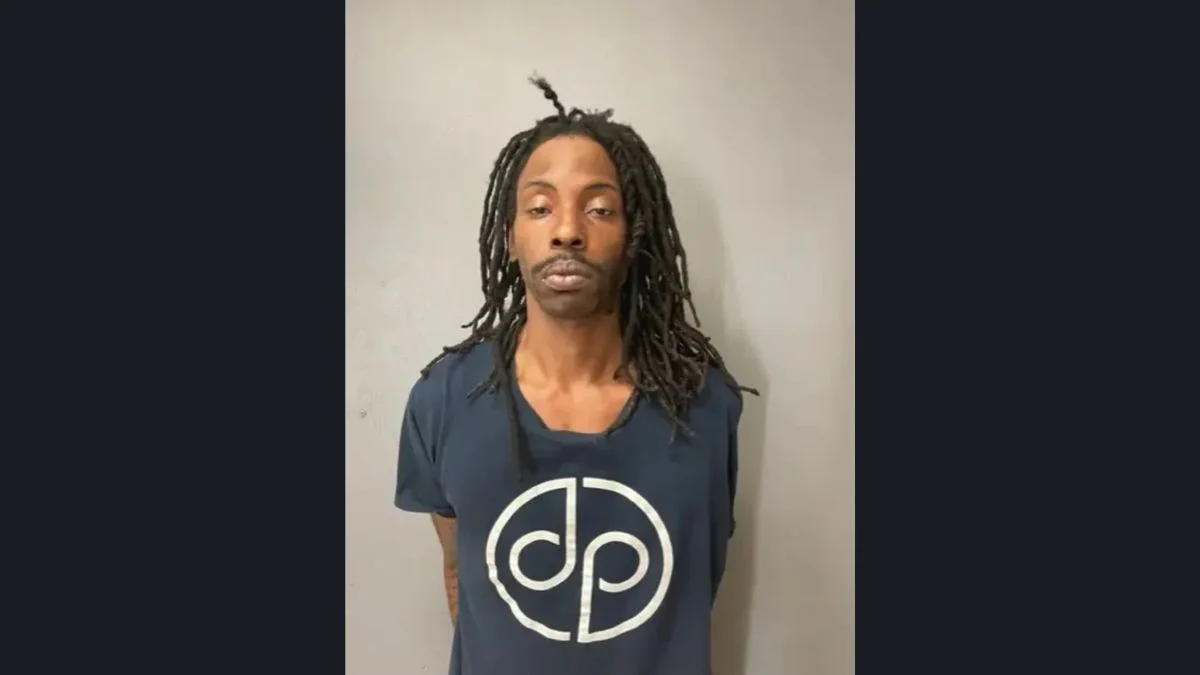
A federal criminal trial in Washington, D.C., took an extraordinary turn when jurors examining physical evidence discovered items that apparently escaped the attention of investigators, prosecutors and the defense. The discovery involved a jacket, a Pittsburgh Steelers sweatshirt, a Chinese yuan bill and a mysterious white powdery substance.
The evidence had already been presented in the month-long trial of Shamell Naquan Joyner, who faced 28 federal counts connected to a series of alleged armed robberies, carjackings and stolen vehicles across Washington, D.C., Maryland and northern Virginia in spring 2023. The case centered heavily on identifying the person behind a string of robberies, many involving 7-Eleven stores and gas stations.
But while jurors were deliberating in July 2026, they discovered something nobody in the courtroom appeared to know was there. The unusual find triggered questions about evidence handling, possible prejudice to Joyner, and whether the jury could continue deliberating fairly.
Read Our Article on Another Investigation: A separate case also raised questions about what investigators discovered after a deadly incident. Three Found Dead After Rocky Mount Power Cut examines the investigation into three people found dead inside a North Carolina mobile home.
What the Jury Found Inside the Evidence
The clothing had been recovered from a Toyota RAV4 that prosecutors said Joyner carjacked on or around May 2, 2023. Prosecutors presented the two-toned jacket and Steelers sweatshirt as important evidence because the clothing was said to have been worn by the robber.
During the second day of deliberations, around July 22, a juror reached into the jacket’s breast pocket. What came out initially looked like a folded receipt or small note. Inside was a white powdery substance, some of which reportedly spilled slightly.
The jurors put the item back into the pocket and returned the jacket to its evidence bag.
Then another pocket search produced an even stranger discovery: a crumpled Chinese yuan, or renminbi, bill. There was initially some confusion about which sweatshirt contained the currency, but investigators later located it in connection with the Steelers sweatshirt recovered from the Toyota.
The most striking part was that none of the major players in the case knew the items were there.
The FBI agents who had handled the evidence had apparently missed them. Prosecutors had not known about them. Joyner’s defense lawyers had not known either.
Judge Rudolph Contreras later described the oversight in unusually blunt terms, writing that:
“The Court shares Mr. Joyner’s amazement at law enforcement’s failure to uncover the Chinese Yuan, note, and powdery substance in the physical evidence.” — Judge Rudolph Contreras, United States v. Joyner
From the bench, the judge also expressed surprise that money had somehow remained inside the clothing without being discovered during the investigation.
The FBI declined to explain how the objects were missed, while a spokesperson for the U.S. Attorney’s Office did not directly address the evidence-handling failure when questioned.
Read More About a Case Under Investigation: Evidence and unanswered questions can become particularly important when investigators are still working to establish exactly what happened. Twin Falls In-N-Out Shooting Investigation looks at another case involving a fatal shooting and the investigation that followed.
Why the Chinese Yuan and White Powder Created a Legal Problem
The discovery was not simply embarrassing. It potentially raised a serious fairness issue.
During the trial, a 7-Eleven clerk had testified that a Chinese yuan bill was stolen from his wallet during one of the robberies. The clerk said the bill came from a college study-abroad trip.
Separately, a cooperating witness testified that Joyner paid him in drugs on the night of another alleged robbery.
That meant the newly discovered objects appeared to overlap with testimony jurors had already heard. If the yuan or powder had been properly identified, tested and introduced as evidence before deliberations, the prosecution could potentially have attempted to use them as additional evidence. But that never happened during the evidentiary phase of the trial.
Instead, jurors unexpectedly encountered the material themselves.
Joyner’s lawyers argued that this exposure could unfairly influence the verdict and sought a mistrial, among other relief.
Read Our Article on Another Criminal Case: Criminal investigations can take unexpected turns even after authorities believe they have established what happened. Spokane Old Trails Fire Arson Case covers the investigation into a destructive fire and the arson charge that followed.
Judge Contreras Questioned Every Juror Individually
The following morning, Judge Contreras took steps to determine whether the discovery had compromised the jury.
He questioned jurors individually and explained that the yuan and apparent powder were not admitted evidence in the case. The judge then asked whether each juror could put the discoveries aside and continue deliberating impartially.
The jurors indicated that they could.
Contreras ultimately rejected Joyner’s motions for a mistrial and further relief in a memorandum opinion. The court’s ruling allowed deliberations to continue.
The unusual discovery therefore did not end the trial. Instead, the jury returned to the evidence that had actually been admitted.
Another Case That Raised Investigative Questions: The handling of evidence can become a major part of a criminal investigation, particularly when important details remain unclear. Seattle Center Armory Shooting Investigation follows another investigation where authorities worked to piece together what happened.
The Jury Convicted Joyner on 13 Counts but Deadlocked on 15
The final outcome was notably split.
Joyner was convicted on 13 counts connected to an armed robbery in downtown Washington in mid-April 2023, along with four armed robberies and a carjacking occurring on May 2 in Northwest Washington and Maryland.
But the jury could not reach verdicts on 15 of the 28 counts.
Jurors told the court they disagreed about what constituted reasonable doubt and how they should determine identity beyond a reasonable doubt. They said they could not resolve those counts without additional evidence or testimony.
The judge accepted the partial verdict.
According to the U.S. Attorney’s Office, the convictions carry a mandatory minimum sentence of 31 years. Joyner’s attorneys had not appealed as of the latest reporting, with final judgment still pending.
The case began with allegations covering 10 armed robberies and two armed carjackings committed between April 12 and May 2, 2023, across the District of Columbia, Maryland and Virginia. The 28-count superseding indictment also included firearm, stolen-vehicle and related federal charges.
A Rare Evidence-Handling Failure That Overshadowed the Trial
The Joyner case now stands out for an unusual reason beyond the robberies themselves.
After prosecutors, FBI agents and defense attorneys had all handled or examined the clothing, it was ultimately the jurors who found material hidden inside it.
The discovery did not erase the convictions, and the judge determined that the jurors could remain impartial. Still, the episode raised difficult questions about how physical evidence was examined and documented before it reached the jury room.
For longtime D.C. federal practitioners, the mistake was described as unusual and embarrassing. Some former prosecutors also noted that incomplete examination of physical evidence, although rare, is not completely unheard of.
The result leaves Joyner convicted on 13 counts, deadlocked on 15 others and facing a mandatory minimum of 31 years, while an extraordinary question remains attached to the case: how did evidence hidden inside the very clothing presented at trial go unnoticed until the jurors themselves found it?
Another Investigation Raised Difficult Questions: Criminal cases can become complicated when investigators have to piece together what happened from limited or disputed evidence. The Seattle Center Armory Shooting Investigation looks at another case where authorities worked to uncover what happened after a shooting.
Sources and Disclaimer
This article was prepared from a review of reporting by CNN correspondent Katelyn Polantz, related coverage including The Daily Beast, the U.S. Department of Justice and court records in United States v. Joyner, Criminal Action No. 23-309, including Judge Rudolph Contreras’ memorandum opinions concerning the case and Joyner’s mistrial motions. The account is intended as a news summary based on those sources and court records. Allegations made before trial are described as allegations, while the convictions and court rulings are reported according to the available record.
Sources:
Image Credit:
Montgomery County Police Department


Leave a Reply