

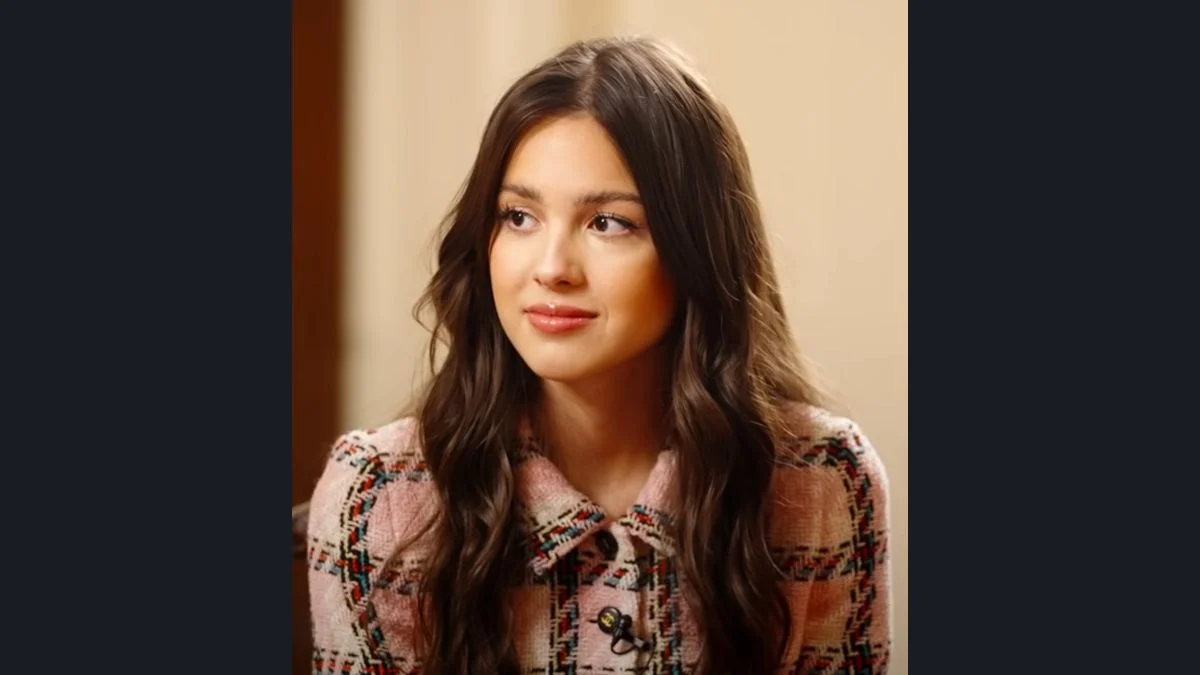
Olivia Rodrigo’s latest move has taken celebrity activism far beyond a microphone and a social-media post. Her inaugural Daisy Chain Fields festival, held August 29 at Great Park in Irvine, California, raised $10 million for organizations supporting women and girls before philanthropist Melinda French Gates pledged another $10 million. The result: $20 million in total support for 10 nonprofit partners, marking one of Rodrigo’s biggest public demonstrations of activism so far.
But the money is only part of the story. A September 1 opinion column in The Guardian by columnist Arwa Mahdawi praised Rodrigo’s willingness to speak publicly about reproductive rights, Gaza and immigration while questioning why Taylor Swift has maintained a comparatively restrained public profile during Donald Trump’s second administration. That comparison has fueled a much bigger conversation about what fans should expect from celebrities with enormous cultural influence — and whether staying quieter is itself a political choice.
More Stars Using Their Platform: Rodrigo isn’t the only artist turning her spotlight toward a cause lately. For more, read our story on Ariana Grande’s emotional tour farewell and what her London goodbye could signal about stepping back from the spotlight.
Olivia Rodrigo’s Daisy Chain Fields Festival Raises $20 Million for Women and Girls
Daisy Chain Fields was never intended to be just another music festival. Rodrigo conceived the event around music, community, philanthropy and collective action, bringing together an all-women lineup while directing net proceeds toward nonprofit organizations addressing reproductive health, maternal health, economic empowerment, domestic violence prevention and gender equity.
The August 29 festival featured Rodrigo alongside Chappell Roan, Doechii, Bikini Kill, Garbage, Mitski, The Breeders, Santigold, Rachel Chinouriri, Die Spitz, Eli, Quiet Light, Not For Radio and Devon Again. The lineup also included special guests Stevie Nicks and Sarah McLachlan, while Alanis Morissette made a surprise appearance.
The festival went beyond putting charitable messaging between performances. Attendees could visit nonprofit activations and educational spaces, including the Daisy Chain Reaction philanthropy village, where participating organizations shared information about their work.
The 10 organizations benefiting from the Daisy Chain Fields Fund were:
| Nonprofit organization | Focus |
| Baby2Baby | Support for families |
| Black Mamas Matter Alliance | Maternal health |
| Center for Reproductive Rights | Reproductive rights |
| FreeFrom | Domestic violence prevention and economic security |
| Jhpiego | Global health |
| Johns Hopkins Center for Indigenous Health | Indigenous health |
| National Domestic Workers Alliance | Domestic-worker protections |
| National Institute for Reproductive Health | Reproductive healthcare |
| National Women’s Law Center | Gender justice and legal advocacy |
| Planned Parenthood | Reproductive healthcare |
Before the festival, organizers announced that $10 million would be donated to the organizations. Then, during Rodrigo’s headlining performance, Melinda French Gates joined her onstage and announced that she would match the amount through Pivotal.
That took the total support to $20 million.
Rodrigo summed up the idea behind the festival by saying:
“Daisy Chain Fields is about what can happen when we come together and use our collective power to support one another.”
Pivotal said its additional $10 million commitment doubled the money raised through Rodrigo’s festival and brought the total support for the 10 nonprofit partners to $20 million.
More Concert Headlines: Big festival moments aren’t always celebratory — some come with unexpected setbacks. For more, read our story on six workers hospitalized after a post-show load-out accident at Ed Sheeran’s Ford Field concert.
Daisy Chain Fields Brings the Lilith Fair Spirit Into a New Generation
The concept behind Daisy Chain Fields has an obvious musical predecessor: Lilith Fair, the influential women-led festival founded by Sarah McLachlan in the 1990s.
Rodrigo drew inspiration from that history while creating something aimed at a newer generation. She personally curated the lineup, bringing together performers from different eras and genres. Stevie Nicks represented one generation of music history, while younger stars such as Chappell Roan and Doechii helped give the event a distinctly contemporary identity.
Yet Daisy Chain Fields was not presented as an exclusively political rally.
Its organizers emphasized music, creativity, community and joy alongside activism and philanthropy. At the same time, several participating organizations work directly on issues that remain deeply politically contentious in the United States, particularly reproductive rights and healthcare access.
That balance is a major reason the festival has attracted attention outside the music world.
Rather than simply making a statement from a stage or posting about a cause online, Rodrigo created an event where her audience could encounter nonprofit organizations directly — while the festival generated substantial financial support for their work.
More Cross-Generational Lineups: Blending music eras for a bigger cause is a formula more artists are borrowing lately. For more, read our post on Miley Cyrus dropping “Cyrus” and unveiling Bass Persuades as the start of her boldest new era.
Olivia Rodrigo’s Political Activism Started Years Before Her $20 Million Festival
Daisy Chain Fields also fits into a much longer pattern of public engagement from Rodrigo.
In 2022, following the U.S. Supreme Court’s decision overturning Roe v. Wade, Rodrigo spoke forcefully at Glastonbury about the potential consequences for women and girls.
She said:
“So many women and so many girls are going to die because of this”
Rodrigo then dedicated a performance of Lily Allen’s “Fuck You” to five Supreme Court justices.
Her activism has also become personal when her own music has been involved in political messaging.
In 2025, after the U.S. Department of Homeland Security and White House used her song “All-American Bitch” in a video promoting self-deportation, Rodrigo objected publicly. She said her music should not be used to promote:
“racist, hateful propaganda.”
The moment showed that her political engagement has not been limited to broad comments about social issues. She has also spoken up when her own work was used in political communications with which she disagreed.
Gaza has been another important part of Rodrigo’s public commentary. She has previously expressed concern about the humanitarian situation there, including the impact on civilians and access to basic necessities.
As referenced by The Guardian, Rodrigo described pretending not to be affected by what was happening in Gaza as:
“disingenuous”
She connected acknowledging such issues with her responsibilities as an artist.
More Artists Pushing Back on Misuse: Rodrigo isn’t the only performer taking a stand when her image or work gets tangled in controversy. For more, read our story on Jaime Pressly being escorted from a San Jose hotel following a reported incident ahead of GalaxyCon.
Why Taylor Swift Suddenly Became Part of the Olivia Rodrigo Debate
This is where the story becomes more complicated.
Mahdawi’s September 1 Guardian column moves from Rodrigo’s festival into a broader argument about celebrity activism — and Taylor Swift becomes the central comparison.
Swift has hardly been politically silent throughout her career.
Her political evolution became particularly visible following the 2016 U.S. presidential election, when she moved away from largely avoiding political endorsements and began publicly supporting Democratic candidates.
Her transformation was explored in the 2020 documentary Miss Americana, where Swift discussed her decision to become more politically outspoken.
She said:
“I need to be on the right side of history.”
Swift subsequently endorsed Joe Biden and Kamala Harris in different presidential election cycles. In September 2024, after the presidential debate, she publicly endorsed Kamala Harris and Tim Walz.
Swift said she was voting for Harris because she believed the Democratic candidate fought for rights and causes that needed a strong advocate. She also called Harris a:
“steady-handed, gifted leader”
and said she believed the country could accomplish more under:
“calm and not chaos.”
So the argument is not that Swift has never taken political positions. The record clearly shows otherwise.
The real issue raised by Mahdawi is what has happened more recently.
More Political Crossroads for Pop Stars: Swift isn’t the only chart-topper facing scrutiny over how — or whether — to use her platform. For more, read our story on Gal Gadot explaining her Wonder Woman exit and calling out DC’s handling of Henry Cavill and Patty Jenkins.
Taylor Swift’s Quieter Political Profile Under Trump’s Second Administration
Mahdawi’s criticism centers on what she sees as Swift’s relative silence during Donald Trump’s second administration.
One recent example involves Swift’s music appearing in social-media posts connected with Trump and the White House. Reuters reported in August that some Swift songs were subsequently removed from videos posted by Trump’s campaign and the White House.
Those posts had used her music in political content, including material that mocked or referenced the singer.
Swift did not publicly comment on the removals, according to Reuters.
That silence is important to Mahdawi’s argument because Rodrigo has repeatedly responded publicly to political issues and to the use of her music in political messaging.
Still, silence on particular issues should not automatically be interpreted as political neutrality.
Swift already has an established public political record, including her 2024 endorsement of Harris and Walz and her previous criticism of Trump.
The distinction matters: Mahdawi is arguing that Swift has become less vocal about some major issues during the current administration, not that Swift has suddenly become apolitical.
More Public Silence Under Scrutiny: Swift isn’t the only star facing questions over unverified claims and public silence lately. For more, read our story on Say Anything’s Max Bemis postponing his remaining 2026 shows as unverified allegations spread online.
Gaza Creates an Even Sharper Contrast Between Olivia Rodrigo and Taylor Swift
The Gaza issue adds another layer to the discussion.
Rodrigo has made public comments concerning the humanitarian crisis in Gaza. Swift has not made comparable recent public statements on the issue.
That difference has become especially noticeable amid a wider entertainment-industry debate over whether celebrities with enormous platforms should speak publicly about the Israel-Gaza conflict.
Mahdawi’s position is that artists with huge audiences and significant financial resources have an opportunity — and, in her view, a responsibility — to use that influence for vulnerable communities.
But that remains the columnist’s opinion, not an established rule requiring celebrities to take political positions.
That distinction is crucial when looking at the Rodrigo-Swift comparison.
More Backlash Over Public Statements: Not every public stance lands well — some spark real professional consequences. For more, read our story on John Galliano’s 2027 Met Gala exhibition being canceled after backlash over his past remarks.
Olivia Rodrigo’s Palestinian Fashion Choice Added Another Layer to Daisy Chain Fields
Rodrigo’s connection to Palestinian issues also appeared around the festival itself.
Before Daisy Chain Fields, she appeared at a press presentation wearing a dress created by Nöl Collective, a Ramallah-based Palestinian fashion label known for incorporating Palestinian embroidery and craftsmanship.
The choice attracted attention because it connected the festival’s wider themes of women, culture and social issues with Palestinian creative work.
It also provided additional context around Rodrigo’s previous comments about Gaza.
However, Daisy Chain Fields itself was principally organized around women’s causes and the work of its 10 nonprofit partners. The Palestinian fashion connection added another layer to Rodrigo’s broader public engagement rather than changing the central mission of the festival.
More Fashion Statements That Made Headlines: Rodrigo isn’t the only star using a red-carpet or press look to make a bigger point. For more, read our story on Jamie Dornan joining Zoë Kravitz and Adèle Exarchopoulos in Megan Park’s secretive Apple mystery film.
What Daisy Chain Fields Says About the Future of Celebrity Activism
The most important part of Daisy Chain Fields may ultimately have little to do with Taylor Swift.
Rodrigo has shown that a major pop star can build an event where entertainment, philanthropy and advocacy operate at the same time.
The festival attracted tens of thousands of people, assembled a prominent cross-generational lineup and generated $10 million before French Gates matched the contribution and pushed total support to $20 million.
And the money is going to organizations already working on the issues the festival highlighted.
The beneficiaries span reproductive healthcare, maternal health, economic security, domestic-worker protections, Indigenous health, support for families and gender equity.
That gives the event a practical dimension that a celebrity statement alone cannot necessarily provide.
Fans were not simply watching Rodrigo make a political declaration. They were entering a space where nonprofit organizations could explain their work, connect with audiences and benefit financially from the event.
More Setbacks on Tour: Not every night on the road goes as planned, even for the biggest names in music. For more, read our story on Tim McGraw showing up 40 minutes late, then taking a hard fall on stage in Cincinnati.
The Olivia Rodrigo vs. Taylor Swift Debate Is Not Really a Feud
Despite the dramatic framing, there is no evidence here of a new personal political dispute between Rodrigo and Swift.
The comparison comes from Arwa Mahdawi’s opinion column.
The verified facts are straightforward: Rodrigo organized Daisy Chain Fields, the festival supported 10 nonprofit organizations, $10 million was announced before the event, and Melinda French Gates matched that amount through Pivotal, bringing the total to $20 million.
Rodrigo has also publicly addressed abortion rights, Gaza and immigration-related issues, while Swift has an established history of political involvement that includes her 2024 endorsement of Harris and Walz.
What remains subjective is whether Swift should be speaking out more.
That is Mahdawi’s argument — not an established fact about what celebrities are obligated to do.
What is much harder to dismiss is the impact of Rodrigo’s festival itself. Daisy Chain Fields has demonstrated a different model of celebrity activism: bring major artists together, mobilize an audience, put nonprofit organizations directly in front of that audience and generate serious money for their work.
Whether every celebrity should follow that model is another question.
But with $20 million now supporting 10 organizations, Olivia Rodrigo has certainly made the conversation about celebrity activism louder — and given the entertainment industry a very tangible example of what happens when a pop platform becomes a fundraising engine.
More Star-Powered Fundraising: Rodrigo’s festival isn’t the only recent example of a celebrity turning philanthropy into a major public event. For more, read our story on Ariana Grande’s emotional tour farewell and what her London goodbye could signal about stepping back from the spotlight.
Disclaimer and Sources
This article has been prepared on the basis of thorough research of the sources provided, including The Guardian, Pivotal, Live Nation, the Associated Press, Reuters, Vanity Fair, and The Washington Post. Verified events, fundraising figures, public statements and documented political activity have been distinguished from opinions expressed by commentators. The comparison between Olivia Rodrigo and Taylor Swift is presented specifically as Arwa Mahdawi’s opinion and argument, rather than as an objective conclusion. Political and social issues discussed in this article are included for informational and journalistic context and do not constitute an endorsement of any political position.
Sources
- The Guardian — Arwa Mahdawi’s original opinion column — Original commentary and the basis for the Rodrigo-Swift comparison.
- Pivotal — Melinda French Gates’ $10 million matching commitment — Primary source confirming the $20 million total and the 10 nonprofit beneficiaries.
- Live Nation — Daisy Chain Fields announcement and nonprofit mission — Official festival announcement, lineup and charitable purpose.
- Associated Press — Daisy Chain Fields festival coverage — Independent reporting on the festival, attendees, performers, charities and fundraising.
- Reuters — Taylor Swift songs removed from Trump and White House posts — Independent reporting on the Trump-related use and subsequent removal of Swift’s music.
- Vanity Fair — Taylor Swift and *Miss Americana* — Context for Swift’s political evolution and her “right side of history” statement.
- The Guardian — Olivia Rodrigo’s 2022 Glastonbury Roe v. Wade remarks — Contemporary reporting documenting Rodrigo’s abortion-rights comments.
- The Washington Post — Swift’s 2024 Kamala Harris endorsement — Independent confirmation of Swift’s 2024 endorsement and statement.
Featured Image Credit: The White House official YouTube channel / Public domain


Leave a Reply