

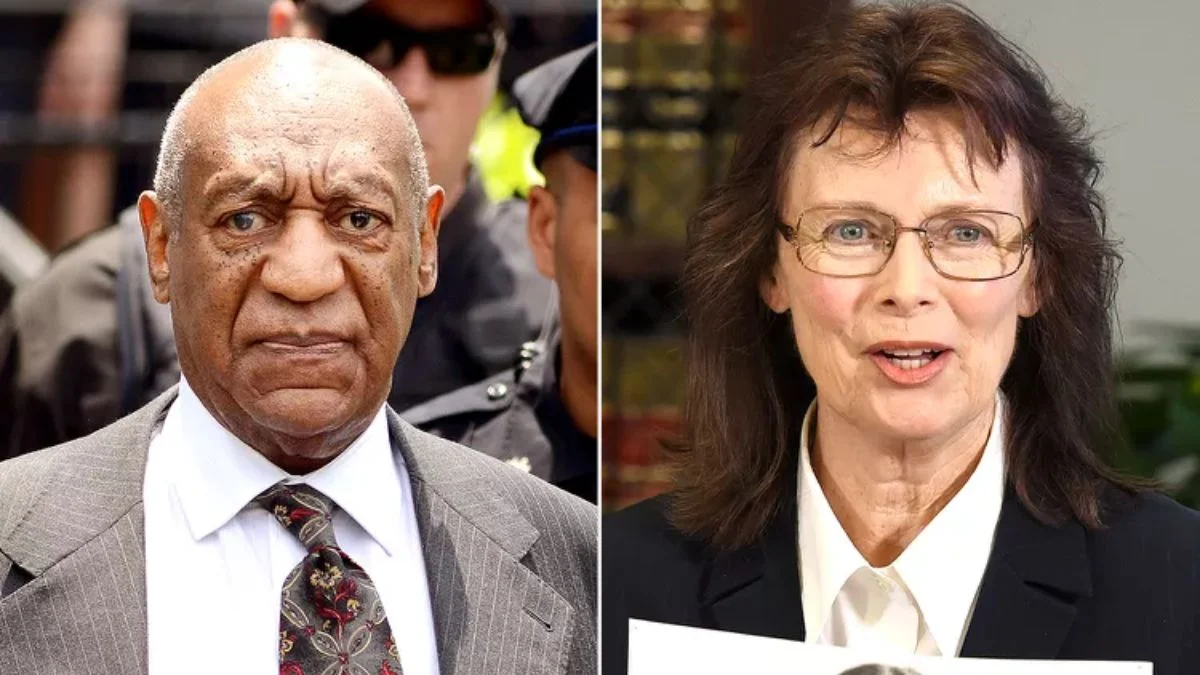
For decades, Bill Cosby was one of the most trusted figures in American entertainment—a comedian, actor, producer, philanthropist, and cultural icon affectionately known as “America’s Dad.” His public image projected wisdom, morality, and family values, particularly through the global success of The Cosby Show.
Yet behind the carefully maintained persona lay a shadow that would take nearly half a century to fully surface. What began as whispers in the 1960s eventually became one of the most extensive and consequential sexual misconduct reckonings involving a celebrity in U.S. history.

In This Post:
The Pattern No One Could See: Early Allegations in the 1960s
The earliest accusations against Bill Cosby trace back to the mid-1960s, long before he became a household name. According to multiple women who later came forward, the alleged conduct followed a strikingly similar pattern: trust, isolation, incapacitation, and assault.
In 1965, Kristina Ruehli alleged that Cosby drugged and raped her in Beverly Hills. Around the same era, Joan Tarshis accused Cosby of drugging and assaulting her in 1969. That same year, Linda Joy Traitz reported groping and forced pill ingestion, while actress Cindra Ladd described waking up naked after being given a pill for a headache.
Additional claims from 1969 include Linda Brown, who alleged assault after drinking a drugged soda in Toronto; Victoria Valentino, who claimed rape after pills; Sunni Welles, who said she awoke naked after consuming drinks Cosby provided; and Carla Ferrigno, who alleged forceful kissing at a 1967 party.
At the time, none of these allegations reached law enforcement in a meaningful way. Cosby’s rising career—and the cultural norms of the era—meant the stories largely went unheard.
A Decade of Silence Broken: The 1970s Allegations Multiply
The 1970s brought a widening circle of allegations, as Cosby’s fame grew. Shawn Brown alleged drugging and rape during an affair. Tamara Green reported an attempted rape after being given what Cosby described as a “decongestant.”
In 1976, Sharon Van Ert said she blacked out after drinking a beverage Cosby provided and later discovered her underwear missing. Linda Ridgeway Whitedeer accused Cosby of assault during a job interview, while Marcella Tate alleged she blacked out at the Playboy Mansion in 1975.
One of the most disturbing claims came from Judith Huth, who alleged that Cosby sexually assaulted her at the Playboy Mansion in 1974 when she was 16 years old, including forced sexual contact.
Other women from the decade include PJ Masten, who claimed rape after a cocktail in Chicago in 1979; an anonymous woman known as “Elizabeth,” who alleged a forced sex act after drinking sake in 1976; and “Sandy,” who claimed drugging during a relationship that extended into 1980.
Fame, Power, and Escalation: Allegations During the 1980s

By the 1980s, Bill Cosby had achieved extraordinary fame. The accusations from this period suggest that his celebrity status may have provided increased access—and protection.
Linda Kirkpatrick alleged a blackout after a drink in Las Vegas in 1981. Heidi Thomas claimed Cosby performed oral sex on her during an audition in 1984 after she sipped a beverage he gave her. Beth Ferrier reported being drugged via coffee in Denver the same year.
Janice Dickinson accused Cosby of rape in Lake Tahoe in 1982 after wine and a pill. Janice Baker-Kinney alleged she blacked out and awoke naked in Las Vegas that same year.
Renita Chaney Hill, who was a teenager at the time, reported ongoing abuse between 1982 and 1987 involving drugged drinks. Barbara Bowman alleged two rapes in New York and Atlantic City in 1986.
Other claims from the decade include Lise-Lotte Lublin (1989), Chelan Lasha (1986), Jewel Allison (1986), Helen Gumpel (1987), and Morganne Picard, who alleged multiple drug-facilitated incidents on The Cosby Show set between 1987 and 1990.

The 1990s and a Quiet Continuation
In 1990, actress Lili Bernard alleged multiple assaults, including rape at the Trump Taj Mahal after drugging. Charlotte Fox accused Cosby of rape at the Playboy Mansion during the 1990s. Cynthia Myers reported witnessing Cosby use drugs for sex at the Playboy Mansion prior to 1997.
Despite the growing number of alleged victims, no criminal case moved forward during this period.
The First Criminal Complaint: A Warning Ignored in 2000
In 2000, Lachele Covington filed a criminal complaint in Manhattan, accusing Cosby of exposing himself and grabbing her breasts. The New York Police Department referred the case to the district attorney, but prosecutors declined to file charges, citing insufficient evidence.
It would not be the last missed opportunity.
Andrea Constand and the Case That Changed Everything
In 2004, Andrea Constand alleged that Cosby drugged her with Benadryl and digitally penetrated her at his home in Montgomery County, Pennsylvania.
District Attorney Bruce Castor declined to prosecute in 2005, stating there was insufficient evidence for a conviction. Castor later said he made a verbal non-prosecution agreement to encourage Constand to pursue a civil lawsuit.
Constand filed her civil suit in March 2005, joined by 13 Jane Does. In November 2006, Cosby settled for $3.38 million, under a confidentiality agreement.
During discovery, Cosby gave a sworn deposition in which he admitted to obtaining Quaaludes illegally for use with women, asserting that the encounters were consensual.
That deposition would later resurface—and change history.
The Viral Moment That Opened the Floodgates (2014)
In October 2014, comedian Hannibal Buress referred to Cosby as a rapist during a stand-up routine. The clip went viral.
Within weeks, women began coming forward publicly. Janice Dickinson, Louisa Moritz, Therese Serignese, and many others added their names to allegations spanning from 1965 to 2004.
By early 2015, more than 20 women had accused Cosby. Attorney Gloria Allred represented 33 accusers. Television networks pulled Cosby’s shows, universities revoked honorary degrees, and institutions severed ties.
In July 2015, the 2005 deposition was unsealed. New York magazine published a cover featuring 35 accusers. By October, nearly 60 women had come forward.
Criminal Charges, Trials, and Convictions
In December 2015, Cosby was charged with three counts of aggravated indecent assault in Pennsylvania related to Andrea Constand’s case.
His first trial in June 2017 ended in a mistrial due to a hung jury.
In April 2018, a retrial began. This time, five additional accusers were allowed to testify to establish a pattern of behavior. Cosby did not testify.
On April 26, 2018, the jury found Cosby guilty on all three counts.
In September 2018, he was sentenced to 3–10 years in prison, fined $25,000 plus costs, and designated a “sexually violent predator.”
The Overturning That Shocked the Nation
In June 2021, the Pennsylvania Supreme Court overturned Cosby’s conviction, ruling that the 2005 non-prosecution agreement barred later charges and that Cosby’s due process rights had been violated.
He was released after serving 2 years and 9 months.
In March 2022, the U.S. Supreme Court declined to hear the case, finalizing the decision.
Civil Trials and Renewed Legal Battles (2022–2024)
In June 2022, a civil jury found Cosby liable for sexually abusing Judith Huth in 1974 when she was 16. She was awarded $500,000 in compensatory damages.
Between 2023 and 2024, new civil lawsuits were filed under expanded statute laws:
- Nine women filed suits in Nevada (June 2023)
- Victoria Valentino sued for a 1969 assault
- Morganne Picard sued for incidents from 1987–1990
- Joan Tarshis filed under New York’s Survivors Act (November 2023)
- Chelan Lasha filed suit in January 2024
As of 2025–2026, no new criminal charges have been filed, and these civil cases remain unresolved.
The Legacy and the Reckoning
Bill Cosby maintains his innocence. His representatives describe the accusations as “discredited.”
Yet his professional legacy has collapsed. He has lost honors from over 20 universities, been expelled from the Academy of Motion Picture Arts and Sciences, and seen his work removed from syndication.
For many accusers, the pursuit of accountability continues through civil courts.

Conclusion: A Crime Story Still Unfolding
The Bill Cosby sexual misconduct allegations span more than 60 years, more than 60 women, and nearly every phase of American celebrity culture. While the criminal system delivered one conviction—later overturned—the civil reckoning continues.
As of 2026, the story is not over.
It is paused—waiting for its final chapter.


Leave a Reply