

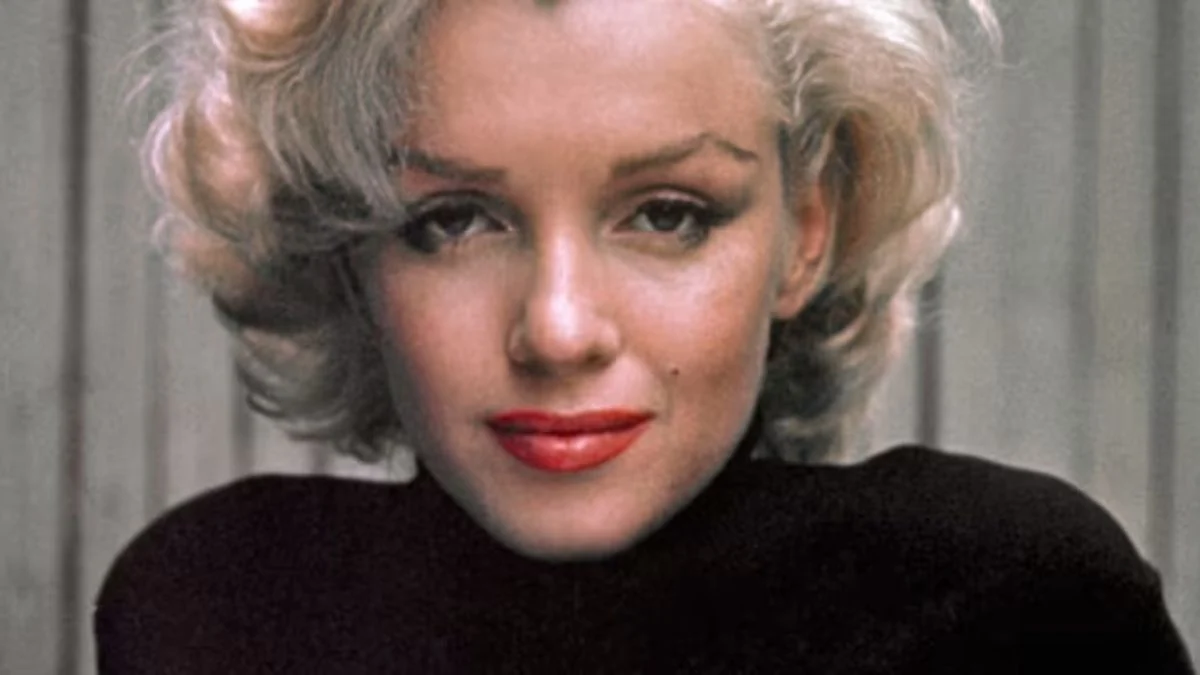
Marilyn Monroe remains one of the most recognizable faces in human history. Decades after her death, her smile still sells posters, her films still draw audiences, and her name still sparks fascination. Yet behind the platinum hair and glamorous screen presence lay a life marked by trauma, instability, and quiet suffering.
Her story is not just about fame. It is a slow, unsettling descent shaped by abandonment, mental illness, addiction, and relentless pressure—ending in a death that continues to provoke debate more than sixty years later.
This is the verified, documented story of Marilyn Monroe’s life, her struggles, and the controversial final hours that sealed her legacy.
In This Post:
Marilyn Monroe’s Troubled Childhood: Born Into Instability
Marilyn Monroe was born Norma Jeane Mortenson on June 1, 1926, in Los Angeles, California. From the very beginning, stability was absent from her life.
Her mother, Gladys Pearl Baker, suffered from paranoid schizophrenia and was institutionalized multiple times starting in 1934. With her mother unable to care for her, Norma Jeane was sent into foster homes and an orphanage, drifting from place to place during her formative years.
During this period, Monroe later alleged that she experienced sexual abuse in foster care, trauma that left deep psychological scars. These experiences contributed to chronic emotional distress, a childhood stutter, and a persistent sense of abandonment that followed her into adulthood.
At just 16 years old, in 1942, she married James Dougherty—not out of romance, but to avoid being returned to an orphanage. The marriage ended in 1946, closing one chapter of survival and opening another filled with ambition and vulnerability.
Hollywood Fame and the Creation of Marilyn Monroe
The late 1940s and early 1950s marked the transformation of Norma Jeane into Marilyn Monroe, a carefully crafted Hollywood persona. She rose quickly as a model and actress, capturing public attention with a combination of charm, vulnerability, and undeniable screen presence.
By the 1950s, she became a global icon through films such as:
- Gentlemen Prefer Blondes (1953)
- The Seven Year Itch (1955)
- Some Like It Hot (1959) — a role that earned her a Golden Globe Award
Despite her success, Monroe felt increasingly trapped. Studios frequently typecast her as the “dumb blonde”, ignoring her intelligence and ambition. She battled studio exploitation, career pressure, and deep personal dissatisfaction, even as her fame soared.
Marilyn Monroe’s Marriages and Emotional Turmoil
Monroe’s personal life mirrored her inner instability.
Her marriage to Joe DiMaggio in 1954 lasted less than a year. The relationship was marked by jealousy and abuse, and they divorced in 1955.
In 1956, she married playwright Arthur Miller, seeking emotional and intellectual connection. Instead, the marriage was strained by multiple miscarriages, Monroe’s worsening mental health, and Miller’s affair. They divorced in 1961.
Each failed relationship deepened Monroe’s feelings of low self-esteem, rejection, and emotional isolation.
Mental Health Struggles and Substance Dependency
Throughout her adult life, Monroe battled severe depression, anxiety, chronic insomnia, stage fright, perfectionism, and persistent self-doubt. Her family history of mental illness—particularly her mother’s schizophrenia—haunted her.
To cope, she turned to barbiturates, amphetamines, and alcohol. What began as medical treatment became addiction, leading to overdoses and repeated psychiatric hospitalizations.
In 1961, she was admitted to the Payne Whitney Clinic, where the experience proved traumatic and included a brief misdiagnosis. She underwent years of psychoanalysis and openly expressed suicidal thoughts.
Adding to her physical suffering was endometriosis, which required multiple surgeries and contributed to ongoing pain and emotional strain.
By the early 1960s, Monroe’s life had settled into a dangerous pattern of instability—fame on the outside, chaos within.
Marilyn Monroe’s Final Day: August 4, 1962
On August 4, 1962, Marilyn Monroe spent the day at her Brentwood home, located at 12305 Fifth Helena Drive.
Her day included:
- A meeting with photographer Lawrence Schiller
- A massage
- Several phone conversations
- An argument with publicist Patricia Newcomb regarding her insomnia
At approximately 4:30 p.m., her psychiatrist Dr. Ralph Greenson arrived for a therapy session.
Later that evening, around 7:00–7:15 p.m., Monroe spoke with Joe DiMaggio Jr., who reported that she seemed normal and not distressed.
She retired to her bedroom around 8:00 p.m.
That night, actor Peter Lawford called her. He later stated that Monroe sounded drugged and said goodbye to him, Pat Kennedy, and the president before drifting off. Alarmed, Lawford contacted others, but housekeeper Eunice Murray assured him Monroe was fine.
No one spoke to Marilyn Monroe again that night.
Discovery of Marilyn Monroe’s Death
At approximately 3:30 a.m. on August 5, Eunice Murray noticed that Monroe was unresponsive in her locked bedroom.
She was found lying face down, nude, on her bed, clutching a telephone. Psychiatrist Ralph Greenson broke a window to enter the room.
Monroe was already dead. She was just 36 year old.
Physician Dr. Hyman Engelberg confirmed her death around 3:50 a.m., and the Los Angeles Police Department was notified at 4:25 a.m.
Autopsy Results and Official Cause of Death
The autopsy, conducted by Deputy Coroner Thomas Noguchi, revealed acute barbiturate poisoning.
Key findings included:
- Chloral hydrate: 8 mg% in blood
- Pentobarbital (Nembutal): 4.5 mg% in blood, 13 mg% in liver
- Empty pill bottles found beside her bed
- No external injuries, except a superficial bruise on her back, considered accidental
- Rigor mortis estimated time of death between 8:30 and 10:30 p.m. on August 4
On August 17, 1962, the coroner ruled her death a “probable suicide”, citing:
- Ingestion of a massive dose of sedatives
- Long history of psychiatric illness
- Prior suicide attempts
- Severe sedative addiction
No suicide note was found—consistent with statistics showing fewer than 40% of suicides include one.
Investigations, Reviews, and Official Conclusions
The case was officially closed as probable suicide.
In 1982, amid renewed conspiracy claims, Los Angeles District Attorney John Van de Kamp ordered a review. A 30-page investigative report concluded there was no credible evidence of murder, affirming the original ruling as reasonable—whether suicide or accidental overdose—and ruling out foul play.
Marilyn Monroe Death Mysteries and Ongoing Controversies

Despite the official ruling of probable suicide, Marilyn Monroe’s death has never fully settled into history. Instead, it exists in a space where evidence, human error, and unanswered questions intersect—quietly unsettling, never fully resolved.
At the center of the controversy is a detail that has fueled debate for decades: no visible pills or capsule residue were found in Monroe’s stomach or upper intestinal tract, despite empty bottles of chloral hydrate and pentobarbital (Nembutal) discovered beside her bed. In typical barbiturate overdoses, pathologists often find undissolved fragments or chemical residue in the digestive system, even hours after ingestion. In Monroe’s case, the autopsy revealed none.
Deputy Coroner Thomas Noguchi addressed this anomaly at the time and later in his 1983 memoir, Coroner. He explained that Monroe’s long-term barbiturate dependence could account for the absence of residue, as habitual users may absorb sedatives unusually fast. He also noted that Nembutal capsules dissolve rapidly and leave no colored dye or easily detectable material, making postmortem detection unreliable—especially when death does not occur immediately after ingestion. While this explanation was accepted scientifically, the unusual finding became one of the most frequently cited points by skeptics.
Questions did not end there.
Conflicting Accounts and a Fractured Timeline
Another layer of uncertainty comes from inconsistencies in witness statements, particularly those involving housekeeper Eunice Murray and the attending physicians. Over the years, Murray’s recollections varied regarding when she first noticed something was wrong, how often she checked on Monroe, and the exact sequence of calls made that night. While such inconsistencies are not uncommon in traumatic situations, they complicated efforts to establish a precise timeline.
Similarly, scrutiny has focused on the actions of psychiatrist Dr. Ralph Greenson and physician Dr. Hyman Engelberg—specifically the delay between discovering Monroe’s body and notifying the Los Angeles Police Department. Monroe was found unresponsive around 3:30 a.m., death was confirmed shortly afterward, yet police were not contacted until approximately 4:25 a.m. Though the delay amounted to roughly 35 minutes, critics argued that it deviated from standard procedure, allowing speculation to flourish.
No evidence, however, ever demonstrated that this delay altered physical evidence or concealed a crime. Later official reviews concluded the delay reflected confusion and shock rather than intent.
The Absence of a Suicide Note—and the Problem of Interpretation
Equally debated is the absence of a suicide note. While popular culture often assumes such notes are common, forensic data shows that fewer than 40 percent of suicide victims leave one. Still, in Monroe’s case, the lack of a note stood in contrast to her celebrity status and lifelong habit of writing letters and journal entries, making its absence feel conspicuous to many observers.
Complicating interpretation further was Monroe’s apparent forward momentum at the time of her death. She had ongoing film discussions, recent professional engagements, and conversations hinting at future relationships or remarriage. To some, these plans appeared incompatible with a deliberate decision to die. To others familiar with clinical depression, they reflected the complex reality that outward planning does not preclude inner despair.
From Questions to Conspiracy
Over time, these unresolved elements—no stomach residue, conflicting testimonies, delayed notification, no note, and Monroe’s future plans—became fertile ground for conspiracy theories. Allegations emerged linking her death to John F. Kennedy, Robert F. Kennedy, organized crime figures, or even intelligence agencies, often suggesting a political cover-up.
Yet these claims repeatedly relied on discredited sources, forged recordings, unverified diaries, or witnesses whose accounts shifted dramatically over time. None were supported by forensic evidence. Each major investigation, including the 1982 review ordered by Los Angeles District Attorney John Van de Kamp, found no credible proof of murder or external involvement, reaffirming that the original ruling—whether suicide or accidental overdose—was reasonable based on available facts.
Noguchi’s Later Reflections and the Limits of Certainty
In 2025, Thomas Noguchi—then in his 90s—publicly acknowledged lingering doubts about whether Monroe’s death was the result of a purely suicidal ingestion, again referencing the absence of visible pill residue and the destruction of certain tissue samples before exhaustive testing could be completed. Importantly, he did not retract his original findings. Instead, he emphasized the limitations of forensic science at the time and the irreversible loss of evidence that made absolute certainty impossible.
Noguchi had already addressed these issues decades earlier, and his original conclusions—central to the suicide ruling—remained unchanged.
A Tragedy Grounded in Evidence, Not Myth’

Ultimately, Marilyn Monroe’s death remains tragic not because it is mysterious, but because it reflects the devastating convergence of mental illness, addiction, physical pain, and unrelenting pressure. The unanswered questions persist not as proof of conspiracy, but as reminders that even well-documented cases can contain gaps—especially when the subject is a deeply private person living under constant public scrutiny.
No verified evidence has ever supported murder.
What endures is not a hidden crime, but a life spent searching for stability—and a death that exposed how fragile even the brightest icons can be.


Leave a Reply