

A chilling tale of disappearance, identity and suburban terror
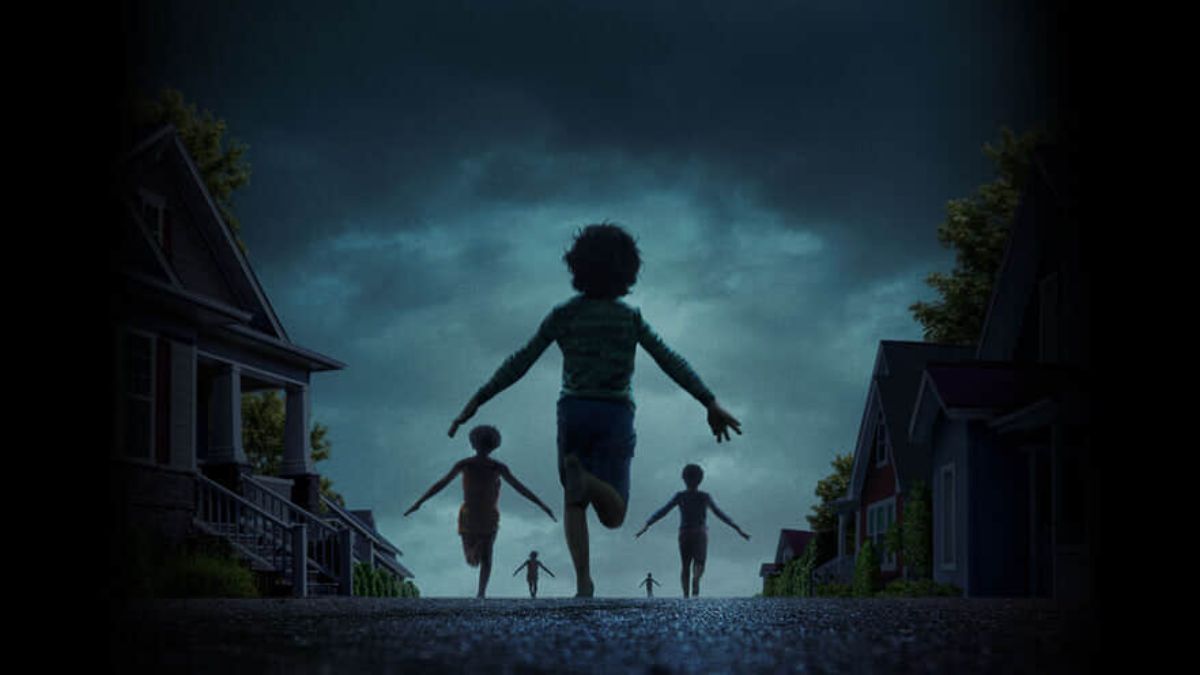
When the Weapons film opens, we’re plunged into a nightmare set in the small town of Maybrook, Pennsylvania, where at exactly 2:17 a.m. one dreadful morning, seventeen children from the same classroom leave their homes in unison — arms outstretched like little airplanes — and vanish. Only one child remains: Alex Lilly.
From that jarring opening moment, director-writer Zach Cregger (also producer and co-composer) weaves a non-linear, multi-perspective horror mystery — one part witch-ritual nightmare, one part community breakdown, and one part psychological monster-story
In This Post:
Timeline & Story Narration
Here’s how the major beats of Weapons (2025) unfold, in a roughly chronological timeline, even though the film shifts POVs and jumps back and forth.

Might Interest You: The Home (2025) Ending Explained: Full Plot Breakdown, Spoilers & Themes
Several weeks before the vanishings
- Gladys Lilly, the reclusive great-aunt of Alex, arrives suddenly in Maybrook at the Lilly household. Alex’s parents begin acting strangely: catatonic, their windows covered in paper, something unspoken in the house.
- Alex grows uneasy: he notices his parents staring blankly, doing things robotically. Gladys displays a power over them.
Night of the disappearance (Day 0)
- At exactly 2:17 a.m., the children of teacher Justine Gandy’s third-grade classroom leave their homes, arms out like airplanes, then vanish into the darkness. Alex is the only one who remains.
- The next morning, Justine arrives at school and the classroom is empty — all but one student. The town is stunned.
Weeks following the disappearance
- The community descends into panic, suspicion and paranoia. Justine is thrust into the spotlight — her students are gone, and everyone wonders: did she know something? Was she complicit?
- Archer Graff (Josh Brolin), father of one of the missing children, begins his own investigation. He studies surveillance footage (home door-cams, Ring cameras) that show the children leaving together. He becomes fixated on Alex, wondering why he stayed behind.
- The narrative also shifts to: Paul (a police officer; Paul Morgan), school principal Marcus (Marcus Miller / Andrew depending on credit), James (a homeless addict/lurker) and other townspeople — each with their own chapter.
Investigation & Revelation
- Justine, suspended from her job, turns to alcoholism. She starts surveilling Alex’s home, worries mounting. She discovers the Lilly home has weird signs: taped-over windows, peculiar behaviour.
- James breaks into the Lilly house, hoping to steal something to pawn for drugs. There he witnesses the children withheld in the basement and Alex’s parents in a catatonic state.
- The film reveals the sinister core: Gladys is a witch of sorts, abusing magical (or ritual) control to siphon life, turning people into tools — “weapons”. She uses Alex as a conduit: he collects items belonging to each missing child, enabling her ritual to attract them.
Climax & showdown
- Justine + Archer converge at the Lilly home to confront the truth. They descend into the basement where the children are held, and Gladys’s full scheme is exposed: she has weaponised children and adults alike, robbed of identity, forced into servitude.
- Alex turns on Gladys. He triggers the ritual’s inversion, causing the “weapons” (the missing children) to become aggressors. Gladys is hunted by the very children she summoned. She is destroyed — pulled apart in a gruesome final act.
Aftermath
- The children are rescued, though many are psychologically scarred. Alex relocates; his parents are institutionalised. Justine is cleared of blame, but the community remains broken.
- The film closes with the implication: the horror may have ended — for now — but the trauma, the scars, the underlying failure of that community remain.
Ending Explained
The ending of Weapons (2025) is both cathartic and deeply unsettling. On one level, the antagonist — Gladys — is defeated, the missing children are found, and the immediate threat is eliminated. But on a deeper level, what ends is not the horror so much as the possibility of return to innocence.
Key events:
- Defeat of the witch (Gladys): The ritual-mastermind is torn apart by the very children she manipulated. In doing so, the film literalises the idea of children becoming weapons, then turning on the wielder.
- Children rescued but damaged: Though they return home, they are not the same. Silence, catatonia, trauma linger. The film refuses to tie everything up in a neat bow.
- Alex’s complicated redemption: He’s both victim and reluctant accomplice. In the end, he makes the choice to break the ritual. His survival comes at the cost of innocence.
- Justine and the community: The teacher survives the witch-hunt (literal and metaphorical) but remains forever changed. The town may continue functioning, yet the underlying fissures are exposed.
- Ambiguity remains: Evil is vanquished, yes — but the film ends with the sense that the suburban veneer, the mass hysteria, the susceptibility to manipulation, remain unaddressed. The film suggests the root horror lies in what we accept, ignore or perpetuate.
Philosophical & Psychological Themes
What sets Weapons apart from a standard horror flick is how layer upon layer of meaning is built beneath the horror spectacle.
1. Loss of identity & weaponisation
The title “Weapons” points directly to the film’s philosophical core: children become instruments, stripped of agency, turned into tools for someone else’s agenda. The transformation of the innocent into the instrument of violence is unsettling and symbolic of larger cultural fears: of how society molds children, how trauma is internalised, and how individuals become cogs.
2. Community breakdown & scapegoating
From day one, the teacher Justine becomes a scapegoat. The town rallies, blames, ostracises. Psychologically, we see how groups under terror will turn inward, seek someone to blame, rather than confront uncomfortable truths — a dynamic seen in real life under crisis (mass shootings, school disappearances, etc). The loss of trust, the fragmentation of community — these are horror tropes elevated to existential commentary.
3. Witchcraft as an allegory for parasitic power
Gladys’s rituals are not just supernatural scares — they symbolise parasitic forms of exploitation: older generations consuming younger, institutions draining vitality from the vulnerable. Psychologically, this flick taps into fear of being used, drained, manipulated, betrayed by someone you should trust.
4. Childhood trauma & complicity
Alex is fascinating: the one who stays behind, the one who helps, the one who saves. His arc touches on complicity, betrayal, survival. The film asks: what does innocence mean when you’ve been forced into the role of weapon? What cost does survival exact?
5. Suburbia as façade & horror beneath normality
Maybrook is the kind of quiet town we assume safe. The horror emerges not in the abandoned castle, but behind picket fences, normal classrooms, house alarms. Philosophically, the film suggests the real horror is not monsters in the dark, but the unseen poison in what we assume is ordinary. It invites us to question our complacency.
6. Memory, trauma, and recovery
The ending doesn’t show a neat recovery. Some children speak after months; some remain silent. The scars remain. Real-life trauma seldom ends cleanly; Weapons honour that ambiguity.
Final Take
Weapons is more than just a creepy horror film — it’s an unsettling mirror held to modern society. The startling visual of children running with arms outstretched at 2:17 a.m. becomes the gateway into deeper terror: the dismantling of identity, the weaponising of innocence, the collapse of community, and the yawning gap between façade and truth.
The ending delivers a brutal, satisfying catharsis, yet refuses to fully comfort. The witch is slain, but the rot she exploited remains. The children return, but they are changed. The town resumes life, but the trust is gone. Psychologically, it reminds us: trauma doesn’t erase itself; philosophically, it asks: who holds the weapon when innocent arms are extended?
More Trending Posts:


Leave a Reply