

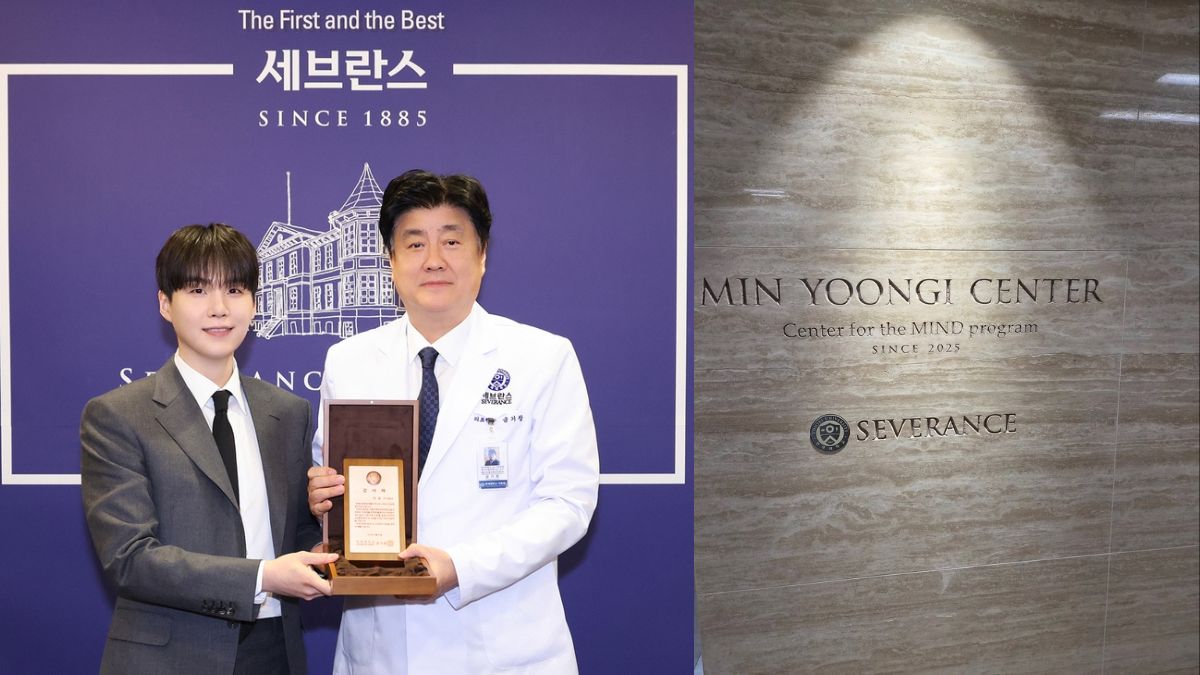
BTS member SUGA — known off-stage as Min Yoongi — has unveiled the Min Yoongi Treatment Center in Seoul, a state-of-the-art facility dedicated to supporting children and young adults on the autism spectrum. Opened in collaboration with Severance Hospital, one of Korea’s oldest and most respected medical institutions, the center integrates the MIND Program (Music, Interaction, Network, Diversity) to nurture social and emotional skills through music-driven activities.
For fans who follow Korean dramas or celebrity philanthropy, the unveiling feels cinematic: a superstar returns to the hospital where he once recovered, this time not as a patient but as a benefactor transforming lives. The center is officially scheduled to launch on September 30, 2025.
A Personal Chapter Behind the Facility
According to reliable sources, this project carries an unmistakably personal resonance. Years ago, SUGA underwent appendicitis surgery at Severance Hospital. During that stay he wrote “Just One Day,” a BTS song that has since become a global fan favourite. That intimate memory is woven into the center’s DNA: the Pediatric Psychiatry Department worked closely with him to translate his idea of music-based therapy into a fully fledged program.
On social media, the entrance signage — “Min Yoongi Treatment Center. Center for the MIND Program, Since 2025” — has been widely shared. By using his real romanised name rather than his stage name, SUGA signals both authenticity and personal stake. For the BTS ARMY, it’s a tender reminder of the artist they know beyond the spotlight.
The MIND Program: Music as Therapy
At the heart of the center is the MIND Program, a structured approach combining group music sessions, interaction modules, and network-building activities for children and young adults with autism spectrum disorder (ASD). The program’s emphasis on diversity and inclusion mirrors SUGA’s own journey of meeting children on the spectrum long before the center opened.
Fans recall how he would quietly visit, guitar in hand, and introduce himself simply as “Prof. Min.” Those visits shaped his vision for a therapeutic space that feels approachable, not clinical — a place where music and structured social practice blend to nurture growth.
A Multi-Million Investment in Hope
SUGA’s commitment goes beyond symbolic gestures. He has invested approximately 5 billion KRW (around USD 3.6 million or Rs 31 crore) to bring the center to life. This substantial funding underscores a new model of celebrity philanthropy in South Korea: leveraging personal experiences and global influence to launch sustainable, evidence-based initiatives rather than one-time donations.
By situating the facility within Seoul’s medical hub, the Min Yoongi Treatment Center also becomes accessible to families who might otherwise struggle to find specialised services.

Fans React: “Prof. Min” Inspires ARMY Worldwide
Since photos of the facility surfaced online, hashtags like #MinYoongiTreatmentCenter and #ProfMin have trended globally. Fans have expressed how meaningful it feels to see an idol invest in long-term community health, echoing the themes of healing and resilience often found in Korean dramas. For many, the use of his real name on the building resonates like a handwritten signature — a personal promise rather than a branding exercise.
This reaction highlights how SUGA’s influence is evolving from chart-topping producer to humanitarian figure whose actions inspire both the BTS ARMY and the public at large.
A New Chapter for Music-Driven Care in Korea
With the Min Yoongi Treatment Center now open, South Korea gains not only another medical facility but a model of integrated care where music therapy, social skill development, and inclusive community building converge. For SUGA, it’s a homecoming that bridges his own healing with the hope of others.
For fans and observers alike, the project reads like the best kind of Korean drama arc: an artist who once composed music within hospital walls now funds a center where music becomes a lifeline. It’s a story of continuity, compassion, and the quiet power of personal touch in public service.
More Trending Stories:


Leave a Reply