

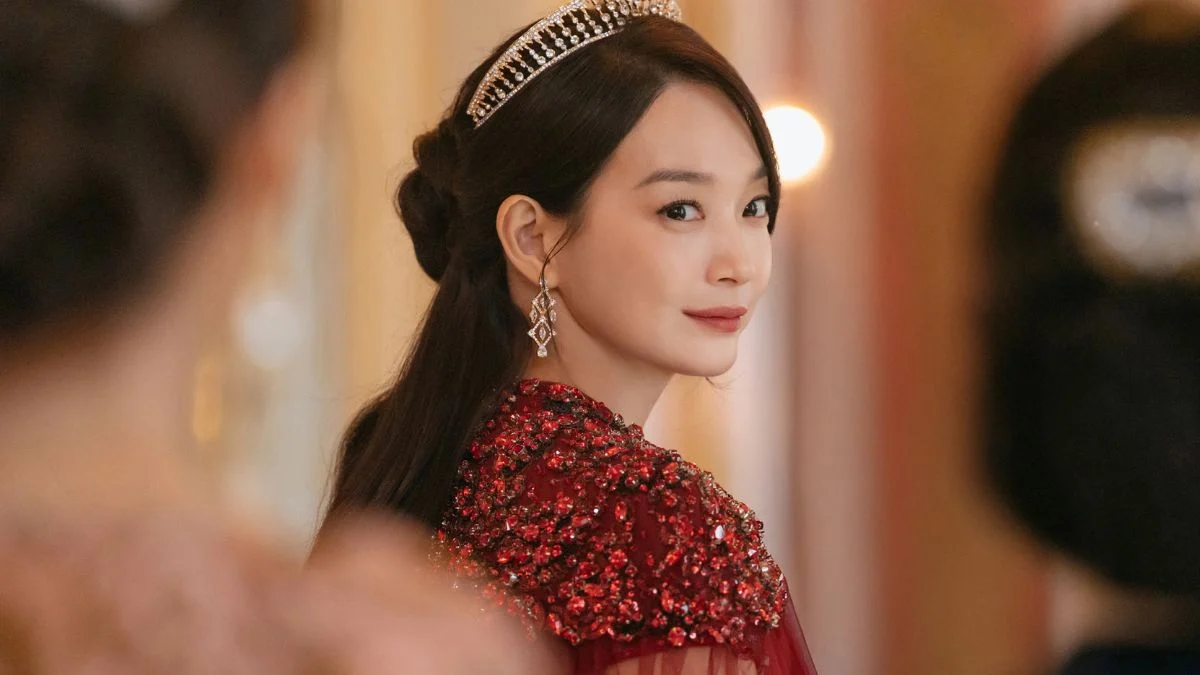
The Remarried Empress stands as one of the most anticipated titles in the Disney+ Korean drama lineup for 2026. Slated for release in the second half of the year, the fantasy romance series adapts the globally popular web novel by Alpha Tart and brings imperial politics and emotional resolve into sharp focus. On January 22, Disney+ unveiled a teaser video introducing its upcoming original slate, placing The Remarried Empress alongside dramas such as In Your Radiant Season, Perfect Crown, and The Husband. The announcement positioned the series as a flagship project within the platform’s expanding K-drama strategy.
In This Post:

A World Shaped by Power and Restraint
The drama unfolds across two empires that reflect opposing philosophies. The Eastern Empire values order, hierarchy, and ceremonial grace. Its palaces feel controlled and symmetrical, reinforcing a culture built on duty and reputation. This environment mirrors the inner discipline of its empress.

The Western Kingdom offers contrast rather than chaos. Warmth, openness, and motion define its visual identity. Light and space play an active role in shaping mood, signaling emotional freedom rather than rigid structure. This deliberate world design supports the story’s central transformation without overpowering it with spectacle.
Story Overview
At the center of the narrative stands Navier, the exemplary Empress of the Eastern Empire. She earns admiration through intelligence, composure, and an unwavering sense of responsibility. Her marriage to Emperor Sovieshu rests on shared history and political partnership rather than romantic passion. They grow up together with a common goal of strengthening the empire.
That balance fractures when Sovieshu brings Rashta, a runaway slave, into the palace and names her his mistress. The act breaks a promise that defined Navier’s role as empress and destabilizes the court. Emotional distance turns into public betrayal when Sovieshu issues a divorce.
Navier refuses to accept humiliation as her ending. She responds with clarity and resolve by requesting permission to remarry Heinrey, the prince of the Western Kingdom. Her decision shifts the political order and reframes the meaning of power within the empire.
Running parallel to this conflict, Heinrey enters the Eastern Empire under secrecy. His royal clan carries the rare ability to transform into birds, and he uses this gift to spy on foreign powers. During these covert visits, he meets Navier and grows to love her, not as a symbol of authority but as a woman shaped by restraint and quiet strength.
The story favors emotional intelligence over melodrama. Dialogue carries intention, and choices drive consequence.
Characters at the Core

Navier, Empress of the Eastern Empire
Navier defines leadership through reason and self-respect. She values stability yet never surrenders her dignity. Her journey centers on reclaiming agency within a system that expects silent endurance.
Sovieshu, Emperor of the Eastern Empire
Sovieshu rules with authority but lacks emotional discipline. His decisions expose the dangers of entitlement and unchecked power, making him a catalyst rather than a simple antagonist.
Heinrey, Prince of the Western Kingdom
Heinrey blends charm with calculation. His ability to transform into a bird adds a fantasy layer, but his true strength lies in empathy and emotional clarity. He offers partnership instead of possession.
Rashta
Rashta disrupts the court through ambition and survival instinct. Her background introduces class tension and moral complexity, ensuring the conflict feels human rather than symbolic.
Cast and Performances

- Shin Min Ah as Navier
Shin Min Ah brings controlled emotional depth and natural elegance, aligning closely with Navier’s composed strength. - Ju Ji Hoon as Sovieshu
Ju Ji Hoon portrays authority with fracture, capturing both imperial confidence and moral instability. - Lee Jong Suk as Heinrey
Lee Jong Suk delivers warmth and subtlety, allowing Heinrey’s sincerity to emerge without excess. - Lee Se Young as Rashta
Lee Se Young adds unpredictability and vulnerability, grounding Rashta in lived emotion rather than trope.
The casting emphasizes credibility and restraint, which strengthens the adaptation’s tone.
From Web Novel to Screen
The original web novel gained popularity through its introspective narration and political nuance. The television adaptation translates that internal voice into visual storytelling through framing, pacing, and performance. Silence carries weight. Ceremony replaces exposition. Emotional shifts unfold through choice rather than explanation.
The series respects the source material while embracing the strengths of serialized drama. Longtime readers will recognize key emotional beats, while new viewers gain clarity through structured storytelling and visual contrast.

Place Within Disney+’s K-Drama Strategy
Disney+ continues to expand its Korean original slate with stories that balance scale and character depth. The Remarried Empress fits this strategy through its high production value, globally recognized source material, and thematically mature romance. Its inclusion alongside titles like In Your Radiant Season, Perfect Crown, and The Husband signals a focus on diverse storytelling rather than genre repetition.


Leave a Reply