

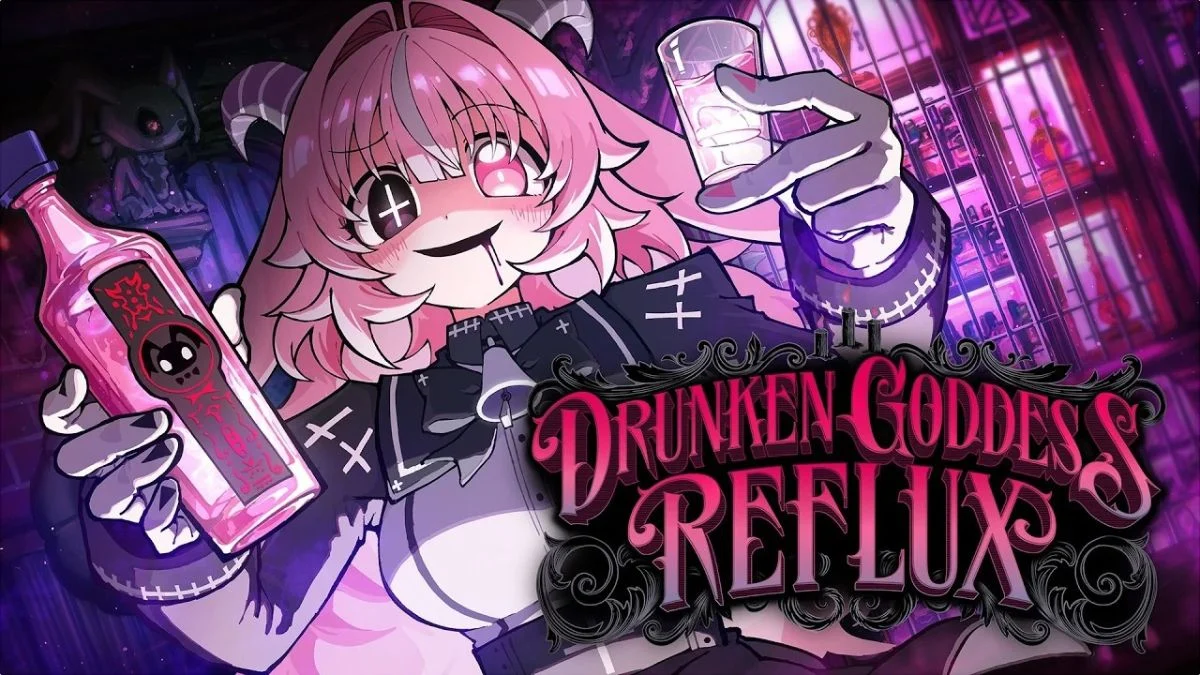
Alliance Arts has pulled the public demo for Drunken Goddess Reflux just days before players were supposed to get their hands on the bizarre drinking-survival game. The reason? The developers are worried that AI and other tools could help people recreate the game’s presentation and gameplay, potentially allowing imitation projects to hit the market before the original.
The public demo was scheduled to arrive on Monday, October 19, 2026. However, Alliance Arts announced on October 16 that the plan had changed, replacing the public release with a closed online playtest for a limited number of players. The studio still wants fans to experience the game before launch, but access will now come with strict rules governing gameplay footage, AI use, copying and data analysis.
The decision does not mean that a clone of Drunken Goddess Reflux has already appeared, nor does Alliance Arts claim that a particular developer has copied the game. Instead, the studio is taking preventative action over what it believes could happen if too much of the game becomes publicly accessible before release.
With the full game still scheduled to launch on December 8, 2026, the question is whether this more controlled preview can give players a taste of the chaos without exposing too much of what makes the game distinctive.
Why Was the Drunken Goddess Reflux Demo Canceled?
Alliance Arts announced the cancellation on October 16, just three days before the planned public demo. The studio apologized for making such a late change and explained that two concerns had influenced the decision.
The first was a practical problem. The developers had planned to let everyone access the demo while restricting the posting and streaming of gameplay footage. However, they concluded that their current team and operating structure were not equipped to manage and enforce those restrictions effectively.
The second concern involved the possibility of AI-assisted imitation.
In its announcement, Alliance Arts stated:
“We are concerned that, based on the content of the demo, works imitating or replicating this game’s presentation and gameplay could be quickly produced using AI or other tools and released ahead of the game’s launch.”
That distinction matters. The studio has not confirmed that an imitation game exists or that another developer is already attempting to beat it to market. Its concern is that exposing the playable build could give others enough information to accelerate the creation of similar work.
Even so, Alliance Arts has not abandoned the idea of letting fans play early. The studio explained:
“At the same time, we still want to give players the chance to actually play the game before launch.”
Its solution is a closed online playtest in which participants must accept specific conditions before gaining access. Applicants will be selected through a lottery, keeping the test limited rather than opening the build to the entire gaming community.
For Gamers Following the AI Debate
AI-related controversies have also affected gaming sponsorships, including the reported dispute involving VTuber Ironmouse and the game NTE. For a look at that separate controversy, explore our Ironmouse NTE sponsorship cancellation report
Drunken Goddess Reflux Closed Playtest: Dates, Eligibility and How to Apply
Players who were looking forward to trying the canceled demo still have a chance to experience the game before launch, provided they meet the requirements and are selected.
Alliance Arts plans to run the closed playtest on Steam from October 23 through October 31, 2026, in Japan Standard Time. The planned nine-day testing period is intended to collect player feedback before release.
The exact start and end times have not yet been announced, and the studio says the schedule may change because of operational requirements.
Here are the important details:
- Playtest period: October 23–31, 2026, Japan Standard Time.
- Application deadline: October 22, 2026, at 11:59 p.m. JST.
- Platform: Steam.
- Minimum age: 15 years old.
- Parental consent: Required for eligible minors.
- Hardware requirement: A PC capable of running the Steam version.
- Community requirement: Applicants must join the official Discord server.
- Selection process: Lottery.
- Access notification: Selected applicants will receive a product code at the email address provided in their application.
If selected, players will use their code to activate the game through Steam. They will then be expected to submit their impressions and feedback through a designated form on the official Discord server.
There is one important catch: this is a development build, not a promise of a polished final experience. Alliance Arts warns that performance may be unstable and that the game’s specifications can change during development.
For players hoping to help shape the final release, the test offers an opportunity to provide feedback. However, getting in means agreeing to the studio’s rules before jumping into the game.
Strict Rules: No Gameplay Streams, AI Training or Game Clones
The closed playtest is designed to give Alliance Arts more control over its pre-release material. Participants will face restrictions that go well beyond simply keeping their Steam codes private.
First, players cannot transfer their playtest codes to other people. They are also prohibited from streaming gameplay, sharing gameplay videos or publishing spoiler material outside the official Discord server.
The agreement also specifically addresses copying, technical analysis and AI-related use.
Participants cannot create, publish, distribute or sell copies of the game. They cannot use the playtest build or its contents to train AI systems, create datasets for AI training, or have AI analyze the game’s programs or data.
Other prohibited activities include reverse engineering, extracting game data, modifying that data, and using the build to create, publish, distribute or sell a game or other work that imitates Drunken Goddess Reflux before its official release.
Alliance Arts defines a “Copy” broadly. Under the agreement, this can include a game or other software that relies on the game or its playtest build and is substantially identical to it, regardless of whether it was produced through direct copying, manual recreation or generative AI.
In other words, the restrictions are not limited to someone simply duplicating the original files. They also address attempts to recreate substantially identical work through other methods.
The studio has outlined consequences for violations. Alliance Arts may remove participants from its official Discord, bar them from the playtest or future related projects, and request the deletion of material published in breach of the agreement. The agreement also allows for appropriate legal action in serious cases.
That does not mean players are forbidden from discussing the experience altogether. The rules permit spoiler-free impressions, information that Alliance Arts has already made public, and material the company explicitly authorizes.
For anyone selected, the safest approach is straightforward: follow the agreement, keep restricted footage private and share feedback through the approved channels.
Alliance Arts Had Already Restricted AI Use Before the Demo Cancellation
The studio’s concerns about AI did not suddenly appear with the October announcement.
In April 2026, Alliance Arts published derivative-work guidelines for Drunken Goddess Reflux. These rules allow individuals to create certain non-commercial fan works, including illustrations, fan publications, merchandise and cosplay. Posting fan art on social media is also permitted within the guidelines.
However, that permission comes with limits.
The guidelines prohibit using the game’s in-game assets as training data for generative AI. They also restrict the creation or publication of works based on pre-release or leaked information, unauthorized use of in-game assets, data mining and other forms of technical analysis.
The April guidelines therefore established boundaries around the use of the game’s material months before the public demo was canceled.
The October playtest agreement adds specific conditions for people accessing the development build, including restrictions on AI training, datasets, AI-assisted analysis and imitation projects created before the official release.
Together, these policies show that Alliance Arts is taking a cautious approach to how its unreleased game can be accessed, analyzed and reused.
What Is Drunken Goddess Reflux? The Drinking Survival Game Explained
Developed by Alliance Arts and WHO YOU, Drunken Goddess Reflux is an upcoming PC game coming to Steam. Its official materials describe the concept as a “Russian Roulette × Drinking Survival × Demon” game.
The premise is as unusual as it sounds. Players face a demon in a survival experience built around a roulette-style drinking mechanic. According to the official description, drinking more causes the game’s rules to begin breaking down, with the central objective involving getting the demon intoxicated enough to reveal her soul.
Alliance Arts presents the encounter as a dangerous balancing act: the demon might “kill for you—or kill you.” Players must navigate the increasingly chaotic situation while trying to survive and push the encounter toward its intended conclusion.
That distinctive combination of drinking mechanics, roulette-style tension and a supernatural opponent gives the game a concept that stands apart from a conventional survival title.
The project also involves members of the team behind Yunyun Syndrome!? Rhythm Psychosis, including WHO YOU, Fuyuki Hayashi, odyk and Nanahira.
Its theme song features music by Aiobahn +81, with lyrics and vocals by DEMONDICE. Japanese materials also associate the game with the title PUKEY GODDESS SHOT TRICK, which appears in the name of its official Discord server.
For players drawn to unusual indie concepts, the game’s combination of dark humour, supernatural chaos and survival mechanics is part of its appeal. It is also the sort of distinctive presentation that Alliance Arts is now trying to protect before launch.
300,000 Steam Wishlists in Three Weeks Put the Game on the Map
The cancellation arrives after Drunken Goddess Reflux had already attracted significant attention.
Alliance Arts announced the game in May 2026 and revealed that it had surpassed 300,000 Steam wishlists within three weeks of its announcement.
That early response gave the project substantial visibility well ahead of its planned release. The studio subsequently announced December 8, 2026, as the launch date for the PC version on Steam.
The canceled October 19 demo was meant to give players a hands-on preview before that date. With the public demo now off the schedule, the closed playtest is the only pre-release hands-on opportunity Alliance Arts has announced at this point.
The studio has not announced a delay to the full game. Its current plan remains to use the late-October test to gather feedback before the December launch.
Players who miss out on the lottery will therefore need to wait for further official announcements or the scheduled release to find out how the finished game plays for themselves.
Why This Matters for Indie Games in the AI Era
For independent developers, a public demo can be a powerful way to build momentum. It gives players something tangible to try, encourages streamers and content creators to cover a game, generates discussion and can help push more people toward a Steam wishlist.
A playable build also reveals much more than a trailer or a handful of screenshots. Players can experience the mechanics, presentation, progression and overall structure firsthand.
That creates a difficult decision when a developer believes the same exposure could make imitation easier.
Alliance Arts has not established that AI can automatically reproduce an entire game, and its announcement does not identify a competitor that has already attempted to clone Drunken Goddess Reflux. Rather, the studio is concerned that AI and other tools could accelerate the production of imitative work using information exposed through the demo.
The cancellation highlights the trade-off: wider access could help the game reach more players, but the developers believe unrestricted access could also expose elements they would prefer to keep under control until launch.
For a game that reportedly passed 300,000 wishlists within three weeks, foregoing a public demo is a significant choice. It sacrifices a potential promotional opportunity in favour of a more restricted preview.
Whether other indie studios make similar decisions remains to be seen. The situation nevertheless illustrates a growing challenge for developers who want to showcase original mechanics while protecting unreleased work from unauthorized copying or imitation.
Keeping Up With Gaming Industry Changes
Xbox’s studio restructuring coverage examines organizational changes involving Activision, Halo and Ninja Theory. For a broader look at industry developments, revisit our Xbox studio restructuring coverage.
Is Drunken Goddess Reflux Still Releasing in December 2026?
Yes. Based on the announcements currently available, Drunken Goddess Reflux remains scheduled to launch on December 8, 2026, for PC via Steam. Alliance Arts has announced no release delay alongside the public-demo cancellation.
The closed playtest is planned for October 23–31, with selected participants expected to provide feedback through the official Discord server. During the test, the development build will remain subject to restrictions covering gameplay sharing, AI use, copying and technical analysis.
For now, the studio’s strategy is clear: let a limited group of players experience the game, collect useful feedback and keep the unreleased build from being widely distributed or analyzed.
The cancellation may disappoint fans who were ready to jump into the public demo, but it does not mean the game itself has been canceled. The December release remains on the calendar, and the late-October playtest is intended to help prepare the game for launch.
For players watching this unusual indie release, the next milestone is the closed test. Until then, the demon, the drinking mechanics and the game’s increasingly chaotic survival challenge remain largely behind a controlled door.
Disclaimer: This article reflects information available at the time of writing and is based on official Alliance Arts announcements, the game’s official materials, Steam information and relevant reporting on the demo cancellation. The AI-cloning issue is presented as a preventative concern raised by the developers, not as confirmation that a clone exists or that another developer has copied the game.
Sources
- Alliance Arts: Change to the Demo Release Plan
- Alliance Arts: Closed Playtest Participation Details
- Alliance Arts: Closed Playtest Participation Agreement
- Alliance Arts: Drunken Goddess Reflux Official Game Page
- Alliance Arts: 300,000 Steam Wishlists Announcement
- Alliance Arts: Drunken Goddess Reflux Derivative Works Guidelines
- Steam: Drunken Goddess Reflux
- Gematsu: Drunken Goddess Reflux launches December 8, demo canceled
- Polygon: Drunken Goddess Reflux demo canceled over AI clone concerns
Featured Image Credit: Alliance Arts


Leave a Reply