

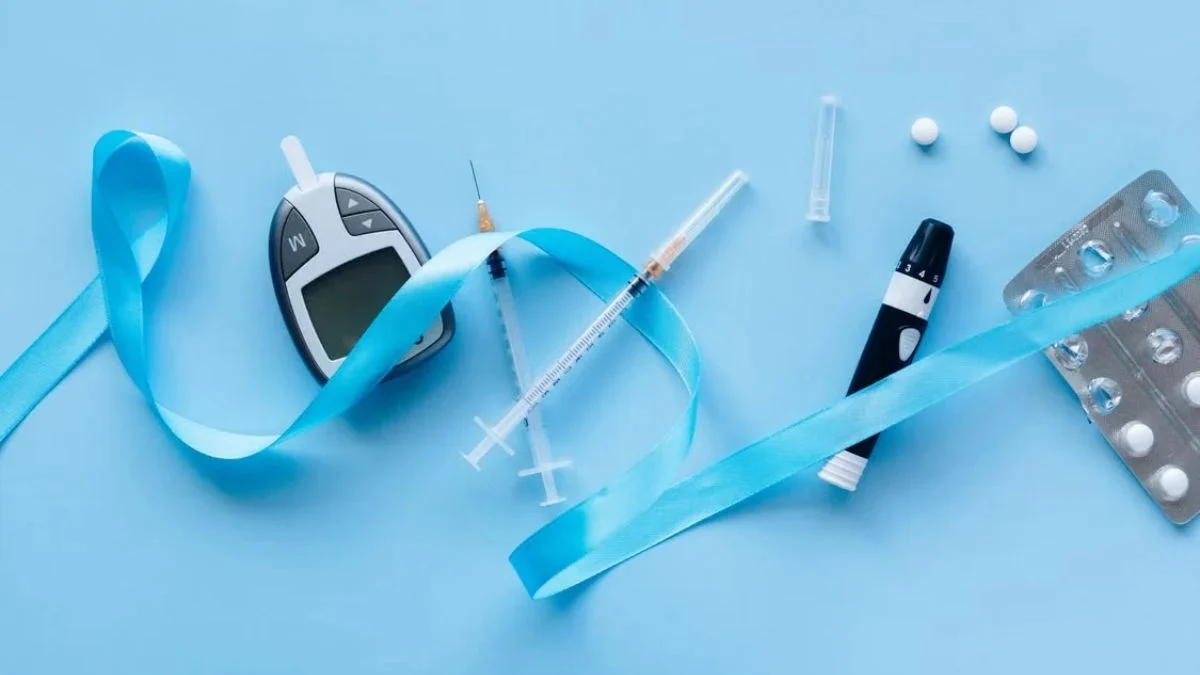
A Maryland man’s account of losing his sight after taking Ozempic has brought renewed attention to questions surrounding semaglutide and a rare eye condition linked to sudden vision loss. Todd Engel, who was taking the medication to manage type 2 diabetes, says the condition changed his ability to work, live independently and enjoy time with his family.
Engel has now taken legal action against Novo Nordisk, alleging that patients and doctors were not adequately warned about the potential risk. His case comes as regulators in Europe and the UK acknowledge a possible association between semaglutide and non-arteritic anterior ischemic optic neuropathy (NAION), while other research has produced conflicting findings.
Todd Engel Says Ozempic Was Followed by Vision Loss
Engel, 63, told Fox News that he first noticed a problem on New Year’s Eve 2024. He had finished showering and was getting ready for work when he realised he could no longer see out of his right eye.
“I first noticed it on New Year’s Eve, 2024. I had just gotten out of the shower, was getting ready to go to work. And I said to Shelley, ‘I can’t see in my right eye. It’s totally black. It’s totally dark in my right eye.’”
The sudden change left him frightened and distressed.
“I was horrified. I was very, very upset that I couldn’t see.”
Engel underwent further medical testing, including an evaluation at Johns Hopkins’ Wilmer Eye Institute. Doctors told him he had experienced NAION, a condition sometimes described as an “eye stroke”.
NAION involves reduced blood flow to the optic nerve and can cause sudden, usually painless vision loss. It generally affects one eye at a time, and the resulting damage can be permanent.
According to Engel, his initial tests did not reveal an obvious explanation for what had happened.
“The blood work came back in the normal range for me. My blood pressure was fine. They said, ‘You can go back to work.’”
He continued taking Ozempic because, according to his family’s account, neither he nor his doctors knew of a possible association between semaglutide and NAION at the time.
Curious About Health Claims Online?
A viral “pinky test” for dementia has circulated on TikTok, and the coverage asks whether it is really a measure of brain health. For the fact-check, see our TikTok pinky test dementia fact-check report.
His Second Eye Was Affected Around 10 Months Later
The situation became even more devastating when Engel experienced similar symptoms in his left eye around 10 months after losing vision in his right eye.
“At that point in time, losing sight in both eyes, there was a tremendous amount of concern.”
Doctors subsequently told him that no medication or surgical procedure could reverse the damage and restore his lost vision. Engel stopped taking Ozempic after the second episode.
Describing the impact on his life, he said:
“I didn’t go blind — I had my vision taken from me, which was catastrophic to me and to my family.”
Engel’s account describes a severe personal experience, but it does not independently establish that Ozempic caused his condition. The potential relationship between semaglutide and NAION remains the subject of scientific investigation and regulatory review.
Why Is Todd Engel Suing Ozempic Manufacturer Novo Nordisk?
Engel has filed a lawsuit against Novo Nordisk, alleging that the company failed to provide adequate warnings to patients and healthcare professionals about a possible connection between semaglutide and vision loss.
Fox News reported that Engel is among hundreds of patients pursuing legal action against manufacturers of GLP-1 medicines over alleged NAION-related injuries. These lawsuits contain allegations that must be distinguished from established medical findings; their existence does not prove that a particular medication caused an individual’s injury.
The dispute also raises questions about differences between US and European product warnings.
Jonathan Orent, an attorney for the Engel family and co-lead counsel in nationwide litigation involving GLP-1 drugs, said the family wants the US Ozempic label to include a warning similar to the information provided in Europe.
“It’s amazing what just a simple warning can do. That’s really what this case is about. It’s about information.”
The family’s argument centres on whether more explicit information could help patients and doctors make informed decisions about treatment.
European Regulators Recognise NAION as a Very Rare Semaglutide Side Effect
In June 2025, the European Medicines Agency’s Pharmacovigilance Risk Assessment Committee concluded that NAION is a very rare side effect of semaglutide.
The finding applies to semaglutide medicines including Ozempic, Rybelsus and Wegovy. The EMA said its review considered clinical-trial data, post-marketing reports, epidemiological studies and medical literature.
Several large epidemiological studies indicated an approximately two-fold increase in the relative risk of NAION among adults with type 2 diabetes exposed to semaglutide. According to the EMA, this corresponds to approximately one additional case per 10,000 person-years of treatment.
European Ozempic product information now lists NAION as a very rare adverse reaction. It also advises patients experiencing sudden vision loss or rapidly worsening eyesight to seek medical attention without delay. If NAION is confirmed, semaglutide should be stopped, according to the product guidance.
The UK’s Medicines and Healthcare products Regulatory Agency issued a safety update in February 2026. It likewise stated that NAION had been very rarely reported in association with semaglutide and recommended urgent ophthalmological assessment for patients experiencing sudden vision loss.
The MHRA acknowledged that the evidence was not entirely consistent but adopted the European recommendation to update semaglutide product information.
What Does the 2026 Ozempic Eye-Risk Research Show?
Despite the regulatory warnings, research has not reached a unanimous conclusion about whether GLP-1 medicines increase the risk of NAION.
A pooled analysis published in the British Journal of Ophthalmology in 2026 examined randomised, placebo-controlled trials involving semaglutide and liraglutide. It included 96,829 participants and 205,777 participant-years of observation.
Researchers identified eight ophthalmologist-confirmed NAION cases across the trials.
| Research finding | Reported result |
| Total participants | 96,829 |
| Observation period | 205,777 participant-years |
| Confirmed NAION cases | 8 |
| Cases among GLP-1-treated participants | 3 |
| Cases among placebo participants | 5 |
| Incidence among GLP-1-treated participants | Approximately 3 per 100,000 person-years |
| Incidence among placebo participants | Approximately 6 per 100,000 person-years |
The researchers concluded that the randomised-trial data did not show an increased incidence of NAION among participants receiving GLP-1 receptor agonists compared with those receiving a placebo.
All confirmed NAION cases among GLP-1-treated participants had one or more additional risk factors, including factors such as age over 50, obesity, smoking, dyslipidaemia or hypertension.
However, the researchers acknowledged an important limitation: the trials were not specifically designed or statistically powered to detect a very rare condition such as NAION. The findings therefore do not conclusively settle the question of risk.
Other Studies Continue to Report Conflicting Findings
Additional research published in 2026 has added to the uncertainty.
A systematic review and meta-analysis of observational studies involving more than 5.9 million participants found an association between semaglutide use and NAION. Its authors said further randomised clinical trials would be needed to establish a clearer conclusion.
Another 2026 meta-analysis focusing on people with type 2 diabetes also reported an increased association between semaglutide and NAION in observational data.
These results differ from the pooled randomised-trial analysis. Observational studies can examine large real-world populations, but their findings may be affected by differences between people who receive a particular medicine and those who do not. Randomised trials generally offer stronger control over such differences, although they can struggle to identify very rare adverse events.
A 2026 consensus statement from the North American Neuro-Ophthalmology Society and the American Academy of Ophthalmology similarly noted conflicting observational findings and said the overall magnitude of any potential NAION risk remained low.
The evidence therefore does not support a definitive claim that Ozempic has been proven to cause blindness. Nevertheless, European and UK regulators have recognised the potential association strongly enough to introduce or recommend warnings.
Novo Nordisk Disputes That Semaglutide Causes NAION
Novo Nordisk has rejected the allegation that semaglutide has been established as the cause of NAION.
Liz Skrbkova, head of US Media and Stakeholder Relations for Novo Nordisk, told Fox News Digital:
“A causal relationship between GLP-1RAs, including semaglutide, and NAION cannot be confirmed based on the totality of data.”
The company pointed to its analysis of randomised, placebo-controlled clinical trials, which identified very few confirmed NAION cases and found no increased incidence among participants receiving semaglutide.
Novo Nordisk has also said it continues to monitor NAION through routine drug-safety surveillance.
Skrbkova added:
“Novo believes the personal injury lawsuits filed in the U.S. are without merit, and we are defending them in court.”
The current US Ozempic prescribing information does not list NAION in the same way as the updated European product information. This difference in regulatory labelling is central to the concerns raised by Engel’s legal team.
How Losing His Sight Changed Engel’s Career and Family Life
Before his vision loss, Engel worked for Howard County Highways as a heavy equipment operator and truck driver. Fox News reported that he had spent around 40 years in the field and held a commercial driver’s licence for nearly as long.
He says he can no longer continue the work that defined much of his professional life.
“I was extremely mechanically inclined with my hands and in my mind. I can’t do that anymore, which is extremely upsetting to me.”
He also described the frustration of losing the ability to decide when to retire.
“People want to be able to retire on their own accord when they want to, not when a medical catastrophic injury such as this … takes away your livelihood.”
Everyday activities have become more difficult, too. Engel was an avid reader but can no longer read newspapers, magazines or books. To move around his home, he has memorised the number of steps between familiar locations.
“I know that coming in from our parking lot, there are 10 steps … nine going down into our basement, 13 going up into our bedroom.”
He now uses a white cane outside and relies on family members for assistance. His grandchildren help guide him by taking his hand and explaining where to walk.
“They will take me by my hand and talk to me: ‘Pops, three steps straight. Then we’re gonna turn right.’”
Engel also spoke about the emotional difficulty of needing help with basic navigation.
“For me personally, it’s embarrassing. I’m 64 years old. I shouldn’t need … my grandchildren or my wife to help me get from point A to point B.”
Fox News identified Engel as 63 in its October 15, 2026 report, although he referred to himself as 64 in this quoted statement. His age in the quotation has been preserved as spoken.
His wife, Shelley Engel, said the effects have reached every part of their family life.
“It has completely changed every aspect of our lives. There is not one piece of our lives that hasn’t changed or been touched by this throughout our whole family.”
Engel said losing his sight also means he will no longer be able to see his wife, watch his grandchildren grow or play ball with them.
“I will never be able to see my wife’s beautiful face again, be able to see children and grandchildren, be able to play ball with them,”
He added:
“And that is very, very upsetting to me.”
Describing his daily reality, Engel said:
“I wake up in the dark, I go to sleep in the darkness.”
Engel Warns Ozempic Users to Research Potential Risks
Engel believes he might have made a different treatment decision if he had known about the possible association between semaglutide and NAION.
“Had I known, had my doctor had any inkling that this could have happened … I’m sure he would have asked me and I would have said absolutely not.”
He continued:
“I will deal with the diabetes … I refuse to jeopardize my eyes.”
Engel urged other patients to investigate potential risks and speak with healthcare professionals about their treatment.
“Do the research for yourselves to make sure that my catastrophic injuries do not happen to you or anybody else.”
He also explained why he and his wife have chosen to share their experience.
“If we can help one person, then that’s a pleasure to Shelley and I.”
His warning arrives amid an ongoing debate about whether semaglutide increases the risk of NAION and, if so, by how much. Patients taking semaglutide should not interpret Engel’s experience as proof that the medication will cause blindness, but the regulatory guidance makes awareness of sudden vision changes important.
Anyone experiencing sudden vision loss or rapidly worsening eyesight while taking semaglutide should seek urgent medical evaluation. European guidance specifically recommends stopping the medicine if NAION is confirmed.
Conclusion
Todd Engel’s lawsuit against Novo Nordisk highlights the serious consequences of his reported vision loss and raises questions about whether patients in the United States receive sufficient information about rare potential risks. European and UK regulators recognise NAION as a very rare possible adverse effect of semaglutide, while a major 2026 analysis of randomised trials found no increased incidence compared with placebo.
The scientific evidence remains mixed, and a causal connection has not been established by the available findings. Engel’s allegations will be addressed through the legal process, while ongoing research and regulatory monitoring continue to shape understanding of the potential risk.
Following the Perez Hilton Update
Perez Hilton was reported to have been hospitalised after a mental health crisis, according to coverage that includes a statement from him about a difficult day for his family. For the reported details, see our Perez Hilton hospitalisation report.
Source and Research Disclaimer
This article has been prepared using the reporting, regulatory information, medical research and source links provided below. It reflects the information available in those materials and does not imply independent verification beyond them. Allegations in ongoing litigation are presented as allegations, and the scientific evidence concerning semaglutide and NAION remains under evaluation.
Sources
- Fox News: Todd Engel’s Ozempic vision-loss lawsuit and interview
- European Medicines Agency: PRAC conclusion on NAION and semaglutide medicines
- EMA: Current Ozempic product information
- UK MHRA: Semaglutide and risk of NAION safety update
- British Journal of Ophthalmology: 2026 randomised-trial analysis of NAION and semaglutide/liraglutide
- PubMed: 2026 pooled analysis of placebo-controlled trials
- North American Neuro-Ophthalmology Society/American Academy of Ophthalmology consensus statement
- PubMed: 2026 systematic review and meta-analysis of semaglutide and NAION
- FDA: 2026 Ozempic prescribing information
Featured Image Credit: Nataliya Vaitkevich / Pexels


Leave a Reply