

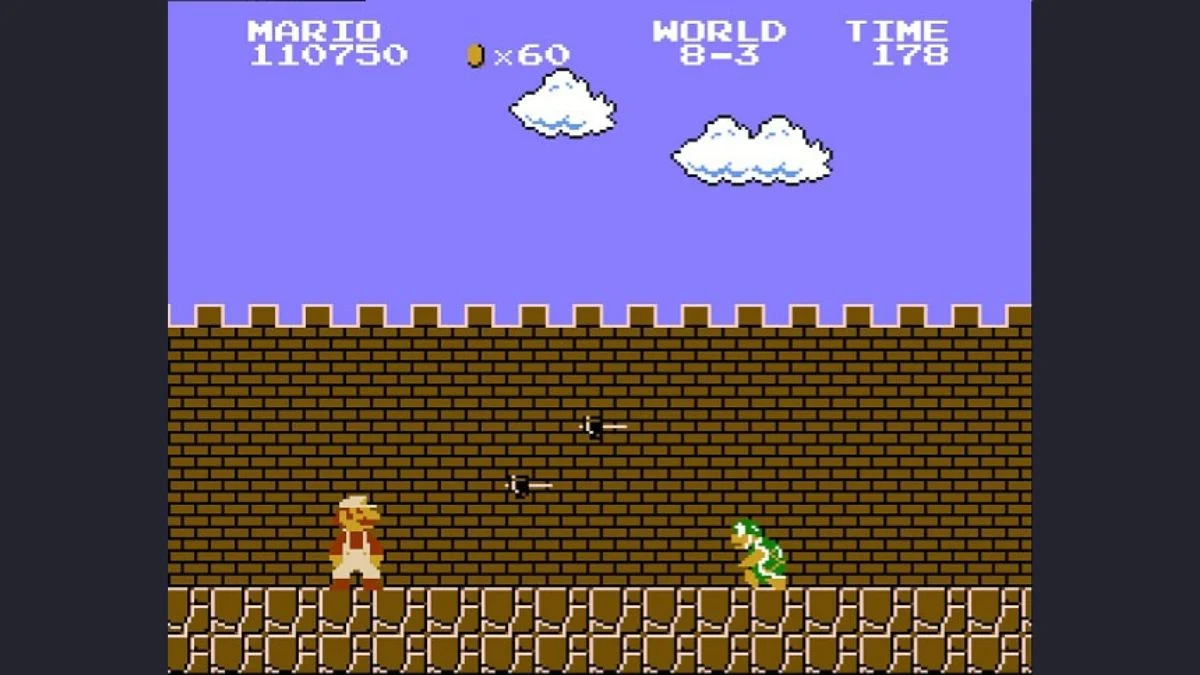
Some games age.
Others somehow keep a direct connection to the person you were when you first played them.
You can forget an old password, lose touch with people you once knew, or struggle to remember what you had for breakfast yesterday. Then a familiar game boots up, the music starts, and suddenly everything comes rushing back—the menus, sound effects, controller, the room you were sitting in and even the feeling of waiting for your turn.
That is exactly why retro games remain so powerful.
They are not simply older versions of modern games. They are playable time machines, carrying memories of blowing into cartridges, waiting for a memory card to save, trading Pokémon with friends, fighting over an arcade cabinet or desperately trying to finish one more level before someone told you it was time to switch the console off.
So, if you want to revisit the games that helped define childhood gaming memories, here are 11 retro classics worth loading up again.
1. Super Mario World
Let’s start with one that practically screams childhood: Super Mario World.
Released for the Super Nintendo Entertainment System in 1990, it became Mario and Luigi’s first SNES adventure. Nintendo’s historical material describes the game as taking place in Dinosaur Land, where players encounter colorful environments, secrets, hidden paths, secret exits, new power-ups and the unforgettable Yoshi.
And honestly, the secrets are a huge part of the magic.
You could be running through a normal level, spot a suspicious pipe and immediately think, Wait… what’s in there?
Suddenly, the straightforward platforming adventure became an exploration mission.
You could stumble into secret areas, discover alternate routes and experiment with Yoshi, who could swallow enemies and give the adventure an entirely different feel.
Then comes the Cape Feather.
Once Mario takes flight, you suddenly have a completely different toy to play with. You might have a perfectly sensible objective waiting for you, but spending an afternoon figuring out how far Mario can fly is way more tempting.
That’s what makes Super Mario World such a strong nostalgia trip. Even after years away, the controls and basic rhythm can feel instantly familiar.
You don’t just remember the game.
You remember playing it.
Nostalgic heroes aren’t the only kind of character worth celebrating on a list like this. Sometimes playing the bad guy is just as memorable as saving the day. Check our roundup of 11 Best Games Where You Play as the Vilain
2. Pokémon Red and Blue
If someone asks you about your first Pokémon team, chances are you can remember at least some of it with ridiculous precision.
Your starter.
Your first catch.
The Pokémon you desperately wanted.
The creature you could never seem to find.
Or perhaps the Pokédex entries you were determined to complete.
Pokémon Red and Blue transformed collecting, battling and exploration into a shared childhood experience.
The original Pokémon games launched in Japan in 1996 before arriving internationally. Red and Blue introduced players to the Kanto region and the original generation of Pokémon, with Nintendo’s historical material highlighting exploration, battling, trading and Pokédex completion as major parts of the experience.
But trading was where things became especially personal.
You might have Pokémon your friend didn’t have, while your friend had something you desperately wanted.
Suddenly, the playground, classroom or living room became an unofficial Pokémon exchange.
And back then, discovering things was part of the adventure.
You didn’t necessarily have every answer sitting in front of you. You experimented. You asked friends. You learned through trial and error.
That mystery gave the original games a special charm.
Pokémon eventually became a massive global franchise, but returning to those original Game Boy adventures can still remind you just how much imagination could fit inside one tiny cartridge.
3. The Legend of Zelda: Ocarina of Time
Some retro games make you remember a level.
The Legend of Zelda: Ocarina of Time makes you remember an entire world.
Released for Nintendo 64 in 1998, the game transformed the familiar Zelda formula into a 3D adventure packed with dungeons, characters, secrets and exploration.
Nintendo’s current Zelda history places the Nintendo 64 release on December 12, 1998, with Link’s journey centered on summoning the sages and saving Hyrule from Ganondorf.
For players experiencing that world at the time, stepping into Hyrule Field could feel enormous.
This wasn’t a world you simply looked down upon from above.
You could run through it.
You could ride across it.
You could approach a distant structure and wonder what was waiting for you.
And then there was the music.
The ocarina is obviously central to the adventure, but the soundtrack became something much bigger than background noise. Certain melodies can still transport players directly back to specific locations in Hyrule.
Maybe you have forgotten a puzzle solution.
Maybe a particular dungeon has disappeared from your memory.
But when that familiar world appears again, the memories start loading themselves.
That’s the real nostalgia hit.
Retro adventures aren’t the only genre that can pull you in emotionally. Sometimes a great story needs a great love interest to really stick with you. Read our list of 11 Best Games With Romance That Make Your Adventure Even Better
4. Super Mario 64
Before Super Mario 64, Mario was already one of gaming’s biggest icons.
After it arrived, 3D platforming suddenly felt like a completely different playground.
Nintendo released Super Mario 64 alongside the Nintendo 64 in 1996, making it Mario’s first 3D adventure. The game introduced large 3D environments and made extensive use of the N64’s analog stick for movement.
And that movement changed everything.
Instead of simply running from one side of a level to another, you entered paintings, explored different environments and hunted for stars while learning how Mario behaved in three-dimensional space.
Let’s be real: half the fun could be messing around.
Jump.
Dive.
Swim.
Climb.
Bounce.
Run around Peach’s castle.
Experiment with movement just because you could.
The castle itself felt like a playground.
Even today, walking into it can trigger a strangely specific memory—the feeling of holding that N64 controller and realizing that Mario could suddenly move in practically every direction.
That first experience is hard to replicate.
5. Sonic the Hedgehog 2
Mario had the Mushroom Kingdom.
Sega had speed.
Sonic the Hedgehog 2 arrived in 1992 and delivered one of Sonic’s most memorable adventures while introducing Tails as a playable companion.
Sega’s official Sonic material confirms the 1992 release and notes that Tails could assist Sonic or compete with him in split-screen racing.
And speed was the entire vibe.
You could tear through a level collecting rings, launch from springs, fly down slopes and attempt to keep Sonic moving without smashing into an obstacle that you absolutely should have noticed.
Then came the special stages.
For an entire generation of players, Sonic 2 represented Sega’s personality: bright colors, memorable music and an almost relentless sense of momentum.
The multiplayer element added another layer.
Playing Sonic with someone else made the experience feel social rather than solitary. Tails could join the adventure, turning the game into something you experienced together.
And that’s a major part of why Sonic the Hedgehog 2 remains such a strong retro memory.
Childhood classics aren’t the only games worth carving out time for. Plenty of smaller studios are putting out standout titles right now that deserve just as much attention. Check out our guide to 11 Best Indie Games of 2026 So Far: The Ultimate Guide to the Standout Games You Should Play
6. Tetris
Retro gaming nostalgia does not require impressive graphics.
Tetris proves it.
Created by Alexey Pajitnov in 1984, the original game centered on falling geometric pieces that players had to rotate, move and arrange to clear lines.
The official Tetris history traces the game’s origins to Moscow and its eventual spread across countless platforms worldwide.
The concept is almost hilariously simple.
Pieces fall.
You arrange them.
Lines disappear.
Repeat.
And somehow, you can lose an entire afternoon to it.
The sound effects and music became part of the memory too. Sometimes you can practically hear that familiar rhythm before the game is even on screen.
The Game Boy version became especially important to retro gaming culture. Tetris was included with Nintendo’s handheld at launch, and Nintendo’s historical material confirms the 1989 Game Boy release. The Tetris Company says the Game Boy version eventually sold more than 35 million copies.
Modern Tetris has plenty of variations, but sometimes the nostalgia hit comes from the basics.
Just give me the blocks.
7. Pac-Man
Before open-world games gave us enormous maps and cinematic stories, an evening of gaming could involve nothing more complicated than guiding a yellow circle through a maze.
That’s Pac-Man.
You move through the maze.
Collect the dots.
Grab power-ups.
Avoid the ghosts.
That’s essentially the entire concept.
Yet that simple formula became one of gaming’s most recognizable experiences.
Arcade nostalgia works differently from modern gaming nostalgia. There are no giant character builds or skill trees demanding your attention. You’re focused on one thing: beating your previous score.
Then you make a mistake.
Game over.
Try again.
That loop is incredibly effective because almost anyone can understand Pac-Man within seconds.
Hand someone the controls and they immediately understand what they’re supposed to do.
Sometimes nostalgia isn’t about remembering complicated mechanics.
It’s about remembering how much fun a simple idea could deliver.
8. Final Fantasy VII
Not every nostalgic game takes you back to carefree afternoons.
Some remind you of the first time a video game felt like a genuinely massive story.
Final Fantasy VII arrived on PlayStation in 1997 and became a defining RPG for a generation of players.
Its original PlayStation release helped bring Cloud, Midgar and the game’s sprawling story to an international audience, while the original game remains available today in updated form.
For many players, this was their first experience with a Japanese RPG on this scale.
The characters felt important.
The world felt enormous.
The story kept moving from one surprising location to another.
And then there was Cloud.
Even people who have never played the original can probably recognize the spiky hair and enormous sword.
But the nostalgia comes from the time investment.
This wasn’t necessarily a game you finished during one quick afternoon session. You lived with it.
You learned its characters.
You remembered its locations.
You became invested in what happened next.
That’s why returning to the original Final Fantasy VII can feel less like replaying an old game and more like opening a book you haven’t touched in years.
9. Metal Gear Solid
There was a time when a game attempting something cinematic could feel genuinely surprising.
Metal Gear Solid was one of those games.
Konami released it for PlayStation in 1998, bringing Solid Snake into a fully 3D adventure while continuing the series’ focus on tactical infiltration. Konami describes it as a landmark title that brought the series’ core design into a real-time, full-polygon 3D environment.
But the technology isn’t necessarily what players remember most.
It’s the atmosphere.
The conversations.
The strange characters.
The dramatic scenes.
The sense that something much larger was unfolding around you.
Metal Gear Solid also made players feel clever.
Sometimes charging forward wasn’t the solution.
Sometimes patience and observation were more important.
Successfully getting through an area could feel like an achievement because the game encouraged you to think about how you approached the situation.
And then there are the moments that became part of gaming culture.
Mention Solid Snake to someone who played the game during that era and there is a good chance they’ll immediately remember the voice, the sneaking and the unmistakable atmosphere.
10. Tony Hawk’s Pro Skater 2
You didn’t need to know how to skateboard to become a skating legend in Tony Hawk’s Pro Skater 2.
That was the beauty of it.
Released in 2000, the game expanded on its predecessor with skating, exploration, objectives and increasingly ridiculous tricks.
Activision’s corporate history identifies Tony Hawk’s Pro Skater 2 as part of the series that followed its original Tony Hawk game after the company licensed Hawk’s name and likeness in the late 1990s.
But the tricks weren’t the only thing players remember.
The soundtrack was a massive part of the experience.
You could load into a level, hear the right song and immediately feel like playing for another hour.
Then came the objectives.
One more collectible.
One more challenge.
One more trick combination.
One more attempt to land something ridiculous.
Tony Hawk’s Pro Skater 2 captured the fantasy of being dramatically better at skating than you might ever be in real life.
Maybe you couldn’t land a complicated trick on an actual skateboard.
Inside the game?
You could become a superstar.
11. Street Fighter II: The World Warrior
And then there’s the game that could turn a casual gathering into a full-blown rivalry.
Street Fighter II: The World Warrior made arcade competition a social event.
Released in the early 1990s, the game featured a colorful roster of fighters with distinct moves, personalities and fighting styles. The original source material highlights Ryu, Ken, Chun-Li, Guile, E. Honda and Dhalsim, while GamesRadar’s retrospective notes how Street Fighter II helped establish conventions that would shape the fighting-game genre.
But the real memories often begin after the match.
You win.
Someone wants a rematch.
They choose another fighter.
You choose someone else.
Another match begins.
Suddenly, what was supposed to be a quick game has become an hour-long competition.
That’s the magic of retro multiplayer.
The game didn’t need a huge story campaign to become unforgettable. You needed two people, two fighters and enough confidence to believe you could finally defeat the person who had been destroying you all afternoon.
And when you finally pulled it off?
That victory felt enormous.
Nostalgia isn’t the only mood worth building a gaming list around. If you’re looking for something to play this fall, there’s a whole lineup of frights waiting for you. For more, check our roundup of 11 Best Horror Games to Play on Halloween: Silent Hill 2, REANIMAL, Halloween: The Game & More
Why These Retro Games Still Hit So Hard
Modern games can create enormous worlds with detailed graphics, cinematic storytelling and reactive environments that earlier generations could barely imagine.
But technological progress doesn’t erase what made older games special.
Super Mario World shows how much personality and discovery can fit into a 2D platformer. Pokémon Red and Blue turned collecting into a social experience. Ocarina of Time and Super Mario 64 captured the excitement of stepping into 3D worlds.
Sonic the Hedgehog 2 turned speed into pure joy, while Tetris proved that an idea doesn’t need complicated mechanics to remain timeless.
Then you have Final Fantasy VII, Metal Gear Solid, Tony Hawk’s Pro Skater 2 and Street Fighter II, each creating a different kind of gaming memory.
That’s ultimately what makes retro gaming nostalgia so powerful.
We don’t only remember what we played.
We remember who we were when we played it.
Maybe your memory is a Game Boy during a long car journey.
Maybe it is a console sitting underneath the family television.
Maybe it’s an arcade cabinet surrounded by friends.
Or maybe it’s staying up later than you were supposed to because you were absolutely determined to finish one more level.
The graphics might look older now.
The loading screens might feel painfully long.
The controls might take a few minutes to remember.
Then the music starts.
And suddenly, you’re back there.
Disclaimer
This is an opinion-based nostalgia feature. The selection reflects the cultural impact, lasting memories and nostalgic appeal of these games rather than a definitive ranking of the greatest games ever made.
Featured Image Credit: Nintendo


Leave a Reply