

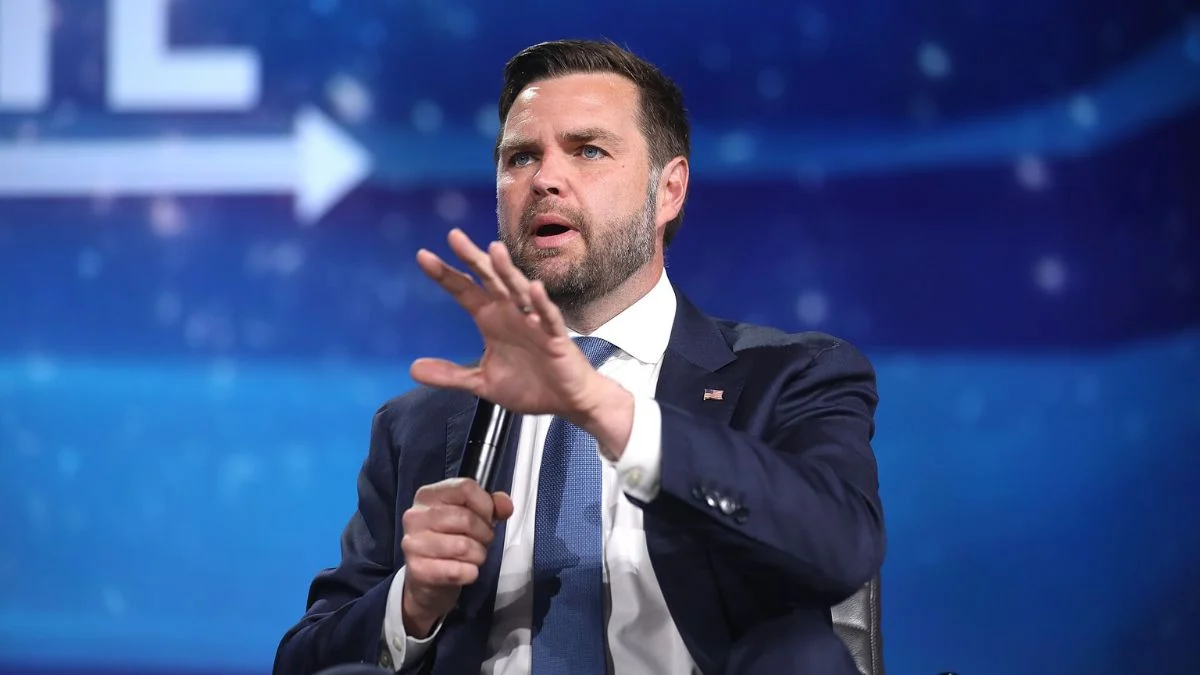
Microsoft’s H-1B visa figures have become a focal point in the Trump administration’s immigration crackdown, raising questions about whether visa approvals can demonstrate that American workers were replaced by foreign employees. The dispute intensified after Vice President JD Vance linked the company’s workforce reductions to its use of employment-based immigration programmes.
The controversy took another turn on October 8, 2026, when the US Department of Labor suspended eight companies from its permanent labour-certification programme. Microsoft’s response and the available visa data, however, reveal why the relationship between layoffs, H-1B approvals and green-card applications requires closer examination.
Why the US Government Suspended Microsoft and Seven Other Companies
On October 8, the US Department of Labor suspended eight companies from participating in the Permanent Labour Certification, or PERM, programme as part of the administration’s broader scrutiny of employment-based immigration.
The affected companies are:
- Microsoft
- Adobe
- Cognizant
- Infosys
- Tata Consultancy Services
- Wipro
- HCL Technologies
- Capgemini
PERM forms part of the employment-based green-card process. Employers generally must establish that there are not sufficient qualified, willing and available US workers for a particular position and that employing a foreign worker will not adversely affect the wages and working conditions of similarly employed American workers.
Once a labour certification is approved, an employer can proceed with the subsequent stages of the employment-based immigration process.
Under the announced suspension, the affected companies cannot have new PERM applications accepted or pending applications processed under the administration’s action. However, the suspension does not automatically cancel existing H-1B visas or prevent workers who already hold H-1B status from continuing to do so.
This distinction is important because PERM and H-1B serve different purposes within the US employment-based immigration system. One concerns a stage of the permanent-residency process, while the other provides temporary employment authorisation for eligible foreign professionals.
The administration has justified its crackdown by alleging that companies have misused foreign-worker programmes while reducing their American workforces. Microsoft became a particular focus after Vance raised concerns about its layoffs and H-1B approvals.
Another Immigration Case
Former NFL linebacker Daniel Adongo’s reported deportation provides another example of immigration enforcement involving an individual rather than a corporate visa programme. For a separate case timeline, see our Daniel Adongo ICE deportation report.
What JD Vance Said About Microsoft’s Layoffs and H-1B Visas
Vance argued that Microsoft’s workforce reductions, considered alongside its use of H-1B visas, demonstrated that American workers were being replaced by foreign employees.
According to Vance, Microsoft laid off approximately 6,000 American workers while obtaining around 6,300 H-1B visas and nearly 3,000 green cards. He used those figures to argue that the company’s workforce reductions were connected to its reliance on foreign labour.
Vance stated:
“You cannot lay off American workers and then replace them with foreign indentured servants.”
He also argued that his comparison of the figures showed Microsoft had effectively replaced laid-off American workers with foreign H-1B employees.
However, these statements represent Vance’s allegations and interpretation of the available data. They do not establish that Microsoft replaced each laid-off American employee with an H-1B worker.
The distinction matters because an H-1B approval does not necessarily represent a newly recruited employee. Some approvals concern people who already work for the sponsoring company and need their immigration status extended or changed.
To assess Vance’s claim, it is therefore necessary to examine what Microsoft said about its applications and what the available approval figures actually measure.
Microsoft’s Response: Most H-1B Applications Were Not for New Hires
Microsoft challenged the administration’s characterisation of its employment and immigration practices in a statement published on October 8.
The company said the vast majority of its US employees are Americans. It also explained that approximately 80% of the roughly 6,000 H-1B applications it submitted during the last fiscal year concerned existing employees whose immigration status was being extended or changed.
Microsoft stated:
“These were not to hire new people.”
According to the company, the remaining filings for new employees involved individuals who were already legally in the United States and chose to join Microsoft. Those filings represented approximately 1% of its US workforce.
Microsoft also disputed suggestions that it uses H-1B workers as cheaper replacements for American employees. The company said it pays H-1B employees the same as other employees performing comparable work and that its H-1B wages rank among the highest in the programme.
These statements present Microsoft’s position in the dispute. They do not, by themselves, resolve the wider debate over employment-based immigration or independently establish the circumstances surrounding each workforce reduction.
Nevertheless, they highlight a key limitation in comparing layoffs directly with visa approvals: the two figures do not necessarily count the same type of employment event.
Microsoft H-1B Approvals in FY2025: How the Numbers Compare
Data from the US Citizenship and Immigration Services (USCIS) Employer Data Hub, as cited by CNBC, places Microsoft among the largest H-1B sponsors in fiscal year 2025.
The reported approval figures for three major technology companies were:
| Company | FY2025 H-1B approvals |
| Amazon | 19,178 |
| Meta | 6,294 |
| Microsoft | 6,258 |
Amazon recorded more than three times Microsoft’s total, while Meta also had slightly more approvals.
Neither Amazon nor Meta was included among the eight companies suspended from the PERM programme.
The comparison does not establish that any of these companies violated immigration or labour requirements. Instead, it raises questions about whether total H-1B approval numbers alone can explain the government’s selection of employers for suspension.
The figures also need to be interpreted in the context of continuing employment. CNBC’s analysis found that roughly two-thirds of Microsoft’s FY2025 approvals went to people who were already working for the company.
That finding differs from Microsoft’s separate statement that approximately 80% of the roughly 6,000 applications it submitted during the last fiscal year concerned existing employees. The two figures come from different descriptions of applications and approvals and should not be treated as interchangeable measurements.
Both nevertheless challenge the assumption that every approval represents a new employee joining Microsoft.
Why H-1B Approvals Do Not Prove That Laid-Off Workers Were Replaced
The central issue in the Microsoft dispute is the difference between immigration approvals and new hiring.
An H-1B approval may involve an existing employee seeking an extension or a change in immigration status. Consequently, the total number of approvals cannot automatically be interpreted as the number of foreign workers newly recruited by a company.
There is also a timing issue. Visa applications, approvals, layoffs and hiring decisions do not necessarily occur simultaneously. An approval may relate to an immigration process that began before a particular workforce reduction, while the affected positions may involve different teams, responsibilities or skill sets.
For these reasons, comparing approximately 6,000 layoffs with 6,258 H-1B approvals does not establish that the people who lost their jobs were replaced by H-1B workers.
The available aggregate figures demonstrate that Microsoft is a major H-1B sponsor and that it has carried out significant workforce reductions. They do not, on their own, establish a direct, individual-level connection between the two.
Determining whether particular American employees were replaced would require evidence connecting specific employment decisions to subsequent hiring or staffing arrangements. The supplied aggregate figures do not provide that evidence.
Amazon’s Higher H-1B Total Adds Another Dimension
Amazon’s 19,178 H-1B approvals provide another point of comparison in the debate.
Despite recording substantially more approvals than Microsoft in FY2025, Amazon was not among the eight companies suspended from PERM. Meta, with 6,294 approvals, was also outside the group.
CNBC’s analysis further found that Amazon brought in nearly four times as many H-1B workers who were new to the company as Microsoft did.
This distinction between new workers and existing employees adds context to the overall approval totals. It also shows why total approvals alone do not explain the administration’s decision to suspend the eight selected companies.
The government has pointed to additional concerns and ongoing investigations in announcing its action. The available figures, however, do not independently establish the reasons for every company’s inclusion or demonstrate wrongdoing by companies that were or were not suspended.
What the PERM Suspension Means for Foreign Workers
The suspension also has implications for foreign professionals employed by the affected companies, particularly those progressing towards permanent residency in the United States.
Microsoft, Adobe and the six IT services companies cannot have new PERM applications accepted or pending applications processed under the announced action. This directly affects the labour-certification stage of the employment-based green-card process.
However, the measure does not automatically terminate existing H-1B status. Workers already employed by these companies should not be assumed to have lost their temporary work authorisation simply because their employers were suspended from PERM.
The distinction is particularly relevant to Indian technology professionals because several affected employers, including Infosys, Tata Consultancy Services, Wipro and HCL Technologies, are major Indian IT services companies with substantial US operations.
The longer-term implications will depend on the progress of the investigations and whether the administration takes additional action against the companies or changes employment-based immigration rules.
US Universities Also Face a Separate J-1 Visa Investigation
The October 8 announcement extended beyond corporate employers.
Anthony D’Esposito, the Labor Department’s inspector general, announced an investigation into alleged J-1 visa fraud involving nine major US universities.
The J-1 exchange-visitor programme is separate from the H-1B employment visa system. The announced investigation forms part of the administration’s wider examination of whether visa programmes are being used in ways that it believes undermine American workers or violate federal requirements.
The investigation concerns allegations, not established findings that the universities committed fraud. It should therefore be distinguished from a final determination of wrongdoing.
Taken together, the corporate suspensions and university investigation demonstrate the broader scope of the administration’s scrutiny of immigration programmes. They do not mean that every employer or institution under investigation has been found to have violated the law.
Conclusion: What Microsoft’s H-1B Data Establishes
Microsoft’s dispute with the Trump administration centres on whether workforce reductions and H-1B approvals demonstrate that American employees were replaced by foreign workers.
Vance has argued that Microsoft’s approximately 6,000 layoffs, around 6,300 H-1B visas and nearly 3,000 green cards support that conclusion. Microsoft, meanwhile, says most of its H-1B applications concerned existing employees and disputes claims that its foreign workers are paid less than comparable employees.
The reported FY2025 figures confirm that Microsoft received 6,258 H-1B approvals, but they do not represent an equivalent number of new hires. Amazon’s higher total and the distinction between new employees and continuing employment further illustrate the limitations of relying on aggregate approval figures alone.
The October 8 PERM suspension places Microsoft and seven other companies under heightened scrutiny, but it does not automatically cancel existing H-1B status. Ultimately, the available figures establish the scale of Microsoft’s participation in the H-1B programme, not proof that it replaced its laid-off American workers with foreign employees.
A look at Social Security’s Future
Social Security’s projected funding shortfall raises questions about the future of retirement benefits and the potential impact on retirees. See the projected figures and possible benefit reductions in our Social Security 2032 benefits explainer.
Source and Research Disclaimer
This article has been prepared using the government and company statements, USCIS-related data and news reports provided in the source material below. It reflects the information available as of October 11, 2026, and distinguishes reported figures, attributed allegations and company responses from established findings. The article does not imply independent verification beyond what the supplied sources support. Immigration policies, investigations and visa statistics may change as further information becomes available.
Sources
- Microsoft’s October 8 statement on H-1B applications
- US Department of Labor: Permanent Labor Certification Program
- US Department of Labor news releases
- CNBC’s analysis of Microsoft’s H-1B data
- Associated Press report on Microsoft’s PERM suspension
- Reuters report on the broader PERM crackdown
- White House press-conference transcript
- The Guardian report on Microsoft’s suspension
- Microsoft 2025 Annual Report
Featured Image Credit: Gage Skidmore from Surprise, AZ, United States of America, CC BY-SA 2.0, via Wikimedia Commons


Leave a Reply