

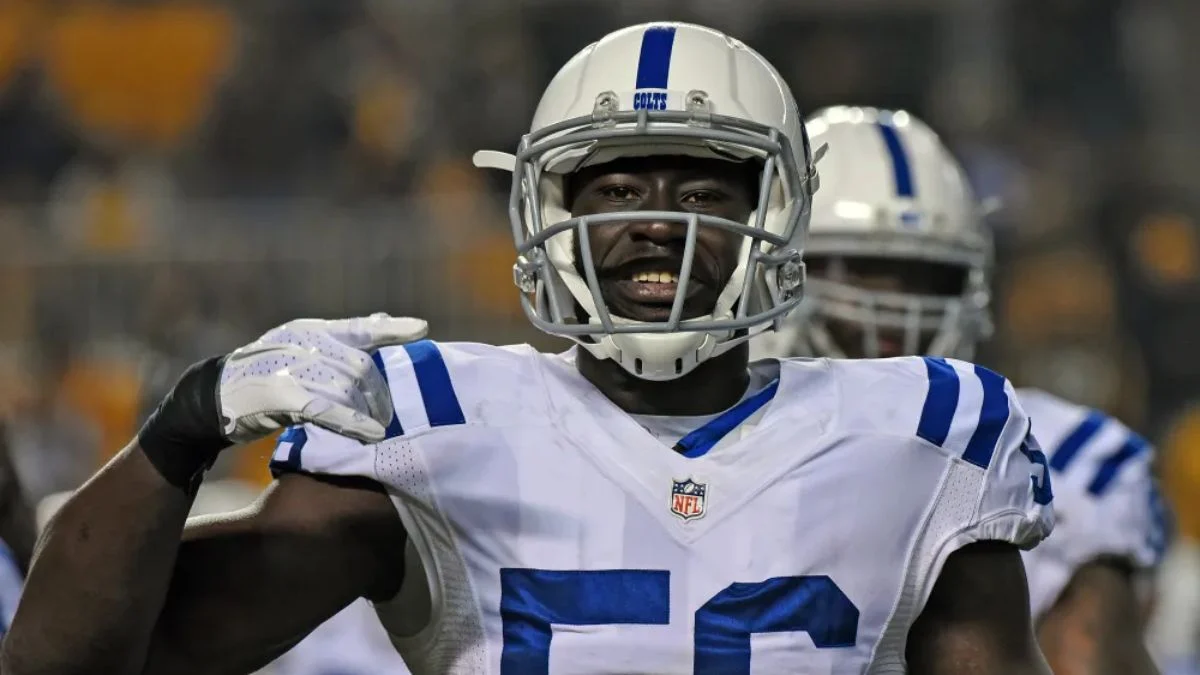
Daniel Adongo, also referred to in some records as Daniel Ojambo Adongo, was once celebrated as the first Kenyan-born player signed by an NFL team after making the unlikely leap from rugby union to American football with the Indianapolis Colts. More than a decade later, however, his story has taken a dramatically different turn.
According to an official U.S. Immigration and Customs Enforcement (ICE) Chicago news release published on July 25, 2026, the 37-year-old Kenyan national was removed from the United States on June 20, 2026, after overstaying his visa and accumulating a criminal record in Indiana. The case has drawn widespread attention because it combines professional sports, immigration enforcement, criminal proceedings, and documented mental health struggles into one highly publicized case.
ICE enforcement actions have made headlines in a range of settings this year, including an unexpected arrest involving airline staff. To know more, read our article Why Was a Southwest Flight Attendant Arrested by ICE at Nashville Airport? What Officials Have Confirmed So Far
From Kenyan rugby star to NFL history-maker
Born on October 12, 1989, in Nairobi, Kenya, Daniel Adongo first established himself as a rugby union player. Before ever playing American football, he competed for South African clubs including the Sharks, Bulls, and Southern Kings, while also gaining experience in New Zealand competitions.
Despite having no prior American football experience, the Indianapolis Colts signed him as an undrafted outside linebacker on July 25, 2013, making him the first Kenyan-born player signed by an NFL franchise.
The Colts viewed him as a long-term developmental prospect, teaching him the fundamentals of football while he spent time on the practice squad before earning promotion to the active roster.
Between 2013 and 2015, Adongo appeared in five NFL games, primarily on special teams, while recording one defensive snap. During his NFL career, he reportedly earned approximately $694,000.
His time with Indianapolis ended in December 2015, when the Colts waived him shortly after police responded to domestic disturbance calls at his home. No charges were filed in those incidents.

Immigration enforcement has also touched everyday travelers and residents in unexpected ways this year, including a British father detained during a routine green card interview. For more on that, read our post British Dad Detained by ICE at Green Card Interview: How Connor Michael Read Went From Family Immigration Appointment to Facing Deportation
Timeline: Daniel Adongo’s journey from the NFL to deportation
| Date | Event | Official Details |
| Pre-2013 | Rugby career | Played for the Sharks, Bulls, Southern Kings and in New Zealand competitions |
| July 25, 2013 | Signed by Indianapolis Colts | Became the first Kenyan-born player signed by an NFL team |
| 2013–2015 | NFL career | Appeared in five games before being waived in December 2015 |
| 2016 | Visa expires | Remained in the United States unlawfully after his visa expired |
| 2015–2025 | Criminal proceedings | Multiple arrests, competency evaluations, psychiatric treatment and one criminal conviction |
| September 2025 | ICE detention | Federal immigration authorities arrested and detained him |
| March 23, 2026 | Removal order | Immigration judge issued a final order of removal |
| June 20, 2026 | Removed from U.S. | ICE Chicago carried out his deportation to Kenya |
| July 25, 2026 | Public confirmation | ICE officially announced the removal |
Immigration enforcement encounters have also turned tragic in other recent cases, including one involving a foreign tourist who died after fleeing ICE agents. To learn more, check out our article Mexican Tourist on Valid Visa Dies After Running From ICE Encounter in Florida as New Details Raise Fresh Questions
Criminal history, immigration status and documented mental health struggles
Following the end of his NFL career, Adongo’s visa expired in 2016, but he remained in the United States unlawfully.
Over the following approximately nine years, Indiana law enforcement arrested him multiple times on allegations including felony intimidation, battery and disorderly conduct. While several charges were later dismissed, he was convicted in 2020 of Class A misdemeanor criminal mischief involving property damage and sentenced to 364 days in jail.
One of the earliest widely reported incidents occurred in 2016, when Indianapolis police arrested him following allegations that he threatened an Uber driver with a hatchet. The resulting intimidation and criminal mischief charges were followed by competency evaluations and psychiatric treatment.
Additional arrests continued in later years, including July 2025 in St. Joseph County, where he faced allegations of intimidation, disorderly conduct and battery resulting in bodily injury.
Court records also document serious mental health concerns. Reports indicate Adongo was diagnosed with schizophrenia, while judges found him incompetent to stand trial on multiple occasions, leading to psychiatric evaluations and hospitalisations.
His mother, Betty Adongo, successfully sought legal guardianship during portions of his legal proceedings. Family members and professionals involved in his care have connected his declining condition to possible traumatic brain injury (TBI) or chronic traumatic encephalopathy (CTE) stemming from years of contact sports in rugby and football. Medical records also described him at times as “acutely psychotic.”

ICE-related incidents have also sparked significant public unrest elsewhere this year, including nationwide protests following a fatal shooting. To see the details, read our article Houston Erupts After ICE Shooting: Why the Death of Lorenzo Salgado Araujo Is Triggering Nationwide Protests and New Questions About Immigration Enforcement
Expert / Public reaction
Federal immigration authorities said Adongo was arrested by ICE on or around September 11, 2025, and remained in custody, including at the Miami Correctional Facility in Indiana, for several months.
His most recent charges fell under the Laken Riley Act, signed into law by President Donald Trump on January 29, 2025, which mandates detention without bond for certain non-citizens charged with or convicted of specified crimes.
After an immigration judge issued a final removal order on March 23, 2026, ICE Chicago deported Adongo to Kenya on June 20, 2026.
ICE Chicago Assistant Field Office Director Douglas Thompson said:
“This dangerous individual was clearly a threat to the community, which is now safer since he’s been removed. Those who violate immigration law are held equally accountable, including former professional athletes.”
The agency presented the removal as part of its broader enforcement priorities involving non-citizens with criminal histories.

Immigration policy has also become a flashpoint at major entertainment events this year, with one high-profile artist using a national stage to speak out. To know more, read our article Bad Bunny’s Powerful Anti-ICE Speech at the 2026 Grammy Awards Sparks Historic Political Moment
What’s next
With Daniel Adongo now removed to Kenya, the U.S. immigration proceedings against him have concluded following the execution of the removal order.
The case continues to receive attention because it traces the extraordinary rise of a rugby player who became an NFL pioneer before years of legal challenges, documented mental illness, immigration violations and criminal proceedings ultimately resulted in his deportation.
Previously, public pushback against immigration enforcement has also taken shape through organized cultural events, including a large-scale solidarity concert. To see the details, read our article Protest Concert in Minneapolis: Inside the “Concert of Solidarity and Resistance” That Shook ICE Policy Debates
Disclaimer
This article is based on thorough research using publicly available information and official reporting. The information has been compiled from the official ICE Chicago news release, USA Today, Newsweek, Wikipedia, and other contemporaneous reporting. The article presents verified information available from those sources at the time of publication.
Sources:
Image Credit:
- George Gojkovich/Getty Images


Leave a Reply