

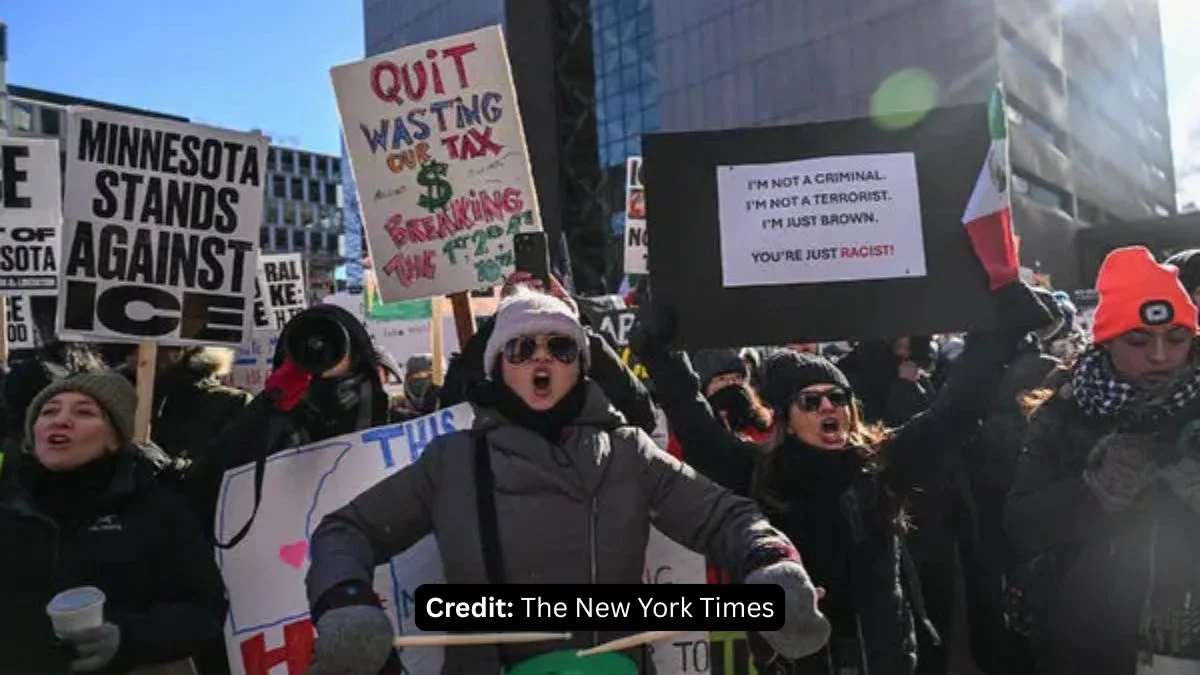
On January 30, 2026, Minneapolis became the center of a growing national reckoning when music, activism, and grief merged at the iconic First Avenue venue. What began as a protest concert soon transformed into a powerful political and cultural moment, drawing sold-out crowds, surprise celebrity appearances, and thousands more into freezing streets demanding change.
Titled “A Concert of Solidarity and Resistance to Defend Minnesota,” the event was not merely entertainment. It was designed as a statement against escalating U.S. Immigration and Customs Enforcement (ICE) operations in Minnesota and as a fundraiser for families impacted by deadly federal actions earlier in the month.
With single-digit temperatures, sub-zero wind chills, and rising national attention, Minneapolis once again found itself shaping a historic protest narrative — this time through guitars, chants, and mass mobilization.

A Historic Protest Concert at First Avenue in Downtown Minneapolis

The protest concert took place at First Avenue in downtown Minneapolis, one of the city’s most iconic music venues. Beginning at noon and lasting into the early afternoon, the show sold out with approximately 1,500 attendees packed inside despite the brutal winter weather outside.
The concert blended music and activism in a way that felt organic rather than staged. Attendees arrived not just for performances but for purpose. The venue pulsed with chants, solidarity, and political messaging as artists used their platforms to call for an end to ICE’s presence in Minnesota.
As the show closed around 2 p.m., crowds didn’t disperse. Instead, energy spilled into the streets, evolving seamlessly into broader demonstrations across downtown Minneapolis.
Why the Minneapolis Protest Concert Was Organized
The concert was organized amid growing outrage over ICE’s activities in Minnesota, particularly a federal operation known as “Operation Metro Surge.” This crackdown began in early January 2026 and intensified enforcement across the Minneapolis-St. Paul region.
These actions were part of President Donald Trump’s broader anti-immigration agenda, and tensions escalated rapidly when two local residents were killed in separate encounters involving federal agents.
Rather than letting the incidents fade quietly, activists, musicians, and community leaders used culture as resistance. The concert became both a fundraiser and a megaphone, amplifying demands for accountability while honoring victims.
All proceeds were directed to support the families of Renee Good and Alex Pretti, the two U.S. citizens fatally shot earlier that month.

Renee Good Shooting Sparks Minneapolis Protests
The first tragedy occurred on January 8, 2026.
Renee Good, a Minneapolis resident and U.S. citizen, was shot and killed by an ICE agent during what authorities described as a routine operation. Her death immediately ignited public anger.
Community members gathered at Powderhorn Park and other sites across the city. These early rallies featured music, chants, and performances by local groups such as the Brass Solidarity Band, which formed in the aftermath of the 2020 George Floyd protests.
Videos from those first demonstrations showed musicians playing uplifting rhythms as crowds chanted against ICE. The fusion of art and outrage quickly became a defining feature of Minneapolis activism.
Good’s killing marked the beginning of what would soon grow into a national movement centered in the Twin Cities.
Alex Pretti Death Intensifies Calls for Accountability
The second fatal incident came just weeks later.
On January 24, 2026, Alex Pretti, another U.S. citizen, was shot and killed by federal agents near the Minneapolis VA Hospital. His death deepened the city’s grief and escalated demands for justice.
Memorials appeared almost immediately. Protesters gathered, holding signs, chanting, and confronting law enforcement presence in riot gear. The U.S. Department of Justice responded by launching a civil rights investigation into both shootings.
With two deaths in less than a month, Minneapolis emerged as the epicenter of national anti-ICE demonstrations, echoing its history of activism since the George Floyd era.
Minneapolis Becomes Ground Zero for National Anti-ICE Demonstrations
By late January, protests had already drawn tens of thousands across Minnesota. Satellite events appeared nationwide, fueled by social media and shared footage.
Some early protest videos captured young demonstrators rapping anti-Trump lyrics and throwing gang signs, highlighting the raw and emotional tone of the movement. Another showed police ordering crowds to disperse while a lone drummer continued playing defiantly in the street.
These scenes revealed a protest culture that was both confrontational and creative, blending street performance with political expression.
The concert was deliberately scheduled to align with a “National Day of Action” and nationwide strikes against ICE, turning local grief into a coordinated national call: “ICE Out Now!”
Tom Morello Organizes the Minneapolis Solidarity Concert
At the center of the event was Tom Morello, guitarist for Rage Against the Machine, who assembled the lineup as a direct response to ICE-related violence.
Morello framed the concert as more than music. It was a fundraiser, a protest, and a rallying point. On stage, he performed Rage Against the Machine classics and repeatedly urged attendees to continue protesting after the show ended.
He emphasized that the concert existed to support families and amplify resistance, not simply to entertain. His leadership set the tone for an event rooted in activism rather than spectacle.

Surprise Bruce Springsteen Appearance Shocks Minneapolis Crowd
What truly elevated the event into national headlines was a surprise appearance by Bruce Springsteen.
Springsteen joined the final 40 minutes of the show, instantly transforming the concert into a symbolic moment of national resistance. Just days earlier, on January 28, 2026, he had released a new protest anthem titled “Streets of Minneapolis.”
The First Avenue crowd witnessed its powerful live debut.
The song referenced “King Trump’s private army from the DHS” and honored the victims with lyrics:
“Here in our home they killed and roamed / In the winter of ’26, we’ll remember the names of those who died / On the streets of Minneapolis.”
Springsteen dedicated the performance to:
“the people of Minneapolis, Minnesota, and the people of our good country, the United States of America.”
He followed it with an encore of “The Ghost of Tom Joad.”
Social media exploded with reactions from fans across the world, including messages from Puebla, Mexico; Vienna, Austria; and Canada, praising the show and expressing solidarity.
Rise Against, Al Di Meola, and Diverse Performances
The lineup extended beyond headline rock.
Other acts included:
- Rise Against,
- Ike Reilly,
- Jazz guitarist Al Di Meola.
Their presence added diversity to the rock-heavy bill and broadened the appeal of the protest concert. Rise Against shared excitement about the event on Instagram and connected it to their upcoming North American tour.
The musical mix allowed the crowd to experience activism across genres, blending punk, rock, acoustic, and jazz influences into one unified political statement.
Attendees described the atmosphere as emotional yet energized, with concertgoers such as “Frog du Nord” praising performers for their unwavering commitment to social justice.
Videos, Chants, and Viral Protest Content
Footage from the concert circulated rapidly online.
Videos featured Springsteen’s full performance of “Streets of Minneapolis,” along with crowd chants of “ICE Out Now!” and moments where music seamlessly transitioned into street protest.
Clips spread across social media platforms and were shared by outlets such as Variety and the Star Tribune, amplifying the Minneapolis movement beyond state borders.
What stood out was not just the performances, but how quickly art became action.
Thousands March After the Concert in Freezing Temperatures
Once the show ended around 2 p.m., thousands poured into downtown Minneapolis for a massive march beginning at the Hennepin County Government Center.
Despite bitter cold, crowds held signs demanding an end to federal immigration enforcement in Minnesota and chanted slogans like “ICE Out.”
This marked the second National Day of Action within a week. Demonstrators filled streets, blending memorial, resistance, and political organizing into one visible force.
The cold did little to slow momentum. Instead, the weather underscored the seriousness of the movement and the commitment of participants.
CNN Journalist Don Lemon Arrest Adds Controversy
One of the most notable developments during coverage was the arrest of CNN journalist Don Lemon while reporting on the protests.
The incident intensified national discussion around press freedom and law enforcement conduct during demonstrations. Social media buzzed with reactions, adding another layer of controversy to an already charged environment.
As images of music, marches, arrests, and chants traveled globally, Minneapolis once again found itself shaping a national conversation.
What the Minneapolis Protest Concert Symbolizes Going Forward
As of January 31, 2026, the movement showed no signs of slowing. Calls for justice, accountability, and policy change continued to grow, fueled by cultural resistance and organized action.
The “Concert of Solidarity and Resistance to Defend Minnesota” demonstrated something deeper than a one-day event. It showed how music can transform grief into mobilization, and how a city shaped by activism continues to lead national conversations.
From freezing streets to sold-out venues, from local tragedy to global attention, Minneapolis used sound, solidarity, and resistance to make one thing clear: the struggle over immigration enforcement in America is no longer confined to policy rooms — it’s echoing through concert halls and city streets alike.
And for many who stood inside First Avenue that day, the protest didn’t end when the music stopped. It had only just begun.


Leave a Reply