

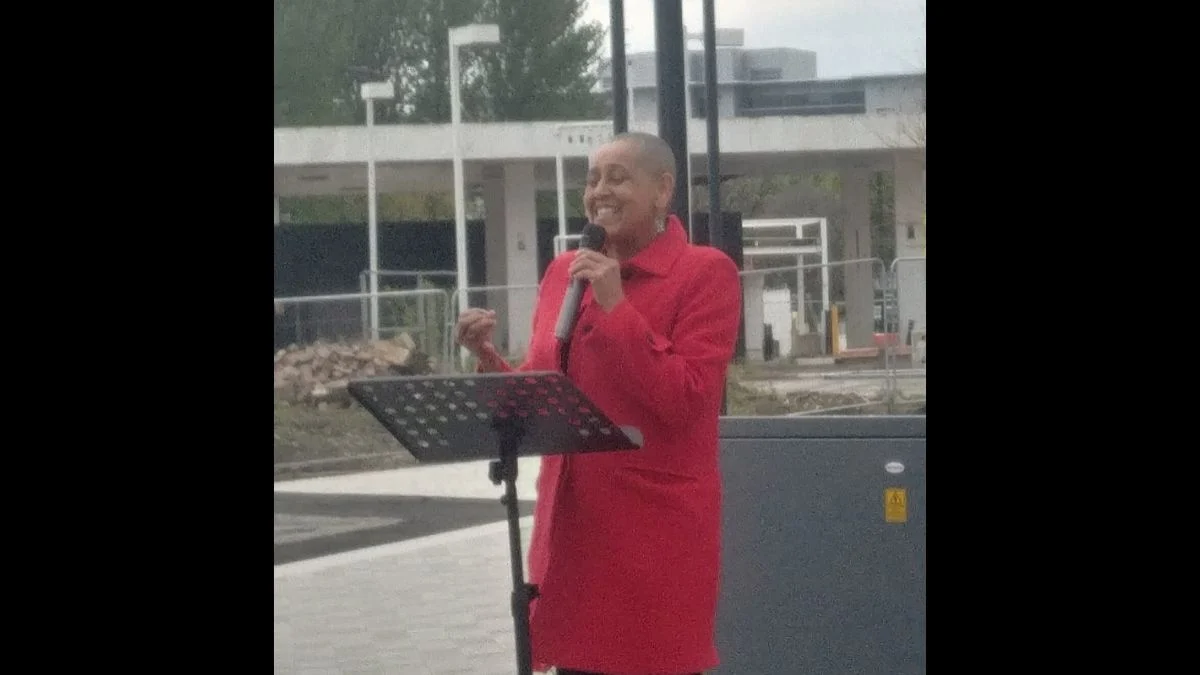
West Yorkshire’s policing priorities are facing scrutiny on several fronts, from drug-related health problems and police misconduct to knife crime and rough sleeping. Deputy Mayor for Policing and Crime Alison Lowe has now placed ketamine-related harm firmly on the agenda, warning that the drug can cause severe and potentially permanent damage, particularly among younger users.
Speaking on BBC Radio Leeds’ Message the Mayor, Lowe discussed the growing concerns surrounding ketamine alongside wider challenges facing the region. But her interview also raised questions about how West Yorkshire measures crime, responds to police misconduct and supports people experiencing homelessness.
Alison Lowe Calls Ketamine a “Nasty Drug” and Warns of Permanent Damage
Ketamine-related harm is one of the priorities Alison Lowe wants to address, with particular attention to children and young people who may not fully understand the risks associated with the drug.
During her BBC Radio Leeds interview, Lowe warned that ketamine misuse can have devastating consequences for physical health.
“The impact on the body is catastrophic – it’s very cheap and it’s very popular,” she said.
She also described ketamine as a “nasty drug”, highlighting the serious damage repeated use can cause, including potentially permanent bladder problems.
Her concerns come amid growing evidence of ketamine-related health complications among younger people in England.
In September, doctors at Alder Hey Children’s Hospital in Liverpool told the BBC that children as young as 13 were receiving treatment for ketamine-related bladder damage. According to the report, the hospital had received more than 100 referrals since opening a dedicated service in May 2025.
Medical professionals involved in the service explained that repeated ketamine use can affect the urinary system and lead to serious complications. These can involve the bladder, ureters and kidneys, with some patients requiring specialist treatment.
The reports have intensified concerns among healthcare professionals about prevention, early intervention and access to treatment for teenagers and young adults experiencing problems associated with ketamine misuse.
It is important to distinguish between legitimate medical use and recreational misuse. Ketamine has recognised medical and veterinary applications, including as an anaesthetic and analgesic. The health concerns raised by Lowe relate specifically to its non-medical misuse.
For Health-Curious Readers
Some people link skin changes, dark circles and hair loss to low iron levels, and “ferritin face” has become a popular term for that idea. For an explanation of what the claim does and does not show, see our ferritin face and low iron symptoms explainer.
Ketamine Classification and the UK’s Approach to Drug-Related Harm
Ketamine remains a Class B controlled drug in the UK, despite a review by the Advisory Council on the Misuse of Drugs.
The council considered whether the substance should be moved into Class A but recommended that it remain in Class B. Its assessment examined the harms associated with ketamine use and considered the effectiveness of different possible policy responses.
The recommendation also highlighted that tackling problematic ketamine use requires more than changes to criminal classification.
Prevention, treatment and wider public-health measures remain important parts of the response, particularly for people experiencing problematic drug use.
This distinction is relevant to Lowe’s position because the issue extends beyond policing. The consequences of ketamine misuse also create significant healthcare concerns, especially when young people are affected.
£10 Million Ketamine Seizure in West Yorkshire: Three Men Charged
The concerns surrounding ketamine have also taken on a significant regional dimension following a major police operation in West Yorkshire.
On September 25, 2026, West Yorkshire Police announced the recovery of approximately 500kg of ketamine, estimated to be worth £10 million, from an address in Rose Avenue, Upton, Pontefract.
The force described the operation as the UK’s second-largest single seizure of ketamine.
Officers from the Yorkshire and Humber Regional Organised Crime Unit led the investigation. During the operation, police discovered approximately 20 black bin bags containing the drug.
Three men were arrested and subsequently charged in connection with the seizure.
| Name | Age | Location | Charges |
| Curtis Binns | 32 | Sunny Avenue, Upton | Possession of a Class B drug with intent to supply and money laundering |
| Paul Turner | 40 | Common Lane, Upton | Possession of a Class B drug with intent to supply |
| Christopher Wills | 42 | Wolverhampton | Supplying a Class B drug |
West Yorkshire Police confirmed that the men were remanded to appear at Leeds Magistrates’ Court.
However, the charges remain allegations and do not establish guilt. Any final determination will be a matter for the courts.
The seizure highlights the scale of one significant drug investigation in the region, although an individual recovery should not be treated as a measure of the overall prevalence of ketamine use.
Police Misconduct: 757 Officers Placed on the Barred List Across England and Wales
Lowe’s interview also turned to police accountability following the publication of new College of Policing figures.
The latest figures cover April 1, 2025, to March 31, 2026, and reveal that 757 regular police officers across England and Wales were placed on the national barred list during the year.
This represents the highest annual figure since the system was introduced in December 2017.
West Yorkshire accounted for 29 of those officers.
The regional breakdown shows that 11 officers were dismissed while still serving, while another 18 were dismissed after resigning. None of the 29 were recorded as having been dismissed after retirement during the reporting period.
The national figures provide further detail about the scale of the disciplinary outcomes.
| Reporting period | Regular officers placed on barred list |
| 2021–22 | 299 |
| 2022–23 | 394 |
| 2023–24 | 594 |
| 2024–25 | 735 |
| 2025–26 | 757 |
Of the 757 officers recorded nationally in 2025–26:
- 334 were dismissed while still serving.
- 397 were dismissed after resigning.
- 26 were dismissed after retirement.
The barred-list figures should not be confused with the number of officers convicted of criminal offences. The system also covers serious disciplinary matters and other circumstances covered by the relevant policing legislation.
The College of Policing publishes the information to provide transparency around serious disciplinary outcomes, identify trends and support improvements in police integrity and public confidence.
Why Alison Lowe Says Rising Police Dismissals Do Not Automatically Mean More Offending
Responding to the figures, Lowe challenged the suggestion that the increase necessarily demonstrates that more police officers are committing offences than in previous years.
She said officers who commit offences while serving should leave policing and highlighted the importance of having an effective process to ensure that dismissed officers cannot simply move into another position of responsibility.
Lowe also explained that dismissal from the police does not automatically prevent someone from working with vulnerable people in another setting. This makes the separate barred-list process particularly important.
Her argument is that improvements in systems for identifying and addressing misconduct can contribute to higher recorded numbers.
Although the national figures show a clear increase in officers being placed on the list, they do not independently establish that the underlying rate of offending among all police officers has risen by the same amount.
Knife Crime in West Yorkshire: Lowe Cites a 14.5% Decline
Knife crime was another major subject during Lowe’s appearance on Message the Mayor.
A listener questioned claims that knife crime was falling, suggesting that the reported figures did not reflect what people were seeing through news coverage and social media.
Lowe responded by pointing to regional figures indicating that knife crime across West Yorkshire was down 14.5%, while knife-enabled robbery had fallen by 10.4%.
However, the latest regional evidence presents a more complicated picture.
West Yorkshire’s 2026–27 Strategic Needs Assessment identifies serious ongoing concerns about violence and knife-related offences. According to the assessment, serious-violence and knife-crime offences had reached a five-year high, although they remained below the levels recorded in 2018–19.
The report also highlights differences between districts and offence categories, including increases in some serious offences such as robbery and concerns about knife crime involving children.
These findings do not necessarily contradict Lowe’s figures. The two sets of statistics may reflect different comparison periods, measures or offence categories.
A percentage decline over a particular period does not automatically mean that knife crime is at its lowest level or that every category of knife-related offending is falling.
The distinction matters because West Yorkshire’s wider crime picture cannot accurately be described as improving uniformly across every knife-crime measure.
Bradford’s Knife Crime Figures Add Another Layer to the Discussion
Bradford also featured in Lowe’s discussion of individual districts across West Yorkshire.
She described Bradford as the best-performing district in the context of the figures she was discussing.
However, the latest regional strategic assessment identifies significant concerns about serious violence and knife crime in parts of Bradford.
The assessment specifically states that Bradford recorded its highest number of knife-crime offences in five years, while also distinguishing this from the broader long-term picture and the higher levels recorded in earlier years.
This means Bradford’s performance needs to be understood in relation to the particular dataset and comparison period being discussed.
The available evidence does not support treating the district’s position in one set of figures as proof that every category of knife-related offending is declining.
£3.7 Million West Yorkshire Programme Targets Rough Sleeping
Beyond policing and crime, Lowe also addressed the continuing challenge of homelessness, particularly rough sleeping in Leeds.
The discussion followed an October 2026 announcement by the West Yorkshire Combined Authority confirming £3.7 million in funding for accommodation and targeted support for people experiencing rough sleeping and complex needs.
Government data indicated that at least 141 people were sleeping rough every night across West Yorkshire.
The total allocation is £3,702,771, distributed between the region’s five local authorities and the Combined Authority.
| Local authority or organisation | Funding allocation |
| Leeds | £1,641,767 |
| Bradford | £688,194 |
| Wakefield | £535,691 |
| Kirklees | £470,045 |
| Calderdale | £255,991 |
| West Yorkshire Combined Authority | £111,083 |
| Total | £3,702,771 |
Leeds receives the largest local allocation, reflecting its position within the regional programme.
The funding forms part of a wider national initiative intended to help people sleeping rough move away from the streets before Christmas.
Rather than focusing exclusively on emergency shelter, the programme is designed to connect people with accommodation and tailored assistance. The Combined Authority said it would work alongside local authorities and existing services to help people access the housing and support they need.
Alison Lowe Revisits the Covid-Era Rough Sleeping Response
During the BBC interview, Lowe referred to the approach taken during the Covid-19 pandemic, when government funding enabled councils to move people sleeping rough into hotels and other accommodation.
She highlighted the importance of combining accommodation with support workers who could help people address longer-term difficulties.
In her view, the Leeds approach worked because professionals were able to provide more than a temporary place to stay. Support workers accompanied the accommodation response, creating opportunities to work with people on the problems contributing to their circumstances.
Lowe said she believed the model could be used again, although she acknowledged that tackling rough sleeping would remain difficult.
The current regional programme follows a similar broader principle: helping people access accommodation while connecting them with targeted support.
Local authorities will determine how the funding allocated to their areas is deployed.
Alison Lowe Confirms She Will Leave Her Deputy Mayor Role After the 2028 Election
Another significant moment in the interview concerned Lowe’s own political future.
She confirmed that she does not intend to remain Deputy Mayor for Policing and Crime after the 2028 West Yorkshire mayoral election, describing her time in the position as a seven-year project.
Lowe’s current appointment dates back to June 2024, when West Yorkshire Mayor Tracy Brabin appointed her following Brabin’s re-election.
She had previously held the deputy mayor position between 2021 and 2024.
The role is appointed rather than directly elected. Brabin has already indicated that she intends to seek a third term as West Yorkshire mayor in 2028.
Lowe’s announcement therefore concerns her decision to leave the deputy mayor position, not the future of the office itself.
If Brabin remains mayor following the 2028 election, Lowe has indicated that she will not continue as her Deputy Mayor for Policing and Crime.
House of Lords Appointment: Alison Lowe Becomes Baroness Lowe of Armley
Lowe’s plans also follow her appointment to the House of Lords.
She was announced as a political peer in July 2026 and formally introduced to the House of Lords on September 1, 2026, as Baroness Lowe of Armley.
Her appointment followed decades of public service in West Yorkshire, including her work at Leeds City Council and her involvement in regional policing and crime policy.
However, becoming a member of the House of Lords did not automatically bring her existing deputy mayor responsibilities to an end.
She continues to hold the regional position during the current mayoral term.
After leaving the deputy mayor role, Lowe has indicated that she intends to concentrate on her parliamentary work full time.
Following the Ozempic Safety Debate
A Maryland man has said Ozempic left him blind in both eyes, while the report examines the wider discussion around a possible NAION risk. For his account and the reported medical concerns, see our Maryland man Ozempic NAION report.
Conclusion: West Yorkshire Faces Several Interconnected Challenges
Alison Lowe’s BBC Radio Leeds appearance highlighted the range of issues shaping West Yorkshire’s policing and public-service priorities.
Her warning about ketamine reflects growing concerns about serious health complications, including permanent bladder damage among some users and reports of children as young as 13 requiring treatment. The £10 million seizure in Pontefract has also brought the scale of a major regional drug investigation into focus.
Meanwhile, the record 757 police officers placed on the national barred list, including 29 from West Yorkshire, has renewed attention on police accountability. Lowe argues that stronger disciplinary processes are an important part of maintaining public confidence.
Knife crime remains more complicated, with reported declines in specific regional measures alongside five-year-high figures in the latest strategic assessment. The £3.7 million rough-sleeping programme represents another effort to address the region’s wider social challenges through accommodation and targeted support.
For Lowe, the 2028 mayoral election is expected to mark the end of her deputy mayor career, allowing her to focus on her work in the House of Lords.
Source and Research Disclaimer: This article has been prepared following research of the sources provided below. It reflects the information, official figures, reports and statements available in those sources at the time of writing. Allegations, charges, reported findings and statements have been presented according to their stated status. The article does not imply independent verification beyond the information supported by the supplied sources.
Sources
- BBC: Alison Lowe’s Message the Mayor interview and West Yorkshire crime discussion
- West Yorkshire Police: £10 million ketamine seizure and charges
- College of Policing: Police dismissals and barred-list figures for 2025-26
- West Yorkshire Combined Authority: Deputy Mayor for Policing and Crime profile
- West Yorkshire Combined Authority: £3.7 million rough-sleeping support programme
- West Yorkshire Combined Authority: 2026-27 Strategic Needs Assessment
- West Yorkshire Combined Authority: Alison Lowe appointed to the House of Lords
- UK Parliament: Introduction of Baroness Lowe of Armley
- Yorkshire Post: Tracy Brabin’s 2028 re-election plans
- BBC report on ketamine-related bladder injuries among children
Featured Image Credit: Lajmmoore / CC BY-SA 4.0 / Wikimedia Commons


Leave a Reply