

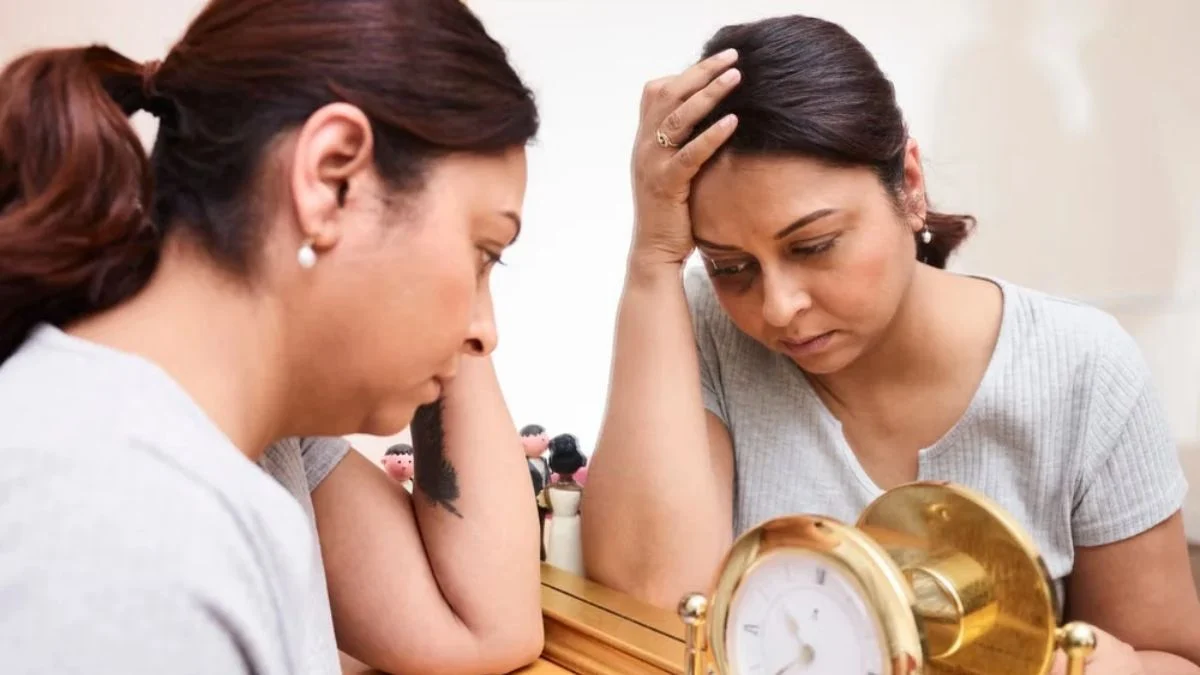
The latest “ferritin face” trend has people scrutinising their reflections for signs of low iron, with TikTok and Instagram posts linking pale skin, dark circles, brittle nails and hair shedding to depleted iron stores. Before-and-after photographs have added to the buzz, with some creators suggesting that restoring ferritin can dramatically change how someone looks.
But how much of this viral beauty conversation is backed by medical evidence? Doctors acknowledge that iron deficiency can affect the body in visible ways, yet there is an important difference between recognising a possible symptom and diagnosing a condition from someone’s appearance.
What Is ‘Ferritin Face’, and Why Is It Trending?
“Ferritin face” is a social-media expression used to describe an appearance that creators associate with low ferritin, the protein responsible for storing iron in the body. Posts commonly highlight pale or grey-looking skin, dark circles beneath the eyes, dry or cracked lips, hair thinning and brittle nails.
Some creators share before-and-after photographs to demonstrate changes they attribute to improving their iron levels. These personal accounts have helped draw attention to symptoms that people may otherwise overlook.
However, “ferritin face” is not a recognised medical diagnosis. A person’s complexion, hair or nails cannot reliably reveal their ferritin concentration, and the appearance promoted in viral videos is not an established diagnostic test.
GP Dr Aziza Sesay told the BBC: “Ferritin face is not a medical diagnosis.”
She explained that physical changes might provide a clue that something is happening, but symptoms such as pale skin, hair shedding and brittle nails can have multiple causes.
That distinction matters: a possible warning sign does not automatically establish the underlying condition.
A Related TikTok Health Claim Worth Questioning
Social media has also popularised simple tests that claim to reveal serious health conditions, often without enough evidence to support the conclusions. For another evidence-based breakdown, read our TikTok pinky test dementia fact check.
What Does Ferritin Actually Tell You About Your Health?
Ferritin is a protein that stores iron, and measuring its concentration in the blood helps clinicians assess the body’s iron reserves.
Iron is essential for producing haemoglobin, the protein in red blood cells that carries oxygen around the body. When iron deficiency becomes severe enough to reduce haemoglobin, it can lead to iron-deficiency anaemia.
However, low iron stores and iron-deficiency anaemia are not the same thing.
Iron stores can become depleted before haemoglobin falls below the level used to define anaemia. Someone can therefore have iron deficiency without having anaemia.
Consultant haematologist Dr Drew Provan explained this distinction in the BBC’s report, saying: “You’ve got no stored iron but you’re maintaining your haemoglobin. That’s the big disconnect.”
This helps explain why someone might experience symptoms associated with iron deficiency even when their haemoglobin result does not indicate anaemia.
The British Society of Gastroenterology identifies serum ferritin as the single most useful marker of iron deficiency in the assessment of iron-deficiency anaemia. However, inflammation can complicate the picture because it may raise ferritin concentrations even when iron deficiency is present.
The World Health Organization also recognises ferritin as an important marker of iron stores while warning that infection and inflammation can affect its interpretation.
Can Low Iron Really Change Your Face?
There is a genuine medical connection between iron deficiency and certain physical symptoms, but the evidence does not establish a distinctive facial appearance that reliably identifies low ferritin.
The NHS lists paler-than-usual skin among the symptoms of iron-deficiency anaemia. Hair loss and nail changes, including spoon-shaped nails, are also recognised as less common symptoms.
Other symptoms can include tiredness, a lack of energy, shortness of breath, noticeable heartbeats and headaches.
A 2025 NHS clinical guideline for healthcare professionals also identifies possible symptoms of non-anaemic iron deficiency, including fatigue, poor concentration or memory, a sore tongue, poorer skin, hair or nail condition, hair loss, delayed wound healing and restless legs.
These associations provide some medical context for the viral trend. Nevertheless, they do not mean that everyone with low ferritin will develop visible changes.
Why iron-deficiency anaemia can cause pale skin
Paleness has a clearer association with iron-deficiency anaemia than many other features promoted online.
When iron deficiency reduces haemoglobin, the blood has less of this oxygen-carrying protein available. This can contribute to a paler appearance.
However, iron stores can be depleted while haemoglobin remains within the normal range, so someone with low ferritin may not display the classic signs of established anaemia.
Natural differences in skin colour also affect how noticeable paleness may be. Dr Sesay noted that changes in skin colour can be less obvious in people with darker skin.
The absence of visible paleness, therefore, does not rule out iron deficiency.
Are dark circles under the eyes a sign of low ferritin?
Dark circles are frequently mentioned in “ferritin face” videos, but they are not a reliable indicator of low iron.
Their appearance can be influenced by normal pigmentation, facial anatomy, shadows and tiredness. Fatigue can also make someone look more tired around the eyes.
Dr Provan told the BBC that people with significant anaemia may appear pale and that fatigue can contribute to dark circles. However, he described visual signs as “subjective and unreliable.”
In other words, dark circles alone cannot establish that someone’s iron stores are low. Equally, someone without dark circles can still have iron deficiency.
Can low ferritin cause hair loss and brittle nails?
Hair loss has a recognised association with iron deficiency, and the NHS lists it among the less common symptoms of iron-deficiency anaemia.
Clinical guidance from Royal United Hospitals Bath also recognises hair loss and poorer hair, skin and nail condition among possible symptoms of non-anaemic iron deficiency.
However, hair shedding can have many causes. Changes in diet, medications, hormonal factors and other aspects of a person’s health may need to be considered during an assessment.
Brittle nails and changes in skin condition are similarly nonspecific. Their presence does not prove that ferritin is low, and attributing every change in appearance to iron deficiency may overlook another explanation.
What Ferritin Level Is Considered Low?
Ferritin results need to be interpreted in the context of a person’s symptoms, health and other blood tests. There is no universal “ferritin face” threshold that can determine whether someone has iron deficiency based on appearance.
The British Society of Gastroenterology’s guidance provides the following reference points for interpreting ferritin in the absence of inflammation:
| Ferritin level | Interpretation |
| Below 15 micrograms per litre | Indicates absent iron stores |
| Below 30 micrograms per litre | Generally indicates low body iron stores |
| Above 30 micrograms per litre | Does not automatically rule out iron deficiency in every circumstance |
The final distinction is particularly important because ferritin is an acute-phase protein. Infection and inflammation can increase its concentration, potentially making a result appear normal despite depleted iron stores.
The British Society of Gastroenterology notes that additional tests, including transferrin saturation, can help when inflammation may be affecting the ferritin result. WHO guidance similarly stresses the need to consider infection and inflammation when interpreting ferritin.
A laboratory result must therefore be assessed in context rather than converted into a beauty-related target.
One Woman’s Experience Helped Bring the Trend Into Focus
The BBC report featured Lucy M, a 32-year-old content creator who discusses hair loss on Instagram and TikTok.
Lucy said she developed heart palpitations, fatigue and hair loss in 2021. She reported that she was initially told her blood tests were normal and was diagnosed with generalised anxiety disorder. According to Lucy, a later test showed a ferritin level of 12 micrograms per litre.
She recalled that her appearance had changed, describing her skin as “grey” and saying her hair had become dull and brittle.
Lucy provided the BBC with photographs from when her ferritin was low and photographs from after it had recovered. She described the difference in her appearance and how she felt as “night and day.”
Her account illustrates why the trend resonates with people who have experienced persistent symptoms and subsequently discovered iron deficiency.
However, an individual experience cannot demonstrate that the same appearance reliably identifies low ferritin in other people. Lucy also told the BBC that she is not a doctor and presents her content as her own experience.
Why before-and-after photographs cannot prove the cause
Photographs may look persuasive, but differences in lighting, camera exposure, shadows, makeup, facial expression, skin hydration and camera angle can influence how someone’s complexion appears.
Even when a genuine physical change has occurred, a photograph cannot establish what caused it. If someone looks healthier in a later image, the difference alone does not prove that ferritin was responsible.
This is why comparing one’s face with a creator’s before-and-after photographs is not a dependable way to assess iron status.
How Do Doctors Check for Iron Deficiency?
Rather than relying on a visual checklist, healthcare professionals consider a person’s symptoms and medical circumstances alongside appropriate blood tests.
The NHS recommends medical assessment for people who think they may have iron-deficiency anaemia. Testing commonly includes a full blood count, with further investigations used when appropriate.
The British Society of Gastroenterology recommends confirming iron deficiency through iron studies before investigating iron-deficiency anaemia. Ferritin is particularly useful, while additional tests may help if inflammation could be affecting the result.
A normal haemoglobin result does not automatically establish that iron stores are adequate. Equally, symptoms such as tiredness, hair loss or pale skin do not automatically mean that iron deficiency is present.
Both symptoms and laboratory results need to be interpreted in context.
What Causes Iron Deficiency, and Should You Take Supplements?
Finding low iron is only part of the process. Clinicians also need to consider why the deficiency has occurred.
Possible causes include blood loss, heavy menstrual bleeding, inadequate dietary iron, increased iron requirements during pregnancy, problems absorbing iron through the digestive system, gastrointestinal conditions and gastrointestinal bleeding.
The NHS identifies heavy periods and pregnancy as common causes of iron-deficiency anaemia and also recognises gastrointestinal blood loss as a possible cause.
The British Society of Gastroenterology notes that poor dietary intake, malabsorption and chronic blood loss, including menstrual or gastrointestinal blood loss, can contribute to iron deficiency. It also stresses the importance of investigating unexplained iron-deficiency anaemia because gastrointestinal conditions can sometimes be responsible.
Iron replacement is an established treatment when deficiency is identified. The British Society of Gastroenterology recommends oral iron as the usual initial treatment for iron-deficiency anaemia, with alternative preparations or intravenous iron considered in circumstances such as intolerance, ineffective treatment or particular clinical needs.
However, taking iron supplements simply because your face looks pale or your hair is shedding is not recommended. Unnecessary supplementation is not a harmless way to experiment with appearance, and treatment should be appropriate to the individual’s circumstances and the cause of the deficiency.
Iron-rich foods include meat, beans, lentils, leafy green vegetables and fortified cereals. The NHS recommends iron-rich foods as part of dietary management where appropriate, but dietary changes alone may not resolve a deficiency caused by blood loss, increased requirements or poor absorption.
People experiencing persistent fatigue, unusual paleness, hair loss, nail changes, shortness of breath, noticeable heartbeats or other concerning symptoms should discuss them with a healthcare professional.
Dr Sesay described social media as a “double-edged sword” because it can encourage people to seek medical help while also promoting self-diagnosis through short videos. Lucy similarly said the useful part of the trend, in her view, is encouraging people to recognise when something does not feel right and ask questions rather than diagnosing themselves from their appearance.
Conclusion: Is ‘Ferritin Face’ Real?
“Ferritin face” has a kernel of medical truth behind it: iron deficiency can occur before anaemia develops, and iron-deficiency anaemia can cause paleness, fatigue, hair loss and nail changes. Medical guidance recognises these symptoms, but it does not establish a distinctive facial appearance that can reveal someone’s ferritin level.
The most reliable approach is to seek an appropriate clinical assessment and blood testing when symptoms are persistent or concerning. Ferritin is an important marker of iron stores, but inflammation and other clinical factors can affect how results should be interpreted.
Social media can help people recognise that symptoms deserve attention. A TikTok checklist or before-and-after photograph, however, cannot replace a medical diagnosis.
When Medication-Related Health Claims Make Headlines
Health stories involving medicines can raise difficult questions about reported side effects and what the available evidence actually establishes. Our report on a Maryland man who says Ozempic left him blind examines the reported Ozempic-related blindness and NAION risk debate.
Source Disclaimer
This article has been prepared based on research using the sources provided below. It reflects the information available in those sources and does not imply independent verification beyond the material supplied. It is intended for general informational purposes and should not replace assessment or advice from a qualified healthcare professional.
Sources
- BBC News: Report on “ferritin face” by Zara Salaria
- British Society of Gastroenterology: Guidelines for the management of iron deficiency anaemia in adults
- British Society of Gastroenterology: Adult Iron Deficiency Anaemia Care Guidelines, reviewed 2026
- NHS: Iron deficiency anaemia
- World Health Organization: Guideline on use of ferritin concentrations to assess iron status
- Royal United Hospitals Bath: Ferritin guide for GPs
Featured Image Credit: Vodafone x Rankin everyone.connected / Pexels


Leave a Reply