

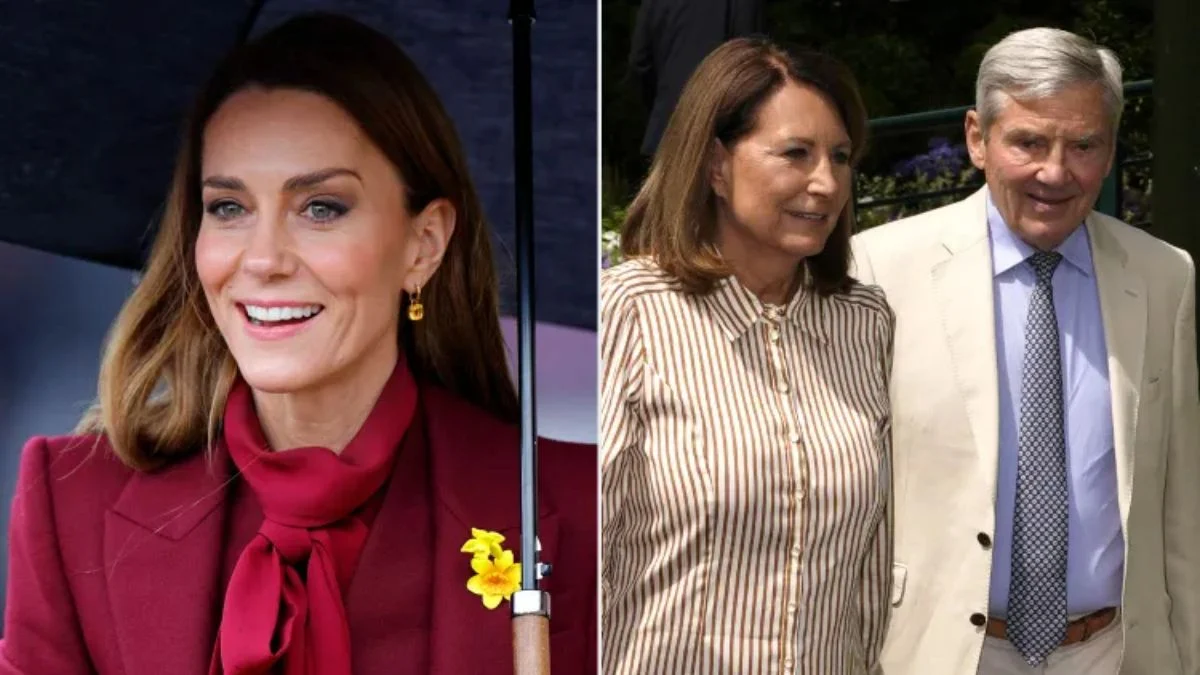
In the ever-watchful world of the British Royal Family, few relationships have drawn as much quiet curiosity as the bond between Prince William and his in-laws, Carole Middleton and Michael Middleton.
For years, royal observers in both the UK and the United States have speculated about how the future king truly feels about his wife’s parents playing such an active role in their lives. Are they simply doting grandparents? Or something more central to the stability of the modern monarchy?
A recent biography has now offered the clearest insight yet — and the revelations may surprise those who assume royal protocol keeps extended family at arm’s length.
The Royal Biography Revealing Prince William’s Private Perspective

The conversation gained fresh momentum following the release of William and Catherine: The Monarchy’s New Era: The Inside Story by royal journalist Russell Myers.
In the book, the Middletons are described as a “constant presence” in the lives of William and Catherine Princess of Wales — not in an intrusive way, but as a grounding and stabilizing force.
According to reporting highlighted by People, William has genuinely appreciated this dynamic. Far from feeling overshadowed or pressured, he reportedly sees the Middletons’ involvement as something that allows his family “more room to breathe.”
For a senior royal balancing public scrutiny, fatherhood, and the future of the Crown, that phrase speaks volumes.

Why Kate Middleton’s Parents Have Become So Central to Royal Family Life
To understand William’s feelings, it’s important to understand the Middleton role in context.
Unlike traditional aristocratic royal in-laws, Carole and Michael built a successful, middle-class family business and raised their children outside palace walls. Their parenting style has often been described as warm, hands-on, and refreshingly normal.
This “normalcy” appears to be exactly what William values most.
Even at the time of his engagement to Catherine in 2010, he publicly described her parents as loving, welcoming, and fun — adding that they made him feel like part of the family from the very beginning. That early admiration has only deepened over time.
Anmer Hall Weekends: The Quiet Royal Routine That Speaks Volumes
One of the clearest examples of the Middletons’ steady presence is their time spent at Anmer Hall, the Wales family’s country home in Norfolk.
Carole and Michael are known to join William, Catherine, and their children — Prince George of Wales, Princess Charlotte of Wales, and Prince Louis of Wales — for relaxed weekends away from London.
Here, royal titles matter less than bedtime routines, outdoor games, and shared meals.
For William, who lost his mother Diana Princess of Wales at a young age, this kind of stable, extended family structure carries emotional weight. Some royal commentators have even described Carole as a maternal presence William deeply appreciates — offering warmth and steadiness that has shaped his adult life.
A Crucial Support System During Princess Kate’s Health Battle
The importance of the Middletons became even more evident during Catherine’s health crisis in 2024.
After undergoing abdominal surgery early in the year, Catherine later revealed she was receiving cancer treatment. The announcement shocked royal watchers worldwide and prompted an outpouring of support from the UK, the US, and beyond.
During this period, Carole and Michael stepped into an even more vital role.
According to verified reporting, they were described as a “reassuring presence” for both William and Catherine. They provided emotional comfort, practical childcare support, and quiet stability behind the scenes.
When Catherine later shared a video marking the completion of her chemotherapy, her parents’ involvement underscored just how closely knit the family remains.
For William, juggling public duty with private fear and fatherhood, their support was not merely helpful — it was essential.

How the Middletons Influence William’s Parenting Style
Observers have long noted that William appears to have drawn inspiration from the Middleton parenting approach.
Carole and Michael raised their children with structure but also warmth, encouraging independence while maintaining strong family bonds. Royal commentators have suggested that William admires this balance and incorporates aspects of it into his own parenting philosophy.
This is particularly visible in how he and Catherine prioritize hands-on involvement with their children despite royal commitments.
School drop-offs, sporting events, and ordinary family outings have become part of the Wales public image — a deliberate shift toward a more relatable monarchy.
Timeline: Key Moments Showing the Middletons’ “Constant Presence”
| Year | Event | Location | Significance |
| 2010 | Engagement of William and Catherine | UK | William publicly praises Middleton family warmth |
| 2011 | Royal Wedding | Westminster Abbey | Middletons step into global spotlight |
| 2013–2018 | Birth of George, Charlotte, and Louis | London | Grandparent involvement grows |
| Ongoing | Weekend stays | Anmer Hall, Norfolk | Regular hands-on family support |
| 2024 | Catherine’s surgery and cancer treatment | UK | Middletons provide crucial emotional and practical support |
This pattern shows consistency — not sporadic appearances, but sustained involvement.
A Modern Royal Family Model That Resonates in the UK and US
In both Britain and America, there has been increasing fascination with how the monarchy adapts to modern expectations.
The visible closeness between William and the Middletons offers a contrast to more rigid royal traditions of the past. It signals a monarchy rooted not just in ceremony, but in family.
For American audiences especially, the Middleton influence feels relatable — entrepreneurial grandparents helping raise children, supporting during health crises, and participating in everyday life.
For UK readers, it reflects a future king shaped not solely by palace corridors, but by a broader family circle grounded in ordinary values.
Did Prince William Ever Feel Overwhelmed by Their Presence?
Based on verified accounts, there is no public evidence of resentment or tension from William regarding his in-laws’ closeness.
Instead, reports consistently emphasize appreciation.
The phrase “more room to breathe” is particularly telling. It suggests that rather than crowding the couple, the Middletons’ presence relieves pressure.
In a life defined by scrutiny, additional trusted family members can provide emotional insulation. That appears to be precisely what they offer.
What This Means for the Future of the Monarchy
As Prince William prepares for his eventual role as king, the family model he cultivates today will shape the monarchy tomorrow.
The steady involvement of Carole and Michael Middleton signals a shift toward:
- Strong extended family networks
- Greater emotional openness
- Visible grandparent participation
- A blend of tradition and modern family values
It is a quiet evolution — but one that resonates strongly with the public.

Final Reflection: A ‘Constant Presence’ That Strengthens, Not Overshadows
The narrative surrounding Prince William and his in-laws is not one of interference, but integration.
From engagement days to country weekends, from joyful milestones to health challenges, the Middletons have remained steady figures in the background — offering warmth, practical help, and emotional reassurance.
For Prince William, their “constant presence” appears to be less about dependency and more about balance.
In a world where royal life can feel isolating, having trusted family close by may be one of the most stabilizing forces of all.
And as the future king continues shaping a monarchy for the 21st century, that grounding influence may prove more significant than anyone once imagined.


Leave a Reply