

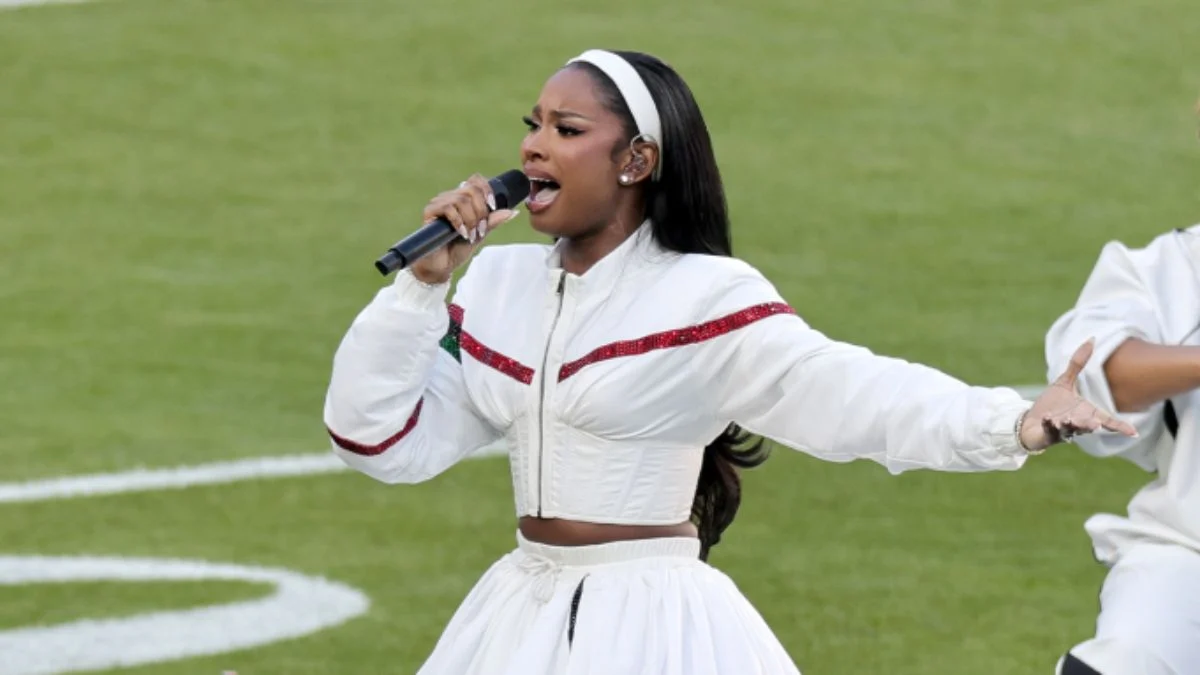
The Super Bowl is known for football, fireworks, and unforgettable performances — but Super Bowl LX delivered something else entirely: a cultural flashpoint. Before kickoff on February 8, 2026, at Levi’s Stadium in Santa Clara, California, R&B singer Coco Jones performed “Lift Every Voice and Sing,” widely recognized as the Black national anthem, during the pregame ceremony between the Seattle Seahawks and the New England Patriots.
What followed wasn’t just applause. It was an online firestorm.
As soon as the first notes hit, social media — especially X (formerly Twitter) — erupted with anger, praise, mockery, and political debate. While some viewers celebrated the moment as a symbol of inclusion, others slammed it as divisive, un-American, and unnecessary. The performance quickly became one of the most talked-about controversies of Super Bowl LX, fueling arguments about identity, patriotism, and the future of American sports culture.
What Happened at Super Bowl LX? Key Details From the Pregame Ceremony
Before kickoff, the NFL presented its traditional patriotic lineup — but with one element that continues to polarize fans. Coco Jones delivered a rendition of “Lift Every Voice and Sing” alongside the U.S. national anthem.
Jones appeared in a white tracksuit, a stylistic homage to Whitney Houston’s iconic 1991 Super Bowl look, adding a visual callback layered into an already symbolic moment.
Below are the official event details:
| Time (ET) | Event | Performer | Location | Notes |
| Pregame | Lift Every Voice and Sing | Coco Jones | Levi’s Stadium, Santa Clara, CA | Homage to Whitney Houston outfit |
| Pregame | The Star-Spangled Banner | Charlie Puth | Levi’s Stadium | Widely praised rendition |
| Pregame | America the Beautiful | Brandi Carlile | Levi’s Stadium | Part of ceremonial lineup |
| Kickoff | Seahawks vs Patriots | NFL | Santa Clara, CA | Super Bowl LX |
The inclusion of “Lift Every Voice and Sing” has been standard since the 2020 NFL season, yet every year it reignites controversy — and Super Bowl LX was no exception.

The History of “Lift Every Voice and Sing” in the NFL
Written in 1900 by James Weldon Johnson and his brother J. Rosamond Johnson, the hymn has long represented resilience, hope, and civil rights progress within the Black community. It is often performed at major cultural and historical events and became widely known as the Black national anthem over time.
The NFL formally incorporated it into major ceremonies during the 2020 season, following heightened awareness of racial injustice after the George Floyd protests. Since then, it has appeared at every Super Bowl, alongside “The Star-Spangled Banner.”
League officials previously explained the move as an effort to promote equity, acknowledgment, and unity, though for many viewers, the gesture continues to feel controversial rather than conciliatory.
Social Media Explodes: Outrage Trends on X
The backlash surfaced almost instantly. Hashtags like #BlackNationalAnthem, #SuperBowlLX, and #NFL surged on X as viewers debated the performance’s meaning.
Critics argued that playing a separate anthem undermines national unity and pushes political ideology into sports. Phrases like “one anthem for one nation”, “divisive,” and “un-American” dominated trending posts.
Some of the most shared reactions included:
| User Handle | Quote | Engagement |
| @SirBylHolte | “WHAT HAPPENED TO AMERICA? Why does the NFL bend over backward to celebrate every culture EXCEPT the one that built this nation?” | 8,460 likes / 1,809 replies / 101,648 views |
| @lsferguson | Shared Breitbart: “Fans Outraged by Performance of ‘Black National Anthem’ Before Super Bowl LX” | 16 likes / 7 replies / 518 views |
| @echo16photo | “There is only ONE National Anthem. So sick of the divisive bull shit.” | 4 likes / 1 reply / 133 views |
| @DannyNicho70055 | “Total…bullshit…this is America, not Black America.” | 2 likes / 0 replies / 102 views |
| @onesmallvoice | “I’m confused, are they citizens of another country?” | 5 likes / 1 reply / 168 views |
Many posts linked to conservative media outlets such as Fox News and Breitbart, amplifying the narrative. Hashtags like #FucktheNFL trended briefly as some users claimed they turned off the game entirely.

Supporters Push Back and Mock the Outrage
Not everyone joined the backlash. Some users defended the song’s inclusion, highlighting its cultural significance and history. Others mocked what they viewed as performative outrage.
An Instagram post circulated showing “MAGA users being BIG MAD,” while Yahoo Sports reported on viewers rage-quitting before kickoff. Reddit threads revisited the recurring question: Is acknowledging history more divisive than ignoring it?
However, engagement metrics showed outrage posts consistently outperformed supportive ones, suggesting that social platforms algorithmically amplify conflict over calm discussion.
Media Coverage and Political Context Around Super Bowl LX
Mainstream and conservative outlets quickly picked up the story. Fox News led with headlines like “Black national anthem stokes social media outrage before Super Bowl LX,” calling the tradition a “source of consternation” since 2020. Breitbart echoed fan frustration, emphasizing political framing.
The controversy also intersected with other Super Bowl debates:
- Bad Bunny’s halftime show drew criticism for Spanish-language performances, with some arguing English should dominate the event.
- Green Day’s appearance sparked commentary for not being political enough for critics and too political for supporters.
- Charlie Puth’s anthem performance received largely positive reviews.
- Audience demographics were debated, with critics arguing the NFL should prioritize majority preferences rather than diversity messaging.
Meanwhile, neutral coverage from outlets like The Guardian simply described the performance as a dramatic hymn moment, without focusing heavily on backlash.

Why the Super Bowl Black National Anthem Debate Keeps Returning
Search interest for “Black national anthem Super Bowl,” “Coco Jones Super Bowl LX,” and “Lift Every Voice and Sing controversy” spiked on February 8–9, 2026. Each year, the issue resurfaces because it sits at the intersection of sports, politics, culture, and national identity.
Supporters see recognition.
Critics see separation.
The NFL sees branding and social positioning.
With no official response from the league following Super Bowl LX, history suggests the tradition will continue — and so will the outrage.
In today’s digital age, the Super Bowl isn’t just about touchdowns anymore. It’s a mirror reflecting America’s unresolved conversations about unity, history, and who gets represented on the biggest stage in sports.
And as Super Bowl LX proved, sometimes the loudest moments happen long before the first kickoff.


Leave a Reply