

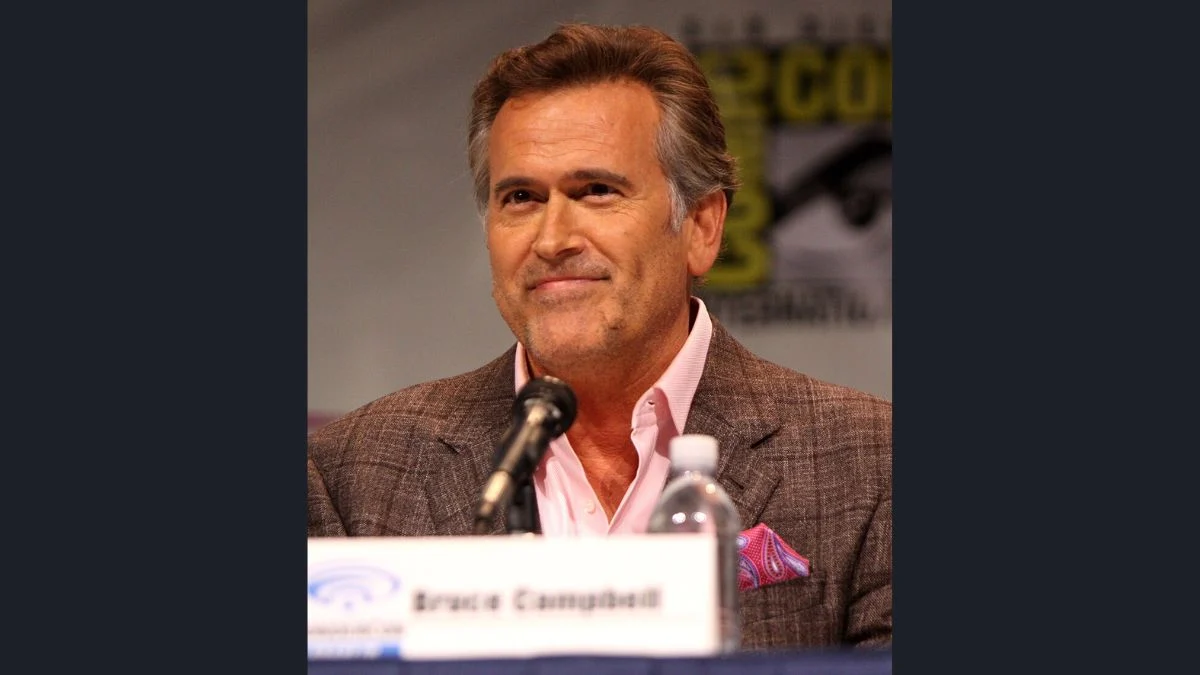
Bruce Campbell has offered fans a deeply personal update about his cancer battle, revealing that he has been given a five-year prognosis while making it clear that he does not intend to spend that time simply thinking about the disease. The Evil Dead star, now 68, discussed his health during a recent appearance on The Adam Carolla Show, months after confirming that he had been diagnosed with a form of cancer he described as “treatable” but “not curable.”
Campbell has still chosen not to reveal the specific type of cancer he has. Instead, his latest comments focus on something arguably more revealing: how he plans to live with the diagnosis, why he refuses to fall into what he calls the “cancer rabbit hole,” and why he is continuing to work and promote his new film Ernie & Emma.
More Health Journeys: A fellow British television personality recently shared his own cancer diagnosis on air, in a moment that reframed how he approaches a long-running public feud. For more, read our story on Jeremy Clarkson’s prostate cancer diagnosis on Clarkson’s Farm.
Bruce Campbell Reveals His Five-Year Cancer Prognosis
The biggest new detail from Campbell’s appearance on The Adam Carolla Show was his revelation that his current medical outlook involves a five-year prognosis.
When host Adam Carolla asked about his situation, Campbell said:
“I’m in a five-year prognosis. With the type of cancer that I have, which I don’t want to get into, the current thing is a five-year deal.”
Carolla then asked the question many listeners would naturally have after hearing those words: Did that mean Campbell’s prognosis was that he had five years to live?
Campbell’s answer was brief:
“Give or take.”
That exchange has subsequently been widely reported as Campbell saying he has approximately five years left to live. But there is an important distinction here.
Campbell did not announce an exact date of death, nor did he say that he had been given a guaranteed five-year countdown. A prognosis is an estimate of the expected course of an illness, and Campbell himself left the timeframe open-ended with his “Give or take” response.
He also indicated that he remains hopeful that cancer treatment could improve during that period. More importantly, he has deliberately chosen not to let the diagnosis consume his thoughts.
And that decision appears to be central to how Campbell is approaching everything that comes next.
Similar Health Battles: Another actress recently opened up about the anxiety of waiting on cancer screening results, describing the emotional toll before any diagnosis is even confirmed. For more, read our story on Christy Carlson Romano’s cancer test update.
Bruce Campbell Says He Wants to “Live With It, Not Die From It”
Campbell’s most striking comment was not actually about the number five.
It was about what he intends to do with the time ahead.
The actor explained that he has consciously decided to continue living rather than allowing cancer to become the defining feature of his life.
“I’ve decided though pretty specifically though to live with it, not die from it.”
That statement essentially sums up Campbell’s current philosophy.
Rather than constantly searching for information, joining conversations about cancer or becoming overwhelmed by his prognosis, he said he wants to avoid becoming consumed by the illness.
Campbell described that experience as a “cancer rabbit hole.”
“I don’t want to go down the cancer rabbit hole,”
he said, explaining that he stays away from what he described as “focus groups” involving people dealing with similar health problems.
The comments suggest that Campbell’s strategy is relatively straightforward: acknowledge the seriousness of the disease, deal with the treatment he needs, but continue focusing on the life that remains.
That attitude also makes more sense when viewed alongside what he said when he first announced his diagnosis.
More Cancer News: Another public figure’s cancer story has stretched across several years, moving from an early-stage diagnosis to a much harder fight. For more, read our story on Teddi Mellencamp’s cancer battle timeline.
When Bruce Campbell First Announced His Cancer Diagnosis in 2026
Campbell publicly revealed his cancer diagnosis in March 2026, but even then he made a deliberate decision not to identify the specific type of cancer.
His description was blunt. He called the disease “treatable” but “not curable.”
The announcement was not presented as an attempt to attract sympathy. Instead, Campbell explained that he was making the diagnosis public because it would affect his professional schedule.
At the time, he wrote:
“I’m posting this, because professionally, a few things will have to change — appearances and cons and work in general need to take a back seat to treatment.”
He also explained that he hoped to get well enough during the summer to return to the road and promote Ernie & Emma during the fall.
“My plan is to get as well as I possibly can over the summer so that I can tour with my new movie Ernie & Emma this fall.”
But Campbell also drew a firm boundary around his personal medical information.
“The good news is, I’m not gonna go into any more detail.”
That boundary has remained in place. Campbell has not publicly identified the cancer type, and his newest comments do not provide additional information about the disease itself.
Instead, he has focused on explaining how he intends to deal with it.
More on This Story: Read the original announcement that first introduced Campbell’s diagnosis to fans, before this latest update on his prognosis. For more, read our story on Bruce Campbell’s original 2026 cancer announcement.
Why Bruce Campbell Did Not Want to Make His Cancer Public in Detail
Campbell’s original announcement also made his reasoning clear.
He was concerned that inaccurate information could circulate if he did not address the situation himself. Rather than allowing speculation to fill the gap, he decided to publicly confirm the diagnosis while keeping the medical specifics private.
He wrote:
“That’s about it. I’m not trying to enlist sympathy — or advice — I just want to get ahead of this information in case false information gets out (which it will).”
It was a very Campbell-like way of addressing an extremely serious situation: acknowledge what is happening, explain what fans and professional contacts need to know, and refuse to turn the diagnosis into an open-ended public discussion.
He ended that announcement by reassuring fans that he intended to keep fighting.
“Fear not, I am a tough old son-of-a-bitch and I have great support, so I expect to be around awhile.”
At that stage, Campbell had confirmed the diagnosis and explained that treatment would require changes to his professional commitments. He had not, however, publicly disclosed the five-year prognosis that he has now discussed.
Related Health News: Another entertainer recently shared her own cancer diagnosis and treatment plans, along with a message she hopes other women will hear. For more, read our story on Snooki’s stage 1 cervical cancer diagnosis.
Cancer Treatment Forced Bruce Campbell to Scale Back Work
The diagnosis did have immediate professional consequences.
Campbell said treatment would have to take priority over some of his appearances and other commitments. He acknowledged that several convention appearances planned for the summer would have to be cancelled.
He wrote:
“There are several cons this summer that I have to cancel. Big regrets on my part. Treatment needs and professional obligations don’t always go hand-in-hand.”
For a performer whose career has involved movies, television, conventions and fan events, that meant temporarily stepping back from some of the activities that have kept him closely connected with audiences.
But stepping back did not mean disappearing.
Campbell’s plan was to focus on treatment while hoping to recover sufficiently to resume his professional activities and promote Ernie & Emma in the fall.
And that film now carries a surprisingly heavy emotional connection to everything Campbell is going through.
More From Clarkson: He has also reflected on how his diagnosis reshaped his perspective on a public dispute he now regrets. For more, read our story on Clarkson’s comments on the Chris Packham row since his diagnosis.
‘Ernie & Emma’ Has Become Even More Personal for Bruce Campbell
Ernie & Emma is an independent film Campbell wrote, directed, produced and stars in.
The story follows Ernie, a widower who sets out to fulfil his late wife Emma’s wishes concerning her ashes. At its heart, the film deals with grief, mortality and the difficult process of moving forward after losing someone close.
Then came Campbell’s cancer diagnosis.
The timing became impossible to ignore.
While discussing the movie, Campbell acknowledged the strange and deeply personal coincidence:
“It’s a very fascinating timing of having a movie about a guy who’s spreading his wife’s ashes who died made by a guy who’s dying.”
It is a striking observation, particularly because Campbell has continued promoting the project rather than abandoning it.
The film’s themes of mortality and loss now inevitably intersect with Campbell’s own public discussion about his prognosis, giving Ernie & Emma a very different context.
Yet Campbell’s response has not been to retreat from the project.
He has continued participating in events surrounding the movie and promoting it as planned.
Another Health Update: A rapper recently shared an emotional update after receiving difficult news from her doctor about a blood cancer diagnosis. For more, read our story on Bhad Bhabie’s blood cancer update.
Bruce Campbell Is Still Choosing Work, Life and the Future
There is a bigger picture behind Campbell’s latest remarks.
His comments do not suggest that he is ignoring his illness. Quite the opposite. He has acknowledged that the cancer is serious, that it is incurable and that his current prognosis is five years.
But he has also repeatedly made another point: he intends to live his life.
That philosophy was already visible in his March announcement, when he explained that treatment would temporarily force him to change his schedule while simultaneously outlining his intention to return to work.
His continued involvement with Ernie & Emma reflects the same approach.
Campbell has not indicated that he intends to completely retire from creative work because of his diagnosis. Instead, he appears determined to manage his health while continuing to pursue the projects and activities that matter to him for as long as he can.
His refusal to publicly disclose the cancer type also fits into that philosophy.
He is willing to discuss the reality of having cancer, but he does not appear interested in making every medical detail part of his public identity.
Does Bruce Campbell Really Have Only Five Years to Live?
This is where the wording matters most.
Campbell said he was on a “five-year prognosis.” When Adam Carolla asked whether that meant five years to live, Campbell answered:
“Give or take.”
That is very different from announcing a precise death date.
Campbell has not publicly disclosed the cancer type, stage or other medical information that would allow anyone outside his medical team to independently assess his prognosis.
As a result, headlines saying Campbell “has five years left to live” can be viewed as shorthand for the exchange, but they can also make his statement sound more precise and certain than it actually was.
What Campbell himself has confirmed is much clearer:
| Detail | What Campbell has publicly said |
| Diagnosis | He has cancer |
| Cancer type | Not publicly disclosed |
| Description of disease | “Treatable” but “not curable” |
| Prognosis | Five-year prognosis |
| Exact timeline | Not guaranteed; Campbell said “Give or take” |
| Treatment | Has required changes to his professional schedule |
| Conventions | Several summer appearances were cancelled |
| Ernie & Emma | Campbell wrote, directed, produced and stars in the film |
| Current approach | He wants to “live with it, not die from it” |
That distinction is crucial because Campbell’s comments describe a serious medical outlook, but they do not establish an exact date when his life will end.
More Family Health News: A mother recently ended months of silence to share her young daughter’s cancer diagnosis with followers, after choosing to keep the news private during early treatment. For more, read our story on Nara Smith’s update on daughter Whimsy Lou’s diagnosis.
Bruce Campbell’s Message to Fans Is Ultimately About Living
For fans who have followed Campbell since his breakthrough role as Ash Williams in Sam Raimi’s Evil Dead franchise, this is unquestionably a major health update.
But Campbell’s own response has remained characteristically defiant.
He has not chosen to make the diagnosis the centre of every conversation. He has not publicly revealed the type of cancer. He has declined to provide more medical details and has actively avoided what he calls the “cancer rabbit hole.”
Instead, he is continuing to work, promoting Ernie & Emma, and focusing on the time ahead.
His five-year prognosis is serious. His cancer is something he has described as incurable. His treatment has already forced him to make professional changes.
But Campbell’s message is not simply about a number.
It is about what he intends to do with whatever time he has.
“I’ve decided though pretty specifically though to live with it, not die from it.”
And for now, that appears to be the part of the story Campbell wants people to remember.
More Health Stories: A 33-year-old recently described the breast cancer symptoms she almost dismissed and the lesson she wants other women to take from her diagnosis. For more, read our story on Jillian Cardarelli’s stage 2 breast cancer diagnosis.
Disclaimer
The article reports Campbell’s publicly disclosed statements about his cancer diagnosis, treatment and prognosis. It does not provide medical advice or independently assess his medical condition. A prognosis is an estimate of the expected course of an illness and should not be interpreted as a guaranteed date of death.
Sources
- The Adam Carolla Show — Bruce Campbell’s Cancer Diagnosis Update
- Entertainment Weekly — Bruce Campbell Says He Has Five Years Left to Live
- People — Bruce Campbell Reveals Cancer Diagnosis and Five-Year Prognosis
- People — Bruce Campbell Announces Cancer Diagnosis
- The Hollywood Reporter — Bruce Campbell Reveals Treatable, Not Curable Cancer
- Los Angeles Times — Bruce Campbell Announces Cancer Diagnosis
- Bruce Campbell Official Website
- Ernie & Emma — Official Website
Featured Image: Gage Skidmore / Creative Commons Attribution-Share Alike 3.0


Leave a Reply