

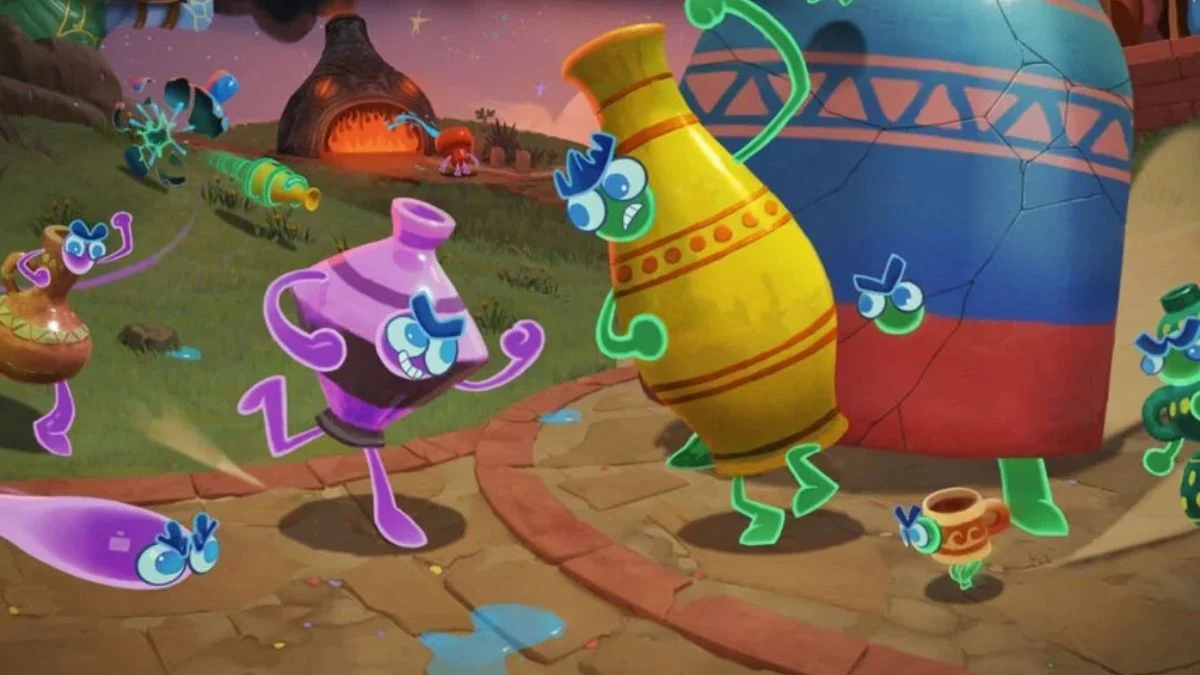
Double Fine Productions is officially taking back control of its games after seven years under Microsoft, and for players, that changes where their money goes. The Psychonauts developer has confirmed that it owns—or is in the process of owning—the intellectual property and publishing rights to every game it created during its Xbox era.
The clarification comes as Double Fine begins a new independent chapter after leaving Xbox earlier this year. CEO Tim Schafer confirmed during an appearance on Kinda Funny Games that purchases of the studio’s catalogue now support Double Fine directly, giving the developer another source of revenue as it works to keep its next projects moving.
There is still some paperwork to finish. Certain games may continue to list Microsoft as the owner or publisher for now because the administrative transfer has not been completed everywhere. The ownership transition, however, is underway, meaning Double Fine is not simply independent in name—it is also regaining control of the games it made during its time with Microsoft.
More Game News: Big shifts in how developers handle multiplayer and ownership are shaping up to be a bigger story in gaming this year. For more, read our story on the Modern Warfare 4 beta update shaking up multiplayer with Cachette, Inflation and TTK changes.
Tim Schafer Confirms Double Fine Is Getting Its Games and Publishing Rights Back
During the Kinda Funny Games appearance, Schafer directly addressed one of the biggest questions surrounding Double Fine’s return to independence: does the studio actually make money when players purchase its games?
His answer was clear. The transfer of the intellectual property has come back to Double Fine, along with the publishing rights to its games.
Schafer also explained why some storefront listings may still cause confusion. Microsoft can continue appearing as the listed owner or publisher on certain titles while the administrative process works its way through the various systems. In other words, seeing Microsoft’s name on a listing right now does not necessarily mean Double Fine has failed to regain the rights.
The important part for players is that the transition is happening. Double Fine is regaining control over both the intellectual property and publishing rights connected to its catalogue.
That publishing control matters because it gives Double Fine a much more direct role in distributing its games and collecting revenue from them. Instead of simply having creative control while Microsoft handles the business side, the independent studio is now taking control of a valuable catalogue it can use to help fund its future.
And Schafer wants players to know that buying those games actually matters.
More Legal & Rights News: Questions about who actually owns and controls creative work are playing out across more than one corner of the industry this week. For more, check out our story on Take-Two’s federal subpoenas targeting Microsoft and Discord in the hunt for GTA 6 leaker CyberLeek.
Buying Double Fine Games Now Directly Helps the Studio
Schafer specifically encouraged players to support Double Fine by purchasing its games.
The message is especially important because the studio is entering independence with a smaller team and a need to carefully manage its finances. Existing games can continue generating revenue while Double Fine works on whatever comes next.
That catalogue includes games released during Microsoft’s ownership, such as Psychonauts 2, Keeper, and Kiln, alongside Double Fine’s much larger collection of games created before Microsoft acquired the studio.
For players who already love Double Fine’s work, the situation creates a pretty straightforward way to support the developer: buying its games helps provide revenue that can extend the studio’s financial runway. Schafer has described that runway as something the studio needs to protect while it develops future projects.
That makes the return of the publishing rights more than a technical business change. It gives Double Fine greater control over an existing source of income at a moment when the studio is rebuilding itself.
More Industry Support News: Player purchases directly funding a studio’s next chapter is a theme showing up across more than one corner of gaming. For more, check out our coverage of 2XKO ending active development in 2026, including refunds and what happens next.
Double Fine Returned to Independence on July 6
Double Fine’s return to independence was announced on July 6, 2026, as part of Microsoft’s much larger restructuring of Xbox.
In its official announcement, Double Fine said the agreement with Xbox would preserve the studio’s history and culture while returning ownership of its games to the company.
Xbox CEO Asha Sharma also previously explained that Double Fine and Compulsion Games would return to management as independent studios while retaining their intellectual property, catalogues, and runway for their next games.
That distinction is crucial. Double Fine was not simply being closed or having its projects abandoned. The arrangement allowed the studio to leave the Xbox structure while taking its existing intellectual property and game catalogue with it.
Now, Schafer’s latest comments provide additional clarity on what that arrangement means in practice: Double Fine is also receiving the publishing rights needed to sell and generate revenue from those games.
More Independence & Industry News: Studios and communities renegotiating their relationship with bigger platforms is a running theme in gaming right now. For more, read our story on the PlayStation Blackout protest against Sony’s digital-only future.
Microsoft Bought Double Fine in 2019
The independent comeback comes seven years after Microsoft acquired Double Fine in 2019 and brought it into Xbox Game Studios.
During those seven years, Double Fine released Psychonauts 2, Keeper, and Kiln. The studio’s catalogue therefore includes games created and released during both its independent years and its time under Microsoft.
Psychonauts 2 became one of the studio’s biggest critical successes, while Keeper and Kiln represent more recent additions to its lineup.
Now, with the intellectual property and publishing rights returning to Double Fine, the studio has more control over the games it created during its Xbox era.
That also means players purchasing those titles can contribute directly to the studio’s operations rather than simply supporting Microsoft’s broader publishing structure. The exact storefront listings may take longer to catch up, but the rights transfer itself is moving forward.
More Big Publisher News: Major publishers navigating their relationships with the studios and communities under them is a bigger story than usual this year. For more, read our story on Nintendo wiping 400+ Switch emulator repositories from GitHub in a massive DMCA sweep.
Double Fine’s Financial Runway Is Now More Important Than Ever
Independence sounds exciting, but Double Fine is also facing the less glamorous reality of paying for its next games.
Schafer described the studio’s financial position as “a runway, not a freeway.” The phrase highlights just how carefully Double Fine needs to manage its available resources.
Game sales can help extend that runway. New publishing arrangements and future projects can also contribute. The studio’s existing catalogue therefore becomes an important financial asset as Double Fine figures out its next move.
One of those next moves is already scheduled.
Double Fine is bringing back its long-running Amnesia Fortnight game jam, with the new event scheduled to begin on August 31, 2026.
This time, the event is being connected to a Kickstarter campaign that will allow backers to vote on which of Double Fine’s prototypes should receive further development.
More Console Game News: Managing resources carefully while still delivering a polished release is a balancing act across the industry right now. For more, read our story on why The Blood of Dawnwalker won’t hit 60 FPS on PS5, PS5 Pro or Xbox Series X.
Amnesia Fortnight Is Bringing Players Into Double Fine’s Next Chapter
Amnesia Fortnight has been part of Double Fine’s creative history for years. The concept gives the studio an opportunity to temporarily step away from its regular projects and explore new ideas through prototypes.
The 2026 return is being framed as Amnesia Fortnight 2026 – Indie Reboot, and this version brings the community directly into the process.
The campaign launches on August 31 and runs through most of September. Backers will be able to choose which ideas become prototypes, with four ideas ultimately selected for development. One winning prototype will then be polished into a small game under Double Fine’s new label for small, unusual projects, Double Fine Action Labs.
The entire process will also be filmed by 2 Player Productions and turned into a documentary, giving players a behind-the-scenes look at how the ideas evolve.
For Double Fine, this is not just another game jam. It gives the independent studio a way to experiment, involve its community, generate prototypes, and potentially discover the foundation for a future project.
And the timing could hardly be more significant.
Double Fine is trying to determine what comes next while simultaneously operating with fewer employees and a limited financial runway.
Double Fine Cut Roughly a Quarter of Its Staff
The return to independence has come with painful changes.
Double Fine cut roughly a quarter of its staff during the transition. The studio had around 90 employees, meaning approximately 23 people were laid off.
The layoffs came shortly after the studio separated from Xbox. Double Fine explained that the reduction was necessary to bring the company down to a size it could sustain. Schafer described the decision as deeply painful and said the survival of the studio was the reason such a step became necessary.
That makes the restored game catalogue even more important.
Double Fine now has a smaller team and must carefully balance its resources, but it also has control over a substantial collection of games capable of generating revenue.
The studio therefore enters its independent era with both creative freedom and serious financial responsibilities.
More Community-Driven Game News: Letting the community shape what gets made next is a growing trend across game development. For more, check out our full breakdown of The Duskbloods’ 8-player PvPvE multiplayer and online features.
Compulsion Games Took a Similar Path Out of Xbox
Double Fine was not the only Xbox-owned studio to emerge from the restructuring with its intellectual property intact.
Compulsion Games also returned to independence and retained ownership of its intellectual property and back catalogue.
The studio is known for Contrast, We Happy Few, and South of Midnight. Like Double Fine, Compulsion was able to leave the Xbox structure while taking control of its existing games and franchises with it.
The two studios therefore found themselves in similar positions after Microsoft’s restructuring: independent again, owners of their catalogues, and responsible for figuring out how to fund their next chapters.
For Double Fine, that process is already taking shape through game sales, its financial runway, and the upcoming Amnesia Fortnight campaign.
More Studio Milestone News: Other studios are hitting their own major turning points around the same time. For more, read our story on Marvel’s Wolverine going gold after five years as its September 15 PS5 launch nears.
Double Fine’s Independent Era Starts With More Control—and a Lot to Prove
This is a major turning point for Double Fine.
After seven years under Microsoft, the studio once again controls its own direction while also regaining the intellectual property and publishing rights for the games it created during that period.
The transition is not completely reflected across every storefront yet. Some listings may continue to display Microsoft while the administrative work is finalized. That does not change the broader situation confirmed by Schafer: the rights are returning to Double Fine.
For players, the practical takeaway is huge. Buying Double Fine’s games now supports the independent studio and contributes to the financial runway it needs to keep developing new ideas.
At the same time, Amnesia Fortnight 2026 – Indie Reboot gives the community a chance to participate in what comes next. Beginning August 31, backers will be able to vote on prototypes, watch the development process unfold, and help determine which idea becomes a small finished game.
Double Fine is therefore heading into its next era with ownership of its games back in its hands, a catalogue that can generate revenue, a smaller but sustainable team, and a community-driven experiment ready to begin.
For a studio built around strange ideas and creative risks, the next chapter is already looking very Double Fine.
More Studio Spotlight News: Other studios are also opening up about the ideas and philosophy shaping their next big project. For more, read our story on Hidetaka Miyazaki explaining The Duskbloods’ wildest ideas and why FromSoftware isn’t leaving single-player games behind.
Sources
Image Credit:
- Featured Image: Double Fine


Leave a Reply