

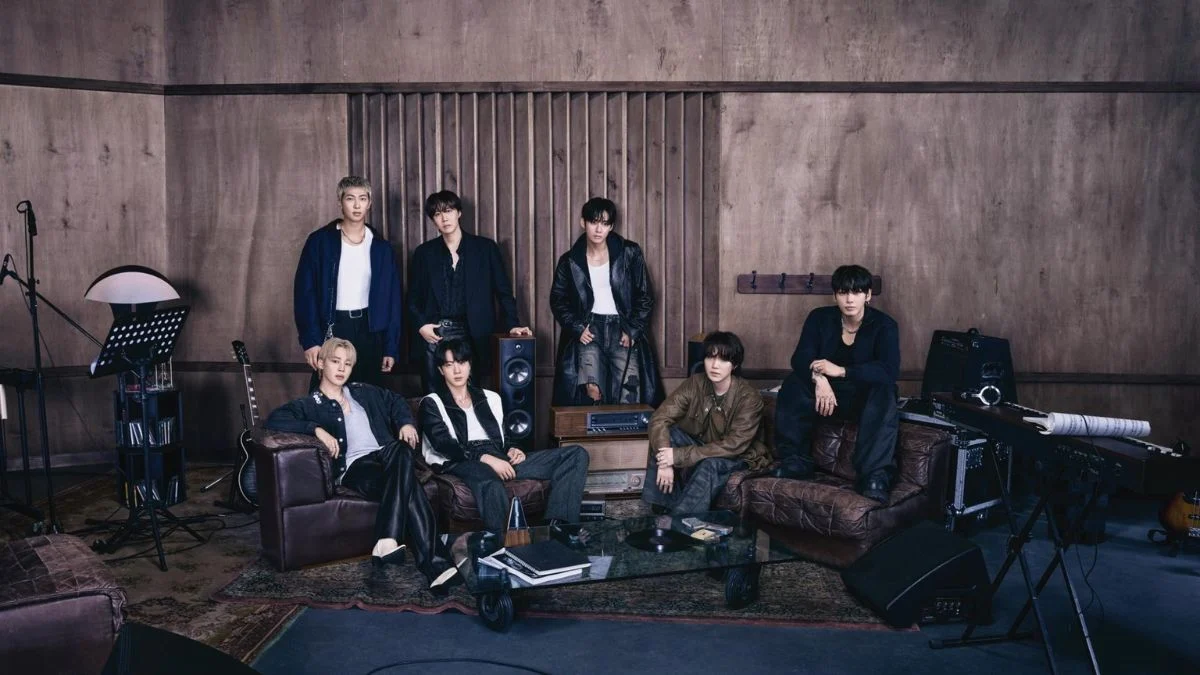
“Hooligan” is Track 2 on BTS’s fifth studio album ARIRANG, released on March 20, 2026, under BIGHIT MUSIC.
If “Body to Body” announces that BTS is back, “Hooligan” makes absolutely clear that they are not here to play it safe. The second track on ARIRANG is loud, chaotic, and deliberately unhinged, and it works precisely because of that. Here is a full breakdown of the song, its meaning, and why it has ARMY losing their minds over j-hope’s verse.
Hooligan Song at a Glance
| Detail | Info |
| Song Title | Hooligan |
| Album | ARIRANG |
| Track Number | 2 |
| Track Length | 3:02 |
| Release Date | March 20, 2026 |
| Label | BIGHIT MUSIC / HYBE |
| Producers | El Guincho, Fakeguido, Jasper Harris |
| Genre | Alternative Hip-Hop / Pop Rock |
| Distributor | YG PLUS and HYBE |
What Is “Hooligan” About?
“Hooligan” operates as a declaration of controlled chaos. The central idea is that BTS has reached a point in their career where they can afford to be a little reckless, to show up loud and unbothered, knowing that everything they do carries weight regardless.
The word “hooligan” itself is key. It carries connotations of disorder, rule-breaking, and unpredictability, but in BTS’s framing it becomes something celebratory rather than destructive. They are not hooligans in the sense of causing harm. They are hooligans in the sense of refusing to conform to expectations or behave the way people might want them to.
The song also functions as a statement about international dominance. Lines about being unforgettable, about K representing something that demands better pop, and about being heard around the clock position BTS not just as K-pop artists but as a global force that operates entirely on its own terms.
Per Big Hit and HYBE’s official album framing, “Hooligan” reflects the time BTS spent travelling across the world and carving out their own path, symbolising the group as pioneers who defied norms, left a global trail, and now return unapologetically chaotic on their own terms.
There is also a layer of cultural confidence woven through the track. The use of the traditional Korean exclamation “얼쑤” (eolssu), drawn from folk music traditions like pansori, sits alongside English slang and Latin American folk references in the same song. The juxtaposition is intentional, reflecting the same philosophy that runs through the entire ARIRANG album: BTS carries their Korean identity into every global space they occupy rather than leaving it at the door.

Key Lyrical Moments and Their Meanings
The “얼쑤” Reference
During j-hope’s verse, the word “얼쑤” appears alongside lines about being out of control and jumping with energy. Pronounced “eol-ssu”, it is an energetic shout of encouragement and excitement used in pansori, the traditional Korean form of narrative singing, as well as in broader folk performance contexts. Placing it inside a hip-hop verse alongside English slang and Latin American cultural references grounds the track’s chaos in specifically Korean roots, consistent with ARIRANG’s central theme throughout.
The El Cucuy Reference
SUGA’s verse references El Cucuy, a figure from Latin American folklore equivalent to a boogeyman used to frighten children. Using this reference positions BTS as an intimidating, almost mythical presence that people recognise and respond to instinctively, without needing an explanation. The line suggests a level of cultural fluency and global reach that the song’s broader theme reinforces throughout.
The “Bigger Mop” Bridge
RM’s bridge frames the group’s impact as a mess that keeps growing, one that requires a bigger response to deal with. Rather than apologising for the disruption BTS causes, the lyric leans into it with self-aware humour while remaining genuinely confident. It is one of the more quotable moments on the track and captures the song’s overall tone perfectly.
The “This that K” Line
This line is a confident assertion that K-pop, and BTS specifically, has raised the standard for popular music globally. It avoids being boastful by framing it as a simple observation rather than a direct challenge. Several fan commentators have noted it as one of the clearest statements of intent on the entire album.

Who Produced “Hooligan”?
The production and writing credits on “Hooligan” bring together a tightly focused team compared to the broader collaborative pool on some other ARIRANG tracks.
| Role | Contributors |
| Producers | El Guincho (Pablo Diaz-Reixa), Fakeguido (Pablo Martinez Alborch), Jasper Harris |
| Songwriters | RM, SUGA, j-hope, Jung Kook, El Guincho, Michel Magne, Fakeguido, MarcLo, Eskeerdo, Delacey, Jasper Harris, Derrick Milano, Pdogg, Kirsten Spencer |
| Vocals | RM, Jin, SUGA, j-hope, Jimin, V, Jung Kook |
El Guincho, the Spanish producer and songwriter, plays a central role here, and his influence is audible in the track’s sharp, percussive texture and unpredictable energy.
On the “Tamouré Hully-Gully” Sample: “Hooligan” interpolates Michel Magne’s “Tamouré Hully-Gully”, a 1960s French track, which explains why Magne appears in the songwriting credits. Some fans have drawn a connection between the “hully-gully” reference and the Korean card game Halli Galli, which BTS has played frequently on variety content and is particularly associated with Jin. Whether intentional or coincidental, the link has become a talking point within the ARMY community.
The song’s origin traces back directly to Jung Kook, who revealed in BTS’s Studio Notes live stream that the word “Hooligan” came to him spontaneously during the creative process, with no specific reference point such as football culture or anything external. In his own words:
“The word ‘Hooligan’ just popped into my head. I didn’t know it would become the title. The song was born from that.”
He also helped shape the chorus alongside the production team, making his contribution more structural than it might initially appear from the credits alone. The spontaneity of the track’s origin is widely considered fitting given the song’s chaotic energy.
How “Hooligan” Fits the Album
As Track 2, “Hooligan” continues the outward-facing, high-energy momentum that “Body to Body” established. The first half of ARIRANG is deliberately louder and more confrontational before the album turns inward at the interlude “No. 29.” “Hooligan” serves as the second push in that direction, and it does so with a sonic palette that is notably different from its predecessor.
Where “Body to Body” leans into electronic-pop and club production, “Hooligan” is a rap-forward track built around a strings arrangement and the sound of sharp blades clashing, as described in The Hollywood Reporter’s track-by-track breakdown of ARIRANG. Billboard has also noted the track’s eerie laughter samples, clashing blades, and cavernous 808 bass as defining sonic elements, while Clash described it as audacious and built on a rhythm track constructed from sharpening knives. The combination of orchestral texture and hip-hop aggression gives the song a sound that does not resemble anything else on the album.
The Hollywood Reporter also noted that “Hooligan” is one of the most sonically interesting tracks on ARIRANG, with the vocal line’s contribution to the chorus adding a melodic contrast that keeps the song from staying in one lane throughout.

Fan Reactions to “Hooligan”
Reception to “Hooligan” on YouTube and social media reflected a fairly consistent pattern across the ARMY community, though not without some variation in opinion.
What landed strongly: The rap line drew the most enthusiastic responses, with j-hope’s verse in particular highlighted repeatedly across comments as a standout moment. The transition from j-hope’s verse into Jung Kook’s vocal delivery was widely described as one of the most satisfying moments on the album. The repetitive refrain section also generated significant discussion, with many fans describing it as immediately addictive and clearly designed for live audiences to join in on.
Where opinions split: Some listeners noted that “Hooligan” requires more listens to fully appreciate than “Body to Body,” with the dense layering and rapid tonal shifts demanding closer attention. A portion of fans also felt the song works better as part of the album sequence than as a standalone track. However, the overall critical reception leaned positive, with Billboard and Clash both highlighting it among the more experimental moments on the album.
On the rap line specifically: The collective performance of SUGA, RM, and j-hope drew widespread praise as one of the most exciting moments on ARIRANG so far. However, some vocal line fans noted they would have appreciated more prominent moments for Jin, Jimin, V, and Jung Kook within the track’s structure, given how rap-dominant the song is.
The track was trending in multiple markets following release, and early streaming numbers reflected strong listener engagement across both domestic and international audiences.


Leave a Reply