

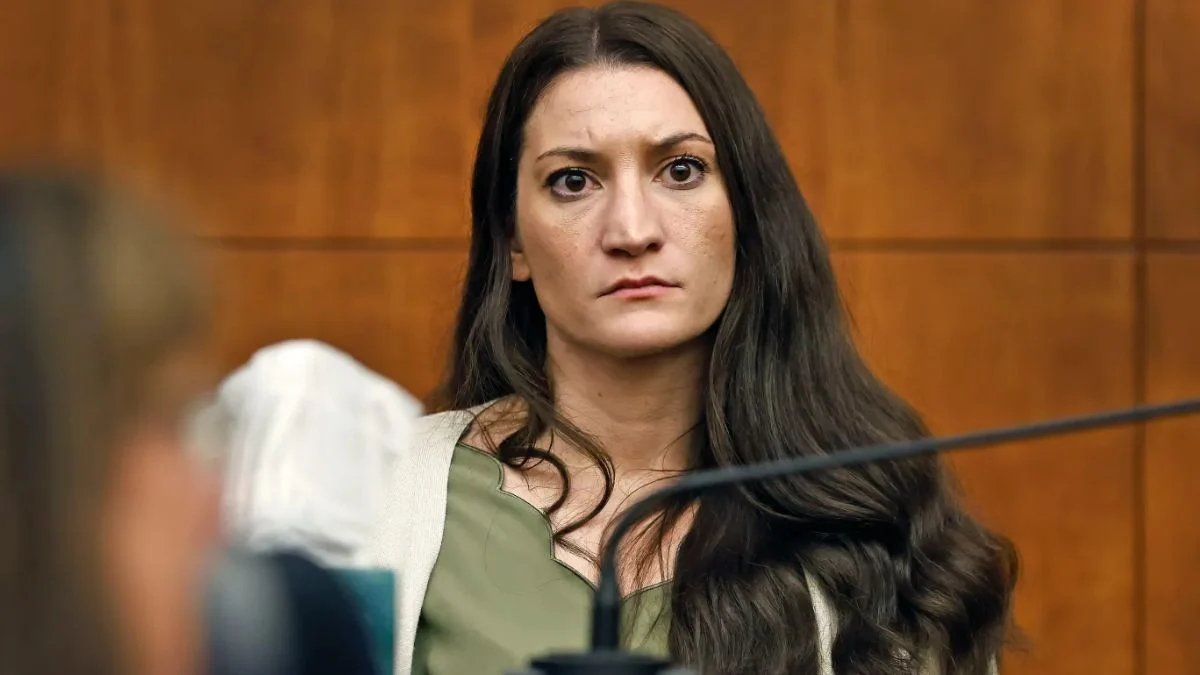
The trial of Lindsay Clancy, the former Massachusetts labor and delivery nurse accused of killing her three young children in one of America’s most heartbreaking family tragedies, is finally underway. But despite the devastating nature of the case, the central legal question is not simply what happened inside the family’s Duxbury home on January 24, 2023—it is whether Clancy can be held criminally responsible under Massachusetts law.
Rather than focusing solely on the deaths of Cora (5), Dawson (3) and Callan (then about 7–8 months old), the trial centres on her defence’s claim that severe postpartum mental illness, including postpartum psychosis, left her unable to appreciate the wrongfulness of her actions or conform her conduct to the law at the time of the incident. Prosecutors, meanwhile, argue that the killings were deliberate and premeditated.
As opening statements begin, prosecutors and defense attorneys are preparing to present two dramatically different explanations for what happened inside the family’s Duxbury home on January 24, 2023. The trial is expected to rely heavily on psychiatric experts, medical records, crime-scene evidence and emotional testimony from Lindsay’s former husband, Patrick Clancy, who is expected to be among the first witnesses.
Lindsay Clancy trial timeline: Key events from the 2023 deaths to the 2026 murder trial
| Date | Event |
| January 24, 2023 | Cora (5), Dawson (3) and Callan (about 7–8 months) were found unconscious inside the family’s Duxbury home. |
| January 24, 2023 | Patrick Clancy returned home after picking up takeout food and medicine at Lindsay’s request. |
| January 24, 2023 | Lindsay was found outside the home after an apparent suicide attempt. |
| January 27, 2023 (approx.) | Callan died after being treated at Boston Children’s Hospital. |
| July 2026 | Prosecutors dropped three strangulation charges, leaving three murder charges. |
| July 24, 2026 | Judge William Sullivan restricted public distribution of Patrick Clancy’s 911 call and the children’s autopsy photographs. |
| July 27, 2026 | Opening statements were scheduled to begin after jury selection concluded. |
Cases involving young victims and premeditation have drawn similarly intense scrutiny elsewhere, including one where a teenage gunman’s guilty plea revealed detailed evidence of planning. That case is covered in Apalachee High School Shooting: The Chilling Evidence Colt Gray Left Behind Before Pleading Guilty to All 55 Charges.
What happened inside the Clancy family home on January 24, 2023?

The events that led to the criminal case began on the evening of January 24, 2023, at the family’s home on Summer Street in Duxbury, Massachusetts.
According to prosecutors, Patrick Clancy briefly left the house after Lindsay asked him to pick up takeout food and medicine for one of their children. He was gone for about an hour.
When Patrick returned, the home was unusually quiet.
He discovered the bedroom door locked, noticed blood inside the room and found a second-story window open.
Outside the house, he found Lindsay Clancy on the ground with injuries to her wrists and neck after she had apparently jumped from the second-story window in what authorities describe as an attempted suicide.
During the subsequent 911 call, Patrick asked Lindsay what she had done.
She indicated that she had tried to kill herself.
When he asked about the children, she directed him to the basement.
Patrick found Cora, Dawson and Callan unconscious in the basement.
First responders determined that the children had been strangled, with prosecutors alleging exercise bands were used.
Cora and Dawson were pronounced dead that night.
Callan was airlifted to Boston Children’s Hospital, where he died several days later, around January 27, 2023.
Lindsay survived the fall but suffered spinal injuries that left her paraplegic. Since then, she has remained under secure medical and psychiatric care, including treatment at Tewksbury Hospital.

Unresolved questions surrounding a death have also kept another closely watched case active for months, as investigators worked to determine what happened. That story is detailed in Big Sur Hiker Death Mystery Finally Solved: Why Joanna Ruth Shields’ Case Took Months to Reach a Shocking Conclusion.
Lindsay Clancy does not dispute the killings—but her defence centres on postpartum psychosis
One of the most unusual aspects of this case is that Lindsay Clancy does not dispute causing the deaths of her children.
Instead, the dispute is over criminal responsibility.
She has pleaded not guilty and is pursuing a lack-of-criminal-responsibility (insanity) defence under Massachusetts law.
Her legal team argues that she was suffering from severe postpartum mental illness, including postpartum psychosis, together with the effects of multiple psychiatric medications.
Under Massachusetts law, the defence must show that, because of mental disease or defect, she could not appreciate the wrongfulness of her conduct or conform her behaviour to the law.
Attorney Kevin Reddington has argued that the case reflects systemic failures in treating postpartum mental illness.

Forensic evidence has similarly played a defining role in other high-profile cases involving young victims, as prosecutors laid out findings in a separate closely followed investigation. That case is examined in D4vd Murder Case: Prosecutors Reveal Chilling Forensic Evidence They Say Links David Anthony Burke to the Death of 14-Year-Old Celeste Rivas Hernandez.
How Lindsay Clancy’s mental health became central to the murder trial
According to the defence, Lindsay had a history of depression, but her condition worsened significantly after the birth of her third child.
She reportedly experienced:
- Insomnia
- Depression
- Intrusive thoughts
She sought treatment repeatedly and voluntarily admitted herself to McLean Hospital for several days in early January 2023.
The defence also argues that she was rapidly prescribed 11 to 13 psychiatric medications over roughly four months.
Those medications reportedly included:
- Zoloft
- Fluoxetine
- Ambien (zolpidem)
- Trazodone
- Ativan
- Klonopin
- Valium
- Seroquel (quetiapine)
- Lamictal (lamotrigine)
Her attorneys have alleged that she was misdiagnosed, that doctors failed to properly identify bipolar disorder with postpartum onset or postpartum psychosis, that she was subjected to polypharmacy, and that her condition worsened because of inadequate monitoring.
Separate civil lawsuits filed by both Lindsay and Patrick Clancy in 2026 allege medical negligence contributed to the tragedy.
Prosecutors, however, dispute much of the defence’s account.
They argue Lindsay was never taking more than a few medications simultaneously and point to periods where her condition appeared to improve.
The prosecution instead argues the killings were deliberate, planned acts, pointing to allegations that Lindsay intentionally sent Patrick out of the house, used specific means to kill the children and then attempted suicide.

Families pushing for greater transparency in the aftermath of a loved one’s death have also made headlines in other recent cases, including one family’s call for an independent review following a young athlete’s passing. That story is covered in Nolan Wells Independent Autopsy Update: Ben Crump Reveals New Findings as Mississippi Investigation Enters Critical Phase.
Judge limits release of 911 call and autopsy photos before trial
Just days before opening statements, Judge William Sullivan issued an important pretrial ruling.
On July 24, 2026, he partially granted Patrick Clancy’s request to shield some of the trial’s most sensitive evidence.
The judge ruled that Patrick Clancy’s 911 call and the children’s autopsy photographs may be presented in court but cannot be recorded, reproduced, distributed or publicly disseminated by the media.
Jurors and people inside the courtroom will still be able to hear and view the evidence, while reporters may describe what they observed.
The judge concluded there was a substantial likelihood of harm to the family if the material were widely circulated.
The defence supported Patrick’s request.
Patrick Clancy expected to play a major role in Lindsay Clancy trial
Patrick Clancy remains one of the trial’s most significant witnesses.
He is listed as a witness for both the prosecution and the defence and is expected to testify early in the proceedings.
Since the tragedy, Patrick has publicly expressed forgiveness toward Lindsay, saying he was “not married to a monster” but to someone who became ill.
He has since divorced Lindsay, remarried a fertility and reproductive endocrinology specialist and now lives in the New York City area.

Surviving a violent, life-altering attack and later speaking about it publicly is a thread that has emerged in other stories as well, including one actor’s account of a near-fatal stabbing decades ago. That story is detailed in Coronation Street Legend John Savident’s Chilling Real-Life Stabbing: How Fred Elliott Star Survived a Near-Fatal Attack That Shocked Britain.
What happens if Lindsay Clancy is convicted—or found not criminally responsible?
The trial is expected to last six to eight weeks.
Jurors are expected to hear extensive testimony from psychiatric experts alongside medical records, crime-scene evidence and the restricted 911 call.
The jury will ultimately decide whether Lindsay was legally responsible for the deaths of Cora, Dawson and Callan.
If she is found guilty of first-degree murder, she faces life imprisonment without the possibility of parole under Massachusetts law.
If she is found not criminally responsible, she would instead be committed to a Massachusetts state psychiatric facility.
Conclusion
The Lindsay Clancy case remains one of the most closely watched criminal trials in the United States because it sits at the intersection of criminal law, psychiatry and postpartum mental health. Lindsay Clancy acknowledges causing the deaths of her three children, but the court must determine whether she can be held criminally responsible under Massachusetts law.

Sentencing outcomes tied to fatal incidents have also drawn public attention in other recent cases, including one entertainer who received a lengthy prison term following a deadly hit-and-run. That case is covered in Rapper and Netflix Star Ghetts Sentenced to 12 Years for Fatal London Hit-and-Run That Killed Student.
As the trial progresses, jurors will weigh competing arguments about severe postpartum mental illness, psychiatric treatment, medication history and alleged premeditation before deciding one of the most consequential questions in the case.
Disclaimer: This article is based on thorough research from publicly available reporting and court developments. Information has been compiled from the following sources: NBC Boston, CNN, and publicly reported court records. The trial is ongoing, and allegations, legal arguments and evidence described reflect court proceedings and claims made by the prosecution and defence that will ultimately be evaluated by the jury.
Sources:
Image Source:
- Greg Derr/POOL


Leave a Reply