
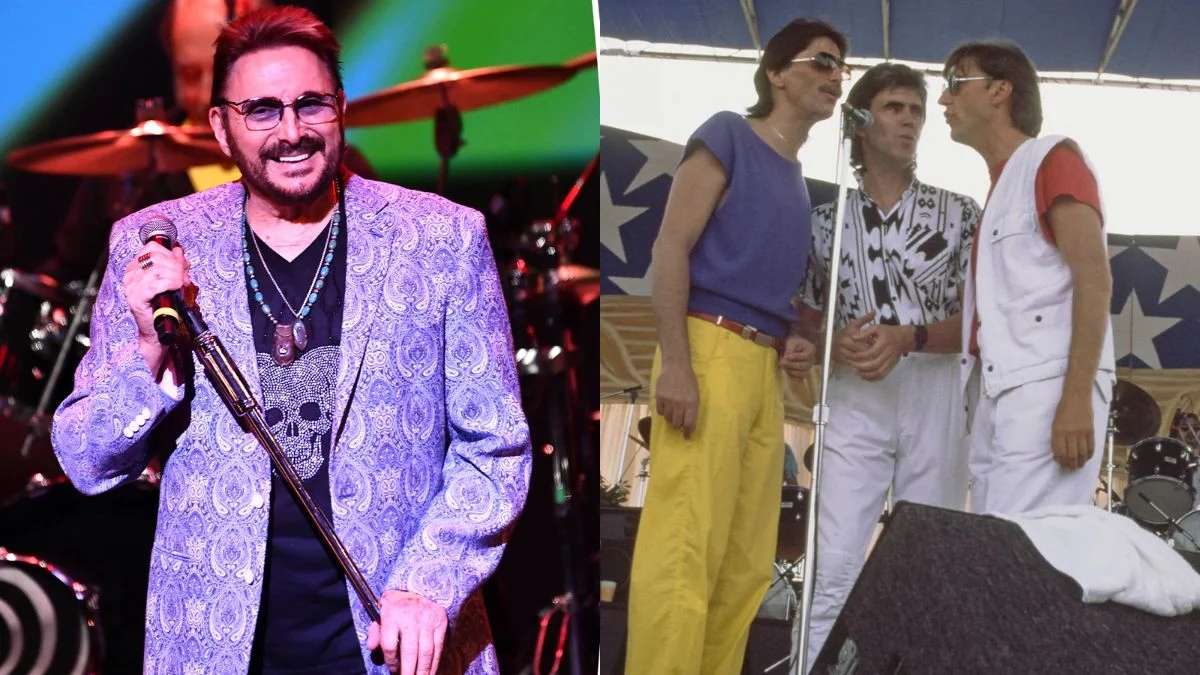
The voice that once blasted through AM radios, stadium speakers, jukeboxes, and living rooms across America has gone silent. Chuck Negron, founding member and iconic lead vocalist of the legendary rock band Three Dog Night, passed away on February 2, 2026, at the age of 83.
Negron died peacefully at his home in the Studio City neighborhood of Los Angeles, California, surrounded by his loving family. The cause of death was confirmed as complications from heart failure and chronic obstructive pulmonary disease (COPD), a condition he had battled for decades. His publicist, Zach Farnum, confirmed the news in statements shared across multiple media outlets and on Negron’s official social platforms.
As of early February 4, 2026, Negron’s official website had not yet posted an announcement of his passing, though it still featured recent blog updates and notes about his long struggle with COPD.
For millions of fans, Chuck Negron was not just a singer — he was the emotional engine behind one of the most successful bands in American rock history. And his story, filled with glory, collapse, survival, and redemption, is as unforgettable as the music he left behind.
In This Post:
Early Life of Chuck Negron: From Bronx Street Corners to National Stages
Born Charles Negron II on June 8, 1942, in Manhattan, New York City, Chuck Negron grew up in the Bronx during a turbulent childhood. His father was a Puerto Rican nightclub performer, and after his parents separated, Negron and his twin sister Nancy were placed in foster care because their mother could not afford to raise them.
Even at a young age, Negron showed exceptional promise. He balanced two passions: basketball and music. On Bronx street corners, he sang in doo-wop groups, developing the soulful style that would later define his career. He also performed at local venues, including the legendary Apollo Theater.
Initially, sports seemed like his future. Negron earned a basketball scholarship to Allan Hancock College in Santa Maria, California, later transferring to California State University in Los Angeles. But destiny intervened when he won a school talent show. That victory convinced him that singing, not basketball, was his true calling.
Soon, Negron headed deeper into the Los Angeles club scene — unaware that he was about to become one of rock’s most recognizable voices.

Formation of Three Dog Night: How Chuck Negron Helped Build a Rock Powerhouse
In the mid-1960s, Negron began performing in Los Angeles clubs, where he met fellow vocalists Cory Wells and Danny Hutton. The trio’s chemistry was instant. They formed a group in 1967 initially called Redwood before changing their name to Three Dog Night — inspired by Australian Indigenous slang describing a brutally cold night requiring three dogs for warmth.
The group nearly signed with the Beach Boys’ Brothers Records but instead landed with ABC-Dunhill. They expanded the lineup with drummer Floyd Sneed, bassist Joe Schermie, and keyboardist Jimmy Greenspoon, creating the classic Three Dog Night sound.
Unlike many bands of their era, Three Dog Night focused on interpreting and reworking songs by outside writers instead of composing their own material. Their emotional delivery and layered harmonies earned them the nickname “The Kings of Oversing.”
It was here that Chuck Negron’s multi-octave tenor began to dominate rock radio.
Three Dog Night’s Massive Success: Chuck Negron’s Golden Era
From 1969 to 1975, Three Dog Night became one of the most successful American bands of the late ’60s and early ’70s. Their blend of R&B, rock-and-roll, and doo-wop resonated across generations.
The numbers alone tell the story:
- 21 consecutive Top 40 hits on the Billboard Hot 100
- 18 reached the Top 20
- 12 albums certified gold
- Four albums released in just 18 months
At their peak, Three Dog Night out-grossed Sly and the Family Stone, Creedence Clearwater Revival, Elvis Presley, and the Rolling Stones. They also appeared on the inaugural Dick Clark’s “New Year’s Rockin’ Eve” in December 1972.
Negron’s distinctive look — highlighted by his famous drooping mustache — and his soaring voice made him the emotional anchor behind many of the band’s most unforgettable songs.

Chuck Negron’s Most Famous Songs With Three Dog Night
Chuck Negron sang lead on many of the band’s biggest hits, helping define the sound of 1970s American rock.
“Joy to the World” (1971 – Hoyt Axton)
Opening with the legendary line, “Jeremiah was a bullfrog!”, Negron screamed the lyric on a high D scale for maximum impact. The song:
- Hit No. 1
- Outsold every other song in 1971
- Earned two Grammy nominations
- Appeared in films like The Big Chill and Forrest Gump
Negron later recalled liking the demo’s fun, jam-heavy vibe and choosing to exaggerate the opening for shock value.
“One” (1969 – Harry Nilsson)
Transformed into a haunting cry of solitude, the song peaked at No. 5 and became one of Negron’s signature performances.
“An Old Fashioned Love Song” (Paul Williams)
“Easy to Be Hard” (from Hair)
Other iconic tracks include:
- “Mama Told Me (Not to Come)” – Randy Newman
- “Eli’s Coming” – Laura Nyro
- “Black and White”
- “Celebrate”
- “Shambala”
- “The Show Must Go On”
Three Dog Night’s success helped popularize writers like Harry Nilsson, Randy Newman, Laura Nyro, Elton John, and Bernie Taupin on the pop charts.
Negron even performed “Joy to the World” at back-to-back Grammy ceremonies, a rare honor that reflected the song’s cultural dominance.

Chuck Negron’s Addiction Battle and the Fall of Three Dog Night
By the mid-1970s, burnout and internal feuds tore through the band. Three Dog Night officially broke up in 1976.
Behind the scenes, Negron’s life was unraveling. His severe heroin and drug addiction nearly killed him multiple times. Once living in a luxurious Hollywood Hills villa, Negron lost his family, fortune, and career. At his lowest, he became homeless, sleeping on Skid Row and even on a mattress in a vacant lot.
He was fired from the band in the mid-1980s after relapsing following a brief 1982 reunion. Over the years, Negron endured 37 rehab stints and spent 13 years addicted to drugs before finally achieving sobriety on September 17, 1991.
After recovery, Negron dedicated himself to helping others struggling with addiction, often stating bluntly that drugs don’t enhance creativity — they kill you.
Chuck Negron’s Memoir and Solo Career After Recovery
In 1999, Negron published his brutally honest memoir Three Dog Nightmare, later reissued 20 years later. Chapters carried raw titles like:
- “Making Millions and Stoned All the Time”
- “Threw Up My Guts and Loved It”
Alongside the book, he released a companion solo album titled Long Road Back.
After recovery, Negron launched a solo career, releasing seven albums between 1995 and 2017, including Joy to the World and Long Road Back.
During the pandemic, when touring stopped due to his COPD risks, Negron adapted by hosting weekly live vinyl and memorabilia sales on platforms like Whatnot, staying connected with fans worldwide.
In 2025, he reconciled with longtime bandmate Danny Hutton after decades of estrangement. They exchanged apologies and closed a painful chapter. Hutton remains the only original member still touring with Three Dog Night. Cory Wells died in 2015 from blood cancer.
Chuck Negron’s Personal Life, Marriage, and Family
Negron was married four times, most recently to his manager, Ami Albea Negron. One of his former wives was Julie Densmore, who had previously been married to The Doors drummer John Densmore.
He is survived by five children. In a 1998 interview, Negron reflected that inner peace and family eventually mattered more to him than chart success or money.
After decades of chaos, fame, and recovery, he finally found balance late in life.

Chuck Negron’s Legacy: Why the Three Dog Night Singer Still Matters
Chuck Negron’s voice became woven into the soundtrack of American culture. His music played on rock radio, in movie soundtracks, and across generations of listeners.
Fans and outlets flooded social media with tributes, celebrating his unmistakable vocals and the joy he delivered through songs like “Joy to the World.” One fan summed it up perfectly:
“His voice wasn’t just heard, it was felt.”
Negron’s life story — from Bronx foster care to chart-topping superstardom, from addiction and homelessness to recovery and peace — stands as one of rock’s most powerful redemption arcs.
He didn’t just sing hits. He survived his own downfall and used his story to help others climb back up.
As the world remembers Chuck Negron, the bullfrog still sings — echoing across radios, playlists, memories, and hearts.
And in the end, his voice remains exactly what it always was: joyful, human, and unforgettable.


Leave a Reply