

हिंदी में पढ़ें: कामाख्या देवी मंदिर गुवाहाटी: जहाँ नीलाचल पर्वत पर दिव्य शक्ति जागृत होती है
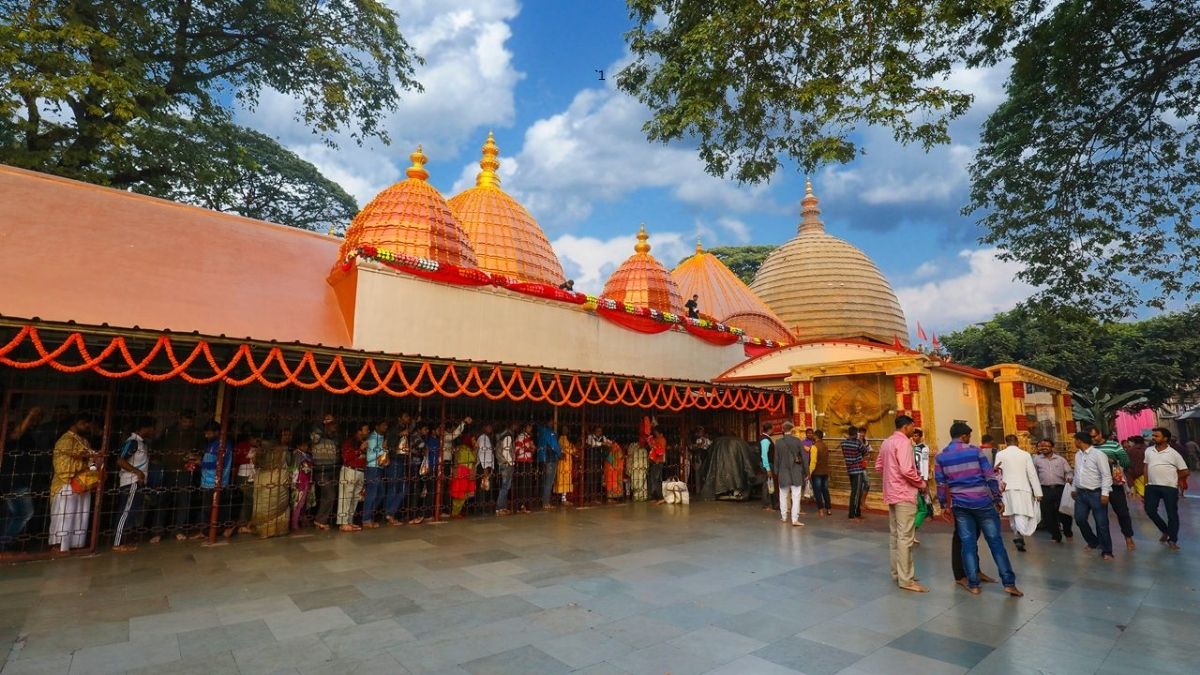
Deep in the mist-wrapped hills of Guwahati, Assam, stands a temple unlike any other in the world. The Kamakhya Devi Temple, perched majestically on Nilachal Hill, whispers ancient secrets that have drawn pilgrims, tantrics, and seekers for over a millennium. This is not merely a temple—it is the very womb of the universe, where the Divine Mother reveals herself in her most primal and powerful form.
The Sacred Mystery: Worshipping the Divine Yoni
Step into the Kamakhya Temple Guwahati, and prepare to witness something extraordinary. Unlike conventional temples adorned with elaborate idols, the heart of this sacred space holds a profound secret. Deep within the underground garbhagriha (sanctum sanctorum), carved by nature herself, lies a yoni-shaped rock fissure—the actual object of worship.

Here, the Goddess Kamakhya is not represented by marble or bronze, but by the living earth itself. A perennial spring feeds this sacred depression, creating an ever-flowing source of divine energy that devotees believe connects directly to the cosmic womb of creation. The sight is both humbling and awe-inspiring—a reminder that the divine feminine energy that creates and sustains all life flows eternally through this sacred space.
Kamakhya Devi Temple History: From Ancient Legends to Royal Patronage
The history of Kamakhya Temple is woven with threads of myth and archaeology that span centuries. According to ancient Shakti Peetha legends, this hallowed ground is where Sati’s yoni fell when Lord Vishnu’s Sudarshan Chakra dismembered her divine form. This mythic foundation connects Kamakhya to the primordial feminine power that predates recorded history.

Archaeological evidence reveals structural elements dating back to the 8th-9th centuries, though the site’s spiritual significance extends far deeper into antiquity. The temple has witnessed numerous reconstructions, with the current magnificent structure largely dating to the 16th century. It was under the patronage of the Koch kings, particularly King Nara Narayan, that Kamakhya rose to its current architectural glory, with later additions by the Ahom dynasty further enhancing its grandeur.
What began as a local shrine revered by ancient Kamarupa royalty gradually transformed into a pan-regional pilgrimage destination, particularly gaining prominence among Bengali devotees during the 19th century.
Ambubachi Mela: The Most Sacred Festival of Divine Femininity
Every year, usually in late June, Nilachal Hill becomes the epicenter of one of India’s most unique spiritual gatherings—the Ambubachi Mela. This extraordinary festival celebrates the annual menstruation of Goddess Kamakhya, a concept that elevates the natural feminine cycle to the realm of cosmic significance.

For three sacred days, the Kamakhya Temple closes completely, marking the Goddess’s period of rest and rejuvenation. The entire hill falls into a reverent silence, as devotees from across India and beyond wait in anticipation. When the temple doors finally reopen, the scene is nothing short of miraculous—hundreds of thousands of pilgrims surge forward for darshan, creating what locals call the “Mahakumbh of the East.”
During this time, devotees receive the blessed angabastra—red cloth that has absorbed the divine energy of the Goddess. Many pilgrims treasure these sacred offerings for years, believing them to carry protective powers and the ability to fulfill heartfelt wishes.
Architectural Marvel: The Beehive Temple of Assam
The Kamakhya Temple architecture represents a unique fusion that speaks to Assam’s rich cultural heritage. The temple’s distinctive hemispherical, beehive-like dome rising from a cruciform base creates a silhouette that is instantly recognizable against the Guwahati skyline. This Nilachal architectural style is a testament to the indigenous building traditions that flourished under royal patronage.

The most striking feature is how the main sanctum is positioned below ground level, requiring devotees to descend narrow, steep stone steps to reach the garbhagriha. This descent feels like a journey into the earth’s womb itself, where the sacred and the elemental merge in perfect harmony.

Might Interest You: Yakshinis: The Mystical Female Nature Spirits of Indian Mythology
The Living Tantric Landscape: 51 Shakti Peethas and the Ten Mahavidyas
Kamakhya Temple Assam holds the distinction of being one of the 51 Shakti Peethas and stands as the most important center of Tantric Shaktism in Eastern India. But the temple complex extends far beyond the main shrine. The entire Nilachal Hill is dotted with smaller temples dedicated to the Ten Mahavidyas—Kali, Tara, Tripura Sundari, Bhuvaneshwari, Bhairavi, Chhinnamasta, Dhumavati, Bagalamukhi, Matangi, and Kamala.

Each shrine pulses with its own unique energy, creating a tantric landscape where practitioners from across the subcontinent come to perform sadhanas, seek siddhis, and connect with the divine feminine in her myriad forms. Sacred ponds, mysterious caves, and ancient meditation spots are scattered across the hill, each with its own legends and spiritual significance.
Miracles and Divine Interventions: Stories from Devotees
The Kamakhya Devi Temple is renowned throughout India for the miracles attributed to the Divine Mother’s grace. Countless devotees share stories of:
Fertility Blessings and Childbirth Protection
Childless couples from across India make the pilgrimage to Kamakhya Temple Guwahati, seeking the Goddess’s blessings for conception and safe delivery. Many return years later with their children, offering gratitude for answered prayers.
Wish Fulfillment and Divine Protection
From students seeking success in examinations to business owners praying for prosperity, devotees regularly report unexpected positive changes in their lives after visiting during Ambubachi or making special vows to Maa Kamakhya.
Healing and Spiritual Transformation
The temple’s reputation as a center for tantric practices attracts serious spiritual seekers who report profound transformations, healing of ailments, and breakthroughs in their sadhana after spending time on Nilachal Hill.
The Mysterious Red Waters: Nature’s Divine Sign
One of the most talked-about phenomena associated with Kamakhya Temple is the belief that the Brahmaputra River turns red during the Ambubachi festival. While explanations range from divine intervention to natural causes like seasonal silt and minerals, the folklore persists as part of the temple’s mystical aura, adding another layer to its reputation as a place where the natural and supernatural converge.

Visiting Kamakhya Devi Temple: A Pilgrim’s Guide
Best Time to Visit Kamakhya Temple
While the temple welcomes devotees year-round, the Ambubachi Mela (late June) offers the most spiritually charged atmosphere. However, be prepared for massive crowds and long waiting times. For a more peaceful experience, consider visiting during the winter months (October to March) when the weather is pleasant and the hill is less crowded.

What to Expect at Kamakhya Temple Guwahati
- The Descent: The journey to the main sanctum involves navigating narrow, steep stone steps
- The Darshan: Witnessing the sacred yoni-shaped rock formation fed by the natural spring
- Mahavidya Circuit: Exploring the ten smaller temples dedicated to different aspects of the Divine Mother
- Sacred Atmosphere: Experience the palpable spiritual energy that permeates the entire hill

Another Interesting Read: The Sacred Dance of Divine Spirits: A Mystical Journey into Bhuta Kola
Temple Timings and Accessibility
The Kamakhya Temple is easily accessible from Guwahati city center, located approximately 8 kilometers away on Nilachal Hill. Regular buses, taxis, and auto-rickshaws connect the temple to the main city.
The Eternal Call of the Divine Mother

In a world increasingly disconnected from the sacred feminine, Kamakhya Devi Temple Assam stands as a beacon of divine motherhood, creativity, and power. Here, on Nilachal Hill, the ancient wisdom of Tantra and Shaktism continues to flow like the eternal spring that feeds the sacred yoni.
Whether you come seeking miracles, spiritual awakening, or simply to witness one of India’s most unique religious traditions, Maa Kamakhya welcomes all her children with open arms. For in her sacred presence, every seeker discovers that the divine they seek has been waiting within them all along.
The Goddess Kamakhya doesn’t just reside on Nilachal Hill—she is the hill, the temple, the spring, and the eternal feminine energy that flows through every atom of existence. Come, and experience the divine mystery that has drawn millions of souls across the centuries to this sacred hill in the heart of Assam.
More Posts on Mythology:


References
- Wikipedia contributors. “Kamakhya Temple.” Wikipedia, The Free Encyclopedia.
- Kamrup Kamakhya – Official temple and regional cultural sources
- 64 Yogini & Kriya Babaji Ashram – Documentation of tantric practices and devotee experiences
- The Times of India – Contemporary reporting on temple practices and festivals
- astroulagam.com.my – Folklore and cultural traditions documentation

Leave a Reply