

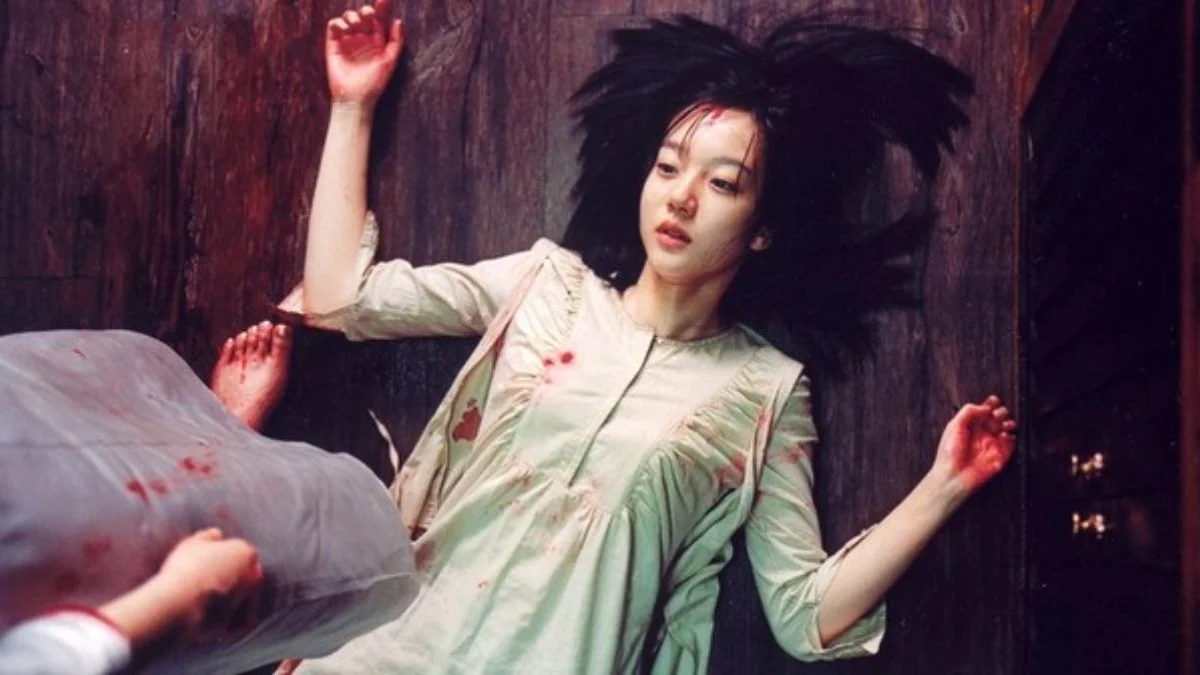

Introduction: Why A Tale of Two Sisters Is One of the Most Confusing Horror Films Ever Made
A Tale of Two Sisters (2003), directed by Kim Jee-woon, is widely regarded as one of the greatest psychological horror films in Asian cinema. Inspired by the classic Korean folk tale “Janghwa Hongryeon Jeon,” the movie blends psychological trauma, supernatural horror, and unreliable narration into a deeply unsettling experience.
Starring Im Soo-jung, Moon Geun-young, Yum Jung-ah, and Kim Kap-soo, the film deliberately confuses its audience by presenting events out of order, hiding critical information, and blurring the line between mental illness and the paranormal. Many viewers finish the movie without fully understanding what actually happened.
This article explains A Tale of Two Sisters in a clear, linear, and detailed way, covering:
- The complete storyline with spoilers
- Chronological events
- The psychological twist explained
- The supernatural ending decoded
- How the film differs from the original folk tale
In This Post:
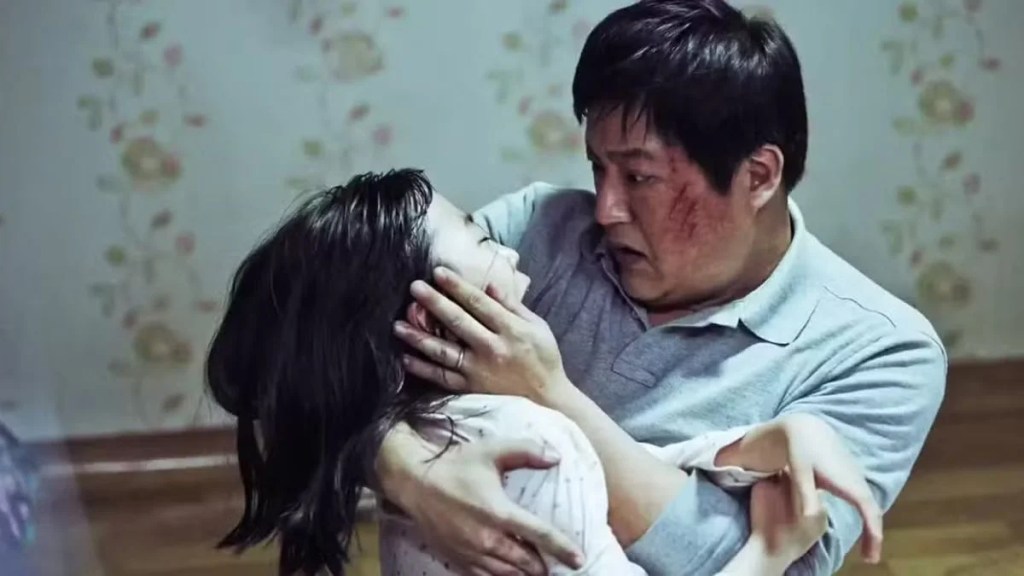
Main Characters in A Tale of Two Sisters
Before diving into the story, here are the key characters:
- Bae Su-mi – Elder sister, suffering from Dissociative Identity Disorder
- Bae Su-yeon – Younger sister (deceased, but appears throughout the film)
- Bae Moo-hyeon – Father, emotionally distant
- Heo Eun-joo – Stepmother and former nurse to the girls’ biological mother
- Mi-hyeon – Biological mother (deceased)
The Film’s Opening: Su-mi’s Return From the Mental Hospital
The movie opens inside a mental institution, where Su-mi undergoes a psychological evaluation. The doctor asks basic identity questions, subtly hinting that she suffers from Dissociative Identity Disorder (DID).
Immediately after, Su-mi is shown returning home with her father. She reunites with her younger sister Su-yeon, and together they arrive at their isolated lakeside house. The atmosphere feels cold, quiet, and uncomfortable from the very first moment.
Their stepmother Eun-joo, who previously worked as a nurse for their late mother, greets them with hostility. It becomes clear that Su-mi despises her, while Su-yeon appears frightened and submissive.
Rising Tension Inside the House
Su-mi quickly notices that her belongings have been rearranged, which infuriates her. She intentionally prepares her father’s clothes before Eun-joo can, provoking jealousy and resentment.
Strange details begin to surface:
- Eun-joo is the one taking medication, not Su-mi
- The father remains emotionally detached
- Eun-joo behaves erratically and cruelly
Su-mi is extremely protective of Su-yeon and suspects Eun-joo of abusing her. When she notices bruises on Su-yeon’s arms, her hatred intensifies.
Nightmares, Ghosts, and Hidden Symbols
Both sisters experience disturbing nightmares involving their deceased mother. Su-mi dreams of her mother’s broken neck, blood, and a ghostly hand emerging from the down leg. These nightmares layer dreams within dreams, creating confusion.
Blood imagery appears repeatedly and subtly symbolizes menstruation, trauma, and shared suffering. Eun-joo even remarks how strange it is that “all three” of them are experiencing it simultaneously—an early hint that something is deeply wrong with reality itself.
The Dinner Scene: The First Major Crack in Reality
The father invites his brother Sun-kyu and sister-in-law Mi-hee for dinner, hoping it will help Su-mi feel better.
However, during dinner:
- Su-mi and Su-yeon are not present
- Eun-joo claims she invited the guests, contradicting the father
- Mi-hee suddenly has a violent seizure
After recovering, Mi-hee claims she saw a young girl’s ghost under the kitchen sink, which the audience also briefly sees. Eun-joo later touches a hair clip near the sink and feels an invisible hand grab hers.
These moments confirm the presence of real supernatural forces, not just hallucinations.
The Wardrobe: The Center of All Trauma

The wardrobe is the most important symbol in the film.
Eun-joo later locks Su-yeon inside it as punishment. Su-mi furiously confronts her father, accusing Eun-joo of abuse. At this point, the father finally says the most shocking line in the film:
“Su-yeon died a long time ago.”
Su-yeon begins to fade away, revealing the truth:
- Su-yeon has been dead the entire time
- Her presence is a hallucination created by Su-mi
This explains why the father never speaks directly to Su-yeon throughout the movie.

The Violent Confrontation and the Big Twist
Su-mi later sees Eun-joo dragging a bloodied sack and beating it violently. Believing her sister is inside, Su-mi attacks Eun-joo.
The fight escalates until the father intervenes. As the camera shifts perspective, the truth is revealed:
- There was no Eun-joo inside the house
- Su-mi herself was playing the role of Eun-joo
- The sack contained a clay doll, not a body
Su-mi has been switching between multiple identities:
- Herself
- A hallucinated Su-yeon
- A cruel version of Eun-joo
That is why:
- The father placed medicine in front of “Eun-joo”
- He rarely reacted to conflicts
- Su-mi and Su-yeon were absent during dinner
The True Flashback: What Really Happened
The final act reveals the real tragedy.
- Su-mi’s mother was terminally ill
- Eun-joo was hired as her nurse
- Moo-hyeon and Eun-joo had an affair
- They secretly got engaged
Devastated, Su-mi’s mother hung herself inside the wardrobe.
That morning:
- Su-yeon discovered the body
- She tried to lift her mother
- The wardrobe collapsed on her
- Su-yeon suffocated and died
Eun-joo heard the noise but, after being verbally abused by Su-mi earlier, chose to walk away ignoring the noise.
Su-mi unknowingly left the house, and the guilt of abandoning her sister shattered her mind.

The Ending Explained: Is the Ghost Real?

After Su-mi is returned to the mental hospital, the real Eun-joo comes back to the house alone.
She hears whistling near the wardrobe. She finds Su-yeon’s ribbon. The ghost of Su-yeon finally appears and kills Eun-joo.
This scene confirms:
- The ghosts are real
- The ending is not a hallucination
- Eun-joo receives supernatural punishment
In the final shot, Su-mi lies in her hospital bed. A tear rolls down her cheek as she hears the same whistling sound. Her expression suggests peace.
Her unfinished wish has been fulfilled.
Themes and Psychological Meaning of A Tale of Two Sisters

1. Literal Site of Catastrophe and Origin of Trauma
The wardrobe is the physical location where the two most devastating events occur:
- The mother’s suicide by hanging herself inside it.
- Su-yeon’s accidental death shortly after, when she discovers the body, panics, and causes the wardrobe to collapse on her while trying to free her mother.
These events chain together in the flashbacks, making the wardrobe the epicenter of the family’s destruction. It transforms from an ordinary piece of furniture into a literal grave and a trigger for irreversible loss. Every time the wardrobe appears on screen (e.g., Su-yeon being locked inside as punishment, ghostly apparitions emerging from it), it evokes these deaths, reinforcing the house’s haunted atmosphere.
2. Symbol of Repressed Memory and the Unconscious
In psychoanalytic terms (heavily influenced by Freudian and Jungian ideas that the film draws upon), the wardrobe represents the repressed unconscious mind:
- It is a dark, enclosed space where painful truths are “locked away.”
- Su-mi’s dissociative identity disorder (DID) stems from her inability to process the trauma; she represses the memory of the deaths, projecting Su-yeon as a living hallucination and embodying an abusive alter ego.
- The wardrobe becomes a portal for these buried memories to surface—both psychologically (through hallucinations and breakdowns) and supernaturally (Su-yeon’s ghost emerging from it in the climax to exact revenge).
This aligns with classic horror tropes of closets/wardrobes as liminal spaces between the conscious and unconscious, the living and the dead (similar to Narnia as escape, but here inverted into horror).
3. Metaphor for Familial Secrets and Dysfunction
The wardrobe houses hidden truths that poison the family:
- The mother’s suicide is tied to the father’s affair with Eun-joo (the future stepmother), a secret betrayal.
- Eun-joo’s failure to help Su-yeon after the collapse stems from resentment after her argument with Su-mi—another buried moral failing.
- By placing these events inside a wardrobe (a private, domestic space), the film suggests that family homes conceal rot and violence beneath a facade of normalcy. The house itself is often analyzed as a symbol of the fractured psyche, with the wardrobe as its darkest chamber.
4. Recurring Motif of Confinement and Punishment
The wardrobe repeatedly appears as a site of entrapment:
- Eun-joo locks Su-yeon inside it as punishment, mirroring the abuse dynamic.
- In Su-mi’s hallucinated reality, this act intensifies her rage and protective instincts.
- Symbolically, it represents how the sisters (and Su-mi especially) are trapped by guilt, mental illness, and unresolved grief—they cannot “escape” the wardrobe’s shadow.
This motif underscores themes of patriarchal/family control and the suffocation of female agency in a dysfunctional household.
5. Supernatural Portal and Instrument of Retribution
In the film’s ambiguous blend of psychology and the supernatural:
- The real ghost of Su-yeon emerges from the wardrobe to kill Eun-joo, turning it into a vengeful gateway.
- This elevates the wardrobe from a mere psychological symbol to a literal conduit for justice, echoing the folk tale origins where ghosts punish wrongdoers.
- The ending’s catharsis—Su-mi finding a tearful peace—suggests the wardrobe’s curse is partially resolved through retribution, allowing some closure.
6. Connection to Broader Visual and Cultural Symbolism
- Flowers and femininity: The film’s floral motifs (rose/lotus in the sisters’ names, ubiquitous flowers in decor) contrast with the wardrobe’s darkness, symbolizing innocence corrupted or buried.
- Korean cultural context: Wardrobes/closets in traditional Korean homes can hold ancestral or personal items, linking to themes of filial piety, inherited guilt, and han (deep-seated sorrow/grief).
- Color and mise-en-scène: The wardrobe is often in shadowed, claustrophobic shots, with red accents (blood, Eun-joo’s dress) nearby, amplifying menace and menstrual/sexual undertones in some readings.
In summary, the wardrobe is far more than a plot device—it’s the film’s central symbolic anchor. It encapsulates how trauma is stored, hidden, and inevitably resurfaces, destroying those who ignore or contribute to it. The movie uses it to blur the line between mental breakdown and ghostly haunting, making every glance at the wardrobe a reminder that the past is never truly locked away. This symbolism contributes powerfully to the film’s enduring impact as a psychological horror masterpiece.
How the Film Differs From the Original Korean Folk Tale

The film is inspired by the Joseon-era Korean folk tale “Janghwa Hongryeon jeon” (meaning “Rose Flower and Red Lotus”), which tells of two sisters abused by their wicked stepmother after their father’s remarriage. In the tale, the older sister (Janghwa) dies from the abuse, her ghost seeks justice, and the younger (Hongryeon) eventually exposes the stepmother, leading to her punishment.

The sisters are reincarnated or ascend to higher states, with themes of moral retribution, filial piety, and sisterly bond. It’s more of a moral fable with supernatural justice and a happier resolution.
Key differences in the movie:
- Psychological Focus vs. Straightforward Supernatural: The folk tale is a simple ghost story with clear good vs. evil. The film introduces dissociative identity disorder, making much of the horror psychological—hallucinations and unreliable perspectives—rather than purely ghostly. Su-yeon (Hongryeon equivalent) is dead from the start, and her “presence” is delusional, unlike the tale’s living sisters.
- Modern Family Trauma: The movie adds adultery, suicide, and accidental death, shifting from outright abuse to complex guilt and neglect. The stepmother’s role is nuanced; she’s complicit but not the sole villain, and her death is by a real ghost, blending psychology with folklore.
- Names and Symbolism: Sisters are renamed Su-mi (beautiful rose) and Su-yeon (beautiful lotus), retaining floral symbolism, but the plot diverges wildly.
- Tone and Ending: The tale ends positively with justice and ascension. The film is darker, with no full redemption—Su-mi remains institutionalized, and peace comes through spectral vengeance, emphasizing ongoing trauma.
Unlike earlier adaptations, this version blends mental illness with real ghosts, making it uniquely haunting.

Final Thoughts: Why A Tale of Two Sisters Still Haunts Viewers
A Tale of Two Sisters is not just a horror movie—it is a deeply tragic exploration of grief, guilt, and the human mind’s ability to fracture under unbearable pain.
Its horror does not rely on jump scares, but on emotional devastation and slow realization. Even after the film ends, its images and themes linger, much like the ghosts within its walls.
This is why, more than two decades later, A Tale of Two Sisters remains one of the most discussed, analyzed, and unforgettable psychological horror films ever made.


Leave a Reply