

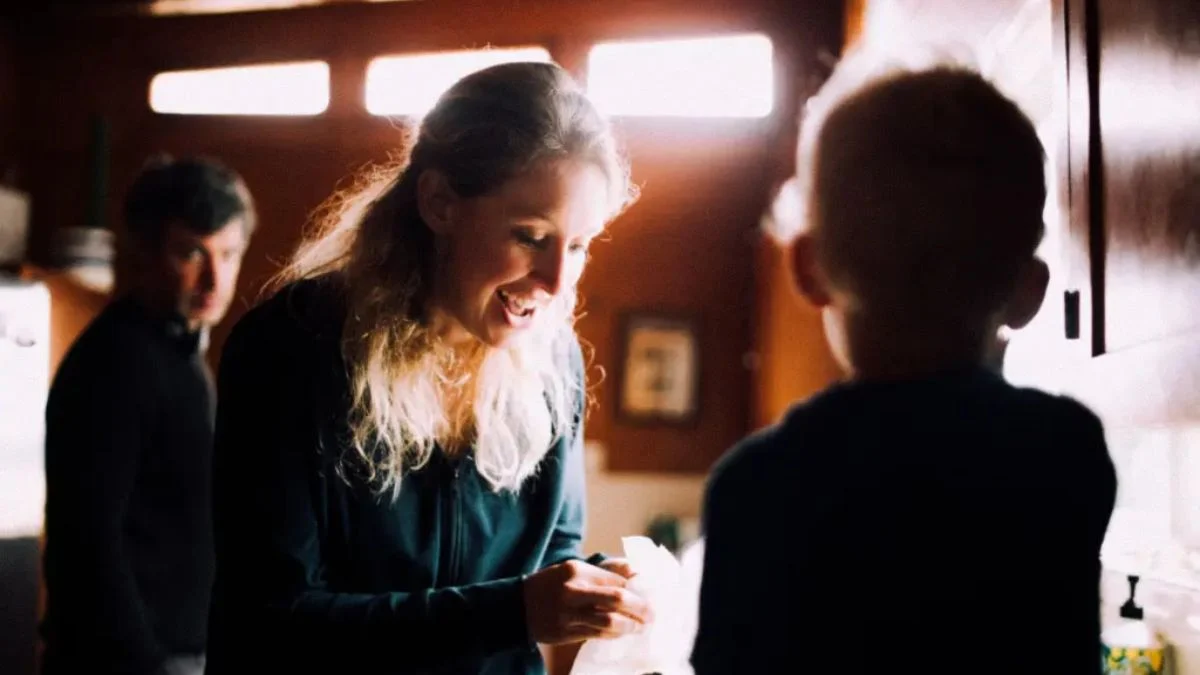
Nathan Fielder’s long-secret Elizabeth Holmes documentary is finally becoming a little less mysterious. A24 has released the first full trailer for You Can See Everything, giving audiences a much closer look at the strange, intimate relationship between Fielder and the convicted Theranos founder ahead of the film’s October theatrical release.
But the trailer does more than revisit the story surrounding Holmes. It raises a much stranger question: what happens when a filmmaker is given extraordinary access to someone who continues to insist that the public fundamentally misunderstood what happened?
The new ‘You Can See Everything’ trailer puts Elizabeth Holmes under pressure
The documentary’s central tension becomes clear almost immediately. Fielder does not simply ask Holmes to recount the Theranos story from a safe distance. Instead, he presses her directly about responsibility, deception and what she believes actually happened.
“You really feel you did nothing wrong?”
Holmes answers:
“I did not.”
When Fielder asks where everything went wrong, Holmes responds:
“I don’t know. I don’t feel like I understand that.”
That exchange captures the unusual dynamic at the heart of You Can See Everything. Holmes continues to maintain that she did not commit the wrongdoing for which she was convicted, while Fielder approaches her account with persistent questioning.
Rather than presenting her through a conventional retrospective interview, the documentary places the filmmaker inside Holmes’ domestic world. Conversations happen in an environment that can feel considerably more personal and unpredictable than a traditional documentary setup.
The earlier teaser had already hinted at that uneasy relationship. Holmes was shown staring intensely at Fielder while telling him:
“I don’t have anything to deceive you on.”
When Fielder asks whether she is being genuine, Holmes responds:
“I’m always being real.”
The new trailer expands that back-and-forth by bringing Holmes’ husband, William “Billy” Evans, further into the story. Fielder asks Evans whether he has ever been suspicious that Holmes has lied to him.
His answer is simple:
“No. Ever.”
More Movie News: Brad Pitt slips back into Cliff Booth for a David Fincher-directed continuation set deep in 1970s Hollywood. For more, read our story on The Further Mis-Adventures of Cliff Booth.
Nathan Fielder actually lived with Elizabeth Holmes and her family
The level of access behind the documentary is one of its most unusual elements.
You Can See Everything was directed by Nathan Fielder and Lance Oppenheim and was made largely in secret. The project began 34 days before Holmes was due to report to federal prison in 2023.
According to the film’s official synopsis, Holmes invited a skeptical crew into her life during those final 34 days before her incarceration. Fielder did not merely arrive for a handful of scheduled interviews. He moved into the home, recording Holmes and Evans as they prepared for the separation ahead.
What began as a project focused on the period immediately before Holmes entered prison ultimately expanded dramatically.
The documentary became a project spanning three years, with Fielder becoming closely embedded in the couple’s home life. The official description calls it a “three-year journey into the abyss.”
Film at Lincoln Center, meanwhile, says the movie was created in secret over a period of four years, reflecting the lengthy production process surrounding the project.
The story also changed once Holmes entered prison. According to the Los Angeles Times, Evans became an important conduit after Holmes’ incarceration, while Fielder and Oppenheim continued following the story.
That change in access appears to have become part of the documentary itself rather than simply remaining an unseen production detail.
Why this Elizabeth Holmes documentary is different from previous Theranos stories
Elizabeth Holmes has already been at the centre of extensive media coverage, documentaries and scripted productions.
One of the best-known dramatizations is Hulu’s The Dropout, starring Amanda Seyfried.
You Can See Everything, however, takes a very different approach because Holmes is participating directly while the filmmakers simultaneously question how much of her version of events can be taken at face value.
Film at Lincoln Center describes the documentary as an examination of the limits of documentary objectivity and the boundary between reality and fiction.
That uncertainty apparently affected the filmmakers themselves.
Following the film’s Telluride premiere, Fielder acknowledged that he and Oppenheim struggled to understand exactly what they had witnessed throughout the production.
Fielder said:
“I really am struggling to this day to understand exactly what I experienced.”
He also explained that the filmmaking team would regularly discuss what they believed had happened during particular moments, only to find that:
“no one could reach a consensus.”
That uncertainty ultimately became part of what convinced the filmmakers to continue following the story rather than treating the original premise as a straightforward portrait.
More Superhero Updates: Nathan Fillion breaks down how his corporate-minded Guy Gardner fits into DC’s expanding future. For more, check out our coverage of Guy Gardner’s Role in Lanterns.
‘You Can See Everything’ was a mystery screening at Telluride
The documentary’s unusual nature extended to its festival debut.
You Can See Everything had its surprise world premiere at the Telluride Film Festival on September 6, where it was presented as a mystery screening. Attendees were not told what film they were about to watch until it was about to begin.
Security around the screening was also unusually strict. Festivalgoers were required to put their electronic devices into locked pouches for both the screening and Q&A.
Fielder and Oppenheim also asked audiences not to reveal the documentary’s major surprises.
The film reportedly contains twists that go beyond its initial setup, including the appearance of an unnamed Hollywood actress. Rather than explaining exactly what those revelations involve, the filmmakers have continued to emphasize the uncertainty surrounding the project.
That secrecy has become a significant part of the film’s early reception, especially because its premise alone does not fully explain what the documentary ultimately becomes.
Early critics say the documentary gets stranger as it continues
The Telluride screening also produced some striking reactions from critics and festival attendees.
Variety critic Owen Gleiberman described the film as:
“a one-of-a-kind reality-TV-as-hangout-movie psychodrama circus”
He also praised Fielder’s questioning and the film’s spirit of inquiry.
Variety’s Clayton Davis similarly wrote that the documentary continues escalating in strangeness across its three-year span. He reported that “Wild” and “WTF?” were among the reactions he heard from Telluride attendees after the screening.
Other early reviews have focused on the documentary’s unusual structure and uncomfortable intimacy rather than approaching it as a conventional business documentary.
The New York Film Festival describes the film as a self-reflexive work that repeatedly changes shape while questioning how much of the story can actually be understood from the material placed in front of the camera.
That makes the documentary’s investigative element particularly unusual. It is not simply asking what happened at Theranos. It is also asking what can be known about Holmes when the person at the centre of the story is actively participating in the process of documenting herself.
The new trailer shows a more vulnerable side of Elizabeth Holmes
The latest trailer is not entirely built around confrontation.
One of its more striking moments focuses on Holmes discussing vulnerability and crying. The sequence suggests that the filmmakers are also interested in how Holmes sees herself, how she understands her own image and what happens when someone voluntarily allows themselves to be watched.
That matters because the documentary is built around Holmes’ decision to invite filmmakers into her home during one of the most consequential periods of her life.
The camera therefore turns back toward a complicated question: what does someone reveal when they voluntarily invite a filmmaker into their private world while maintaining that their public portrayal has been fundamentally misunderstood?
That question appears to sit at the centre of You Can See Everything.
Elizabeth Holmes’ prison sentence changed while the documentary was being made
The documentary’s timeline begins in 2023, when Holmes was preparing to surrender for her federal sentence following her conviction for defrauding Theranos investors.
Holmes was originally sentenced in November 2022 to 135 months, or 11 years and three months, in federal prison. She began serving that sentence in May 2023.
In March 2026, a federal judge reduced the sentence to 123 months, or 10 years and three months, under a retroactive sentencing-guideline change.
That distinction is important because references to Holmes serving an “11-year sentence” reflect the original sentence and are now somewhat outdated. The documentary itself, however, was recorded around the period when that original sentence was about to begin, making the 34-day countdown central to its premise.
Holmes was convicted in 2022 of one count of conspiracy to commit wire fraud and three counts of wire fraud related to investors in Theranos.
The company had claimed that its technology could perform numerous medical tests using very small blood samples. That promise ultimately collapsed amid investigations, followed by the company’s shutdown in 2018.
Key documentary timeline and release details
| Detail | Verified information |
| Documentary | You Can See Everything |
| Directors | Nathan Fielder and Lance Oppenheim |
| Runtime | 174 minutes |
| Production beginning | 34 days before Holmes was due to report to federal prison in 2023 |
| Production span | Three-year journey; Film at Lincoln Center describes four years of secret creation |
| Telluride premiere | September 6, 2026 |
| New York Film Festival screening | September 30, 2026 |
| New York venue | Alice Tully Hall |
| General theatrical release | October 16, 2026 |
| Distributor/studio | A24 |
When and where can you watch ‘You Can See Everything’?
A24 currently lists October 16, 2026 as the theatrical release date for You Can See Everything.
The documentary has a runtime of 174 minutes, making it nearly three hours long.
Before the general theatrical release, the film will have its New York premiere at the 64th New York Film Festival. That screening is scheduled for September 30 at Alice Tully Hall, with Fielder and Oppenheim participating in a Q&A.
For now, the new full trailer offers the clearest public look yet at a documentary that has deliberately resisted being explained in advance.
It confirms the extraordinary level of access Fielder received to Holmes, brings Evans further into the conversation and shows Fielder questioning both of them about truth, memory and responsibility. At the same time, it leaves much of the documentary’s three-year story out of view.
Conclusion
You Can See Everything is taking an unusually intimate route into the Elizabeth Holmes story. Instead of simply revisiting the Theranos scandal from the outside, Nathan Fielder and Lance Oppenheim spent years following Holmes and Evans, beginning shortly before Holmes entered federal prison and continuing through the changes that followed.
The result, judging from the trailer, the filmmakers’ own comments and the early Telluride reactions, is a documentary built around uncertainty as much as answers. Its October 16 theatrical release will finally give wider audiences the chance to see what happened inside the project that Fielder and Oppenheim spent years making largely in secret.
More Box Office Buzz: Zach Cregger’s reboot is tracking toward numbers that could rewrite the franchise’s opening-weekend record. For more, read our post on Resident Evil’s Box Office Surge.
Disclaimer
This article has been prepared from thorough research of the sources provided with the verified material, including A24, Film at Lincoln Center, Variety, Vanity Fair, the Los Angeles Times, the U.S. Department of Justice and Becker’s Hospital Review. It reflects the information available from those sources and does not imply independent verification beyond what the supplied material supports. Details concerning unreleased documentary material and reported surprises may change as the film reaches audiences.
Sources
A24: Official film listing for You Can See Everything, including the October 16, 2026 release date and directors. A24 official film page
Film at Lincoln Center: Official 64th New York Film Festival page for You Can See Everything, including runtime, directors, synopsis and September 30 screening. New York Film Festival official page
Variety: September 23, 2026 report on the new trailer, the film’s premise and Telluride reaction. Variety report
Vanity Fair: Telluride report covering the secret screening, production and Fielder’s post-screening comments. Vanity Fair report
Los Angeles Times: Telluride coverage of the documentary and the filmmakers’ comments about Holmes and Evans. Los Angeles Times report
U.S. Department of Justice: Case information on Elizabeth Holmes’ original federal conviction and 135-month sentence. U.S. Department of Justice case page
Becker’s Hospital Review: March 2026 report on the federal court’s reduction of Holmes’ sentence from 135 to 123 months. Becker’s report
Featured Image Credit: A24


Leave a Reply