

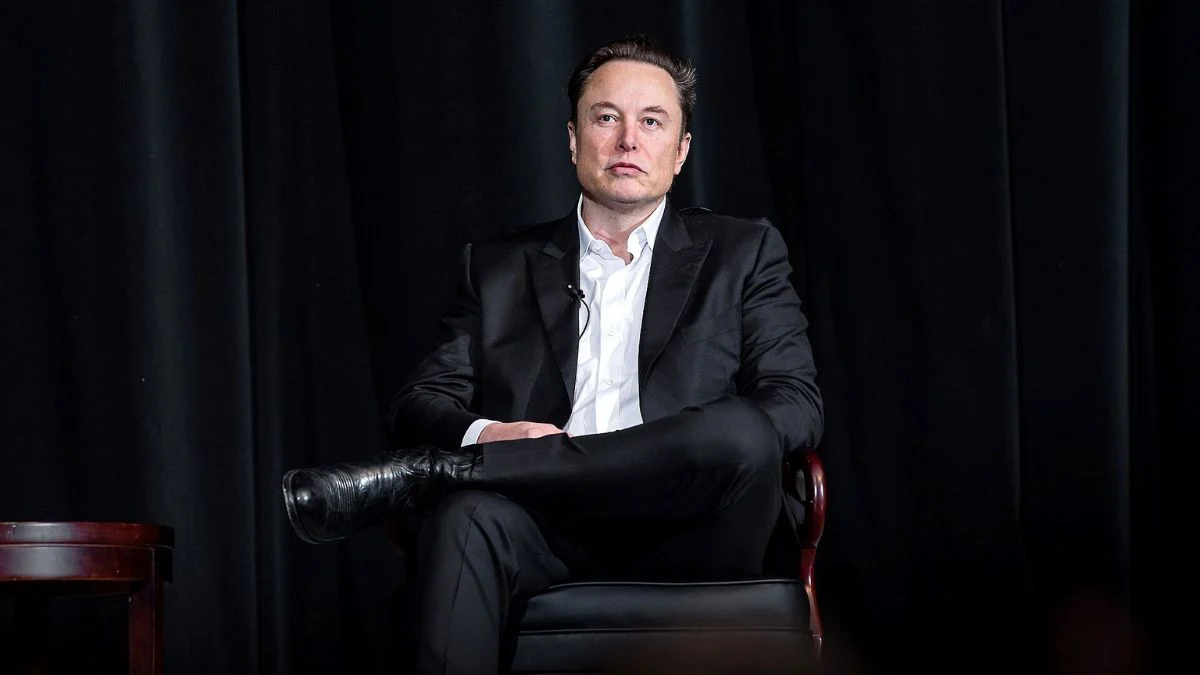
Alex Gibney’s documentary Musk takes a closer look at how Elon Musk became one of the most influential figures in technology, business and politics. Spanning nearly four hours, the film examines the public image surrounding the Tesla and SpaceX chief, his growing political reach and the people who have experienced his influence firsthand.
But the documentary has become a subject of controversy before its theatrical release has fully unfolded. Musk has attacked the film, while his attorney has threatened legal action over a sequence involving private messages about “lasers” in space and the 2024 US presidential election. At the centre of the dispute is a question that extends beyond Musk himself: how much power can one individual accumulate, and what happens when that influence reaches into public institutions?
Alex Gibney’s ‘Musk’ Documentary Examines Four Years of Research
Gibney spent approximately four years developing Musk, initially approaching its subject with interest in his technology ventures and clean-energy ambitions. The filmmaker has said he owned Tesla solar panels and a Powerwall and was initially drawn to Musk’s unconventional personality and online presence.
His perspective changed as the research progressed.
The documentary brings together interviews with family members, former associates and employees, journalists, business figures and people who have encountered Musk throughout his career. Its principal participants include Justine Musk, Ashley St. Clair, Kara Swisher, Tesla co-founder Martin Eberhard, journalist Zoë Schiffer and AI researcher Geoffrey Hinton.
According to the Venice Film Festival’s official synopsis, the film examines the legend surrounding Musk and the extraordinary influence he now exercises over the world.
Gibney’s director’s statement explains the thinking behind the project. He argues that Musk has become exceptionally skilled at controlling the “master shot” through which the public sees him. Rather than accepting that carefully constructed image, the documentary approaches Musk from different angles, examining the people, relationships and institutions surrounding his rise.
Gibney frames the film around power and its abuse, while using Musk’s interest in gaming and simulation theory as part of its wider cinematic approach.
Curious About AI in Filmmaking?
Alex Gibney’s Musk uses a simulated version of Elon Musk as part of its examination of public identity, technology and influence. For another example of AI entering screen storytelling, explore our coverage of Darren Aronofsky’s AI-animated series.
Why Alex Gibney Created an AI-Generated Elon Musk Avatar
One of the film’s most unusual creative decisions came after Musk declined to participate.
Gibney and producer Jessie Deeter reportedly tried to persuade Musk to take part in the documentary. According to Gibney, Musk responded with a public insult directed at the filmmaker, which he interpreted as a refusal.
The production subsequently created a computer-generated avatar resembling Musk.
The digital figure does not represent a newly recorded performance by Musk. Instead, it speaks words taken from his own interviews, public appearances and statements collected over many years.
The filmmakers connected this approach to Musk’s fascination with simulation theory and virtual worlds. The avatar appears in a gamer-style environment, allowing the documentary to revisit Musk’s own words without suggesting that he agreed to participate.
The technique also reflects the film’s central interest in the difference between a public persona and the person behind it. Rather than relying exclusively on Musk’s carefully managed public appearances, Gibney places those statements alongside testimony from people who have known or worked with him.
How Elon Musk Built His Business and Public Image
The opening portion of Musk traces Musk’s development through the technology industry, including his involvement with Tesla and SpaceX.
Gibney challenges the familiar portrayal of Musk as a solitary genius whose achievements can be explained through individual brilliance alone. The documentary instead examines the business relationships, teams, investors, engineers and institutions that contributed to his success and reputation.
Its broader argument concerns how Musk has presented himself as the central figure behind major technological achievements while operating within a much larger network of people and organisations.
The film therefore asks two connected questions: what did Musk accomplish, and how was the public image surrounding those accomplishments created and maintained?
That approach leads into the documentary’s central question, which Gibney poses early in the film:
“How has Elon Musk assumed so much power, and why did we give it to him?”
The question becomes increasingly significant as the documentary moves beyond Musk’s business career and into his influence over communications, artificial intelligence, satellite infrastructure and American politics.
How DOGE Put Elon Musk’s Political Influence Under the Spotlight
The documentary’s second half shifts towards Musk’s growing involvement in American politics, including his alliance with Donald Trump and his role in the Department of Government Efficiency, widely known as DOGE.
Gibney examines the access to government systems and information that accompanied Musk’s position, raising questions about the consequences of concentrating technological resources and political influence in the hands of one individual.
AI researcher Geoffrey Hinton contributes to this discussion by exploring potential dangers associated with combining sensitive personal information with increasingly powerful artificial-intelligence systems. The film considers whether access to large amounts of government data, combined with advanced technology, could create risks for democratic institutions.
These concerns extend beyond Musk’s personal political views. The documentary asks how technological power can influence public institutions and what safeguards might be needed when private individuals acquire substantial political reach.
Justine Musk Shares Her Experience of Marriage to Elon Musk
The documentary also examines Musk’s private life through interviews with people who have been close to him.
His first wife, Justine Musk, whom he married in 2000 and divorced in 2008, discusses their relationship and the power dynamics she experienced during their marriage. The couple had six children, one of whom died in infancy.
Justine describes Musk as domineering and recalls that he told her at their wedding that he was the “alpha male.”
She also says that arguments repeatedly left her feeling responsible for the problems between them. According to her account, the experience led her to learn the term “gaslighting.”
The film additionally addresses Musk’s relationship with their transgender daughter, Vivian Jenna Wilson, and the family conflict that followed.
These accounts provide a personal perspective on Musk beyond his corporate identity. However, they remain testimony from the people involved and should not be treated as independent confirmation of every disputed detail concerning the family’s private life.
Ashley St. Clair Discusses Her Relationship With Musk
Ashley St. Clair, a former conservative influencer who had a relationship with Musk and is the mother of one of his children, provides another perspective on his personal relationships.
St. Clair discusses Musk’s views on having children, his alleged interactions with the mothers of his children and the use of nondisclosure agreements in some relationships.
She also alleges that financial support for her child was reduced by 60 percent after she publicly criticised Musk. This is her allegation, not a claim established by a court finding in the material provided.
One of the most striking passages concerns a message she says Musk sent about having children before a potential period of political upheaval. St. Clair recounts that he wrote they should have a “legion of children before the civil war.”
Describing what she sees as the risks associated with his concentration of power, St. Clair tells the filmmakers:
“Elon is a nuke.”
Her comments add another personal dimension to a documentary that moves between Musk’s public statements, business career, political influence and private relationships.
The ‘Space Lasers’ Messages Behind the Legal Dispute
The most contentious section of Musk concerns private messages exchanged between Musk and St. Clair on October 6, 2024, shortly before the US presidential election.
According to NPR, which obtained and authenticated the messages, Musk told St. Clair that he was “feeling more optimistic” about Donald Trump’s chances because:
“tomorrow we unleash the anomaly in the matrix.”
When St. Clair asked what he meant, Musk said he planned to use:
“’Lasers’ from space”
He added:
“I have over 10 thousand lasers in space right now.”
In the documentary, Gibney asks St. Clair whether she believed Musk was referring to satellites operated by SpaceX. She responds:
“I don’t know where else he has lasers.”
The exchange became central to the legal controversy surrounding the film. Musk’s attorney, Alex Spiro, argued that the sequence falsely insinuated that Musk used Starlink to influence the 2024 election.
A widely circulated conspiracy theory had claimed that Starlink was involved in manipulating vote totals. Election officials, cybersecurity researchers and fact-checkers rejected that claim.
Crucially, the documentary does not establish that Starlink was used to alter election results.
Alex Spiro Threatens Legal Action Over the Documentary
Spiro sent a legal warning to Gibney and Jigsaw Productions, arguing that the film improperly revived a debunked election conspiracy theory.
In his letter, Spiro wrote:
“the insinuation is false”
He also accused the filmmakers of approaching the project with a predetermined conclusion rather than conducting an open-ended investigation.
“This project did not begin as an inquiry. It began with a conclusion.”
Spiro further warned:
“You are on notice, before release, that the insinuation is false, that the material refuting it is public, and that you chose not to be told the rest.”
He also argued that Musk’s representatives had been denied opportunities to provide additional information during the fact-checking process.
Gibney, however, has said he does not believe the evidence establishes that Musk changed vote totals. He has acknowledged that he does not know precisely what Musk meant by the messages, suggesting that Musk might have been exaggerating or trying to impress St. Clair while also raising questions about his political intentions.
The distinction is important: the messages are presented as material for examination, not proof of election manipulation. As of October 10, 2026, the controversy concerns threatened legal action, not a reported court judgment against Gibney or Jigsaw Productions.
Jigsaw has defended the film as a fact-based examination of a powerful public figure, invoking the First Amendment and the importance of investigative documentary filmmaking.
Elon Musk Calls the Film a ‘Hit Piece’
Musk has repeatedly attacked Gibney and the documentary through posts on X, the social-media platform he owns. He has refused to participate in the film and has dismissed its reporting as inaccurate.
Among his descriptions of Gibney are “bitter old man,” “horrible human” and someone with “zero integrity.”
Musk has also labelled the documentary a “hit piece” and a “psy op.” He has questioned the motives and credibility of participants, portraying some as disgruntled former associates.
Gibney, meanwhile, has said he believes Musk may not have watched the finished film. He has indicated that he is prepared to defend the documentary’s reporting rather than withdraw its criticism.
The disagreement has consequently become part of the film’s public reception, with Musk challenging the project and Jigsaw defending its approach.
‘Musk’ Release Date, Runtime and Venice Film Festival Details
Musk premiered at the 83rd Venice International Film Festival in September 2026 as an out-of-competition selection. The festival’s official listing confirms Gibney as director and writer, identifies the principal participants and gives the film’s running time as 225 minutes plus a 10-minute intermission. The premiere reportedly drew a lengthy standing ovation.
| Detail | Information |
| Film | Musk |
| Director and writer | Alex Gibney |
| Venice premiere | September 2026 |
| Official runtime | 225 minutes plus a 10-minute intermission |
| Principal participants | Justine Musk, Ashley St. Clair, Kara Swisher, Martin Eberhard, Zoë Schiffer and Geoffrey Hinton |
| US theatrical release | October 9, 2026 |
| US distributor | Bleecker Street |
| Expected streaming platform | HBO Max, following the theatrical window |
Bleecker Street moved the US theatrical release forward by one week, opening the film in New York and Los Angeles on October 9, with a nationwide expansion to follow. Its theatre listings were updated on October 8. The film is also expected to reach streaming audiences through HBO Max after its theatrical window.
What Alex Gibney’s ‘Musk’ Documentary Ultimately Examines
Beyond the legal dispute, Musk explores Musk’s ambition, business practices, relationships, political transformation and fascination with video games and simulation theory. Gibney uses those interests as part of a broader metaphor for a person who appears to approach the world as something that can be manipulated like a game.
The documentary also examines the culture that elevated technology entrepreneurs into celebrity figures, alongside the investors, consumers, media organisations and political institutions that helped expand Musk’s influence.
Its central question remains:
“How has Elon Musk assumed so much power, and why did we give it to him?”
The film does not offer one definitive psychological explanation for Musk. Instead, it combines public records, private perspectives and expert commentary to investigate how his influence developed and what its consequences might be.
Documentaries About Powerful Figures
Documentaries about influential business figures often examine the gap between public image and private conduct, a theme that also runs through Musk. Discover the project focused on Elizabeth Holmes in our report on Nathan Fielder’s documentary trailer.
Conclusion
Alex Gibney’s Musk is both a portrait of Elon Musk and an examination of the institutions and relationships surrounding his rise. Its interviews, archival statements and discussion of political influence have drawn attention, while the dispute over the 2024 election messages has placed the documentary under additional scrutiny.
The legal threat remains distinct from any finding of wrongdoing, and the film does not establish that Starlink manipulated election results. Ultimately, Gibney’s documentary asks viewers to look beyond Musk’s public image and consider the broader question of how technological wealth and political influence became so closely connected.
Source and Research Disclaimer
This article has been prepared using the source material provided, including the official Venice Film Festival and Bleecker Street information, alongside reporting from The Los Angeles Times and NPR/KPBS concerning the documentary, its participants, release and legal dispute. Claims and allegations have been attributed to the relevant people or sources. The article reflects the information available in those materials and does not imply independent verification beyond what those sources support.
Sources
- Venice Film Festival: Official Musk listing
- Venice Film Festival: Screening information
- Bleecker Street: Musk theatre listings
- Los Angeles Times: Alex Gibney’s documentary about Elon Musk
- NPR/KPBS: Musk threatens to sue over the documentary’s Starlink claim
- NPR/KPBS: Gibney examines Musk, DOGE and the “space lasers” messages
Featured Image Credit: Trevor Cokley, Public domain, via Wikimedia Commons


Leave a Reply