

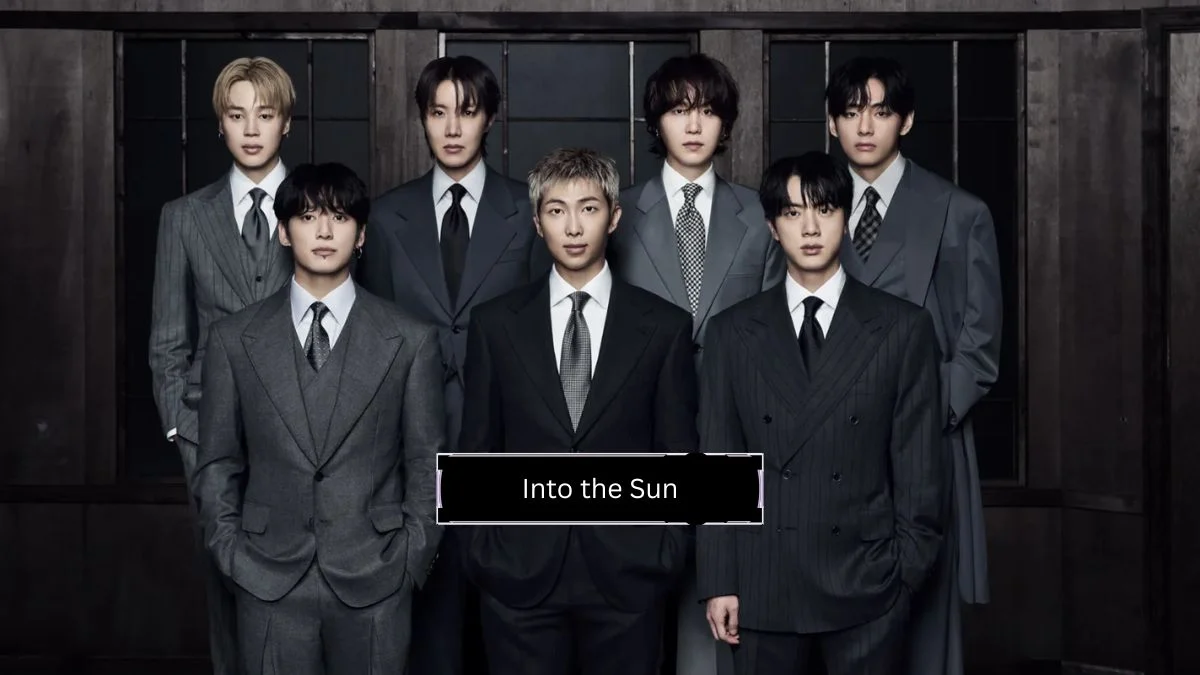
A deep dive into the lyrics, symbolism, and emotional layers behind one of the most powerful tracks on BTS’s fifth studio album.
Released on March 20, 2026, as part of BTS’s fifth studio album ARIRANG, Into The Sun closes the record with the kind of emotional weight that stays with you long after the final note fades. Produced by Pdogg, Diplo, Tyler Johnson, NITTI, and GHSTLOOP, and written with contributions from V and Jimin alongside the rap line and producers, the track blends cinematic production with deeply personal lyrics. It uses the sun as a central metaphor to explore devotion, resilience, and the promise that darkness is always temporary. If you have been trying to unpack what this song is really saying, here is everything broken down clearly.
BTS ‘Into The Sun’ Overview
| Detail | Info |
| Song Title | Into The Sun |
| Album | ARIRANG (BTS Fifth Studio Album) |
| Release Date | March 20, 2026 |
| Song Length | Approximately 3 minutes 47 seconds |
| Producers | Pdogg, Diplo, Tyler Johnson, NITTI, GHSTLOOP |
| Writers | Pdogg, Diplo, V, Jimin, and others |
| Streaming | Available on Spotify, Apple Music, and all major platforms |

What Is Into The Sun About? Two Readings Worth Knowing
Before breaking down the individual verses, it is worth understanding that Into The Sun carries two equally valid emotional readings, and both are very much intentional.
The first is a romantic reading. On this level, the song is about unwavering devotion to a beloved, the promise to guide someone through their darkest moments toward hope and light, and the willingness to pursue the impossible simply because the person beside you makes it worth chasing.
The second reading, and the one that resonates most deeply with ARMY, is that Into The Sun functions as BTS’s direct promise to their fans. After nearly four years apart due to mandatory military service, the line “I’ll follow you into the sun” reads as the group chasing light together with the people who waited for them. On this level, the song is less a love song to one person and more a thank-you letter to an entire fanbase, a vow that the reunion was always coming and that the bond remained unbroken through every dark period.
Both readings coexist throughout the song without contradiction, and that layered quality is a significant part of why Into The Sun lands as the closing statement of the album so effectively.
Connection to the Album Title
ARIRANG takes its name from Korea’s most beloved traditional folk song, a piece that has historically carried themes of longing, separation, resilience, and reunion. Into The Sun draws directly from that emotional heritage. The journey from darkness to dawn that runs through the track mirrors the folk song’s quiet insistence that hardship is survivable and that distance is temporary. As the album closer, Into The Sun delivers the resolution that ARIRANG as a body of work builds toward, which makes the “final anthem” framing feel earned rather than imposed.
The Central Metaphor: Light Versus Darkness
BTS builds the entire emotional framework of Into The Sun around a contrast between darkness and light. Darkness throughout the song represents struggle, grief, and difficult times, while the sun stands for hope, warmth, and the possibility of renewal.
The chorus captures this most directly:
“You call
I run
Dark days
And find the sun
I don’t care how far
Just wait
Dawn”
These lines establish the narrator as someone who responds immediately to their loved one’s need and actively pursues light during the hardest periods. The repeated phrase “Into The Sun” functions as both a direction and a goal, always pointing toward something life-giving rather than simply away from pain.
The Korean verses deepen this imagery significantly. J-hope describes the wind at sunset and the temperature at sunrise, emphasising the full cycle from evening through morning. The intention behind these lines is that the narrator wants their beloved to experience every part of that cycle, the ending and the beginning, the cool and the warmth, suggesting a completeness of care rather than just comfort during the low moments.

Member by Member Breakdown: What Each Verse Contributes
V and Jung Kook – Verse 1
The opening verse establishes intimacy and uniqueness. The lines “Nobody knows me, honey / No one like you” position the beloved as someone with a singular understanding of the narrator. This sets up the theme of emotional safety that runs through the rest of the song. The willingness expressed in “If you wanna go there / I’m ready to be with you” introduces the unconditional commitment that every subsequent verse builds on.
Jimin and Jin – Chorus
The chorus keeps its language deliberately simple and direct. Its power comes from brevity. “You call / I run / Dark days / And find the sun / Just wait / Dawn” functions almost like a vow, a short and unbreakable promise delivered repeatedly throughout the song. The instruction to “just wait” for dawn conveys faith that darkness is temporary, and that patience itself is a form of hope. As a promise to ARMY, these six words carry even more weight, capturing in the simplest possible terms what BTS held onto through their military service.
J-hope and SUGA – Verse 2
This verse carries some of the most layered imagery in the song. J-hope opens with direct questions of care before SUGA takes over with the Korean lines that anchor the emotional core. SUGA describes protecting someone “until dawn breaks” and leading them into the sun, positioning the narrator as a guardian through the night.
The most poignant moment in the entire song arrives here. SUGA acknowledges that “even if we run toward the sun, even if we don’t get closer,” the pursuit still matters. This is a direct reference to the physical impossibility of reaching the sun, and yet the immediate response is “Don’t be afraid, remember / It’s only for a moment.” The value, the song argues, lies not in arrival but in the sustained act of moving toward the light together.
RM – Verse 3
RM’s verse introduces the most complex and layered writing on the track. He opens with “개와 늑대의 시간,” the hour between dog and wolf, a French expression for twilight when one cannot distinguish between a safe dog and a dangerous wolf. It represents uncertainty, emotional confusion, and the threshold between safety and danger.
He then references “the compass of broken beasts,” describing people trying to navigate life with damaged instincts and no reliable sense of direction. However rather than leaving it there, RM follows with “a human breathing and resisting,” which reframes survival itself as an act of defiance. To keep breathing during chaos is already a form of resistance.
The verse then shifts to longing. “I want to go home, to where you are / A place where grass sprouts and stars set” transforms the beloved into a place of belonging and peace, contrasting with the turbulence described before. The image of the moon probably not rising tonight, followed by “you are wonderful,” suggests that the beloved’s presence renders the moon unnecessary. They are light enough on their own.

The Theme of Impossible Devotion
One of the most distinctive emotional qualities of Into The Sun is the way it handles the tension between impossibility and persistence. The song never pretends the goal is achievable in a literal sense. Running toward the sun and never getting closer is physically true, and the song names that directly. However the response to that impossibility is not despair. It is the continued choice to run anyway.
RM reinforces this in the bridge with “And if we run out of time / I’ll chase the feeling / Never too far behind.” This shifts the focus entirely from destination to process. The feeling of moving toward light together is the point. Arrival is secondary.
Read through the ARMY lens, this section hits particularly hard. The military hiatus was, in many ways, exactly that: running toward something that could not be rushed or forced, simply trusting the feeling and never falling too far behind.
The Outro: Devotion as a Mantra
The latter half of Into The Sun builds into a noticeably more urgent and passionate surge, with vocoder effects layering into the hook and outro as the production opens up. This shift from the more restrained earlier sections creates a genuine emotional release, the feeling of something long held finally breaking into the open.
The outro then repeats “I’ll follow you into the sun” over and over until the phrase becomes more than a lyric. It becomes a commitment, a rhythm, a truth repeated until it settles into something unshakeable. The repetition mirrors the cyclical nature of day and night that runs through the album as a whole, and ties directly back to the themes of separation and reunion that ARIRANG draws from its traditional folk namesake. Darkness comes and goes. The devotion does not.
Key Themes Summary
| Theme | How It Appears in the Song |
| Romantic devotion | Unconditional willingness to follow and protect, regardless of cost |
| BTS and ARMY reunion | Post-military promise: “I’ll follow you into the sun” as a shared journey back to the light |
| Light vs Darkness | Sun represents hope and renewal; darkness represents struggle and grief |
| Impossible persistence | Acknowledging you cannot reach the sun, yet continuing toward it anyway |
| Belonging | The beloved as home, a place of peace and grass and stars |
| Liminality | The hour between dog and wolf as a symbol of uncertainty and transformation |
| Korean roots | Tied to ARIRANG folk themes of longing, separation, and resilience |
| Dawn as promise | Darkness framed as temporary; morning treated as a certainty worth waiting for |

Into The Sun earns its place as the closing statement of ARIRANG precisely because it does not offer easy comfort. It sits with the darkness long enough to take it seriously, and then chooses light anyway. Whether you hear it as a love song, a letter to ARMY, or both at once, the emotional core remains the same. The sun is worth chasing. The people beside you make it worth the run.


Leave a Reply