Explore the chilling journey of the Thai-Korean horror film The Medium (2021) — complete with a full story breakdown, ending explanation, and an exploration of its philosophical and psychological themes.
What Makes The Medium a Must-Watch Horror Experience
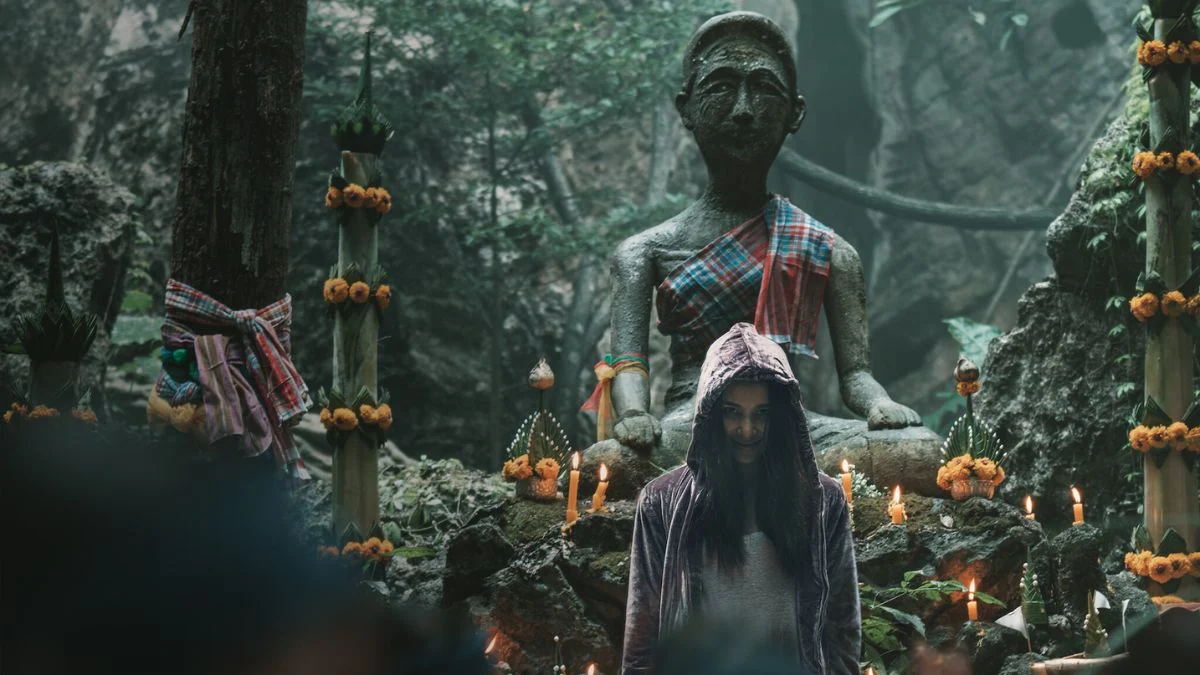
From its immersive found-footage aesthetic to its deep dive into local shamanic traditions in Thailand’s Isan region, The Medium stands out among modern horror films. The film is a collaboration between Thailand and South Korea, directed by Banjong Pisanthanakun, produced by Na Hong‑jin, and shot in the mockumentary style that increasingly appeals to global horror audiences.
Story Setup: The Shaman, the Medium & the Curse

It begins with Nim, a local shamaness in the Isan region of Thailand, who claims to be the vessel of the goddess Ba Yan.
Her older sister, Noi, is supposed to inherit the spirit but refuses and converts to Christianity. Nim then becomes the chosen medium.
Nim’s niece Mink (Noi’s daughter) begins behaving strangely, drawing the attention of a documentary crew who are filming Nim’s rituals and day-to-day life.
Meanwhile, Nim explains the misfortunes of Noi’s husband’s family: Mink’s father’s line has had tragedies and sins that hint at a latent generational curse. This set-up pulls in themes that resonate globally: spiritual inheritance, modernity vs tradition, and the unseen forces that bind a family.

Rising Action: Mink’s Possession and the Unraveling
Mink begins to show alarming symptoms: personality shifts (childlike one moment, aggressive the next), physical pain (abdominal and vaginal bleeding), strange behaviours (animal-like eating, violent acts) and multiple spirits seemingly entering her.
The documentary crew captures bizarre footage, including counters to rational explanations—Mink’s boss finds her with different men at night; Mink lurches through a haunted performance of life and death.
Nim and her shaman friend Santi discover that Mink is not possessed by one benevolent spirit (Ba Yan) but many evil spirits, the culmination of ancestral sins of Mink’s father’s lineage. The tension escalates when Nim realises the ritual meant to succeed is deeply compromised. The film pivots from slow-burn documentary style into chaotic supernatural horror.
Climax & Ending: The Ritual, The Collapse, The Ambiguity

As the climactic ritual unfolds:
- Nim dies mysteriously the day before the main ceremony, leaving the ritual without its central medium.
- Noi volunteers to be the medium in Nim’s stead; the ritual begins at the abandoned factory tied to Mink’s paternal family’s history.
- Things go horribly wrong: the paper seals fail, spirits leap body to body, Mink murders family members, and the ritual devolves into carnage.
- In the final moments, Noi attempts to invoke Ba Yan and claim control, but Mink interrupts, burning her mother alive. A voodoo-style doll marked with the family name appears, symbolising the curse’s scope.
- In the mid-credits scene, Nim appears in interview footage, broken and uncertain: she doubts she was ever truly possessed by Ba Yan. Faith, tradition, and the surreal collapse in one last blow.
Thus, the ending remains ambiguous: the evil is not defeated, the deity may be absent or powerless, and the bloodline remains tainted.
Philosophical & Psychological Aspects: Faith, Trauma, Ancestral Guilt

Faith vs Doubt
The film interrogates belief systems: traditional shamanism versus Christian conversion (Noi’s choice), rational modernity (Mink’s dismissiveness) versus unseen spiritual realities. In the end, Nim’s crisis of faith suggests that belief itself may be the only defence—and when it fails, everything collapses.
The notion that the goddess Ba Yan may have never possessed Nim undermines the entire spiritual scaffolding of the film and raises existential questions: What happens when faith is hollow?
Generational Curse & Psychological Trauma
The film argues that past sins—industrial exploitation, murders, insurance fraud, cruelty to labourers—echo down generations and manifest in supernatural form. The paternal family’s curse is central.
Psychologically, Mink’s behaviour can be seen as externalised trauma: her family’s history, her mother’s rejection of tradition, her weak foundation. The fact that the spirits “possess” her is symbolic of inherited trauma and guilt.
Modernity vs Tradition
Mink openly dismisses shamanic practices as backward—“shamanism and speaking in tongues are superstitious and backward.”
This modern-dismissive stance collides violently with ancient rituals, suggesting that tradition cannot be easily shrugged off when the unseen is real. The found-footage/mockumentary style also places the viewer as a modern observer—watching, documenting, yet powerless.
Why The Ending Matters & What It Means for Viewers

The ending of The Medium is not a clean resolution — and that is precisely the point. It breaks the conventional horror arc of “exorcism-success”. Instead, the film leaves us with collapse, ambiguity, and continuing threat.
- The lack of closure (“Is Ba Yan real? Are the spirits ever vanquished?”) intensifies dread and invites reflection.
- The ritual fails because faith falters; the mediator dies; the family succumbs. This underlines the fragility of human defences against forces (spiritual, psychological, generational) we don’t fully grasp.
- Viewers are left with the sense that the cycle continues: the curse remains, the bloodline still tainted, modern society still ignoring tradition—setting up an unresolved tension.
Final Thoughts
The Medium builds horror on layers: cultural tradition, spiritual dread, modern skepticism, and the weight of inherited guilt. Its slow-burn documentary style lulls you, then detonates in a final act of chaos. The ending is brutal and open-ended, reminding us that in the face of deep-rooted curses and spiritual unknowns, there are no easy outs.
For horror fans worldwide—especially those drawn to “possession horror”, “Asian folk horror”, and “mockumentary satanic rituals”—this film is a strong recommendation. But it’s also rich enough to reward deeper thinking about belief, trauma, and what we pass on to future generations.
More Trending Posts:


![Good News | Official Trailer | Netflix [ENG SUB] – Release Date, Cast, Plot & Everything You Need to Know](https://i0.wp.com/backyarddrunkard.com/wp-content/uploads/2025/10/nterdvx.jpg?fit=1024%2C576&ssl=1)


Leave a Reply