

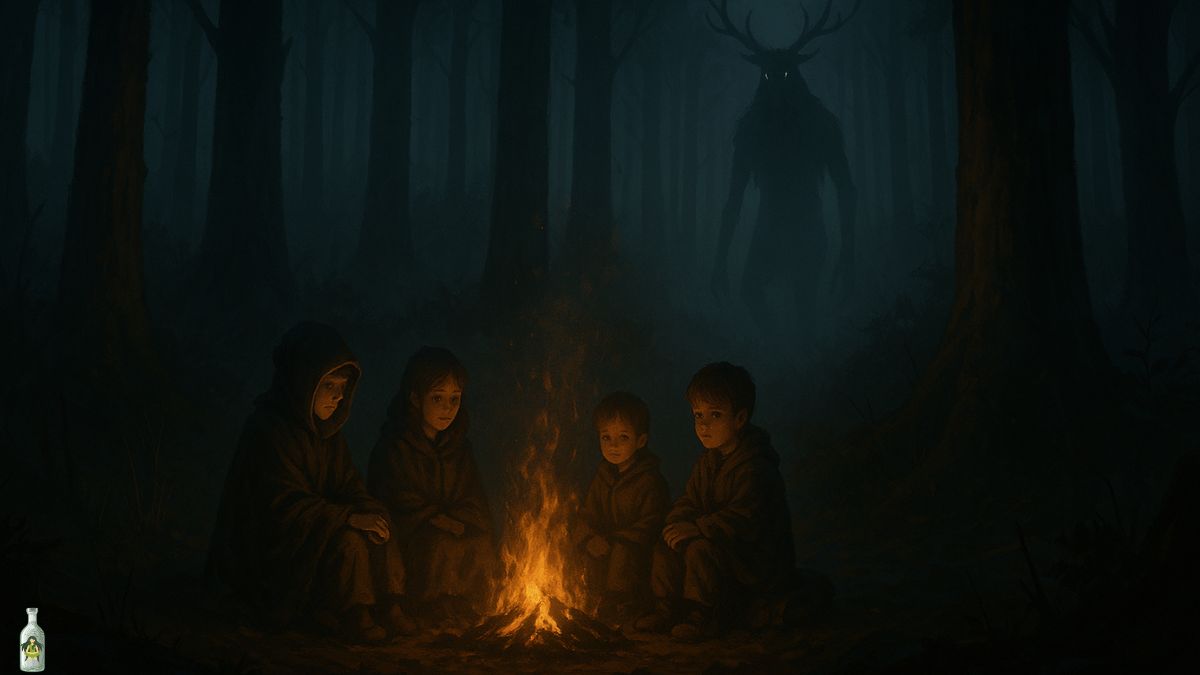
When you first step into the world of 99 Nights in the Forest, the atmosphere is deceivingly calm. Trees sway gently, mist curls at your feet, and silence weighs heavier than the sky. But the deeper you go, the more the forest reveals itself—not just as a hostile place, but as a character. A keeper of secrets, a witness to things unsaid, and perhaps, something far older than you expected. In this game, survival is not a victory over the elements—it’s a negotiation with them.
At the heart of it all lies a story that feels too close to home. One that pulls from true events, adds shadows of folklore, and dares players to ask not just whether they can survive, but what survival really means.
Let’s walk through the story of 99 Nights in the Forest, and break down the good and bad endings so far.
- The Bad Ending: When the Forest Takes You
- The Good Ending: The Campfire and the Children
- Post-Ending: 99 Nights in The Forest
Storyline of 99 Nights in the Forest
While many horror games thrive on fiction, 99 Nights in the Forest takes a different approach. It whispers that it is “based on a true story,” and unlike most games that use this as a gimmick, there’s a striking truth behind that claim. The game most likely draws inspiration from the 2023 Colombian Amazon plane crash, where four children survived alone in the jungle for over a month after their aircraft went down.
But the game doesn’t stop at realism. It adds another layer. Inside the forest lies something unnatural: a towering, wraithlike Deer Monster—part-wendigo, part urban legend—haunting the woods like a living shadow. Around it, cultists chant and sacrifice. Strange rituals echo between moss-covered stones. As a player, you are not one of the lost children, but you are the one searching for them. The role carries weight, especially when you realize what failure could mean.
Every part of this game’s world, from the clues found on old ranger logs to the derelict underground facilities, tells fragments of a story much bigger than us. And whether you uncover that story or not is up to you. Hence, there are both good and bad endings based on how close you get to solving the mystery and surviving the challenges.

Read Detailed Lore Here: Is Roblox 99 Nights in the Forest Based on a True Story?
The Bad Ending: When the Forest Takes You
Not all players will make it to the 99th night. Some will fall to starvation, mismanaging their supplies and watching helplessly as their screen fades to black. Others may be struck down by the random chaos of nature, such as a lightning bolt during a storm. These deaths, although sudden, are strangely mundane—like the forest shrugging you off its shoulder.

Death, in 99 Nights in the Forest, is more than a restart screen. It’s a story in itself—a statement that you tried, but the forest tried harder. But then there are the other endings. The ones that don’t let you die peacefully.
You may be lured into a trap set by cultists, figures in tattered robes chanting in the dark. Sometimes, they’ll ambush you. Other times, you’ll stumble upon them during a ritual. If you’re caught, they won’t simply attack. You’ll become part of their sacrifice, offered to the Deer Monster in a moment that is as terrifying as it is final.
Worse still is death by the Deer itself. If this towering, skeletal figure with branching antlers catches you, there is no escape. Its eyes glow faintly in the night, and when it strikes, it’s not with rage but with precision. A short cutscene plays. The camera pans to its haunting face. Then comes the jump scare—an abrupt, skin-crawling scream and image that dominates your screen. You’re given a chance to revive, but that doesn’t erase the fear it leaves behind.
These bad endings are scattered and varied, but they share one thing: you have failed your mission and need to restart the game.
The Good Ending: The Campfire and the Children
To reach the “good” ending in 99 Nights in the Forest, you must rescue all four lost children and survive until the 99th dawn. That mission sounds simple—until you try it.
Each child is hidden in a different corner of the map, often beyond dense caves or predator-filled clearings. Finding them requires more than just navigation skills. You must craft a map early on, learn the forest’s geography, and interpret cryptic clues from the bulletin board back at camp. But maps don’t reveal danger. The wolves and bears guarding these locations are merciless, and cultist patrols grow bolder with each passing night.
When you find a child, they don’t simply vanish into your inventory. You must walk them back. Slowly. Carefully. Your speed drops. Your risk rises. And any mistake may cost both your life and theirs.
When the last child is rescued and night 99 comes to a close, a final cutscene triggers. The Deer Monster appears again—not as an attacker, but as a silent observer. It watches from a distance before vanishing into the earth through a tunnel, leaving behind an unsettling peace. Then, the words: “More story and an ending will be revealed soon.”

There’s no victory music. No medal. Just the glow of firelight on faces you saved. And a possibility of new endings in future updates.
Post-Ending: 99 Nights in The Forest
Even after the final cutscene, the story isn’t truly over.
99 Nights in the Forest lets you keep playing beyond the ending. The game shifts into a survival sandbox, allowing players to continue exploring the map, crafting items, fortifying their camp, and unlocking badges. You can build up your base, discover hidden areas you may have missed during the rescue, and test your survival strategies beyond the original 99-night challenge.
This post-ending phase isn’t just an afterthought. It’s a natural extension of your journey and leaves a scope for additional storyline or multiple endings in future updates.
The Forest Never Truly Ends
What 99 Nights in the Forest does best is show restraint. It doesn’t flood you with answers. It lets you discover, fail, and survive on your own terms. Its endings—both good and bad—aren’t cinematic spectacles. They’re quiet reflections of how well you understood the forest and how deeply you chose to care.
You won’t kill the Deer. You won’t dismantle the cult. But you’ll protect something fragile, and you’ll know that it mattered.
And maybe, when the firelight flickers low and the children are asleep, you’ll realize the forest hasn’t truly ended.
It’s just waiting to see what you do next.
More Trending Game Guides:


Leave a Reply