

Paralives launched in Early Access on 25 May 2026 on Steam, and one of its most talked-about features is the Storyteller system. Think of Storytellers as a smart difficulty layer with a personality. They shape your entire save, influence daily events, and even drop in during conversations. Picking the right one, or customising your own, makes a real difference to how your playthrough feels, so here is everything you need to know.
What Is the Storyteller System in Paralives?
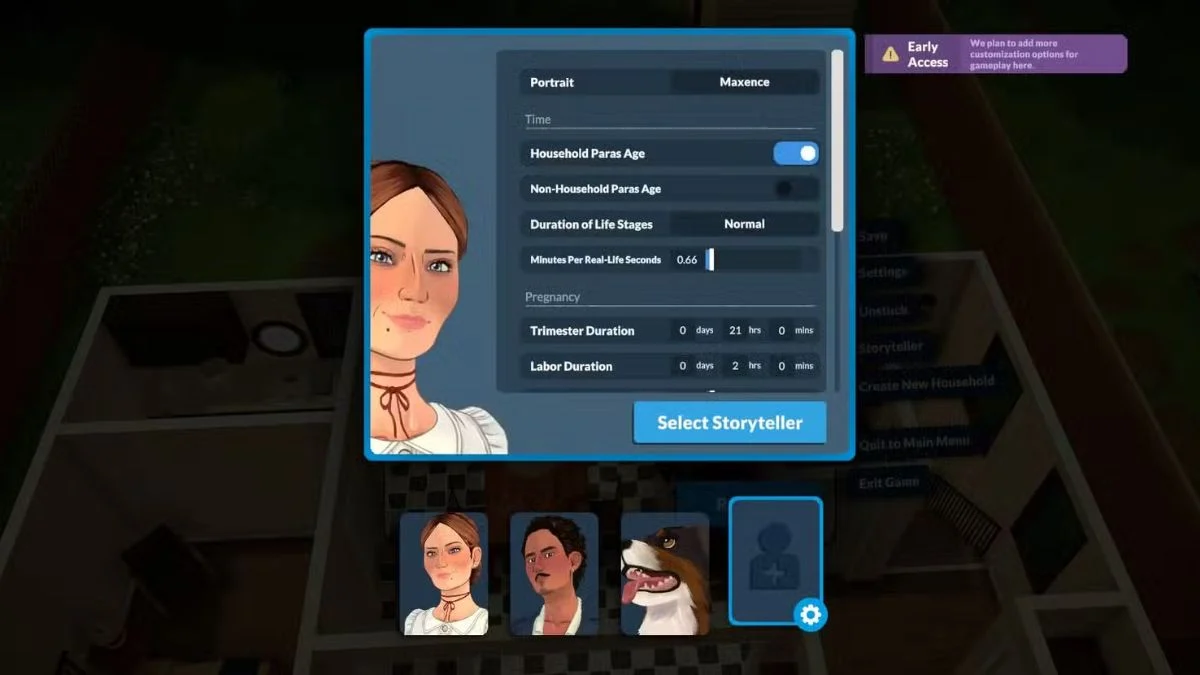
The Storyteller system works as a customisable gameplay settings layer that sits over your entire save. Rather than locking you into a fixed difficulty like many games do, Paralives lets you choose a Storyteller character whose preset values cover everything from starting funds to pregnancy odds. You can then tweak those values further to suit exactly the kind of experience you want.
Storytellers also play an active narrative role throughout your game. Each night, once all your Parafolk are asleep, your chosen Storyteller appears to offer a set of Story Cards. You pick one card, and it influences the following day, triggering new wants, tweaking behaviours, or creating small events in your household. Additionally, Storytellers appear during group conversations to offer Together Cards, which can introduce or level up Relationship Labels between Parafolk.
In short, the Storyteller system handles three things:
Preset difficulty and simulation settings for your save, daily Story Card events that keep gameplay fresh, and social Together Cards that shape relationships.

All Three Storytellers in Paralives
Paralives currently features three Storytellers, each representing a different style of play. Here is a quick overview before we dig into the numbers.
| Storyteller | Difficulty Level | Description |
| Maxence | Balanced / Medium | Fair, balanced gameplay experience |
| Ricardo Castello III | Challenging / Hard | Brings more challenges to daily Parafolk life |
| Stella | Less Challenging / Easy | Protects Parafolk from life’s lowest lows |
Stella is actually a Bernese mountain dog, which is a lovely detail. Ricardo Castello III brings the drama, and Maxence sits right in the middle.
Full Storyteller Settings Compared
The table below shows the exact preset values for each Storyteller. These are the defaults before any customisation.
| Setting | Maxence | Ricardo Castello III | Stella |
| Household Paras Age | Yes | Yes | Yes |
| Non-Household Paras Age | No | No | No |
| Duration of Life Stages | Normal | Normal | Normal |
| Minutes Per Real-Life Second | 0.66 | 0.66 | 0.66 |
| Trimester Duration | 21 hrs | 21 hrs | 21 hrs |
| Labor Duration | 2 hrs | 2 hrs | 2 hrs |
| Chance to Get Pregnant | 50% | 50% | 50% |
| Chance of Twins | 20% | 5% | 5% |
| Chance of Triplets | 10% | 1% | 1% |
| Job Performance Strike Threshold | 10 | 10 | 10 |
| Automatically Eat at Work | Yes | Yes | Yes |
| Automatically Use Toilet at Work | Yes | Yes | Yes |
| Starting Funds | 30,000 | 30,000 | 35,000 |
Key Differences at a Glance
The settings across all three Storytellers are broadly similar in Early Access, but a couple of differences are worth paying attention to.
Stella gives you 5,000 extra starting funds (35,000 vs 30,000), which makes early home-building noticeably easier. Maxence has a significantly higher chance of twins (20%) and triplets (10%), compared to just 5% and 1% for Ricardo and Stella. This quirk may change in future updates, so keep an eye on patch notes. Ricardo turns off automatic eating and toilet use at work, meaning you need to manage those needs more actively.

Which Storyteller Should You Pick?
There is no universally correct answer here, since the best Storyteller depends entirely on the kind of story you want to tell. However, some clear patterns emerge based on playstyle.
Choose Stella if you want to:
Build and decorate homes without financial pressure, focus on creative low-stakes storytelling, play in a relaxed sandbox-style session, or avoid frequent household crises.
Choose Maxence if you want to:
Experience Paralives as the developers intended for a first playthrough, learn all the game systems without things feeling overwhelming, have a mix of good days and challenging ones, or explore multi-generational family stories at a comfortable pace.
Choose Ricardo Castello III if you want to:
Face more unpredictable day-to-day situations, react to events rather than planning everything in advance, create dramatic story-rich saves with higher stakes, or challenge yourself once you already know the game’s systems.
The developers’ own recommendation is to customise the Storyteller settings yourself and simply pick whichever character portrait you like best. The portrait and name are cosmetic. The actual settings drive your experience.
How to Customise Your Storyteller Settings
You do not have to stick with the presets. Paralives gives you full control over every individual setting within your chosen Storyteller.
Before You Start a Save: When you select a Storyteller during the tutorial, you will see a “Customise Storyteller” option. Click it to adjust any of the values listed in the table above before your save begins.
During an Active Save: You can change your Storyteller settings at any point mid-game. Here is how:
- Click the three dots (⋯) in the top-right corner of the screen.
- Select the Storyteller option from the menu.
- Adjust any setting you want, or switch to a different Storyteller entirely.
Important: Changing the Starting Funds setting after you have already started playing will not add money to your current household. It only applies to new saves. If you need more money mid-game, you can use cheats instead.
Can You Switch the Portrait Without Changing Settings?
Yes, and this is a neat feature. You can swap the portrait and name of your Storyteller from the customisation page without affecting any of the underlying settings. For example, you can run Maxence’s balanced settings but have Stella’s face appear each night when Story Cards arrive.
What Is the Maximum Starting Funds Amount?
You can set your Starting Funds up to 99,9999,999 Paradimes. Entering any higher value will automatically revert to the previous amount. If you want even more money during a playthrough, the in-game cheat console handles that separately.
Story Cards: How They Work Night to Night
Each night, once all Parafolk in your household go to sleep, your Storyteller appears with a selection of Story Cards for you to choose from. You pick one card, and its effect carries through to the following day. Effects can include changed moods, triggered wants, altered social interactions, or small household events.
The process looks like this:
All Paras sleep, then the Storyteller appears, then you choose one Story Card, and the effect activates the next day.
Story Cards are optional. You do not have to choose one if you prefer not to engage with the system. The developers have confirmed you can skip them. However, players who enjoy emergent storytelling tend to find this system a highlight of the game, since it adds just enough unpredictability to keep each day feeling different.
It is also worth noting that the type and variety of Story Cards you receive can vary based on which Storyteller you have active, tying the narrative layer directly back to your difficulty choice.
Together Cards and Storyteller Conversations
Beyond the nightly Story Cards, Storytellers appear during group social interactions between Parafolk. In these moments, they offer Together Cards, which are special conversation options that can introduce new Relationship Labels or upgrade existing ones between characters.
This makes the Storyteller feel like a genuine presence in your save rather than just a settings screen you visit once. Whether you are watching two Parafolk become close friends or sparking a rivalry, the Storyteller occasionally steps in to help move those relationship stories forward.

Storyteller Settings Worth Adjusting Early
Once you understand the system, a few targeted tweaks can meaningfully improve your experience. You can turn off aging if you want a permanent neighbourhood without anyone dying, increase Starting Funds for a more comfortable early game (remember, this only applies before the save begins), raise twin and triplet chances if you enjoy genetics-focused family gameplay, extend Life Stage Duration if you want more time at each stage of a Para’s life, or lower Minutes Per Real-Life Second if you prefer a slower and more relaxed pace.
Since the Storyteller settings screen is always just a few clicks away, there is no pressure to get everything perfect at the start. You can iterate as you go.
Will Storytellers Get More Content?
Paralives is currently in Early Access, and the development team has confirmed that the Storyteller system will expand over time. The team has specifically mentioned plans to add more customisation options to the Storyteller section. Since the game targets a full release around 2028, there is plenty of time for the system to grow in depth and variety.
Storytellers were one of the last features revealed before Early Access launched in May 2026, though eagle-eyed fans spotted Maxence in a November 2025 gameplay stream without context. The developers quietly hid the feature in plain sight until the official reveal.
Quick Reference Summary
| What you want | Best choice |
| Relaxed building and creativity | Stella |
| Balanced first playthrough | Maxence |
| Dramatic, unpredictable stories | Ricardo Castello III |
| Total control over the experience | Customise any Storyteller |
| Maximum twin/triplet chance (default) | Maxence |
| Highest starting funds (default) | Stella |
Paralives is currently in Early Access on Steam. Settings and features may change as the game continues to develop.


Leave a Reply