

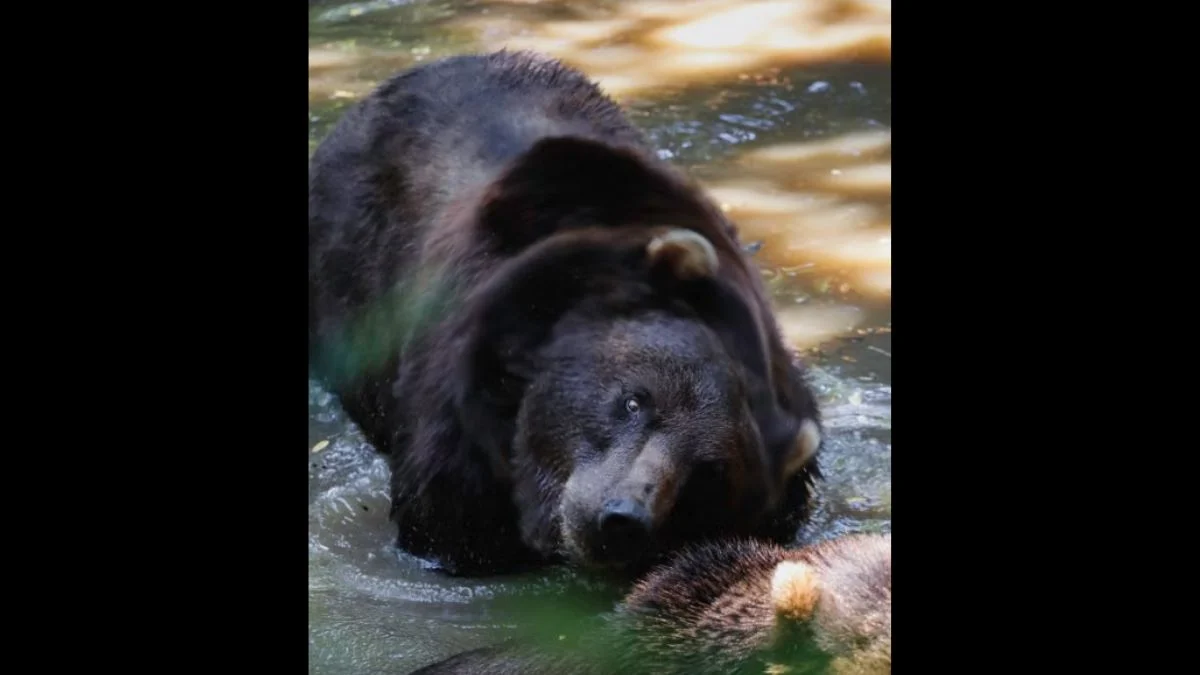
Every autumn, something wonderfully strange happens in Alaska: bears that have spent months preparing for winter suddenly become the stars of a global online competition. Fat Bear Week is back for 2026, and once again, the brown bears of Katmai National Park and Preserve are stepping into the spotlight.
But this is not just a popularity contest about which bear looks biggest. Behind the brackets, votes and live cameras is a very real race against winter, as Katmai’s bears spend the summer feeding heavily and building the fat reserves they need to survive hibernation. And this year, one familiar champion has returned to the scene.
Fat Bear Week 2026 Is Turning Katmai’s Bears Into Global Stars
Fat Bear Week began in 2014 as a way of showing people the dramatic physical changes Katmai’s brown bears experience during the summer.
What began as a single-day event eventually grew into the week-long international competition fans know today. The format is simple: bears face off in a single-elimination, bracket-style tournament, with the public deciding which contender advances from each head-to-head matchup.
The winning bear is not necessarily determined simply by weighing the animals.
According to the official Fat Bear Week information, voters can consider how successfully a bear handled the challenges of the summer, how much fat it accumulated and the survival skills it used while preparing for winter.
That makes the competition a little more interesting than simply asking, “Which bear is the fattest?”
For the bears, however, the stakes are much more serious.
Brown bears at Katmai spend the warmer months taking advantage of available food, particularly salmon around Brooks River. They use that period of abundance to build the fat reserves that will sustain them during winter hibernation.
During hibernation, bears do not eat or drink and can lose roughly one-third of their body weight. In other words, all that summer feeding has a very important job to do.
How did one gene-editing plan for an elephant balloon from about 65 targets to roughly 150? See what pushed the timeline back in our Woolly Mammoth Revival Delayed: Why Colossal Now Expects a Mammoth-Like Calf in the Early 2030s story.
Fat Bear Week 2026 At A Glance
| Detail | Official information |
| Event | Fat Bear Week 2026 |
| Location | Katmai National Park and Preserve, Alaska |
| Competition format | Single-elimination, bracket-style tournament |
| 2026 competition | September 22–September 29 |
| Voting | Head-to-head public voting |
| Final/crowning | September 29, Fat Bear Tuesday |
| 2025 votes | More than 1.7 million |
| 2025 voting reach | More than 100 countries |
| Returning champion | Bear 32 “Chunk” |
| Key food source | Salmon, particularly around Brooks River |
| Event partners | National Park Service, Explore.org and the Katmai Conservancy |
Then There’s Bear 32 “Chunk”
The return of Bear 32 “Chunk” gives the 2026 tournament an especially familiar storyline.
Chunk enters this year’s competition as the reigning Fat Bear Week champion after winning the 2025 tournament through public voting. The National Park Service describes him as one of the largest bears seen around Brooks River and says he can reach an estimated 1,200 pounds or more.
His journey to that title was anything but ordinary.
Chunk arrived back at Brooks River in June 2025 with a broken jaw. Park staff believe the injury was probably caused by a fight with another male bear, although they could not determine exactly how it happened.
That injury could have made feeding difficult at precisely the time when a bear needs to eat as much as possible before winter.
Instead, Chunk adapted.
The National Park Service says he changed his feeding behaviour after the injury and learned to eat salmon without fully using his damaged mandible. His size also remained an advantage because it enabled him to access productive fishing areas despite the difficulties caused by the injury.
Chunk continued feeding and put on enough weight to survive the winter.
His broken jaw has since healed enough for him to continue living normally in the wild, although the injury is permanent and his jaw remains visibly affected.
That combination of size, adaptation and survival became part of the story surrounding his 2025 Fat Bear Week victory.
Now, the champion is back.
How did a Border Collie once abandoned and abused earn a permanent place in a Maracaibo park? Meet him in our Rescue Dog Tsunami Honored With Bronze Statue in Venezuela After Years of Saving Lives post.
A New Generation Of Fat Bears Is Emerging In 2026
While Chunk’s return gives the competition a familiar face, the 2026 event is also shining a light on a new generation of bears around Brooks Camp.
Katmai National Park Superintendent Mark Sturm highlighted the number of young bears being seen in the area this year.
“There are more cubs at Brooks Camp this year than have been seen in a long time,” said Katmai National Park Superintendent Mark Sturm.
He added:
“A new generation of fat bears is taking shape, and they’re off to a strong start. We’re excited to watch them grow and learn as they prepare for winter in Katmai’s incredible ecosystem.”
Those comments add another layer to Fat Bear Week.
The online tournament may look like a fun internet tradition, but the bears featured in it are part of a much larger natural cycle. Their ability to feed, grow and prepare for winter is connected to the ecosystem around them.
Katmai is a place where brown bears benefit from large salmon runs in the Brooks River area. Those salmon provide an essential source of food while the bears prepare for the months ahead.
So while viewers may be debating which bear deserves their vote, the animals themselves are focused on something considerably more important: getting enough food to make it through winter.
Why Brown Bears Need To Get So Big Before Winter
The entire premise of Fat Bear Week is rooted in one of the most important parts of the bears’ annual survival cycle.
During summer, Katmai’s brown bears take advantage of abundant food supplies. Salmon are especially important because large numbers travel through the Brooks River during the warmer months.
The bears feed heavily and build up substantial fat reserves.
Then comes winter.
Hibernation means the bears enter their dens and stop eating and drinking. The National Park Service explains that bears can lose up to one-third of their body weight during hibernation.
That makes the months leading up to winter crucial.
A bear’s summer body transformation is therefore not simply about becoming enormous for an internet competition. It reflects preparation for a period when the animal will depend on the reserves it accumulated while food was plentiful.
Fat Bear Week takes that genuine survival behaviour and turns it into an accessible way for people around the world to learn about Katmai’s bears and the ecosystem supporting them.
More Than 1.7 Million Votes Came From Around The World
The popularity of Fat Bear Week has grown far beyond Alaska.
During the 2025 competition, the National Park Service reported that more than 1.7 million votes were cast by people in more than 100 countries.
That scale has helped transform Katmai’s bears into familiar figures for audiences far beyond the park itself. People can follow the tournament, learn about individual bears and watch live webcams showing the animals in their environment.
The competition is a partnership between the National Park Service, Explore.org and the Katmai Conservancy.
The result is an event that sits somewhere between wildlife education, an online sporting bracket and one of the internet’s most wholesome annual traditions.
How The Fat Bear Week 2026 Tournament Works
The 2026 tournament opened on September 22 and runs through September 29.
The official voting page describes the competition as a single-elimination tournament. Bears are placed into head-to-head matchups, and the bear receiving the most votes advances to the next stage.
The process continues until only one bear remains.
There are no voting rounds over the weekend, according to the official schedule.
The tournament’s final and the crowning of the 2026 champion are scheduled for September 29, also known as Fat Bear Tuesday.
That date is important because the supplied information specifically establishes September 29 as the 2026 crowning date, rather than October 2 as stated in the supplied article.
The Winning Bear Does Not Get A Traditional Prize
There is no conventional trophy, cash award or physical prize waiting for the bear that wins Fat Bear Week.
Instead, the title celebrates the animal’s successful preparation for winter and gives people an opportunity to learn more about Katmai’s wildlife.
The real stakes are biological.
A bear that enters winter with sufficient fat reserves has improved its chances of surviving the months ahead. The public competition simply gives viewers a way to connect with that natural process.
For people watching from home, the reward is following the bears’ individual stories and taking part in a global wildlife-awareness event.
How To Follow Fat Bear Week 2026
Fans can follow Fat Bear Week and cast their votes through the official Fat Bear Week website during the voting period.
The official Explore.org page provides information about the individual bears, the tournament and the voting process. Live cameras also allow viewers to watch Katmai’s bears throughout the year.
With Bear 32 “Chunk” returning as the reigning champion, the tournament has a ready-made storyline. But the emergence of more young bears around Brooks Camp means this year’s event is also looking toward the future.
The 2026 competition runs through September 29, when one of Katmai’s brown bears will be crowned the year’s Fat Bear Week champion.
What did DNA reveal about a 3-pound spotted cat first mistaken for a kitten? Follow the genetic detective work in our Leopardus tilcayo: Scientists Discover a New Wild Cat Species in Bolivia After More Than 100 Years coverage.
Conclusion
Fat Bear Week 2026 once again turns a crucial part of life in Katmai into a global event. Brown bears spend the summer feeding heavily, particularly on salmon, building the fat reserves they need before winter hibernation.
This year, Bear 32 “Chunk” returns after his 2025 championship, a victory that followed a difficult season involving a broken jaw and his adaptation to feeding without fully using his damaged mandible.
At the same time, Katmai is seeing what Superintendent Mark Sturm described as a new generation of fat bears taking shape, with more cubs at Brooks Camp than have been seen in a long time.
The tournament may be fun, but the biology behind it is very real. On September 29, Fat Bear Tuesday will bring the 2026 competition to its conclusion and reveal which of Katmai’s bears claims the title.
Source Disclaimer
This article has been prepared based on thorough research of the sources provided below. It reflects the information, statements, dates, figures and details available from those sources and does not imply independent verification beyond what the provided material supports.
Sources
- National Park Service – Fat Bear Week 2026
- National Park Service – Fat Bear Week: Past and Present
- National Park Service – Bear 32 “Chunk” profile
- Explore.org – Fat Bear Week 2026 voting and schedule
- Explore.org – Fat Bear Week 2026 official voting page
- National Park Service – Bears of Katmai
Featured Image Credit: Oliver Morgan Media / Pexels


Leave a Reply