

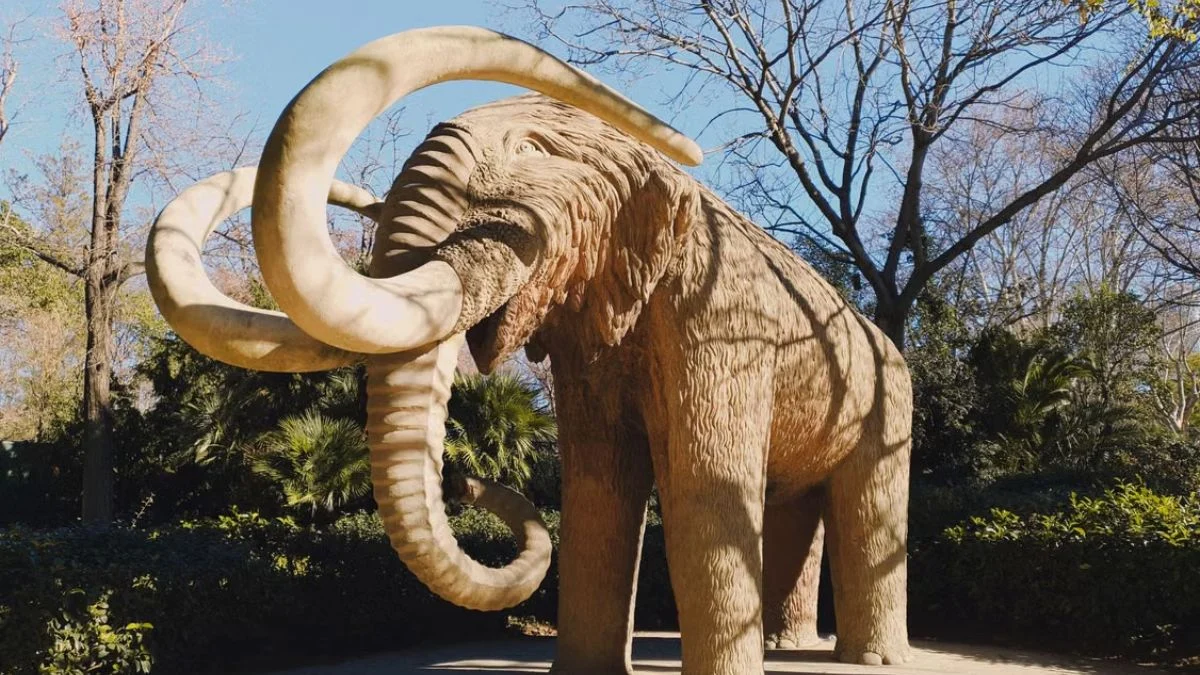
The woolly mammoth has spent thousands of years as a creature trapped in fossils, ancient DNA and human imagination. Now, the company attempting to recreate some of its defining traits has discovered that turning that ambition into a living animal is far more complicated than the original timeline suggested.
Colossal Biosciences is still working toward a mammoth-like animal, but the expected arrival has moved further into the future. What began as a plan built around a 2028 birth has evolved into a much larger genetic and reproductive challenge, with AI, CRISPR, animal models and elephant biology all becoming pieces of the puzzle.
Colossal’s woolly mammoth revival timeline moves into the early 2030s
Colossal announced its woolly mammoth project in 2021 with an ambitious schedule. The company had been targeting a pregnancy in 2027, followed by the birth of a mammoth-like calf in 2028.
That target is no longer expected.
Speaking to TIME in August 2026, Colossal CEO Ben Lamm said the company is now looking toward the early 2030s, while making clear that there is no fixed date.
“We are thinking it will be in the early 2030s. We don’t have a hard date. Not 2036, but not 2030 either.” — Ben Lamm, speaking to TIME
The shift does not mean Colossal has abandoned the project. Instead, the timeline has changed as researchers have learned more about exactly what would be required to recreate the biological characteristics that helped woolly mammoths survive Ice Age environments.
Colossal’s project information describes a process involving ancient mammoth genome sequencing, comparisons with the Asian elephant genome, identification of genes linked to cold adaptation and genome editing in elephant cells.
The deeper researchers go, however, the bigger the genetic challenge appears to become.
Bringing back a mammoth takes decades — but you can own a private island right now, no CRISPR required. For more, check out our story on This $1.125 Million Ohio Private Island Comes With a Mainland Launch Point — But There’s One Big Catch.
The mammoth genetic engineering challenge has grown dramatically
One of the clearest reasons behind the delay is the expanding number of genetic targets.
Earlier versions of Colossal’s plan discussed approximately 65 genes. Later research increased the figure to around 85 genes. The latest reporting indicates that researchers are now dealing with approximately 150 genes and genetic elements, with the number still rising.
That is a major change in the scale of the project.
The objective was never simply to give an Asian elephant a thick coat and call it a mammoth. Researchers are investigating a collection of traits associated with cold adaptation, including the animal’s coat, ears, body composition, fat storage and other biological characteristics.
The ears provide one particularly clear example.
Modern elephants have large, highly vascularized ears that help release body heat. Woolly mammoths, by contrast, lived in extremely cold environments and had much smaller ears, helping reduce heat loss.
Researchers have also identified genetic factors associated with the mammoth’s shorter tail and heavy coat. Studies of skin and hair biology have added another layer of complexity, including research into sebaceous structures and proteins involved in hair development.
Why the number of genetic changes matters
The expanding list of genetic targets illustrates the central problem: mammoth biology is not controlled by a single “mammoth gene.”
Multiple genetic differences contribute to physical and physiological traits. Researchers therefore have to determine which changes matter, how they interact and whether those changes can work together successfully in a living animal.
That is considerably more complicated than recreating one isolated physical characteristic.
While scientists work to bring back an ancient giant, nature is already producing its own rare surprises — like a two-headed turtle hatchling. For more, read our feature on Two-Headed Turtle Hatchling Found on Cape Cod: Rare Diamond-Backed Terrapin Under Expert Watch.
The result would be a mammoth-like elephant, not an exact mammoth
The phrase “woolly mammoth revival” can make the project sound simpler than it is.
Colossal is not attempting to produce a genetically identical woolly mammoth from a perfectly preserved ancient genome. Its stated objective is to engineer an elephant so that it possesses the major biological traits associated with the extinct animal.
The company describes its intended result as:
“a cold-resistant elephant with all of the core biological traits of the woolly mammoth”
The starting point is the Asian elephant, the woolly mammoth’s closest living relative. Colossal says the two share approximately 99.6% of their DNA.
Yet that remaining difference becomes enormously significant when scientists are trying to reproduce particular physical and physiological traits.
That is why “mammoth-like” is an important distinction. The proposed animal would be an elephant-derived animal engineered to express key mammoth traits, rather than an exact genetic reconstruction of an extinct mammoth.
AI is becoming a major part of the de-extinction research
The mammoth project is also becoming a test case for another technology: artificial intelligence.
Colossal has described using machine-learning and computational methods to analyse genetic sequences, identify potentially important mutations and investigate relationships between genes and physical traits.
The reason is straightforward. Researchers are working with enormous quantities of genetic information, including ancient DNA. Finding differences between species is one challenge; determining which of those differences actually influenced an animal’s appearance, metabolism or environmental adaptation is another.
In August 2026, Lamm and geneticist George Church also launched Astromech, a company intended to use AI and deep learning to analyse genomic information across species and explore questions involving evolution, adaptation and disease susceptibility.
That means the mammoth research is becoming about more than the extinct animal itself. Colossal says the tools and biological knowledge developed through the work could potentially contribute to conservation and other areas of genetics.
Woolly mice became a testing ground for mammoth-inspired genes
Before making extensive changes in an elephant, researchers have been able to experiment with much smaller and faster-reproducing animals.
In 2025, Colossal announced that it had produced 38 genetically engineered woolly mice. The mice carried multiple mammoth-inspired genetic changes and developed traits including longer, wavier and lighter-colored hair, along with changes associated with body composition.
The experiment gave researchers an opportunity to study combinations of genetic edits on a much shorter biological timescale.
Colossal said the woolly-mouse work involved seven modified genes for coat-related traits.
That speed matters enormously when the eventual subject is an elephant. An Asian elephant pregnancy lasts approximately 22 months, making each reproductive experiment vastly slower and more difficult.
But the mouse results have an obvious limitation.
A woolly mouse is still a mouse.
The researchers therefore need to move from small-animal models toward increasingly sophisticated work involving elephant cells, reproductive biology and eventually embryo development.
Researchers are investigating more than mammoth fur
The research has continued to expand beyond hair.
Colossal scientists have been examining genetic factors connected to smaller ears, shorter tails and other cold-adapted body characteristics. They have also been investigating elephant skin and hair to understand how a much heavier mammoth-like coat might potentially be produced.
TIME reported that researchers discovered rudimentary sebaceous-like structures in elephant skin after earlier assumptions had suggested elephants lacked the structures found in many hairy mammals.
That discovery could matter because sebaceous glands help maintain hair and may have played an important role in the thick mammoth coat.
Scientists have also examined elephant hair proteins and genes involved in hair development, searching for clues about which genetic changes may be necessary to reproduce mammoth-like coat characteristics.
For Lamm, the unusual nature of the work is obvious.
“It’s a little weird and Frankensteiny, but we’ve done that.” — Ben Lamm, speaking to TIME
Key woolly mammoth revival milestones
| Date/Period | Development | Details |
| 2021 | Colossal announces mammoth project | Original target was pregnancy in 2027 and birth in 2028 |
| 2025 | Woolly mouse research | Colossal announced 38 genetically engineered woolly mice |
| 2025 | Dire wolf project | Colossal announced the birth of three animals it described as genetically engineered dire wolves |
| May 2026 | Artificial egg research | 26 chickens hatched from Colossal’s artificial egg system |
| August 2026 | Timeline update | Ben Lamm told TIME the mammoth-like calf is now being considered for the early 2030s |
| August 2026 | Astromech launched | Lamm and George Church launched an AI/deep-learning genomic analysis company |
| September 2026 context | Current projection | No firm birth date has been announced beyond the broad early-2030s window |
Colossal’s dire wolf experiment offers another piece of the puzzle
The company has already attempted a similar form of genetic engineering with the extinct dire wolf.
In 2025, Colossal announced the birth of three animals it described as genetically engineered dire wolves. Rather than reconstructing an extinct genome and cloning an ancient animal, researchers compared ancient dire wolf DNA with modern gray wolf DNA and edited living gray wolf cells to reproduce selected characteristics associated with the extinct species.
The mammoth project, however, is considerably more complicated.
Colossal’s current materials describe the woolly mammoth as its most complex active de-extinction project, requiring substantially more genetic editing than the company’s dire wolf work.
The elephant’s extremely long gestation period adds another major practical obstacle.
The lessons from the earlier work have contributed to a more cautious approach to the mammoth timeline.
Mammoth research is also opening a window into elephant cancer resistance
The project has produced another unexpected research direction: elephant biology and cancer resistance.
Elephants possess many more cells than humans, theoretically creating more opportunities for cancer-causing mutations to occur. Yet cancer represents a relatively small proportion of elephant deaths.
Researchers have therefore been examining elephant tumour-suppression mechanisms, including the TP53 gene and the elephant-specific LIF6 pathway.
TIME reported that elephants have multiple copies of TP53 compared with humans, while LIF6 participates in a pathway that can cause damaged cells to self-destruct.
Colossal has stressed that this is not human research, and the company is not claiming that its mammoth project will directly create a cancer treatment.
Instead, its work with mammoth, elephant and other genomic datasets is being used to investigate biological mechanisms that could contribute to broader scientific understanding.
A Colossal spokesperson told TIME:
“Colossal is not conducting research on humans, but its work with mammoth, elephant, and other genomic datasets could yield insights relevant to human cancer research. Understanding mechanisms such as elephants’ TP53-related cancer resistance is exactly the kind of problems Astromech is trying to understand, leveraging the mammoth, elephants and other datasets.”
The mammoth is now part of a much larger de-extinction programme
Colossal’s ambitions have expanded considerably since the mammoth project was announced.
The company is also pursuing projects involving the dodo, Tasmanian tiger and moa, alongside conservation and genetic-rescue efforts.
The moa research has included work on artificial eggs and avian reproductive technology. In May 2026, Colossal announced that 26 chickens had hatched from its artificial egg system, describing the development as a step toward its wider moa and dodo research.
Taken together, these projects show that Colossal is developing a collection of genetic, reproductive and computational technologies rather than relying on one extinct species.
The mammoth remains one of the most complicated pieces of that programme.
Why the early 2030s delay matters
The move away from the original 2028 target reveals how dramatically the scientific challenge has evolved.
The earlier timeline assumed researchers could identify the most important mammoth characteristics and reproduce them through a comparatively limited number of genetic edits. As the work has progressed, the number of potential genetic targets has expanded from roughly 65 to around 85 and now approximately 150 and rising.
Every new discovery can therefore solve one problem while exposing another.
The woolly mice demonstrated that mammoth-inspired genetic changes can produce observable traits. Elephant-cell research is providing additional information about skin, hair and cold adaptation. Reproductive research is tackling the enormous challenge of working with an animal whose pregnancy lasts nearly two years. AI is being added to the effort to analyse increasingly complex genomic data.
For Lamm, the deeper research could ultimately make the resulting animal more scientifically informed.
“I hate to say this, because I don’t want to call the mammoth a product, but it will be a better product because of our deeper analysis of what truly made a mammoth a mammoth.” — Ben Lamm, speaking to TIME
Conclusion: The mammoth comeback is taking longer than expected
The woolly mammoth has not been brought back, and there is no firm date for a mammoth-like calf. What has changed is the timetable and the scale of the scientific challenge.
Colossal’s original plan pointed toward a 2028 birth. The company is now looking toward the early 2030s, while continuing research into roughly 150 or more genetic targets, elephant biology, reproductive technology, AI and mammoth-inspired traits.
The eventual animal, if the project succeeds, would not be a genetically identical resurrected mammoth. It would be an Asian elephant engineered to possess the core biological characteristics associated with its extinct relative.
For now, the research continues across mice, elephant cells, genomic datasets and reproductive technologies. The mammoth’s proposed return has simply moved deeper into the future—and the science behind it has become far more complicated than the original headline suggested.
Mammoths aren’t the only elusive giants making headlines — scientists have also just caught some of the ocean’s rarest creatures on camera for the first time. For more, dive into our coverage of Deep-Sea Giants Finally Filmed Alive: Scientists Reveal the Ocean’s Most Mysterious Creatures.
Source and Research Disclaimer
This article has been prepared based on thorough research of the sources provided in the original material, including TIME, Colossal Biosciences and Dexerto. The article reflects the information, statements, research descriptions and projected timelines available from those sources and does not imply independent verification beyond the supplied material. De-extinction remains an experimental field, and the projected timeline and scientific outcomes may change as research continues.
Sources
- TIME, “The Woolly Mammoth’s Comeback Is Taking Longer Than Expected”
- Colossal Biosciences, Woolly Mammoth De-extinction Project & Process
- Colossal Biosciences, Woolly Mouse Research
- Colossal Biosciences, Engineering the Woolly Mouse
- Colossal Biosciences, Published Research & Scientific Papers
- Colossal Biosciences, Dire Wolf De-extinction and Mammoth Research
- Colossal Biosciences, De-extinction News Archive
- Dexerto, “Scientists are using AI to bring back the woolly mammoth, but it’ll take longer than planned”
Featured Image Credit: Aaron Porras / Pexels


Leave a Reply