

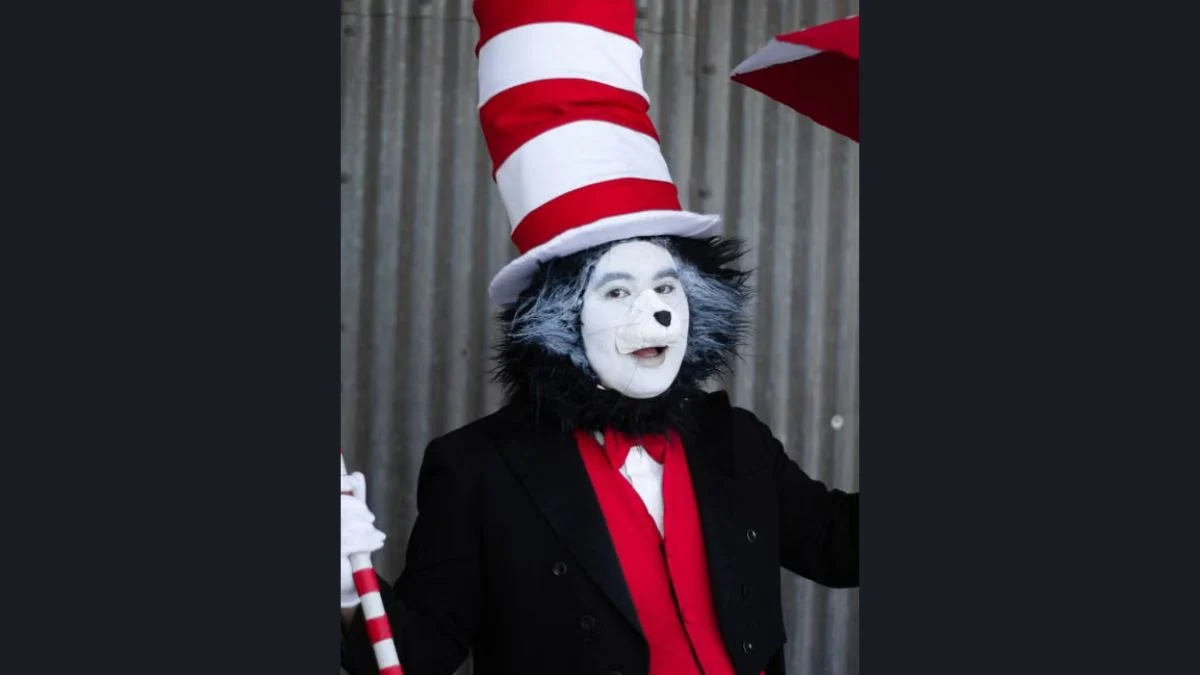
A giant, sinister-looking Cat in the Hat appears outside a home. Then another video shows the character standing in a driveway. Another seems to capture him peering through a window. Before long, social media users across Ireland and the UK were sharing eerie “security-camera” footage and warning others to lock their doors.
But there was one huge problem: the Cat in the Hat was never there. Police in Ireland and the United Kingdom have confirmed that the viral images and videos spreading across TikTok, Facebook, Snapchat and other platforms in mid-to-late August 2026 were AI-generated or fabricated. The posts sparked genuine concern after attaching the fictional character to real locations including Wexford, Limerick, Cork, Tipperary, Dublin, Sheffield, Glasgow, Greater Manchester, Kent, Gloucestershire and Leeds.
Not every unexplained story online turns out to be a costume prank: journalist Ross Coulthart has revisited Estonia’s decades-old “Object M” case as old Soviet UFO files resurface with isotope readings nobody’s fully explained. For more, read our story on the anomaly that refuses to stay buried: Ross Coulthart Revisits Estonia’s Mysterious “Object M” As Soviet UFO Files Resurface
AI-Generated Cat in the Hat Sightings Spread From Ireland to the UK
The strange trend first gained traction in Ireland, particularly around Wexford and Limerick. Alleged sightings named Curracloe, Enniscorthy, Maudlintown and Whiterock in Wexford, along with Limerick, Glanmire in Cork, Cahir in Tipperary and Broadford Park in Dublin.
Some versions became much darker. Viral posts showed the life-sized character carrying a knife, chasing people or leaving notes, while captions urged residents to “lock your doors.” Others were designed to resemble Ring doorbell recordings or grainy home-security footage, making the fictional figure appear to be caught on camera in familiar neighbourhoods.
The character’s creepy reputation may have helped the hoax take off. The Cat in the Hat debuted in Dr. Seuss’s 1957 book, where the giant feline arrives at a child’s home while the parents are away. The original character was not intended to be frightening, but the 2003 live-action movie starring Mike Myers gave him a much more disturbing makeover. That interpretation reportedly horrified Dr. Seuss’s widow, who subsequently refused to allow Hollywood to give her husband’s work another live-action treatment.
That unsettling legacy made the character almost perfect for an AI-fuelled internet prank.
TikTok tutorials also showed how easily users could recreate similar scenes with accessible AI tools. By inserting the recognisable character into realistic photographs and nighttime street scenes, creators could manufacture “sightings” without anyone ever needing to wear a costume or enter a neighbourhood.
Wexford Gardaí were among the first authorities to step in.
“In an unusual turn of events we are hearing a lot about an illusive Dr Seuss character doing the rounds online, apparently causing havoc in neighbourhoods and towns across the country. Fortunately, we can rule out the issue, which is essentially an AI prompt that places the character into images/videos of familiar places. To be clear, the Cat in the Hat was not in your driveway while you were out and he is not currently hiding out in Curracloe.”
Other Gardaí covering Dublin and Limerick likewise confirmed that the circulating material was fabricated. Police recorded no verified real-world incidents involving someone dressed as the Cat in the Hat approaching homes, schools or members of the public.
People will post almost anything online, apparently: one Florida man bought a whole cooked alligator off Facebook Marketplace and called it the best dish he’s ever eaten. For more, check our story on the strangest marketplace order we’ve come across yet: Florida Man Orders Whole Cooked Alligator on Facebook Marketplace
The hoax then crossed the Irish Sea.
In the UK, one of the most notable claims involved Meadowhall in Sheffield. A fabricated post appeared to come from a non-existent “Yorkshire Police” force and claimed officers were investigating a suspicious Cat in the Hat figure seen near Meadowhall during the early hours. It even claimed extra patrols had been ordered and advised residents to lock their doors and windows.
South Yorkshire Police quickly debunked it.
“To confirm, we have not had any reports of a ‘cat in a hat’ in Meadowhall, or anywhere else in South Yorkshire for that matter. We can also confirm no recent sightings of his associates Thing One and Thing Two.”
The force added:
“On a serious note, if you do see posts online providing policing updates and advice, please check that they are from an official policing account. The cat is not out of the hat on this one… we don’t have a new account or a new logo. Please don’t believe everything you read on social media.”
Additional police forces in Glasgow, Cheshire and Cumbria also addressed versions of the claims. Despite being fake, the posts caused genuine concern among teenagers and parents. Some young people feared encountering the character, while others shared the videos as warnings. Members of the public even approached police officers about the footage.
Online posts have a way of landing people in real legal trouble: an Ohio manufacturer is suing a reviewer for more than $25,000 over a single one-star Google review, calling it a personal vendetta. For more, read our post on the review that turned into a lawsuit: Ohio Manufacturer Sues Reviewer Over 1-Star Google Post
The episode has drawn comparisons with the 2016 “killer clown” panic, when reports and images of creepy clowns spread internationally. The major difference now is speed and accessibility. Instead of finding a costume and physically appearing outside someone’s home, an AI tool can manufacture convincing “evidence” from a phone or computer.
The earlier “AI homeless man” trend was also referenced by authorities in the context of fabricated content generating unnecessary emergency calls.
Despite the panic, police have reported no verified real-world Cat in the Hat incidents, no arrests and no criminal investigation involving an actual costumed figure. The problem was entirely online, but the public response was real.
The bizarre saga ultimately shows how quickly AI-generated imagery, familiar locations and social-media reposts can transform a joke into a community scare. Police in both Ireland and the UK have urged people to verify suspicious posts through official policing accounts or reputable news organisations before treating them as genuine warnings.
So, no, the Cat in the Hat wasn’t lurking in your driveway.
And Thing One and Thing Two weren’t there either.
Speaking of things that seem too extreme to be real: an iPhone 17 Pro actually survived a genuine 30,607-metre free fall and walked away with a Guinness World Record. For more, our article covers exactly how the case held up: iPhone 17 Pro Survives 30,607-Metre Free Fall to Set Guinness World Record
Disclaimer
This article is based on thorough research of the source material provided, including police statements and reporting from multiple reputable media outlets. The viral Cat in the Hat images and videos described above have been identified by police as AI-generated or fabricated. Sources include BroBible, BBC News, An Garda Síochána Wexford, South Yorkshire Police, and reporting from the Irish Independent, Irish Examiner, Irish Mirror, The Sun Ireland, Cork Beo, The Star, The Independent, Metro, Yahoo News UK, PetaPixel, Dexerto and IBTimes UK, among other regional Irish and UK publications. Readers should independently verify claims circulating on social media and rely on official police accounts or reputable news organisations for public-safety information.
Sources
- Irish Mirror — Gardaí dismiss claims Cat in the Hat is terrorising neighbourhoods as AI hoax
- Irish Independent — Wexford Gardaí confirm viral ‘Cat in the Hat’ sightings are AI-generated
- PetaPixel — Photos of ‘Cat in the Hat Serial Killer’ Are AI-Generated, Police Say
- The Star (Sheffield) — Police respond to bizarre reports of ‘killer cat in the hat’ in Sheffield
- The Independent / Yahoo News UK — Police issue warning over viral ‘Cat in the Hat’ social media trend
- Metro — What is Cat in the Hat hoax leaving teens scared to open front door?
- NME — Viral ‘Cat In The Hat’ TikTok trend dupes scared teens into thinking he’s real
Featured Image Credit: Franco Monsalvo on Pexels


Leave a Reply