

When language authorities move, culture follows. And in March 2026, one of the internet’s most influential dictionary platforms made a decision that officially cemented modern fandom into the English language.
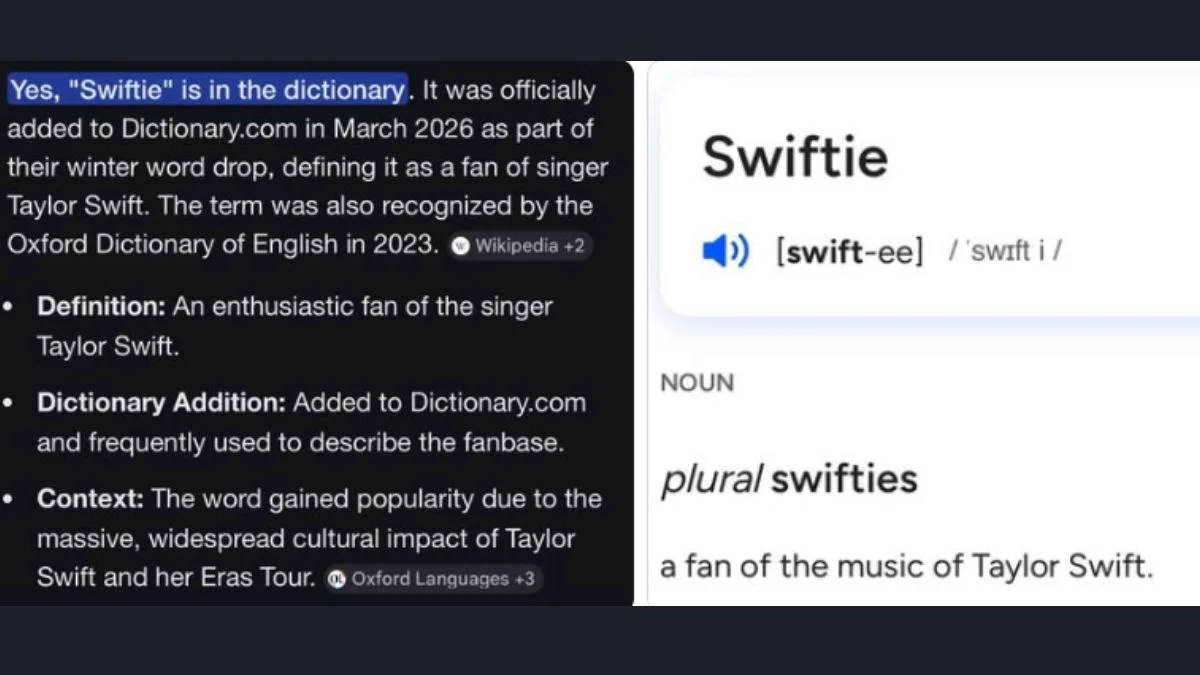
Dictionary.com announced that it had added the word “Swiftie” to its digital dictionary as part of its Fan Favorite Winter Word Drop 2026 — a move that formally recognizes the global fanbase of Taylor Swift within mainstream English vocabulary.
This wasn’t just a pop culture moment. It was a linguistic milestone.
Below is the complete, verified breakdown of what happened, when it happened, why it matters — and how a fan nickname evolved into an officially recognized English word.
When Did Dictionary.com Add “Swiftie”? Complete Timeline & Official Details
The announcement came on March 2, 2026, when Dictionary.com unveiled its Winter Word Drop 2026 update. The seasonal update included more than 1,500 new entries, spanning pop culture, internet slang, science, and technology.
Here are the official details:
| Date | Event | Official Detail |
| March 2, 2026 | Winter Word Drop Announcement | “Swiftie” officially added |
| Winter 2026 Update | 1,500+ new entries | Pop culture & internet language expansion |
| Definition Published | Entry Definition | “A fan of the music of Taylor Swift.” |
The word was added under Dictionary.com’s seasonal expansion initiative, which evaluates words based on widespread usage, longevity, and broad public understanding.
In other words, this was not a trend-based addition — it was a data-driven linguistic decision.

What Does “Swiftie” Officially Mean?
According to Dictionary.com’s published definition:
Swiftie (noun): A fan of the music of Taylor Swift.
The plural form is Swifties, commonly used to refer collectively to members of Swift’s global fanbase.
Example usage:
- “Millions of Swifties attended the tour.”
- “Swifties around the world celebrated the album release.”
The term now exists not just in headlines and hashtags, but in formal lexicographical records.
Why Dictionary.com Decided “Swiftie” Met Official Criteria
Dictionary.com does not add words lightly. Each new entry must meet strict internal standards, including:
- Demonstrated widespread usage
- Broad comprehension among English speakers
- Sustained relevance (not a fleeting trend)
- Utility in general communication
By these measures, “Swiftie” qualified decisively.
The term has been used globally for years across:
- Social media platforms
- News coverage
- Television broadcasts
- Academic discussions of fandom culture
Its usage spans both the UK and USA, reflecting the international reach of Taylor Swift’s career.
The addition signals recognition that modern fan identities have linguistic staying power.
“Swiftie” Was Already Recognized Elsewhere — Including Oxford
Although the 2026 Dictionary.com addition made headlines, the word was not entirely new to formal dictionaries.
The Oxford Dictionary of English had already included “Swiftie” in 2023, acknowledging its cultural presence.
This means the term has now been validated by multiple authoritative English-language institutions — strengthening its legitimacy across both British and American English contexts.
For UK audiences, that Oxford recognition carried weight. For US audiences, Dictionary.com’s inclusion solidified its mainstream acceptance in digital reference platforms.

Taylor Swift’s Connection to the Word — Including Trademark History
Interestingly, the word has not only cultural significance but also commercial relevance.
Taylor Swift formally trademarked “Swiftie” through her management company:
- First in 2017
- Again in 2022
The trademark applies to merchandise categories such as tote bags and accessories.
That move demonstrated early recognition of the term’s branding value — long before its formal dictionary validation.
It’s rare for a fan-coined nickname to evolve into both:
- A trademarked commercial term
- An officially recognized dictionary word
This dual status highlights the scale of Swift’s global cultural footprint.
Part of a Bigger Trend: Fan Culture Words Enter the Dictionary
The 2026 Winter Word Drop wasn’t just about Swifties.
Dictionary.com added over 1,500 entries, many drawn from fandom and internet culture. Among them:
- Beyhive — referring to fans of Beyoncé
- Trekkie — referring to fans of Star Trek
- Janeite — referring to admirers of Jane Austen
- Internet slang such as copium, side quest, and glamazon
This demonstrates a broader linguistic shift: fan communities are shaping the English language in measurable, permanent ways.
From Regency literature enthusiasts to sci-fi devotees to global pop fandoms — language now reflects cultural participation.
How “Swiftie” Evolved From Fandom Slang to Cultural Identity
The word “Swiftie” originated organically within Taylor Swift’s fan community during the early years of her career.
Over time, it became more than a nickname. It evolved into:
- A self-identifying label
- A social media badge
- A global cultural marker
- A recognized demographic category in entertainment reporting
In major UK and US media outlets, journalists regularly use the term without explanation — proof that general audiences understand it.
The transition from informal slang to dictionary entry follows a familiar linguistic pattern:
- Coined in niche community
- Adopted widely
- Used in media
- Recognized by lexicographers
“Swiftie” completed that journey.
Why This Matters in the UK and USA
For American readers, this addition underscores the domestic cultural dominance of Taylor Swift’s career.
The fact that:
- Oxford included it in 2023
- Dictionary.com added it in 2026
… demonstrates transatlantic linguistic validation.
Language is one of the strongest indicators of cultural influence. When a name becomes a noun, and that noun becomes a dictionary entry, it signals lasting impact.
The Official Recognition of Digital Era Language
The Winter Word Drop 2026 also illustrates a key shift in how dictionaries operate.
Modern lexicography increasingly reflects:
- Online behavior
- Social media trends
- Fandom communities
- Meme culture
Rather than resisting internet-born terminology, institutions like Dictionary.com now document it.
By adding “Swiftie,” the platform acknowledges that:
- Fan communities are social institutions
- Online language has permanence
- Digital-era vocabulary belongs in formal English

Summary: Verified Facts About the “Swiftie” Dictionary Addition
| Category | Verified Information |
| Word Added | Swiftie |
| Definition | A fan of the music of Taylor Swift |
| Added By | Dictionary.com |
| Announcement Date | March 2, 2026 |
| Part Of | Fan Favorite Winter Word Drop 2026 |
| Total Words Added | 1,500+ |
| Previous Dictionary Inclusion | Oxford Dictionary of English (2023) |
| Trademark Status | Trademarked by Taylor Swift (2017, 2022) |
Final Thoughts: When Fandom Becomes Formal Language
Language doesn’t evolve quietly — it evolves culturally.
The addition of “Swiftie” to Dictionary.com marks more than a vocabulary update. It represents:
- The institutional recognition of modern fandom
- The lasting influence of Taylor Swift
- The mainstream acceptance of internet-born language
What began as a fan-coined term now sits among formally defined English words.
And for millions of Swifties across the UK, USA, and beyond — that recognition is more than symbolic.
It’s official.
Language has spoken.


Leave a Reply