

Introduction: A Forgotten Olympic Film Soaring Back Into the Spotlight
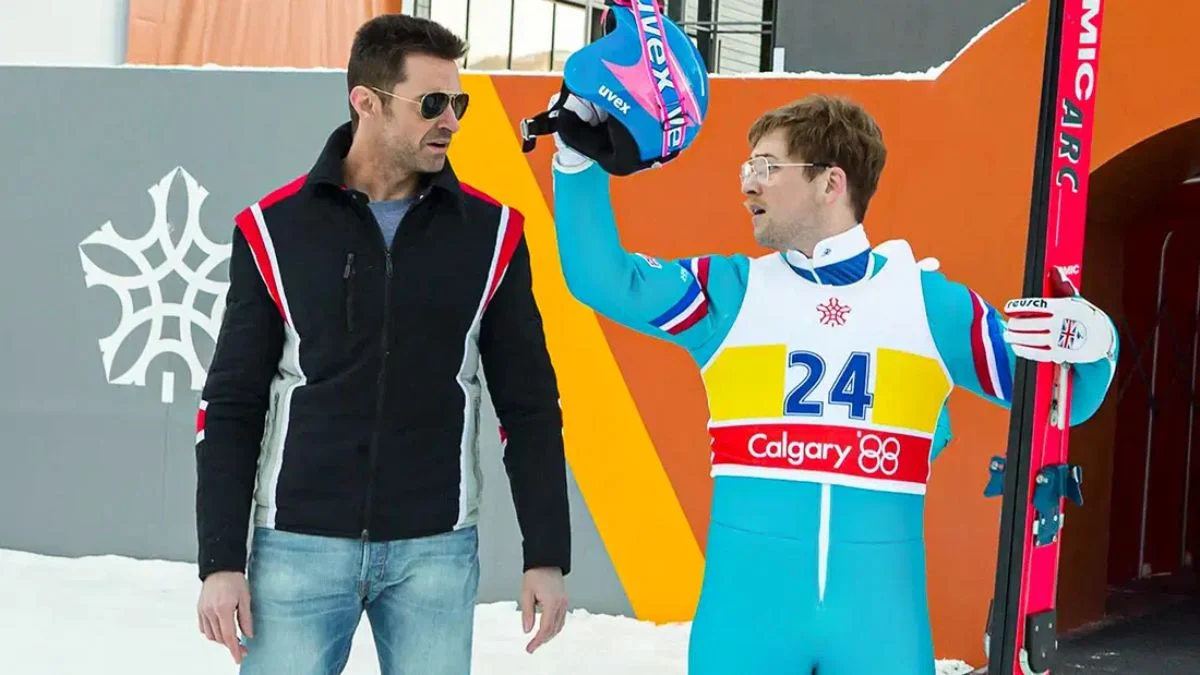
As the world gears up for the 2026 Milan-Cortina Winter Olympics, an unexpected cinematic revival is unfolding. A decade-old sports drama once overlooked at the box office is suddenly dominating conversations again. Eddie the Eagle, the 2016 biographical comedy-drama starring Hugh Jackman and Taron Egerton, is being rediscovered by audiences worldwide—earning praise as a hidden gem that perfectly captures the spirit of Olympic perseverance.
With social media buzzing, critics revisiting it, and streaming platforms pushing it back into the spotlight, the film has become essential viewing for Olympic season. Its message—about courage, persistence, and embracing failure—feels more relevant than ever in today’s hyper-competitive sports culture.
The True Story Behind “Eddie the Eagle”: Britain’s Most Unlikely Olympian
At the center of the film is Michael “Eddie” Edwards, a working-class plasterer from Cheltenham, England, who dreamed of becoming an Olympian despite having limited athletic ability and no financial backing.
Realizing Britain had not sent a ski jumper to the Olympics since 1928, Edwards switched from downhill skiing to ski jumping purely because the field was empty. He trained largely on his own, funding himself and sleeping in unconventional places—including his car and a Finnish mental hospital—simply because it was cheap.
In 1988 at the Calgary Winter Olympics, Edwards finished last in both the 70m and 90m ski jumping events, yet he became a global sensation. His joyful celebrations and fearless attitude won over fans and media worldwide, earning him the nickname “Eddie the Eagle.”
Rather than being remembered for his rankings, Edwards became a symbol of Olympic spirit—proof that participation and courage matter more than medals.
Creative Liberties in the Film: What Hollywood Changed for Drama

While the film stays faithful to the heart of Edwards’ journey, it does take several creative liberties to enhance the narrative:
- In real life, Edwards already had skiing experience and had performed stunt jumps over cars and buses, but the film portrays him as more of a beginner to heighten the underdog story.
- Hugh Jackman’s character, Bronson Peary, is fictional—a composite of multiple mentors rather than a real individual coach.
- The “Eddie the Eagle Rule”, introduced by the International Olympic Committee in 1990, is real. It enforced stricter qualification standards, preventing amateur athletes like Edwards from entering future Games.
Despite these changes, Edwards himself has praised the film, stating that it captures the essence of his philosophy: “It’s about the taking part, not just the winning.”

Initial Release in 2016: Positive Reviews but Commercially Overlooked
Eddie the Eagle premiered on February 26, 2016, at the Sundance Film Festival and was released by 20th Century Fox. Critics praised its uplifting tone, calling it a feel-good sports movie with heart and humor.
The film holds an 82% approval rating on Rotten Tomatoes, and critics highlighted:
- Hugh Jackman’s charismatic performance as a washed-up former ski jumper
- Taron Egerton’s breakout role, later leading to his acclaimed performance in Rocketman
- Christopher Walken’s supporting role, adding emotional depth
However, the film struggled commercially, earning $46.2 million worldwide against a $23 million budget. It was overshadowed by bigger releases like Deadpool—ironically also featuring Jackman in a different role—and suffered from limited streaming availability after its theatrical run.
As a result, it slowly faded from mainstream conversation despite being loved by audiences.
Why “Eddie the Eagle” Is Trending Again in 2026

Olympic Fever and Renewed Relevance
With the 2026 Winter Olympics in Milan-Cortina, the film has resurfaced as a must-watch sports classic. Articles published in early 2026 describe it as:
- “Hugh Jackman’s underseen Winter Olympics movie worth revisiting”
- A “brilliant British triumph” and “solid gold winner”
- A heartwarming true story that resonates with modern audiences
The movie is also streaming again on platforms like Peacock (US) and BBC iPlayer (UK), making it accessible to a new generation of viewers.

Social Media Buzz: Eddie the Eagle Goes Viral Again
The resurgence isn’t just driven by critics—fans and social media platforms are fueling its revival.
On X (formerly Twitter), users are comparing Eddie Edwards to modern Olympic underdogs such as “Raygun” the breakdancer and “Eric the Eel,” highlighting how athletes can become global icons even without winning medals.
Posts praising the film include:
- Recognition of Taron Egerton’s performances in Eddie the Eagle and Rocketman
- Clips and podcast discussions featuring Edwards himself
- Threads celebrating the movie as a joyful, inspirational true story
This viral momentum has positioned the film as part of the broader Olympic narrative of perseverance and unexpected fame.
Table: Key Timeline of Eddie the Eagle’s Journey
| Year | Event | Details |
| 1928 | Last British Olympic ski jumper before Edwards | Britain absent for 60 years |
| 1988 | Calgary Winter Olympics | Edwards finishes last but becomes global sensation |
| 1990 | “Eddie the Eagle Rule” introduced | Stricter Olympic qualification standards implemented |
| 2016 | Film release | Premieres at Sundance and in theaters worldwide |
| 2026 | Renewed popularity | Trending again ahead of Milan-Cortina Olympics |
Why the Film Resonates More Today Than Ever
In an era where elite athletes dominate headlines and medals define success, Eddie the Eagle offers a refreshing perspective. It celebrates the joy of participation, the courage to dream big, and the value of embracing failure.
The film’s message aligns perfectly with modern Olympic discussions about inclusivity, mental health, and the pressure of elite sports. As scandals, controversies, and high-stakes competition dominate the 2026 Games, Edwards’ story feels like a nostalgic reminder of the Olympics’ original spirit.
Hugh Jackman and Taron Egerton: Performances That Elevated the Story
Hugh Jackman’s portrayal of the grizzled, reluctant mentor Bronson Peary was widely praised for its emotional depth and humor. Coming years after his X-Men fame and before Deadpool & Wolverine, the role showcased his versatility beyond superhero cinema.
Taron Egerton’s performance as Eddie marked a turning point in his career, earning him comparisons to his later Oscar-nominated role in Rocketman. His portrayal captured Eddie’s awkward charm, relentless optimism, and genuine passion for sports.
Together, their chemistry made the film both entertaining and emotionally powerful.
Where to Watch “Eddie the Eagle” in 2026
As of early 2026, the film is available on:
- Peacock (United States)
- BBC iPlayer (United Kingdom)
- Other regional platforms depending on licensing
With Olympic fever rising, it has become a popular choice for family viewing, motivational content, and sports-themed watchlists.

Why You Should Watch It During the 2026 Winter Olympics
Whether you’re a sports fan, a movie lover, or someone who enjoys inspirational true stories, Eddie the Eagle offers a unique viewing experience. It combines humor, stunning snowy landscapes, heartfelt performances, and a powerful message about perseverance.
If you’re watching from Dehradun or anywhere else during the chilly Olympic season, it’s the perfect fireside film to rekindle your belief in dreams—no matter how impossible they seem.
Conclusion: A Decade Later, “Eddie the Eagle” Still Soars
Ten years after its release and nearly four decades after Eddie Edwards’ real Olympic journey, Eddie the Eagle is proving that true stories never lose relevance. Its rediscovery in 2026 shows how powerful underdog narratives can transcend time, trends, and box office numbers.
As the Milan-Cortina Winter Olympics unfold, the film stands as a reminder that the Olympics aren’t just about gold medals—they’re about human spirit, courage, and unforgettable moments that inspire generations.
In the words that define Eddie Edwards’ legacy: It’s not about winning—it’s about taking part.


Leave a Reply