

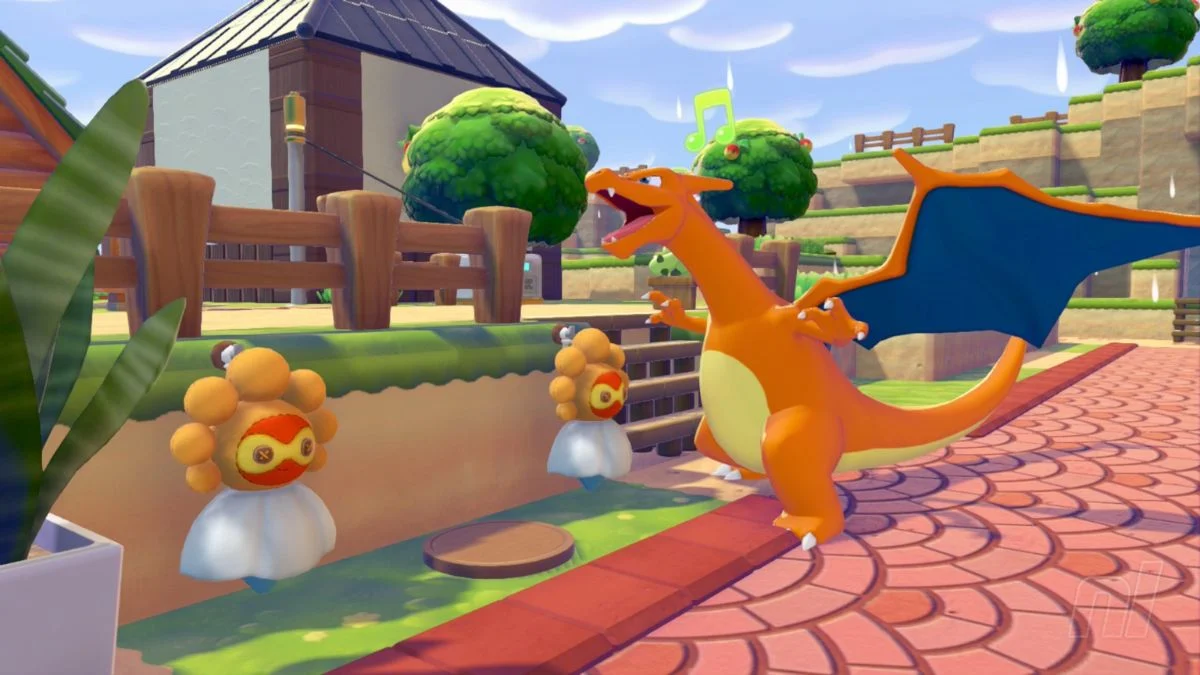
If you have spent any time with mainline Pokémon games, the question of evolution is probably one of the first things on your mind when picking up Pokémon Pokopia. After all, you will meet Charmander, Squirtle, and Bulbasaur almost immediately, and it is only natural to wonder whether their evolved forms are somewhere down the line. The answer might surprise you, and it changes how you approach building your island quite significantly. Here is everything you need to know.
Can You Evolve Pokémon in Pokémon Pokopia?
No, Pokémon cannot evolve in Pokémon Pokopia. The game does not feature any evolution mechanic. However, that does not mean evolved forms are off the table entirely. Every Pokémon in an evolution line, from base form all the way through to the final stage, exists as its own independent Pokémon in the game and can be attracted to your island separately through habitats.
So while you cannot catch a Charmander and evolve it into Charmeleon or Charizard, you can attract a Charmeleon and a Charizard directly by building the right habitats for them. All three can exist on your island at the same time.

How Do You Get Evolved Pokémon in Pokémon Pokopia?
Since evolution is not available, habitats are the only way to attract evolved forms of Pokémon to your island. Evolved Pokémon are simply treated as rarer spawns within compatible habitats, rather than transformations of Pokémon you already have.
| Pokémon | How to Attract |
| Base forms (e.g. Charmander, Ivysaur) | Standard habitat spawns |
| Evolved forms (e.g. Charmeleon, Venusaur) | Rarer spawns from compatible habitats |
| Specific evolved forms (e.g. Blastoise) | Dedicated habitats that only spawn that Pokémon |
As a general rule, the further along an evolution line a Pokémon is, the rarer it will be as a habitat spawn. For example, the same habitat that contains Ivysaur can also spawn Venusaur, though Venusaur will appear far less frequently than Ivysaur.

How to Make Rare Evolved Pokémon Easier to Find
Fortunately, Pokémon Pokopia has a system in place that makes tracking down rarer evolved Pokémon considerably more manageable. Since you cannot attract duplicate Pokémon in the game, once you have befriended every other Pokémon native to a particular habitat, the only one left to spawn will be the rare one. This means that filling out a habitat’s roster of common Pokémon first effectively guarantees that the next arrival will be the rare evolved form you are after.
Additionally, some habitats are specifically designed to spawn only one particular Pokémon. For example, while Blastoise can appear as a rare spawn in the Hydrated Tall Grass habitat alongside four other Pokémon, building the Floating in the Shade habitat makes Blastoise the only possible spawn, which makes attracting it significantly more straightforward.
Key Takeaways
- Pokémon cannot evolve in Pokémon Pokopia. There is no evolution mechanic in the game
- However, all evolved forms of Pokémon exist in the game and can be attracted independently through habitats
- Evolved Pokémon are treated as rarer habitat spawns compared to their base forms
- You can have all stages of an evolution line on your island at the same time by building compatible habitats for each one
- Since duplicate Pokémon cannot spawn, attracting all common Pokémon in a habitat first guarantees the next spawn will be the rare evolved form
- Some habitats are dedicated to a single Pokémon, making them the most reliable way to attract specific evolved forms


Leave a Reply