

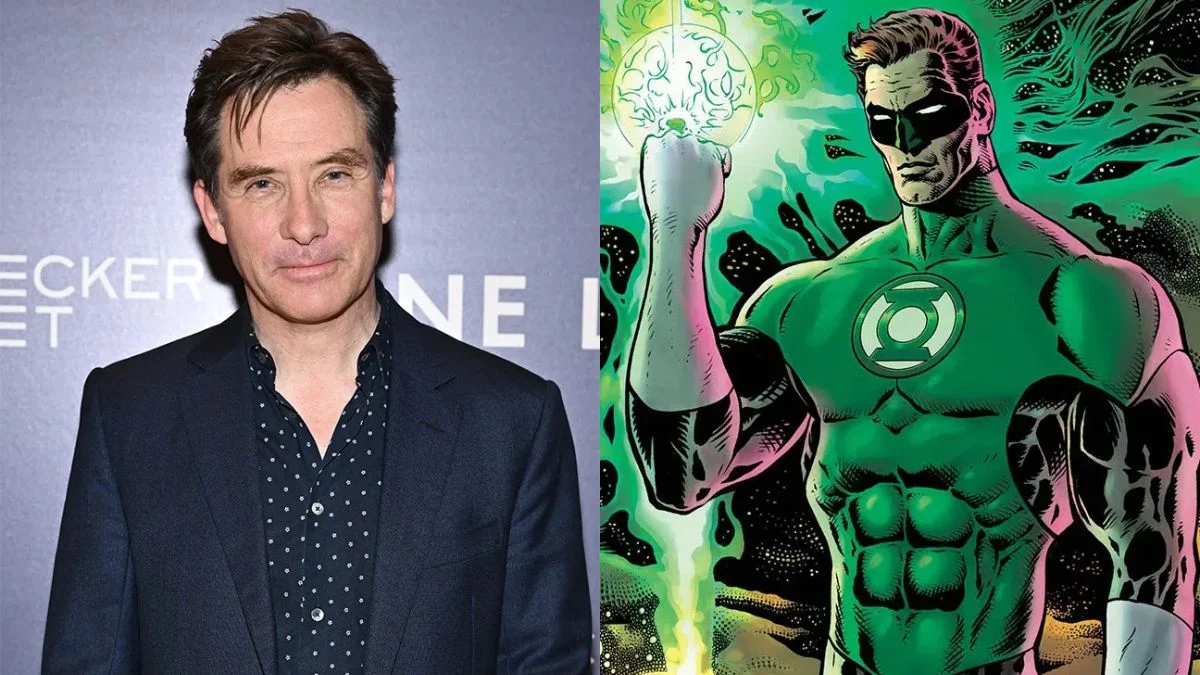
A Superhero Series Ignites a Very Real-World Debate
In what has quickly become one of the most talked-about entertainment controversies of March 2026, HBO’s upcoming DC Universe series Lanterns—still months away from its premiere—has found itself at the center of a heated debate about respect for source material, creative freedom, and the evolving identity of superhero storytelling.
At the heart of the storm are two towering figures from very different corners of the industry: television showrunner Damon Lindelof and legendary comic book writer Grant Morrison. What began as a resurfaced joke has now snowballed into a broader conversation about Hollywood’s relationship with comic book lore—and whether modern adaptations are losing sight of what made these stories iconic in the first place.
What Is Lanterns? HBO’s Bold Reinvention of a DC Classic
The controversy revolves around HBO’s highly anticipated series Lanterns, part of the new DC Universe overseen by James Gunn. The show stars Kyle Chandler as Hal Jordan and Aaron Pierre as John Stewart—two of the most iconic Green Lanterns in DC Comics history.
Unlike previous superhero adaptations, Lanterns is being positioned as a grounded, Earth-based murder mystery. Gunn himself has compared its tone to True Detective, signaling a deliberate shift away from cosmic spectacle toward a more restrained, investigative narrative.
But that creative direction hasn’t come without consequences.

Trailer Backlash: “Where Is the Green?”
When the first teaser trailer dropped in early March 2026, fans were quick to notice something unusual—something missing, in fact.
The signature green glow that defines the Green Lantern mythos was barely present.
Gone were the vibrant energy constructs, the luminous suits, and the visual spectacle that fans associate with the intergalactic peacekeeping corps. Instead, the trailer leaned heavily into realism, muted tones, and a grounded aesthetic.
The reaction online was immediate and widespread. Social media lit up with criticism, with many fans questioning whether the show was straying too far from its roots. Comments like “Where’s the green?” and “This doesn’t feel like Green Lantern” dominated discussions.
In a moment that briefly diffused tension—but also fueled the conversation—HBO’s official account responded with humor, posting an image of a green bowl from the trailer alongside the caption: “What do you mean there’s no green?”
It was playful. But it didn’t settle the debate.
The Resurfaced Joke That Sparked It All
Amid the growing backlash, an older comment from Damon Lindelof resurfaced—and changed everything.
The quote came from an appearance on the Lovett or Leave It podcast, hosted by Jon Lovett. During the discussion, Lindelof joked about the show’s title:
“It’s called Lanterns because we all agreed that the green was stupid, so now it’s just Lanterns.”
He reportedly laughed while making the remark, even downplaying elements of the mythology like the power ring.
At the time, it seemed like a throwaway joke. But in the context of the trailer backlash, it hit very differently.
The clip spread rapidly across social media, reinforcing fears among fans that the creative team might be dismissive of the very elements that define the Green Lantern universe.
Grant Morrison Responds: A “Brutal” Public Rebuttal
The conversation might have remained confined to fans—if not for the intervention of one of the most respected voices in comic book history.
Grant Morrison, known for acclaimed works like All-Star Superman, Batman, Animal Man, and their celebrated Green Lantern run (2018–2021), addressed the issue directly in their Substack newsletter Xanaduum around March 15–16, 2026.
Their response was anything but subtle.
Morrison rejected Lindelof’s comment outright and used it as a launching point for a broader critique of Hollywood’s approach to comic book adaptations:
“TV writer/producer Damon Lindelof’s comments notwithstanding, the ‘Green’ in ‘Green Lantern(s)’ green is not ‘stupid.’ Why does a writer attach himself to this kind of narrative if he thinks it’s fundamentally ‘stupid’?”
They continued by questioning why studios would hire creators who appear dismissive of the source material:
“You don’t hand CSI scripts to patronising writers who condemn forensics experts and their haircuts as ‘stupid,’ so why hire people who are ashamed and in denial about the comic book material they’ve been assigned to develop?”
The critique went further, framing the issue as a disconnect between creators and fans:
“The only people who give a f*** about the ‘Lanterns’ TV series are Green Lantern fans. Why alienate them at the start?”
The post quickly went viral, with major outlets describing it as a “brutal takedown.” Within hours, the controversy had escalated beyond fan discourse into a full-blown industry debate.

Timeline of Events: How the Controversy Unfolded
| Date | Event | Key Figures | Details |
| ~2024–2025 | Podcast Comment | Damon Lindelof | Joke about removing “green” from Lanterns title |
| Early March 2026 | Teaser Trailer Released | HBO / DC Studios | Fans criticize lack of green visuals and grounded tone |
| Mid-March 2026 | Clip Resurfaces | Online Communities | Podcast quote goes viral amid backlash |
| March 15–16, 2026 | Morrison’s Response | Grant Morrison | Substack post criticizes Lindelof and Hollywood trends |
| March 17, 2026 | Lindelof Apologizes | Damon Lindelof | Instagram post calls comment a “dumb joke” |
Damon Lindelof Responds: “Nobody’s Fault But Mine”
As the controversy gained momentum, Damon Lindelof responded publicly on March 17, 2026.
Posting on Instagram, he struck a notably self-aware and apologetic tone:
“I have upset Grant Morrison, which means I have now pissed off MOST of the brilliant British/Scottish comics writers that I grew up idolizing. To quote the bard (Otis Redding), this is nobody’s fault but mine.”
Rather than defending the remark, Lindelof acknowledged it as a mistake. In follow-up clarifications, he described the comment as a “dumb joke” and admitted he had been “sloppy and careless.”
He also referenced his experience with HBO’s Watchmen series, which famously drew criticism from Alan Moore—another legendary British comics writer who distanced himself from the adaptation.
This pattern of tension between adaptation and authorship wasn’t lost on observers.
A Familiar Debate: Comics vs. Hollywood
At its core, the Lanterns controversy reflects a longstanding tension in the entertainment industry.
On one side are creators like Grant Morrison, who view comic book mythology as rich, meaningful, and worthy of faithful interpretation.
On the other are filmmakers and showrunners like Damon Lindelof, who often seek to reinterpret or modernize these stories for broader audiences.
Lindelof’s track record—including Lost, The Leftovers, and Watchmen—shows a consistent interest in deconstruction and reinvention. But that same approach can sometimes clash with fan expectations, especially when it appears to dismiss core elements of the original work.
Morrison’s critique taps into a growing concern among fans: that some adaptations treat their source material as something to be “fixed” rather than celebrated.
Where Does Lanterns Go From Here?
Despite the controversy, production on Lanterns continues unchanged.
There has been no official statement from HBO or DC Studios beyond their earlier social media response. James Gunn has previously defended the show’s grounded approach, emphasizing that it is an intentional creative choice rather than a rejection of the mythology.
For now, the series remains one of the most anticipated entries in the new DC Universe lineup.
But expectations—and scrutiny—are now higher than ever.

Final Thoughts: A Clash That Could Shape the Future of DC
What makes this controversy so compelling isn’t just the sharp exchange between Damon Lindelof and Grant Morrison—it’s what it represents.
This is more than a disagreement over a joke. It’s a reflection of a deeper cultural divide between tradition and reinvention, between fandom and filmmaking, and between honoring a legacy and redefining it.
With Lanterns still months away from release, one thing is certain: the conversation isn’t over.
If anything, it’s just getting started.


Leave a Reply