
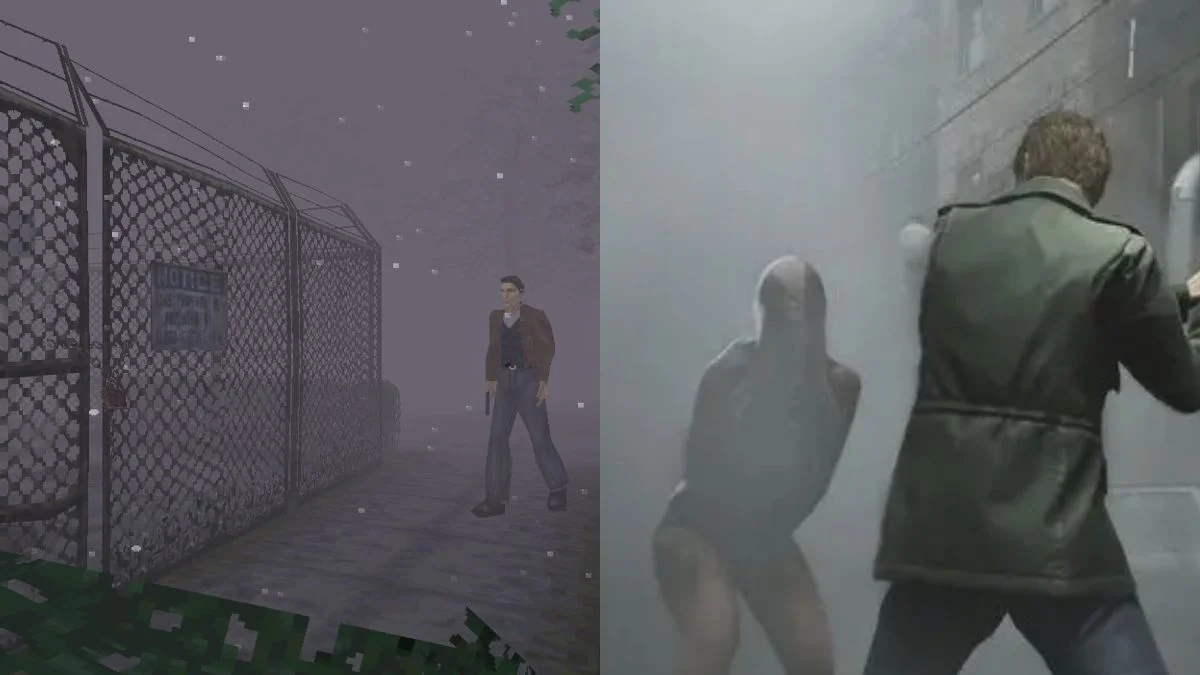
Silent Hill often feels less like a game series and more like a collection of unsettling memories tied to one cursed town. With renewed interest around Silent Hill 2, many players pause before starting and ask a simple question. Should I play Silent Hill 1 first, or can I step straight into Silent Hill 2 without losing meaning?
The answer depends on what you seek from the experience. Story clarity, emotional impact, or lore depth each play a role.
How Silent Hill 1 and Silent Hill 2 Connect?
Silent Hill 1 tells the story of Harry Mason and his search for his missing daughter. Through this journey, we learn about the town’s cult, its rituals, and the tragedy surrounding Alessa. This game solidifies why Silent Hill exists as a place lingering with fear, guilt, and suffering.
Silent Hill 2, however, takes a different path. It introduces James Sunderland, a man drawn to the town by a letter from his deceased wife. The story focuses inward rather than outward. It explores grief, denial, and personal punishment. James has no direct connection to Harry or Alessa, and the plot does not continue events from the first game.
Because of this lack of plot linkage, Silent Hill 2 stands on its own.
Do You Need Silent Hill 1 to Understand Silent Hill 2?
You do not need to play Silent Hill 1 to understand Silent Hill 2. The sequel explains everything required to follow James’s journey. Characters, themes, and conflicts unfold without relying on earlier knowledge. Many longtime fans (myself included) first experienced the series through Silent Hill 2 and never felt lost.
If your goal centers on emotional storytelling and psychological horror, starting with Silent Hill 2 works more than well.
When Playing Silent Hill 1 Adds Value
Playing Silent Hill 1 first adds context rather than necessity. You gain insight into the town’s origins and how trauma manifests into reality within Silent Hill. Environmental details and recurring symbols carry more weight when you understand Alessa’s story.
Players who enjoy deep lore and world-building often appreciate this background. It enriches the setting but does not change the meaning of Silent Hill 2’s narrative.
A Note on Silent Hill 3
If you plan to explore beyond Silent Hill 2, Silent Hill 3 directly continues the story of the first game. In that case, playing Silent Hill 1 becomes important. Without it, major character arcs and emotional moments lose their impact.

The Best Way to Start
If you want a powerful standalone experience, start with Silent Hill 2. If you want to understand the town itself before facing its most personal story, begin with Silent Hill 1.
Both paths lead into the fog. The difference lies in how much history you want to carry with you when you arrive.
Chronological Order of Silent Hill
For players who want to plan out the order before stepping into the fog, understanding the Silent Hill timeline helps clarify which games matter for the story and which ones stand alone. The series mixes direct sequels with self-contained narratives, so release order and story order do not always match.
Silent Hill Games in Release Order
This order reflects how the series evolved creatively over time.
- Silent Hill (1999)
- Silent Hill 2 (2001)
- Silent Hill 3 (2003)
- Silent Hill 4: The Room (2004)
- Silent Hill: Origins (2007)
- Silent Hill: Homecoming (2008)
- Silent Hill: Shattered Memories (2009)
- Silent Hill: Downpour (2012)
- P.T. playable teaser (2014)
- Silent Hill: The Short Message (2024)
- Silent Hill 2 Remake (2024)
- Silent Hill f (2025)
Silent Hill Story Timeline Order
This order focuses on narrative connections and shared lore.
- Silent Hill: Origins
Acts as a prequel and explores events tied to Alessa before the first game. - Silent Hill
Establishes the town’s cult, mythology, and psychological foundation. - Silent Hill 2
A standalone psychological story set later, focused on personal guilt rather than cult lore. - Silent Hill 3
Direct continuation of Silent Hill 1 and the only true sequel in the series. - Silent Hill 4: The Room
Loosely connected through themes and locations rather than direct story links. - Silent Hill: Homecoming
Draws from cult mythology but exists on the edge of the main timeline. - Silent Hill: Downpour
Fully self-contained with thematic ties to punishment and trauma.
Spin-offs like Shattered Memories exist outside the canon timeline and reimagine earlier events rather than extend them.
More Trending Game Guides & News:


Leave a Reply