

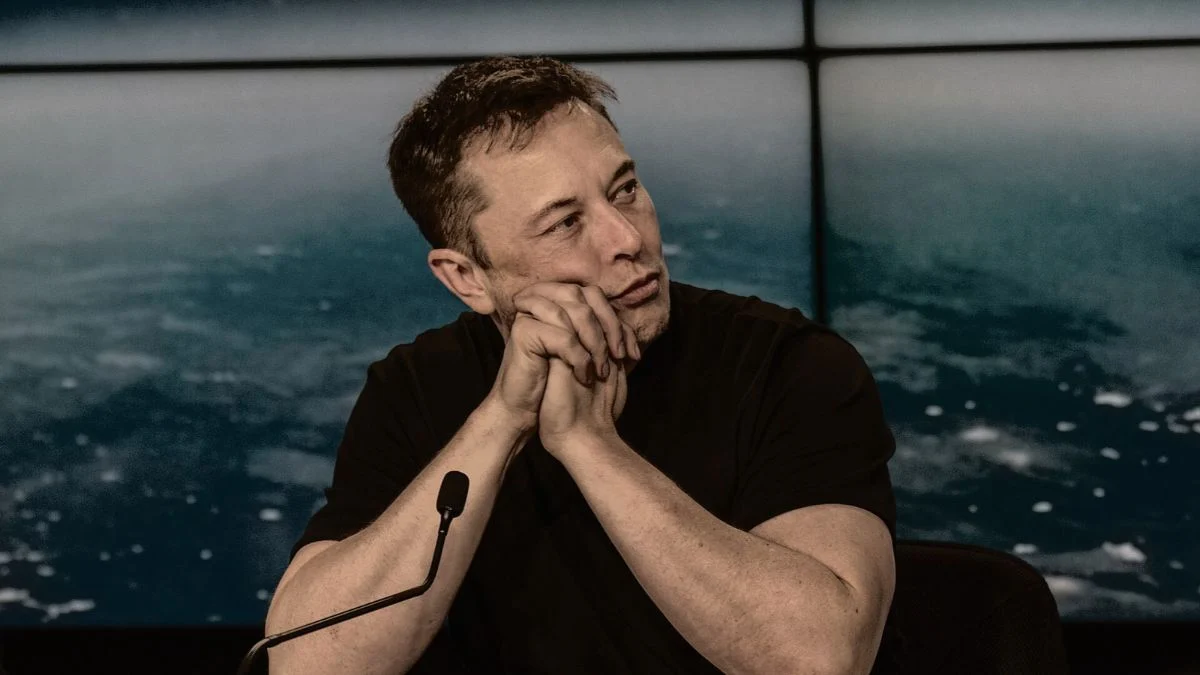
Elon Musk has acknowledged that SpaceX restricted Starlink access in Ukraine, bringing a week-long dispute over battlefield connectivity into sharper focus. The development has raised questions about how the satellite network was being used, why the restrictions were introduced and who was responsible for the separate limitations affecting Starshield.
Although Ukrainian officials say the services have returned to their previous operating speeds, the disagreement is far from settled. Musk maintains that Ukraine violated Starlink’s terms of service, while Kyiv argues that technical restrictions on the commercial network made the alleged long-range offensive operations impossible.
Elon Musk Says SpaceX Restricted Starlink Over Ukraine’s Alleged Drone Operations
Musk addressed the controversy in a series of posts on X on October 24, shortly after Ukraine announced that Starlink and Starshield had returned to their previous operating speeds.
According to Musk, SpaceX restricted the commercial Starlink network because the Ukrainian military allegedly used it for offensive drone strikes intended to kill people. He argued that using a civilian commercial service for such operations was prohibited under its terms of service.
Musk wrote:
“Using Starlink, a civilian commercial service, for offensive drone strikes to kill people has never been allowed, nor should it be.”
He followed that statement with a direct accusation against the Ukrainian military, saying:
“Ukraine military violated Starlink terms of service and used it for offensive drone strikes to kill people. That loophole was closed last week.”
Musk did not publicly provide evidence in those posts identifying specific Ukrainian operations that he said violated the terms.
His comments confirmed that SpaceX had restricted commercial Starlink access, but they did not resolve the central question: whether Ukraine had used the service in the way Musk alleged.
Ukrainian officials have disputed both the allegation and the technical explanation behind it, creating a sharp divide between SpaceX’s account and Kyiv’s description of the network’s capabilities.
Following SpaceX’s Other Big Headlines
Musk’s proposals involving SpaceX have also drawn attention beyond satellite connectivity. Explore our analysis of Musk’s reported SpaceX shares giveaway for more context on the company’s other headlines.
Ukraine Challenges Musk’s Starlink Terms-of-Service Claim
Ukrainian officials have argued that existing technical restrictions on commercial Starlink made the type of long-range offensive drone operations described by Musk impossible.
Serhii Beskrestnov, a Ukrainian presidential adviser involved in defence technology, challenged Musk’s account, pointing to restrictions already imposed on Starlink’s operation in Ukraine.
Beskrestnov wrote:
“It’s very strange that Elon Musk doesn’t know about the restrictions on Starlink’s operation in Ukraine.”
According to Associated Press reporting, Beskrestnov said Starlink-connected drones operating through the commercial service in Ukraine were restricted to speeds of approximately 70 to 90 km/h. He also said the system did not operate over Russian territory.
Reuters similarly reported that Beskrestnov argued Ukraine was physically unable to use commercial Starlink for long- and medium-range attack drone operations.
His argument was that the technical limitations prevented the kind of deep strikes inside Russia that Musk described. Ukrainian officials have nevertheless emphasised the importance of satellite connectivity for communications and other frontline activities.
The distinction matters: military use of satellite communications does not, by itself, establish that commercial Starlink was used for the specific offensive operations alleged by Musk.
As of October 25, the information presented in the available reporting does not independently establish Musk’s allegation. It remains a disputed claim that Ukrainian officials have directly challenged.
Ukraine Confirms Starlink and Starshield Speeds Have Returned to Normal
The immediate connectivity problem appeared to ease on October 24, when Ukraine announced that its monitoring systems had recorded the restoration of Starlink and Starshield operating speeds.
Ukraine’s Ministry of Defence reported that connectivity remained stable at movement speeds exceeding 400 km/h, indicating that the previous operating restrictions had eased.
Ukrainian Defence Minister Yevhenii Khmara welcomed the restoration and highlighted its importance for military operations.
Khmara said:
“This is another example of how direct dialogue and the persistent stance of the President of Ukraine at the highest level give a result,”
He added that the restoration was important:
“for our front line, for service members, for drone operations, logistics, and communications.”
The Defence Ministry said it would continue monitoring the operation of both systems.
President Volodymyr Zelenskyy separately confirmed that the services had returned to their previous performance levels.
Zelenskyy stated:
“The most important thing today is that Starlink and Starshield operations have been restored to the speeds we had before all the restrictions.”
He added:
“The speeds are now where they need to be.”
According to Zelenskyy, the restoration began overnight, and by Saturday morning the speeds were sufficient for Ukraine to use the services again.
He also highlighted their importance for frontline logistics and Ukraine’s efforts to defend against Russian jet-powered Shahed drones.
How Long Did the Starlink Restrictions Last?
The disruption began before Musk publicly acknowledged SpaceX’s decision. Reports of the latest speed limitations emerged around October 13-14, with Ukrainian officials describing problems affecting military systems dependent on satellite connectivity.
Reuters reported that the restrictions reduced operating speeds to approximately 160 km/h or less, creating difficulties for Ukrainian military operations involving faster-moving systems.
By October 23, Ukrainian officials were still reporting that the restrictions had not been completely removed, despite President Donald Trump having said access had been restored.
Reuters reported that drones travelling faster than approximately 160 km/h continued to experience problems.
The following day, Ukraine reported speeds above 400 km/h, while Zelenskyy said Starlink and Starshield had returned to their pre-restriction performance.
The key developments are summarised below.
| Date | Development |
| October 13-14, 2026 | Reports of the latest Starlink speed restrictions emerged. |
| October 15, 2026 | Reuters reported that an order to limit Starshield service for Ukraine came from inside the White House, citing officials familiar with the matter. |
| October 22, 2026 | The Wall Street Journal reported that Trump called Musk and asked him to lift restrictions affecting Ukraine’s Starlink access. |
| October 23, 2026 | Ukrainian officials said speed limitations remained despite Trump’s assurance. |
| October 24, 2026 | Ukraine announced that Starlink and Starshield had returned to their previous operating speeds. Musk acknowledged that SpaceX had restricted commercial Starlink. |
| October 25, 2026 | The dispute over the terms-of-service allegation and responsibility for the restrictions remained unresolved. |
Trump Called Musk as Disagreement Over Restrictions Intensified
The restoration followed pressure from Washington and conflicting public accounts about who had authority over the restrictions.
The Wall Street Journal reported that Trump called Musk on October 22 and asked him to lift restrictions affecting Ukraine’s Starlink access. According to U.S. officials cited by the newspaper, some improvement followed the conversation, although service was initially not fully restored.
Trump subsequently said that if problems remained, he would address them.
However, the administration’s public statements did not establish a single, agreed account of who ordered the restrictions.
Trump denied ordering them. Administration officials also offered differing explanations about the relationship between the White House, SpaceX and Starshield.
The Associated Press reported that Vice President JD Vance indicated Musk would need U.S. government direction concerning Starshield. Secretary of State Marco Rubio and Defense Secretary Pete Hegseth denied that the administration had ordered the restrictions and pointed to SpaceX and its service arrangements.
Musk, meanwhile, emphasised that Starshield was controlled by the U.S. government.
He wrote:
“Starshield, a different system, is controlled by the US government. What they decide to do is up to them.”
That statement highlights an important distinction in the dispute: acknowledging SpaceX’s restrictions on commercial Starlink does not establish who independently ordered every limitation affecting Starshield.
Reuters Reported That the Starshield Order Came From Inside the White House
The separate Starshield restrictions remain a significant part of the controversy.
On October 15, Reuters reported that the order to limit Starshield service for Ukraine came from inside the White House. The report cited two U.S. officials and a Western official briefed on the matter.
According to Reuters, Pentagon leaders were informed that the Starshield service used by the Ukrainian military needed to be slowed.
The Trump administration has disputed that account, and officials have denied that the U.S. government ordered the restrictions.
The public record therefore contains competing explanations. Reuters attributed the order to White House officials, while administration representatives denied U.S. government responsibility.
Musk’s statement about Starshield being controlled by the U.S. government adds another dimension to the disagreement, but it does not settle the question of who authorised the restrictions during the period in question.
Why Starlink Is So Important to Ukraine’s Military
Starlink has become an important part of Ukraine’s communications infrastructure during Russia’s full-scale invasion.
The satellite network provides connectivity in areas where conventional communications infrastructure has been damaged, is unavailable or cannot be relied upon. Ukrainian forces use the service for frontline communications, logistics and various drone-related operations.
Consequently, the restrictions had implications beyond ordinary internet access.
Ukrainian officials said the speed limitations affected drone missions and other military systems that required connectivity while moving at higher speeds. Reuters reported that the restrictions interfered with military operations and efforts to counter Russian aerial attacks.
Zelenskyy also identified frontline logistics and defence against Russian Shahed drones as important reasons for restoring the network’s previous performance.
The episode has highlighted the strategic importance of a satellite communications network operated by a private company. It has also raised questions about Ukraine’s dependence on technology controlled by private companies and foreign governments, particularly when access can become the subject of a political or military dispute.
Ukrainian officials had also raised concerns about the broader relationship with Washington. Reuters reported that Kyiv later said it continued receiving U.S. intelligence despite the tensions.
The restrictions emerged amid wider disagreements between Washington and Kyiv over efforts to end the war and Ukraine’s military strategy. Reuters reported that the episode developed against the backdrop of pressure from Washington over Ukrainian attacks on Russian oil refineries.
However, the available information does not establish that Musk’s stated terms-of-service rationale and the separate political dispute were the same decision or involved the same decision-maker.
Starlink vs Starshield: What Is the Difference?
Although the two systems have frequently been discussed together, Starlink and Starshield are not identical services.
- Starlink: SpaceX’s commercial satellite communications network.
- Starshield: SpaceX’s government-focused satellite system used for national-security and military applications.
Musk has stressed that commercial Starlink is operated by SpaceX, while Starshield is controlled by the U.S. government.
Ukraine’s Defence Ministry reported that monitoring systems had recorded the restoration of Starlink and Starshield operating speeds. Zelenskyy also confirmed that both services had returned to their previous performance.
That does not establish that the systems have identical functions or that the same authority controlled every restriction.
The distinction is central to understanding the controversy. Musk has acknowledged SpaceX’s role in restricting commercial Starlink, while the authority behind the separate Starshield limitations remains disputed.
Conclusion: Starlink Is Back, but Questions Remain
As of October 25, Ukraine says Starlink and Starshield have returned to the operating speeds needed for its military activities. The Defence Ministry reported stable connectivity above 400 km/h, and Zelenskyy confirmed that both systems had returned to their previous performance.
Musk has acknowledged that SpaceX restricted commercial Starlink, arguing that Ukraine violated its terms of service through alleged offensive drone operations. Ukrainian officials reject that explanation, saying technical limitations made the alleged long-range use impossible.
Meanwhile, conflicting accounts remain over who ordered the separate Starshield restrictions.
The immediate connectivity problem may have eased, but the dispute over the allegations, authority and decision-making has not been resolved. The episode underscores how important satellite communications have become to Ukraine’s wartime operations—and how consequential access restrictions can be when military infrastructure depends on systems controlled by private companies and foreign governments.
Another Dispute Involving Elon Musk
Musk has also faced scrutiny over claims involving his personal life and family responsibilities. Our report on the Ashley St. Clair documentary allegations covers that separate controversy.
Source Disclaimer
This article has been prepared based on thorough research of the sources provided, including reporting from Reuters, the Associated Press, The Washington Post, The Wall Street Journal, NPR/OPB and The Guardian, alongside statements from Ukraine’s Ministry of Defence and the Office of the President of Ukraine. It reflects the information, reports, allegations and statements available in those sources as presented in the supplied material. Disputed claims have been attributed to the relevant parties and should not be interpreted as independently established facts beyond what the cited reporting supports.
Sources
- Ukraine Ministry of Defence: Starlink and Starshield speed restored
- Office of the President of Ukraine: Starlink and Starshield operations restored
- Associated Press: Ukraine disputes Musk’s Starlink terms-of-service claim
- The Washington Post: Ukraine disputes Musk’s claim
- Reuters: Ukraine says Starlink and Starshield operating at more than 400 km/h
- Reuters: Report on the alleged White House order to restrict Starshield
- Reuters: Ukraine says Starlink restrictions remained in place on October 23
- The Wall Street Journal: Trump called Musk over Ukraine Starlink restrictions
- NPR/OPB: Musk acknowledges SpaceX restricted Starlink as Ukraine says service was restored
- The Guardian: Ukraine reports stable Starlink connection after restrictions
Featured Image Credit: Daniel Oberhaus / CC BY-SA 4.0 / Wikimedia Commons


Leave a Reply