

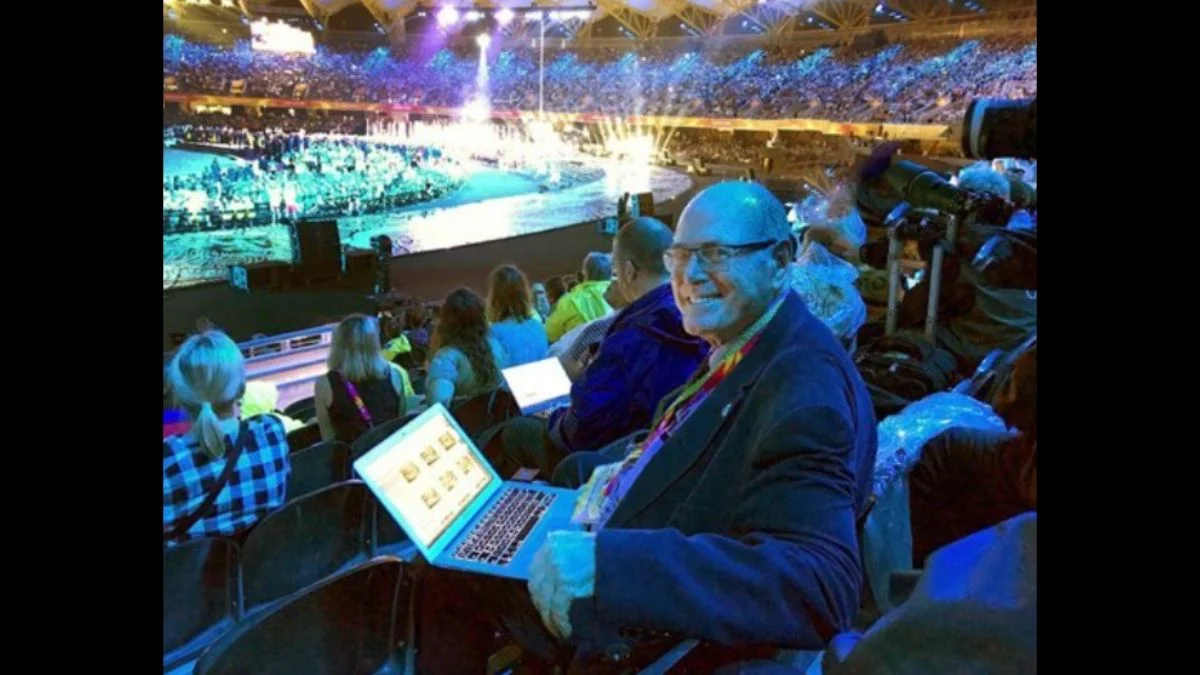
For royal photographer Arthur Edwards, getting the perfect picture has sometimes meant navigating far more than a camera lens. Over five decades, his work has brought him face-to-face with the British Royal Family during its most defining moments, from royal weddings and overseas tours to personal milestones that changed the monarchy forever.
But behind the photographs lies a more complicated story. Edwards, who began photographing the future King Charles III in the 1970s, has recalled tense encounters with the royal that included a memorable confrontation near Highgrove. Now, as his memoir Cup of Tea, Arthur?: My Extraordinary 50 Years Photographing the Royal Family approaches publication, the veteran photographer is looking back at how a difficult professional relationship gradually developed into one marked by familiarity, respect and trust.
Who Is Arthur Edwards? Inside His Five-Decade Royal Photography Career
Born in London in 1940, Arthur Edwards grew up in the East End and left school at 15, according to his publisher’s biography. He began his working life as a darkroom assistant, with his mother, Dolly, helping him obtain a camera that would eventually play a part in shaping his future.
Edwards joined The Sun in 1975, initially covering general news before moving into royal photography. His first photograph of Prince Charles came in 1976, marking the beginning of a professional association that would continue through Charles’ years as Prince of Wales and into his reign as King Charles III.
His early assignments were not necessarily formal royal engagements. Edwards recalled accompanying a reporter to polo and photographing Charles with his ponies. Those pictures subsequently appeared regularly in the newspaper, giving the photographer greater access to the future monarch.
One early photograph became particularly memorable because it showed Charles’ bald spot. The image appeared prominently in the newspaper, and Edwards expected the Prince to be angry when he discovered it had been published.
Instead, Charles later approached him and asked who had seen the photograph. Edwards replied that millions of people had potentially seen it.
The episode reflected the more aggressive newspaper photography culture of the period, a subject Edwards has since addressed openly when discussing his career.
More Royal Family Stories
Royal relationships and family connections continue to generate interest beyond official engagements. Read our royal mentor’s reported MI5 family discovery for another story involving an unexpected connection.
The Highgrove Confrontation: What Happened Between Arthur Edwards and Prince Charles?
One of the most memorable stories from Edwards’ early relationship with Charles centres on Highgrove, the Gloucestershire residence Charles bought in the early 1980s.
Edwards has recounted the encounter in the PBS documentary Arthur: A Life with the Royal Family and in interviews connected with his forthcoming memoir.
According to his recollection, he was walking along a public footpath near Highgrove while carrying a long camera lens when Charles approached on horseback. The Prince objected to the photographer’s presence and challenged him about taking pictures.
Charles reportedly demanded:
“What are you doing on my land?!”
Edwards explained that he was simply doing his job. Charles reportedly responded:
“Some job.”
The photographer then answered:
“Well, at least I’ve got a job.”
Edwards has explained that he did not intend the remark as an insult, although Charles took it that way.
According to Edwards, Charles returned to the house, and a police officer later told him that the Prince had been extremely angry and had complained that the photographer had been on his property.
The exchange offers a glimpse into the friction that could arise between the Royal Family and newspaper photographers during that era. It also illustrates how Edwards’ determination to get a picture could bring him into direct conflict with the people he was photographing.
However, the confrontation did not define their relationship forever. In the decades that followed, the photographer and the future King developed a considerably warmer connection.
Arthur Edwards Photographed Lady Diana Spencer Before Her Engagement
Edwards’ royal career expanded further when he was assigned to discover whom Prince Charles would marry.
He recalled receiving a tip that Charles would attend a polo match with a young woman. At the event, he encountered Lady Diana Spencer, who had not yet become engaged to the Prince.
Edwards approached her and asked whether she was Lady Diana Spencer. After she confirmed her identity, he requested permission to photograph her, and she agreed.
He subsequently contacted the newspaper to learn more about the young woman who had attracted his attention. That photograph became an early moment in his long association with Diana.
Over the following years, Edwards travelled extensively with the Princess and photographed many significant events in her public life.
Yet his later reflections have also included criticism of the intrusive practices associated with sections of the press during the 1980s.
In the PBS documentary, Edwards acknowledged that some of his early work was more aggressive than the approach he eventually adopted. He specifically expressed regret about photographs he took of Diana while she was pregnant during a visit to the Bahamas.
Over time, he explained, he began to see the people in front of his camera less as photographic subjects and more as individuals.
That change in perspective became an important part of his understanding of the job and his relationship with the Royal Family.
How Arthur Edwards’ Relationship With King Charles Changed
The contrast between the Highgrove confrontation and Edwards’ later relationship with Charles is one of the most striking aspects of his career.
What began as a sometimes difficult professional association gradually developed into a relationship in which the photographer came to regard Charles as a friend, while continuing to cover him professionally.
In an interview reported in connection with his memoir, Edwards described their arrangement in characteristically informal terms:
“He calls me Arthur and I call him Sir. It’s a good arrangement. And it’ll be like that until the day I die.”
Edwards has also spoken warmly about continuing to photograph the King. He said that his relationship with Charles is one of the reasons he has continued working and that he believes the King is pleased to see him when he arrives.
He described Charles as humble and praised his stamina, saying that the King continues to work tirelessly. Edwards also described himself as a lifelong supporter of Charles.
The publisher’s material includes a similarly warm assessment from the King, who described Edwards as:
“a very good photographer, a jolly good bloke and a very special person.”
The comment stands in sharp contrast to the anger Edwards remembers from their earlier encounters. It also reflects the familiarity that developed over a relationship spanning approximately half a century.
Arthur Edwards’ Royal Photography Career: Key Milestones
Edwards’ career has followed the Royal Family through several generations, documenting personal milestones and major public events throughout a period of considerable change.
| Year or period | Career milestone |
| 1940 | Arthur Edwards is born in London and grows up in the East End. |
| Age 15 | He leaves school and begins working as a darkroom assistant. |
| 1975 | He joins The Sun, initially covering general news. |
| 1976 | He takes his first photograph of Prince Charles. |
| 1981 | His career unfolds during the period of Charles and Diana’s wedding. |
| 2003 | He is appointed MBE for services to newspapers. |
| September 2022 | He witnesses the period surrounding Queen Elizabeth II’s death and Charles’ accession as King. |
| 2026 | He receives a Lifetime Achievement Award at the UK Picture Editors Guild Awards. |
| November 5, 2026 | His memoir is scheduled for publication. |
According to the publisher, Edwards has covered 200 royal tours across more than 120 countries, seven royal weddings, five funerals, seven births, three Jubilees and a coronation.
PBS describes his career as involving more than 200 royal tours across 120 countries, while listing seven weddings, four funerals and seven births. These descriptions differ slightly in their event counts, so the publisher’s figures provide the most appropriate basis for describing the forthcoming memoir.
From Princess Diana to King Charles III: Five Decades of Royal History
Edwards’ photographs document much more than the public appearances of individual royals. His archive follows the monarchy through several defining chapters of modern British history.
His work spans Charles and Diana’s 1981 wedding, Diana’s years as Princess of Wales, the births of Prince William and Prince Harry, the breakdown of Charles and Diana’s marriage, Diana’s death, Charles’ marriage to Camilla and Charles’ eventual accession to the throne.
He has continued photographing King Charles and Queen Camilla, alongside other members of the modern Royal Family.
His assignments have included royal tours, weddings, funerals, births, Jubilees and the coronation. He was also present during the period surrounding Queen Elizabeth II’s death in September 2022 and the transition to Charles’ reign.
The scale of this work gives Edwards a distinctive place in royal photography. Few careers have extended across so many stages of the same family’s public life.
His recollections of Diana also reveal how his attitude towards royal coverage changed. While his earlier work sometimes prioritised securing a photograph regardless of the discomfort it caused, his later reflections show a more personal understanding of the people he photographed.
That evolution forms an important part of the story behind his eventual relationship with Charles.
Arthur Edwards Receives a Lifetime Achievement Award in 2026
Edwards’ contribution to newspaper photography received further recognition in 2026, when he was presented with a Lifetime Achievement Award at the UK Picture Editors Guild Awards.
The official UK Picture Editors Guild website confirms that Mayor of London Sir Sadiq Khan presented lifetime achievement awards to Sun photographer Arthur Edwards MBE and picture editor Sophie Batterbury.
The recognition celebrated Edwards’ five decades in newspaper photography.
According to The Sun, Edwards described himself as honoured and humbled by the award and said he had enjoyed his career.
He also recalled a humorous exchange with Charles following the Prince’s engagement to Diana. The Sun had sent Charles a congratulatory telegram and received a reply joking about whether Edwards might soon be made redundant.
Decades later, the photographer was still covering Charles, and Edwards said he hoped to continue doing so.
The award was not his first major honour. His publisher’s biography confirms that Edwards was appointed an MBE in 2003 for services to newspapers.
What to Know About Arthur Edwards’ New Memoir
Edwards’ latest reflections arrive ahead of the publication of Cup of Tea, Arthur?: My Extraordinary 50 Years Photographing the Royal Family.
HarperCollins’ publisher information lists the memoir as a 320-page hardback scheduled for release on November 5, 2026. The book carries ISBN 978-0-00-884441-7.
The memoir traces Edwards’ journey from his childhood in London’s East End to becoming one of the best-known photographers covering the British Royal Family.
According to the publisher, he will share stories behind his photographs and disclose experiences he has previously kept private. The book also explores how he earned the Royal Family’s trust and became close to King Charles and Queen Camilla.
The memoir follows the PBS documentary Arthur: A Life with the Royal Family, which examined Edwards’ career and his relationship with the royals. In the programme, he recounts several experiences associated with his work, including his early encounters with Charles and his changing approach to royal photography.
Together, the documentary and memoir offer a retrospective look at a career shaped by access, persistence, difficult encounters and relationships that evolved over time.
Conclusion: A Royal Photographer Who Is Still Working at 86
Arthur Edwards’ story is about more than five decades of photographs. It is also about a professional relationship that changed dramatically, from tense exchanges near Highgrove to the mutual familiarity reflected in King Charles’ praise.
His career has taken him across more than 120 countries and through major moments in the lives of Charles, Diana, Queen Elizabeth II and the wider Royal Family. His willingness to reflect on the more intrusive aspects of his early work also provides insight into how his approach developed over the years.
Now 86, Edwards remains active as a royal photographer for The Sun. His 2026 Lifetime Achievement Award and forthcoming memoir mark an important moment to reflect on that extraordinary career, although he has indicated that he is not yet ready to stop working.
From his first photograph of Prince Charles in 1976 to his continuing coverage of King Charles III, Edwards has witnessed the monarchy change from behind the camera. The relationship that once included a memorable confrontation has since become one he describes with simple familiarity: Charles calls him Arthur, and he calls the King Sir.
Another Highgrove Royal Story
Highgrove remains a setting for stories about relationships within the Royal Family. Explore our Queen Camilla and Prince Harry Highgrove report for a separate account of their reported interaction.
Source Disclaimer
This article has been prepared based on research using the sources provided below, including publisher information, broadcaster material, awards records and contemporary reporting. The account reflects the information available in those sources and preserves distinctions where reported career figures differ. It does not claim independent verification beyond the material cited.
Sources
- HarperCollins / HarperReach – Cup of Tea, Arthur?: My Extraordinary 50 Years Photographing the Royal Family
- UK Picture Editors Guild – Awards
- PBS – Arthur: A Life with the Royal Family
- The Sun – Arthur Edwards receives Lifetime Achievement Award
- Anglia Ruskin University – Arthur Edwards MBE biography
- The Press Awards – Arthur Edwards profile
- Hatchards – Cup of Tea, Arthur?
- Getty Images – King Charles III and Queen Camilla at RAF Northolt, September 2022
Featured Image Credit: Instagram / @arthuredwardsthesun


Leave a Reply