

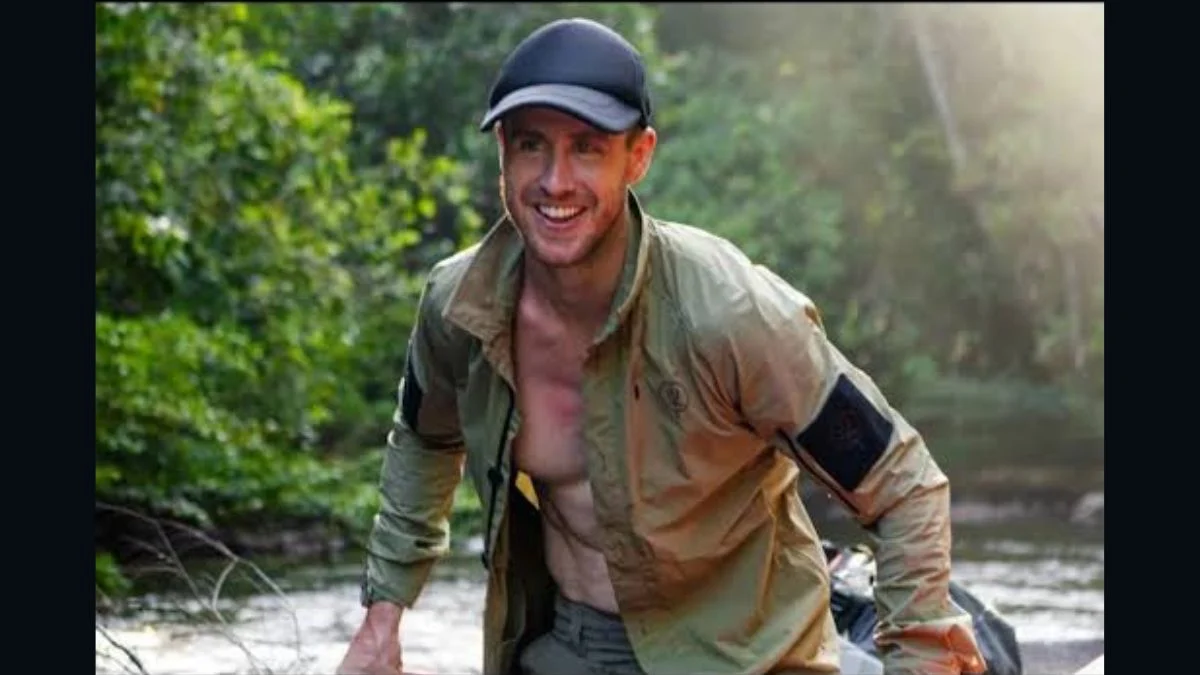
A 700-kilometre journey through Central Africa is drawing attention for reasons that go far beyond adventure. Welsh explorer and extreme athlete Ash Dykes is preparing to navigate the remote Sangha River in an inflatable kayak, facing a combination of wildlife, tropical disease risks and limited access to emergency medical care. As footage and updates from his expedition circulate online, viewers are questioning just how challenging the journey could become.
The conversation has taken an unexpected turn, with TikTok users comparing the Congo Basin’s real-world hazards to the childhood fear surrounding the Bermuda Triangle. But behind the viral reactions lies a serious expedition involving difficult logistics, environmental uncertainty and a region whose complexity extends far beyond its reputation for danger.
Why Ash Dykes’ Congo Basin Expedition Is Trending on TikTok
The online discussion gained momentum after TikTok creator Jess, who posts under the handle @creptyoufirst, questioned why so many people had grown up worrying about the Bermuda Triangle instead of the Congo Basin.
Her video reportedly attracted more than 1.1 million views, bringing fresh attention to the region and Dykes’ ambitious river journey.
Jess asked:
“Is anybody else wondering why we spent so much time as kids worrying about the Bermuda Triangle, when clearly, we should have been worrying about the Congo Basin?”
She continued:
“Like, this thing’s freaking me out. I’m nervous.”
The caption added to the anxious humour surrounding the discussion:
“Pls tell me you’re on Congo Basin Tok bc I can’t be this stressed alone.”
The reaction reflects how quickly a remote expedition can capture public attention when viewers begin imagining the practical challenges involved. Dangerous wildlife, tropical diseases, unfamiliar waterways and the possibility of being days away from medical assistance have all become part of the online conversation.
However, the viral response does not establish that the Congo Basin is more dangerous than every other wilderness region. Instead, it highlights the difference between a frightening legend and an expedition involving identifiable environmental and logistical risks.
Into Unexplained Mysteries?
Strange lights recorded over Tennessee have left one radio host and curious viewers wondering what appeared in the night sky. Explore the unanswered questions in our Haywood County UFO sighting video report.
What Is the Congo Basin, and Why Does It Matter?
The Congo Basin is a vast region of Central Africa centred on the Congo River system, including its tributaries, forests, wetlands and interconnected ecosystems. It extends across six countries: Cameroon, the Central African Republic, the Democratic Republic of the Congo, the Republic of the Congo, Equatorial Guinea and Gabon.
Its rainforest is the world’s second-largest tropical rainforest after the Amazon. The region supports extraordinary biodiversity, including forest elephants, gorillas, chimpanzees, bonobos, numerous bird species and hundreds of freshwater fish species.
The World Wide Fund for Nature describes the Congo Basin as one of Earth’s most biodiverse regions. Its forests also store carbon, support local livelihoods and help sustain wider ecological systems.
Importantly, the basin is not an uninhabited wilderness. Indigenous peoples and other local communities have lived in and depended on its forests for generations. Their knowledge of waterways, wildlife, weather and forest routes is an important part of understanding the region.
That context matters because Dykes is not travelling across the entire Congo Basin. His expedition focuses on a specific route along the Sangha River, through parts of the Central African Republic and the Republic of the Congo.
Project 6: Ash Dykes’ 700-Kilometre Sangha River Challenge
The Congo Basin journey is the first mission in Dykes’ Project 6, an ambitious series of six expeditions across six extreme environments over 12 months.
For this opening challenge, the planned route covers more than 700 kilometres, or over 400 miles, along the Sangha River. Dykes intends to travel by inflatable kayak from Nola in the Central African Republic to Mossaka in the Republic of the Congo.
His official website describes the expedition as a potential world first. That wording reflects the project’s stated ambition, rather than an independently confirmed record.
| Expedition detail | Information |
| Explorer | Ash Dykes, Welsh explorer and extreme athlete |
| Project | Project 6 |
| Planned distance | More than 700 kilometres (over 400 miles) |
| River | Sangha River |
| Starting point | Nola, Central African Republic |
| Destination | Mossaka, Republic of the Congo |
| Equipment | Inflatable kayak |
| Overall project | Six extreme-environment expeditions over 12 months |
The challenge is intended to involve more than endurance. According to the project’s description, Dykes plans to spend time with forest communities, work with local partners, support a grassroots non-governmental organisation and document the river, wildlife and pressures affecting the surrounding environment.
The remaining five Project 6 missions have not all been publicly revealed on the official project page.
Missing Equipment and Visa Complications Delayed the Journey
Before the expedition could fully get underway, the team reportedly encountered unexpected logistical problems.
According to recent reporting by People, a bag containing essential equipment went missing during the team’s journey through Cameroon. The missing items included inflatable-kayak pumps, tents, food and water. The bag was subsequently recovered, allowing preparations to continue.
The team also faced reported visa and border-entry complications, forcing adjustments to its overland travel arrangements before reaching Nola, the planned starting point.
These setbacks illustrate an important part of remote exploration that viral clips may not capture. An expedition’s progress can depend on transport arrangements, permits, equipment reliability and access to the intended route just as much as physical endurance.
As of October 10, 2026, recent reports indicated that Dykes had reached the starting area and begun documenting the journey. However, the expedition’s eventual completion and any claimed world record should not be treated as confirmed until independently established.
Crocodiles, Hippos and Forest Elephants: What Wildlife Risks Could He Face?
Wildlife is one of the most talked-about aspects of the Congo Basin expedition. The wider region contains animals that can pose serious risks during close encounters, including crocodiles and hippos in suitable river habitats, as well as forest elephants and other large mammals.
Crocodiles can be dangerous in and around water. Hippos, despite their plant-based diet, can also be highly dangerous when threatened or approached too closely. The species present and the likelihood of encounters depend on the particular river section and surrounding habitat.
Dykes has discussed the possibility of encountering animals such as forest elephants and gorillas, while identifying crocodiles as an animal he particularly hopes to avoid at close range.
Camping presents another consideration. Dykes has discussed the importance of avoiding forest-elephant corridors when selecting places to pitch a tent. An animal moving along a regular route may not recognise or avoid a person obstructing its path.
Nevertheless, the presence of potentially dangerous species throughout the wider region does not mean every animal will be encountered along the Sangha route. Nor does their presence make an attack inevitable.
Habitat, animal behaviour, distance, local conditions and human decisions all influence risk. Local expertise, careful campsite selection and appropriate equipment are therefore essential parts of responsible wilderness travel.
Malaria, Unsafe Water and the Challenge of Getting Medical Help
Wildlife is only one part of the challenge. Tropical disease, water safety and limited access to medical care are also major considerations for people travelling through remote environments.
Malaria is caused by parasites transmitted through bites from infected female Anopheles mosquitoes. It remains a major public-health concern in sub-Saharan Africa, making preventive measures and timely medical assessment important for travellers.
Other possible health concerns include dengue fever, gastrointestinal illness caused by contaminated food or water, and infections associated with wounds or parasite exposure. The likelihood of individual diseases varies by location, season, exposure and personal circumstances; it would be inaccurate to suggest that every illness presents the same risk along the Sangha River.
Untreated river water should not automatically be considered safe to drink. Contaminants and pathogens may be present even when water looks clear. Reliable water treatment and storage, adequate food supplies, hygiene equipment and medical provisions are consequently important.
Heat and humidity add further pressure. Prolonged physical exertion in hot conditions can increase the risk of dehydration and heat-related illness, while persistent moisture can make it harder to manage clothing, equipment and skin injuries.
Perhaps most importantly, Dykes’ official project description warns that parts of the route may leave the team several days away from the nearest doctor. Communication arrangements, evacuation planning and the ability to respond to emergencies are therefore central to the expedition.
These are genuine considerations, but they should not be mistaken for evidence that the entire Congo Basin is uniformly unsafe.
Is the Congo River Really 722 Feet Deep?
One statistic associated with the wider Congo River system has helped fuel fascination with Central Africa’s waterways: its extraordinary recorded depth.
Guinness World Records reports that measurements taken in July 2008 by scientists from the US Geological Survey and the American Museum of Natural History established a maximum depth of at least 220 metres, approximately 722 feet, in the Lower Congo River.
There is an important distinction, however. This measurement does not mean the entire Congo River is 722 feet deep, nor does it establish the depth of the Sangha River section used for Dykes’ expedition.
The river system contains different stretches with varying depths, currents, channels and riverbed conditions. Scientific measurements in the Lower Congo have also documented powerful currents and complex underwater conditions.
For Dykes’ journey, the relevant factors are the actual conditions along the Sangha route, including current strength, obstacles, accessible stopping points and safe places to leave the water. The Lower Congo’s depth record provides context about the wider river system, not a direct measurement of the water beneath his kayak.
Why the Bermuda Triangle Comparison Has Captured Attention
The Bermuda Triangle has been a fixture of popular culture for decades. Stories about ships and aircraft supposedly disappearing mysteriously helped turn a region of the western North Atlantic into a symbol of unexplained danger.
Yet the US National Oceanic and Atmospheric Administration says there is no evidence that mysterious disappearances occur more frequently in the Bermuda Triangle than in other large, heavily travelled areas of the ocean. The region also has no officially recognised boundaries.
Storms, changing weather, the Gulf Stream, shallow waters and human error can help explain maritime incidents. Claims that supernatural forces govern the area have not been supported by credible evidence.
The contrast with Dykes’ expedition is striking. The Congo Basin’s challenges involve identifiable environmental, biological and logistical factors rather than unexplained forces.
The TikTok discussion has also prompted users to revisit other childhood fears. Comments reported in the original coverage included:
“I was worried about the super volcano under Yellowstone National Park”
“The ‘waterfall in the ocean’ is what freaks me out”
“I learned that one day the sun will literally expand to engulf the earth before it finally dies and I literally was terrified as if it would happen in my lifetime”
These reactions range from geological and ocean-related phenomena to the far-future evolution of the Sun. They illustrate how alarming information can become frightening when presented without sufficient context about likelihood, timescale or scientific uncertainty.
The original coverage also reported that BroBible contacted Jess through a TikTok direct message and comment for a response. A reply should not be implied unless one has been confirmed.
Is the Congo Basin Really the World’s Most Dangerous Rainforest?
Dykes has described the Congo as “the world’s most dangerous and deadly jungle” in media coverage of his preparations. The phrase conveys his view of the challenge, but it is not an established scientific ranking that objectively places every rainforest in order of danger.
Risk depends on what is being measured, including disease exposure, wildlife encounters, terrain, security conditions, distance from medical assistance and the specific demands of an expedition. There is no single universally accepted measure proving that the Congo Basin is the world’s most dangerous rainforest.
It is more accurate to describe Dykes’ journey as a demanding expedition through a remote tropical environment where wildlife, infectious disease, water safety and emergency access require careful planning.
The region should not be defined by danger alone. Its forests, waterways and wetlands support communities and wildlife across Central Africa, while its ecosystems store carbon and help regulate environmental processes.
The basin also faces pressures including habitat loss, unsustainable resource use and other threats to biodiversity. Dykes’ Project 6 description says the expedition will document the people, wildlife and environmental pressures affecting the river and surrounding forest. It also states that the project will work with local partners and support a grassroots NGO.
Local knowledge is important not simply for storytelling, but also for understanding terrain, interpreting environmental conditions and appreciating the region’s cultural and ecological significance.
What Happens Next in Ash Dykes’ Project 6?
The Sangha River journey is the first of six planned expeditions in Dykes’ year-long Project 6 series. The planned route runs from Nola in the Central African Republic to Mossaka in the Republic of the Congo, covering more than 700 kilometres by inflatable kayak.
The team’s progress, any further logistical challenges and the eventual completion of the route will determine what can ultimately be confirmed about the expedition’s outcome. The remaining five missions have not yet been fully announced on the official project page.
For viewers following the story, the central point is that the Congo Basin is not a mysterious no-go zone. It is a vast, inhabited and ecologically important region containing environments that can be difficult to navigate. Dykes’ expedition is bringing those challenges into public view, while the viral reaction demonstrates how a real-world adventure can reshape familiar ideas about danger.
The Bermuda Triangle may remain a popular mystery, but the Congo Basin discussion points towards a more practical question: how can explorers prepare responsibly for a journey where risks are real, varied and dependent on local conditions?
Could Life Exist Beyond Earth?
Saturn’s icy moon Enceladus continues to intrigue scientists searching for clues about life beyond our planet. Discover how an Earth microbe survived simulated extreme ocean chemistry in our Enceladus life mystery research explainer.
Conclusion
Ash Dykes’ 700-kilometre Sangha River challenge combines endurance, remote travel, wildlife awareness and complex logistical planning. Its viral TikTok attention has brought the Congo Basin into a conversation once dominated by the Bermuda Triangle, but the region’s significance extends far beyond fear. Alongside the expedition’s risks are its remarkable biodiversity, local communities and conservation concerns.
Whether Project 6 ultimately delivers the intended record remains to be established. For now, the journey offers a compelling look at the realities of exploring a remote river environment—and a reminder that responsible preparation matters more than sensational claims.
Source and Research Disclaimer: This article has been prepared using the sources listed below, including Ash Dykes’ official Project 6 information, conservation and public-health resources, scientific records concerning the Lower Congo River’s depth, and published reporting on the expedition and TikTok discussion. It reflects the information available from those sources and distinguishes reported developments and project claims from independently established facts. It does not imply independent verification beyond what the cited material supports.
Sources
- Ash Dykes: Official Project 6 page
- Ash Dykes: Official website
- World Wide Fund for Nature: Congo Basin
- Guinness World Records: Deepest river
- U.S. Geological Survey: Measurements in the Lower Congo River
- National Oceanic and Atmospheric Administration: What Is the Bermuda Triangle?
- World Health Organization: Malaria
- World Health Organization: Yellow Fever Update
- People: Ash Dykes’ Early Expedition Setback
- People: Expedition Visa and Travel Complications
Featured Image Credit: Ash Dykes / TikTok


Leave a Reply