

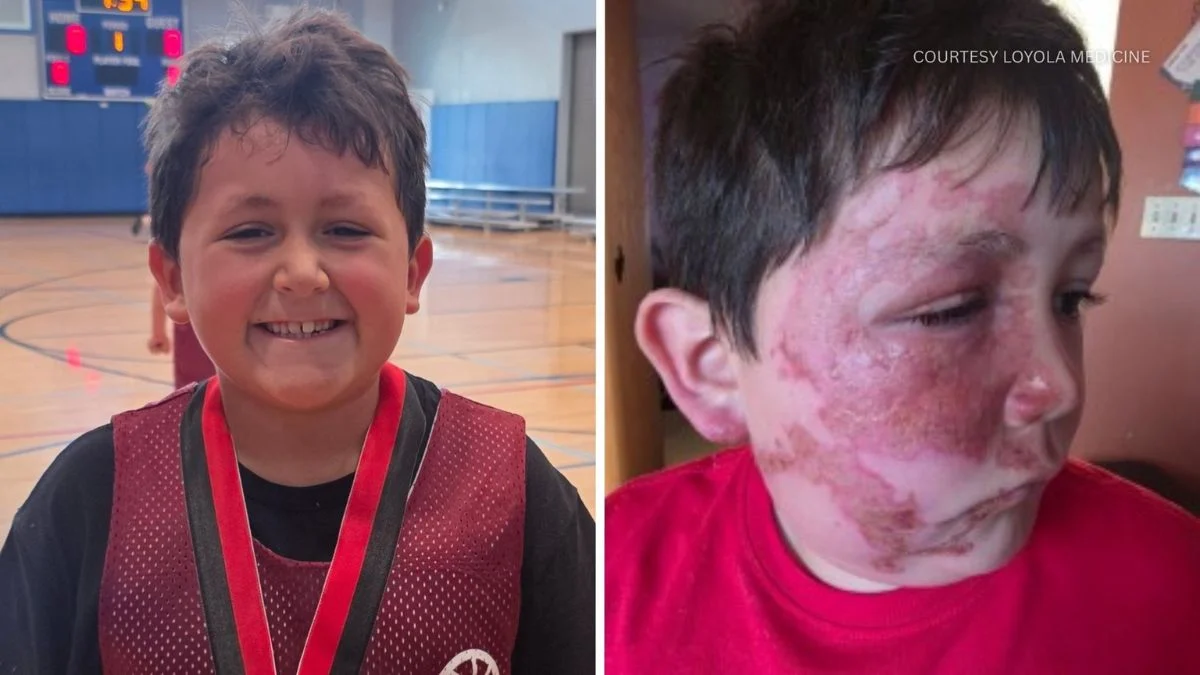
Social media trends come and go, but some leave consequences that last far longer than a viral moment. In early February 2026, a disturbing TikTok challenge involving a popular squishy toy sent shockwaves through parents, schools, and medical professionals after a 9-year-old boy from Plainfield, Illinois, suffered devastating facial burns.
The incident has now become a national warning about how quickly online “hacks” can turn into real-world medical emergencies — especially when children are involved.
In This Post:
What Is the TikTok NeeDoh Cube Microwave Trend?

The trend centers around the NeeDoh Nice Cube, a stress-relief squishy toy filled with a non-toxic, dough-like substance. On TikTok, users began sharing videos showing the toy being microwaved to make it “extra squishy” or more pliable.
At first glance, the hack looks harmless. The videos often show people heating the cube briefly, squeezing it, and enjoying the softer texture. But what many clips fail to show is what happens when the toy overheats.
Microwaving the NeeDoh Cube causes the internal material to become extremely hot and pressurized. When removed, the toy can suddenly expand and explode, sending scalding contents outward with force.
Despite the toy being marketed as safe, manufacturer Schylling explicitly warns users not to microwave it. Still, TikTok videos promoting the method gained traction, misleading children into believing the trend was safe to try at home.

Who Is Caleb? Inside the Plainfield, Illinois Incident
The victim in this case is a 9-year-old boy from Plainfield, Illinois, identified as Caleb — reported as Caleb Grubb in some sources and Caleb Chabolla in others, likely referring to the same child.
About two weeks before the story surfaced publicly during National Burn Awareness Week in early February 2026, Caleb followed instructions he saw on TikTok and microwaved his NeeDoh Nice Cube.
What happened next changed everything.
After heating the toy, it suddenly burst. The contents exploded outward and struck his face at extremely high temperatures.
Caleb’s mother, Whitney, described the terrifying moment afterward:
“The right side of his face was kind of melting off, basically.”
The injury was immediate and graphic, shocking his family and revealing just how dangerous the viral “hack” really was.

Emergency Response and Transfer to a Burn Center
Following the explosion, Caleb was rushed to a local hospital near Plainfield. Due to the severity of the burns, doctors quickly determined he needed specialized care.
He was transferred to Loyola Medicine’s Burn Center in Maywood, Illinois, one of the region’s leading facilities for serious burn injuries.
Doctors treated extensive burns concentrated on his face, with injuries coming dangerously close to his eye. Medical professionals later confirmed that although the burns were significant, Caleb’s vision would not be permanently affected.
His treatment involved intensive wound care, monitoring for infection, and multiple follow-up visits as part of his ongoing recovery.
Loyola Medicine Confirms the Trend Is Not Isolated
As Caleb’s story became public, Loyola Medicine revealed something even more alarming.
According to hospital officials, at least four people in 2026 alone had already been treated at their facility for injuries directly linked to the same TikTok NeeDoh microwave trend.
Burn specialists explained that social media platforms can rapidly amplify risky behaviors, especially among children who may not understand the real-world physics behind heat, pressure, and household appliances.
During National Burn Awareness Week, Loyola used Caleb’s case to educate families on how viral challenges can cause preventable injuries and lifelong trauma.

Hospital Awareness Campaign and Media Coverage
Loyola Medicine partnered with media outlets, including ABC7 Chicago, to spread awareness about the dangers of modifying toys based on online trends.
ABC7 shared Caleb’s story across television broadcasts and social media, where discussions quickly formed about parental supervision and TikTok’s influence on children.
One post from ABC7 Eyewitness News on X drew significant engagement as viewers reacted with concern about how easily kids can access hazardous content disguised as entertainment.
The hospital emphasized the importance of parents discussing online content with their children, monitoring app usage, and encouraging critical thinking when watching viral videos.
Broader Pattern of TikTok Burn Injuries
Caleb’s injury is part of a much larger trend involving TikTok and heat-based challenges.
Doctors in the Chicago area have warned about teens suffering burns from “fire challenges” using hand sanitizer or rubbing alcohol. These substances can ignite unexpectedly, producing invisible flames that cause second- and third-degree burns to hands and faces.
One south suburban mother described her 13-year-old daughter nearly losing her life after flames engulfed about 45–50% of her face with second-degree burns.
Across the U.S., similar cases have surfaced:
- In Northeast Ohio, trauma surgeons reported children being severely burned — and in some cases killed — from fire-based TikTok challenges.
- In Texas, a 12-year-old boy was hospitalized with second- and third-degree burns after experimenting with isopropyl alcohol that ignited and spread rapidly.
- At Shriners Children’s Boston, doctors saw an increase in pediatric admissions from scald injuries related to making “candy grapes” using boiling sugar.
Each case shows how quickly curiosity can turn into catastrophe when viral trends ignore safety.

⚠️ Expert Safety Warnings for Parents and Kids
Health professionals urge families to take several precautions:
- Monitor children’s social media usage and talk openly about online trends.
- Avoid modifying toys or household items in ways not approved by manufacturers.
- Seek immediate medical care for burns, since delays increase complications.
- Report dangerous content on platforms like TikTok to reduce its spread.
Burn specialists stress that most of these injuries are entirely preventable with awareness and supervision.
💬 Caleb’s Message to Other Kids
Despite the pain he endured, Caleb has used his experience to warn others.
His message is simple and powerful:
“Don’t follow the NeeDoh Cube Microwave Trend.”
His recovery continues, but his story now serves as a real-life lesson about how quickly a few seconds of online curiosity can lead to months of medical treatment and emotional trauma.
Final Thoughts: When Viral Trends Become Real-World Danger
The explosion of the NeeDoh Nice Cube in Caleb’s hands highlights a growing issue in the digital age: platforms move faster than safety warnings. What looks fun on a phone screen can behave very differently in real life.
As TikTok challenges continue to evolve, experts, parents, platforms, and schools all face the same responsibility — protecting children before entertainment becomes emergency.
Caleb’s story isn’t just about a toy. It’s about awareness, supervision, and understanding that behind every viral clip is a real world where heat, pressure, and physics don’t care about likes, views, or trends.
And sometimes, the cost of a moment online is far greater than anyone expects.


Leave a Reply