

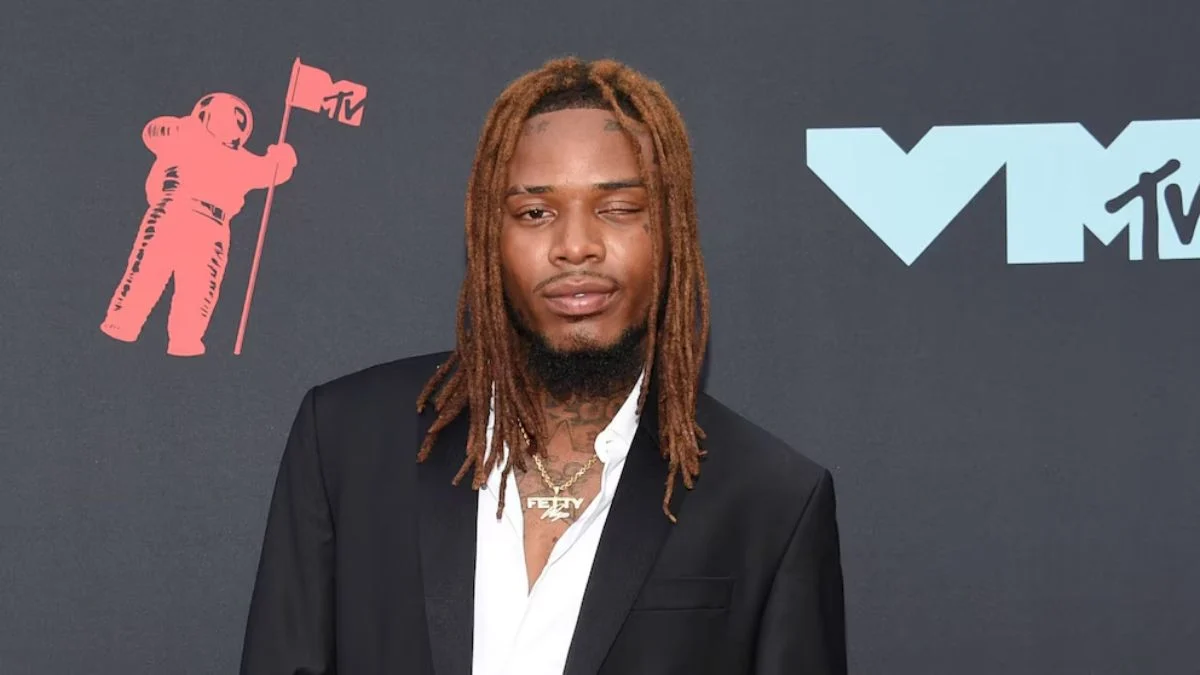
A High-Profile Comeback Moment That Has Everyone Talking
Few hip-hop stories have captured as much public attention in recent years as Fetty Wap’s dramatic rise, fall, and gradual return to society. Once a dominant voice on the Billboard charts, the rapper’s early release from federal prison and transfer to home confinement has reignited conversations around redemption, accountability, and second chances in the music industry. Right now, his story matters not only because of his fame, but because it reflects the complex intersection of celebrity, justice, and personal responsibility in modern America.
As fans react across social media and major outlets track his next steps, Fetty Wap’s post-prison chapter is unfolding in real time.

In This Post:
Who Is Fetty Wap? A Look at the Artist Behind “Trap Queen”
Born Willie Junior Maxwell II on June 7, 1991, in Paterson, New Jersey, Fetty Wap rose from local notoriety to national stardom almost overnight. His 2014 breakout single “Trap Queen” became a cultural phenomenon, peaking at No. 2 on the Billboard Hot 100 and cementing his place in mainstream hip-hop.
Known for his melodic delivery, heavy auto-tune use, and trap-influenced sound, Fetty Wap followed up with his self-titled debut album in 2015, which debuted at No. 1 on the Billboard 200. Additional hits such as “679,” “My Way,” and “Again” helped define mid-2010s rap radio.
Beyond music, Fetty Wap has been open about being blind in one eye due to congenital glaucoma, a condition that later influenced his philanthropic goals. He also released multiple mixtapes and worked closely with the Remy Boyz collective, further expanding his reach before legal troubles interrupted his career trajectory.
The Federal Drug Trafficking Case That Changed Everything
Arrest at Rolling Loud and Federal Indictment
Fetty Wap’s legal troubles began in October 2021, when he was arrested at Citi Field in Queens, New York, just before a scheduled performance at the Rolling Loud music festival. Federal authorities named him as one of six individuals indicted in a large-scale drug trafficking conspiracy.
According to prosecutors, the operation distributed over 100 kilograms of narcotics, including cocaine, heroin, fentanyl, and crack cocaine, across Long Island and New Jersey between June 2019 and June 2020. Investigators alleged the drugs were sourced from the West Coast, transported via U.S. Postal Service vehicles or cars with hidden compartments, and stored in Suffolk County, New York.
The U.S. Department of Justice described Fetty Wap as a “kilogram-level redistributor”, while also noting that the conspiracy involved a New Jersey corrections officer. The FBI emphasized that the case demonstrated how deeply drug trafficking networks can penetrate society, including the entertainment industry.
Bail, Bond, and a Critical Violation
Following his arrest, Fetty Wap was released in November 2021 on a $500,000 personal recognizance bond. However, his freedom was short-lived.
In August 2022, prosecutors alleged that he violated the conditions of his pretrial release by threatening to kill someone and displaying a firearm during a FaceTime call. As a result, his bail was revoked, and he was taken into immediate federal custody.

Guilty Plea and Sentencing in Federal Court

Later in August 2022, Fetty Wap pleaded guilty to one count of conspiracy to distribute and possess controlled substances, specifically involving at least 500 grams of cocaine.
Defense vs. Prosecution Arguments
His defense team argued that financial desperation during the COVID-19 pandemic—when touring and live performances disappeared—played a significant role in his actions. Prosecutors countered that he continued trafficking drugs despite already achieving music success and warned that his celebrity status risked glamorizing criminal behavior to young fans.
On May 24, 2023, U.S. District Judge Joanna Seybert sentenced Fetty Wap to six years in federal prison in a Long Island courtroom. During sentencing, the rapper expressed remorse, acknowledging the broader impact of his choices on his family, community, and supporters. While the sentence exceeded the five-year minimum, it aligned with federal guidelines for the offense.
Life Behind Bars at FCI Sandstone
Fetty Wap began serving his sentence at FCI Sandstone, a low-security federal correctional institution in Sandstone, Minnesota. From August 2022 onward, his projected release date shifted multiple times.
Originally set for March 13, 2027, the date was later moved to January 8, 2027, and then to December 8, 2026, reflecting good conduct credits or other federal adjustments. Reports in November 2025 confirmed these reductions, while fans launched petitions calling for clemency ahead of his May 2025 single “Forever.”
Early Release and Transition to Home Confinement
On January 8, 2026, Fetty Wap was released from FCI Sandstone nearly 11 months ahead of his revised release date. While federal authorities did not publicly specify the exact reasons, the decision likely involved good behavior credits and participation in rehabilitative programs.
Following his release, he was transferred to home confinement in Philadelphia, Pennsylvania, where he will complete the remainder of his sentence until November 8, 2026. This move allows limited reintegration into society under strict supervision.
Federal Supervision Rules He Must Follow
Once his home confinement period ends, Fetty Wap will remain under five years of supervised release. Conditions include:
- Random drug testing
- No alcohol or non-prescribed intoxicants
- Restrictions on opening new bank accounts without approval
- No association with known criminals
- No involvement in illegal activity
Any violation could result in a return to federal custody.
Fetty Wap Speaks: Gratitude, Accountability, and Purpose
Upon returning home, Fetty Wap released a statement thanking his family, friends, and fans for their continued support. He emphasized that his current focus is on community initiatives and philanthropy, particularly supporting at-risk youth.
Through his foundation, he plans to expand access to education, early technology skills, and vision care for children, drawing from his own experience with glaucoma. He also confirmed his release with a simple “HOME” message posted on his Instagram Stories.
Social Media Reactions and Media Coverage
News of Fetty Wap’s early release spread rapidly across X (formerly Twitter). Outlets such as Complex Music, Billboard, E! News, and Rolling Stone highlighted both the legal details and the broader redemption narrative.
Entertainment reporters shared images and timelines, while fans expressed excitement, curiosity, and cautious optimism about his future. Many discussions centered on whether he would return to music or fully pivot toward philanthropy.
What’s Next for Fetty Wap?
While Fetty Wap has not announced immediate music projects, his history and fan support suggest a potential return to the industry. For now, his priorities remain focused on giving back, rebuilding trust, and redefining his public image.
His early release marks a pivotal turning point—one that underscores accountability while opening the door to a more purpose-driven future.

A New Chapter Rooted in Responsibility and Redemption
Fetty Wap’s story is no longer just about chart success or legal consequences. It has evolved into a broader narrative about second chances, personal growth, and the responsibilities that come with influence. As he navigates home confinement and supervised release, his next moves—both musically and socially—will determine how this chapter is ultimately remembered.
For fans, critics, and observers alike, Fetty Wap’s journey remains one of the most closely watched redemption arcs in modern hip-hop.
More Trending Stories:


Leave a Reply