

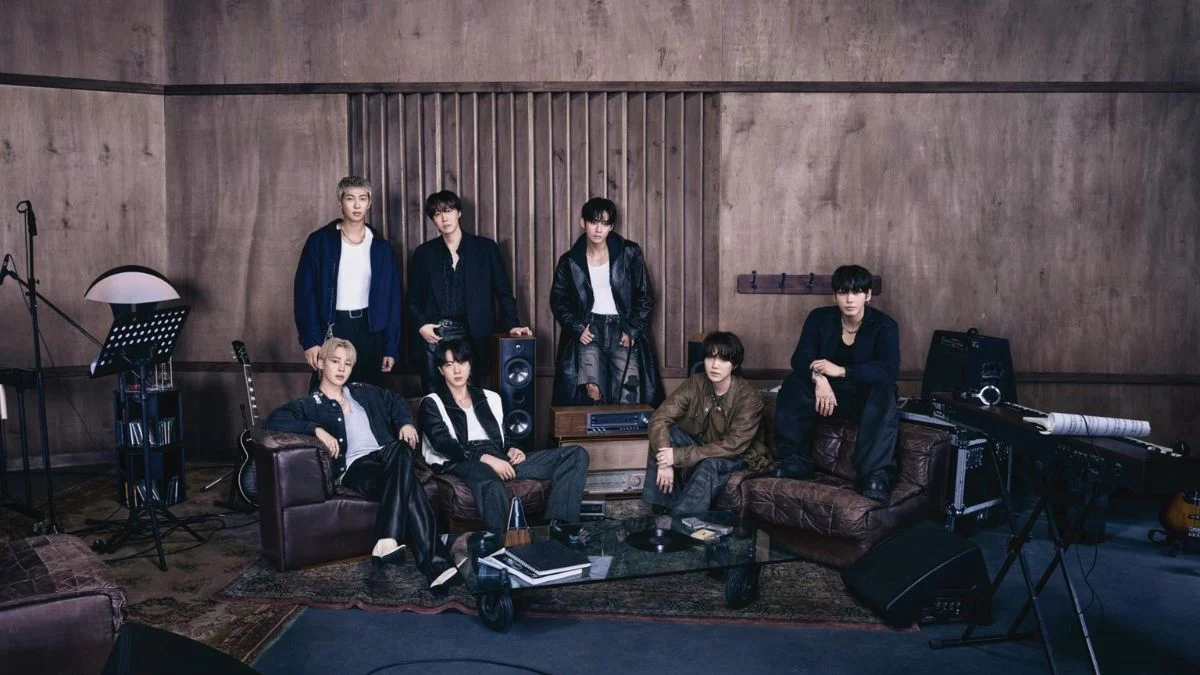
“NORMAL” is Track 9 on BTS’s fifth studio album ARIRANG, released on March 20, 2026, and it is the most direct conversation the album has about what fame actually costs.
Where “Merry Go Round” processes emotional repetition with a quiet, dreamlike ache, “NORMAL” arrives with its eyes wide open. It does not wonder whether the cycle is exhausting. It names it, examines it from every angle, and then delivers the most sardonic possible conclusion: yes, this is what we call normal. The title is not a statement of acceptance. It is a challenge, and possibly a provocation. Here is everything you need to know.
ARIRANG “NORMAL” Theme
“NORMAL” is built around a single, uncomfortable question: at what point does an extraordinary experience stop being extraordinary and become simply the weather of your life, regardless of how objectively overwhelming it appears from the outside?
For BTS, that experience is global superstardom. The “kerosene, dopamine” imagery in the chorus frames celebrity as a chemical process rather than a state of being, something that floods the system and alters perception in ways that cannot be fully rationalised or described. The chorus acknowledges agency directly:
“fantasy and fame, yeah, the things we choose.”
BTS is not presenting themselves as victims of their own success. However, choosing something and finding it manageable are entirely different things, and “NORMAL” sits precisely in the gap between those two realities.
The declaration that all of it, the hate, the love, the dopamine, and the exhaustion, is simply what they call normal carries a deliberate ambiguity. It reads as resilience: we have absorbed it and we continue. It also reads as resignation: we stopped expecting it to make sense, so we named it and kept moving. Both readings are probably correct simultaneously, and that tension is where the song’s emotional weight lives.
During the Zane Lowe interview for Apple Music, RM addressed this directly, saying:
“I’m also really afraid of a new chapter. Because we have to show different things to convince the fans and the people out there. We want to reach maybe a different type of people as well. Since we love each other so much, we’re just here, still. And the fans are there.”
That admission maps almost perfectly onto what “NORMAL” is processing lyrically. Zane Lowe himself noted during the same interview that the track felt like a sign of genuine growth, describing it as evidence the group had reached a point where they could address subjects that felt mature and lived-in.
The official ARIRANG description frames “NORMAL” as an exploration of “the space between spotlight and silence,” which captures its emotional register with precision.

“NORMAL” Key Lyrical Moments Explained
Jimin’s Opening Verse: “Two Sides of a Coin”
Jimin opens by addressing the challenge of authenticity when your entire existence becomes a projection surface for other people’s expectations. He describes the experience of being interpreted as red or blue, as two sides of a coin where neither side is entirely true, and closes by asking whether the experience is different for the listener. That question is an invitation rather than a rhetorical device. It extends the song’s subject outward and asks the audience to locate themselves in it.
The Chorus: “Make Me Bulletproof”
The chorus is the most layered moment on the track. The “kerosene, dopamine” pairing frames emotional extremes as fuel, something that burns and powers simultaneously. The wish to have “a minute just to turn me off” is one of the most universally relatable lines on the album, and fan responses across YouTube and social media consistently flagged it as the moment the song clicked for them personally.
However, the line that carries the most internal weight is “show me hate, show me love, make me bulletproof.” As Elle and multiple fan commentators noted, this is a deliberate callback to BTS’s original Korean name, 방탄소년단, which translates directly to Bulletproof Boy Scouts. Throughout their discography, they have returned to this concept across “We Are Bulletproof Pt. 1,” “We Are Bulletproof Pt. 2,” and “We Are Bulletproof: the Eternal,” treating it differently each time. Hearing it framed here as a plea rather than a declaration transforms the concept entirely. They are not claiming to be bulletproof. They are asking to be made so. For long-term ARMY members, that shift represents one of the most significant lyrical evolutions on the entire album.

The Rap Line Verse: “Some Pain Don’t Heal”
The second verse, handled collectively by j-hope, SUGA, and RM, delivers the album’s most direct statement about the limits of growth and resilience. The admission that a heart once believed to be made of steel now understands that some pain simply does not heal reframes the bulletproof mythology from another angle. The verse continues by questioning what it even means to give everything when you are no longer sure what everything consists of anymore. The closing question about what people want from them is exhausted rather than aggressive, which makes it considerably more affecting than a confrontational reading would allow.
Jin’s Outro
Jin closes the track alone, repeating the title phrase in a way that strips away whatever irony or defiance the chorus carried and leaves something that sounds closer to a statement of fact. By the time he delivers it for the final time, the phrase has travelled from sardonic observation through emotional exhaustion and arrived somewhere that sounds almost like peace with something that will never fully resolve.
The “Bulletproof” Callback: What it Tells the ARMY?
For newer listeners, the bulletproof reference may read as a striking lyrical image. For ARMY, it lands as one of the most deliberate callbacks on the entire album. Each iteration of the bulletproof concept in BTS’s discography has treated it differently, moving from youthful defiance to earned resilience to a collective vow. “NORMAL” places it as a plea within a song about emotional exhaustion and the sustained cost of public life. The implication is that the armour they built is something they still need and still reach for rather than something they have permanently achieved. That reframing is quietly devastating for anyone who has followed the arc of that particular phrase through their catalogue.

How “NORMAL” Fits the Album
As Track 9, “NORMAL” follows “Merry Go Round” and continues the album’s sustained examination of inner life that the second half is built around. Where “Merry Go Round” describes the experience of being trapped in a loop without fully understanding it, “NORMAL” names the loop directly and examines it with considerably clearer eyes.
The BBC noted that “NORMAL” expresses genuine ambivalence about the cost of celebrity, with lyrics about surviving criticism and having to perform happiness. However, the BBC also identified what may be the most important line on the track for understanding ARIRANG’s overall arc: the acknowledgement that fantasy and fame are the things they choose. That line, sitting inside a song about exhaustion, is what keeps the album from becoming purely a lament. BTS is not trapped here. They chose this, they continue to choose it, and the complexity of that choice is exactly what the album is working through.
“NORMAL” Production Credits
| Role | Contributors |
| Producers | Ryan Tedder, Sean Cook |
| Songwriters | Sean Foreman, Livvi Franc, Ryan Tedder, Sean Cook, RM, j-hope, SUGA, Kirsten Spencer, Derrick Milano, Pdogg |
| Vocals | Jin, SUGA, j-hope, RM, Jimin, V, Jung Kook |
| Background Vocals | Jung Kook |
| Guitar | Sean Cook |
| Drums | Ryan Tedder, Sean Cook |
| Keyboards | Ryan Tedder, Sean Cook |
| Programmer | Ryan Tedder, Sean Cook |
| Mixing Engineer | Șerban Ghenea |
| Assistant Mixing Engineer | Bryce Bordone |
| Mastering Engineer | Mike Bozzi |
| Vocal Arranger / Recording Engineer | Pdogg |
Ryan Tedder’s presence as both producer and instrumentalist gives “NORMAL” a live, organic quality that distinguishes it from the more electronic productions elsewhere on ARIRANG. His background spanning pop and rock gives the track a grounded, almost confessional texture that suits the subject matter directly. Sean Cook’s guitar work adds a rock-influenced edge that the BBC noted gives the song an unexpected dimension within the album’s second half.
Fan Reactions to “NORMAL”
“NORMAL” generated some of the most sustained engagement of any track on ARIRANG’s second half across YouTube and social media.
What resonated immediately: The chorus hook proved immediately effective, with its rhythm and repetition landing as one of the most addictive moments on the album’s second half. V’s vocal contribution drew particular attention across comments, with multiple fans describing his delivery as a specific standout. Jung Kook’s background vocal work throughout the track was also noted, with fans identifying quiet moments in the production as impressive additions to the layered arrangement.
What sparked broader conversation: The rap line verse generated the most sustained discussion, particularly the admission about pain that does not heal and the cascading questions about identity and expectation. Several fans connected the verse directly to the group’s experiences during the military service period and to Jungkook’s since-deleted livestream about idol life pressures. The existence of an explicit version also drew comment, with many fans reading the decision to release it as a deliberate signal of directness and maturity rather than simply a formatting choice.

On the “bulletproof” callback: Long-term ARMY members flagged the bulletproof reference extensively, with numerous threads and comment discussions unpacking its position within the group’s discography arc. The consensus across fan communities was that hearing it as a plea rather than a declaration represented one of the most significant lyrical evolutions on the album, and possibly one of the most meaningful single-line moments on ARIRANG as a whole.


Leave a Reply