

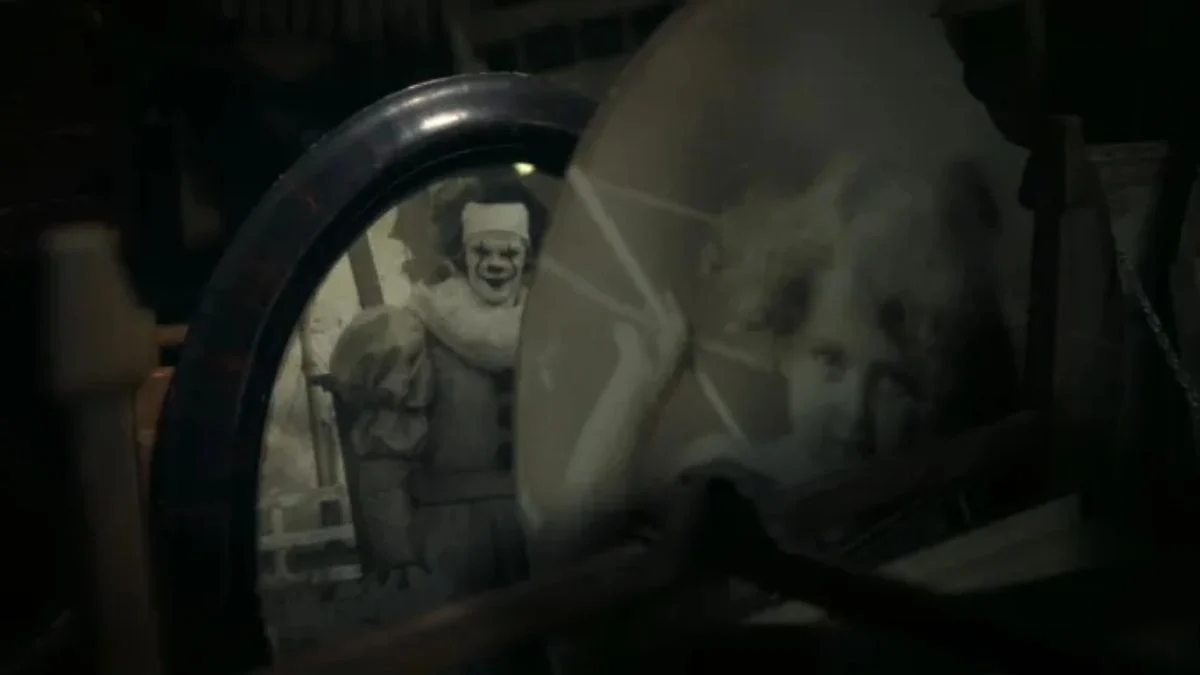
A Town That Never Escapes Its Past
Some places don’t just remember evil — they grow around it. It: Welcome to Derry brings viewers back to Stephen King’s most cursed town, peeling away decades of silence to reveal how fear quietly shaped generations long before the Losers’ Club ever faced Pennywise. For fans of the It movies, this series doesn’t simply expand the story; it reframes everything we thought we knew about Derry, making the horror feel closer, older, and far more personal.
In This Post:
Why Derry’s Story Remains Relevant?
Derry has always been more than a setting. In King’s universe, it behaves like a living organism — one that forgets its own crimes while allowing them to repeat. Welcome to Derry, set years before the events of It (2017), explores this idea with unsettling clarity, showing how ordinary people adapt to unspoken terror instead of confronting it.
For global audiences, including a growing horror fanbase in India and other international markets, the show taps into a universal theme: communities that normalize fear until it becomes invisible.
The Story So Far: What Happens in It: Welcome to Derry
Spoilers ahead.
Episode 1 — “The Pilot”
In 1962 Derry, Maine, a boy named Matty Clements tries to escape town but is picked up by a strange family whose behavior quickly turns horrifying. The mother gives birth to a grotesque winged baby that attacks Matty. Four months later, Major Leroy Hanlon arrives at the Derry Air Force Base and encounters racism while integrating with the other airmen.
Meanwhile, teens Lilly Bainbridge, Teddy Uris, Phil Malkin, and Ronnie Grogan begin experiencing disturbing visions connected to a missing child and decide to investigate disappearances in town. Their search leads them to a movie theater screening where a monstrous creature kills most of them — only Lilly and Ronnie survive the brutal encounter. This shocking horror establishes the dark tone of the series.
Episode 2 — “The Thing in the Dark”
The town reels after the events of the theater. The police start to suspect Ronnie’s father Hank Grogan in the children’s deaths, and Leroy believes the attack was orchestrated as a test rather than a supernatural event. Hank is arrested, forcing Ronnie to defend him.
At the base, Leroy’s distrust of the situation grows and General Shaw reveals a secret mission aiming to harness the entity’s fear‑inducing power. Meanwhile, Will Hanlon (Leroy’s son) struggles at school, befriending Rich, and Ronnie continues to have haunting visions tied to her dead mother.
Episode 3 — “Now You See It”
Lilly is briefly confined to Juniper Hill, a mental institution, but later released. Determined to uncover the truth, Lilly and Ronnie recruit Will and Rich to gather photographic evidence of the creature. The group attempts a summoning ritual in a cemetery to force the entity to appear; it backfires, unleashing terrifying hallucinations and prompting a desperate escape.
This episode also flashes back to a young General Shaw rescued by Rose, a Native American woman, establishing deeper lore ties and showing that the evil afflicting Derry has ancient roots.
Episode 4 — “The Great Swirling Apparatus of Our Planet’s Function”
The kids’ photos fail to show anything initially, but strange events intensify: Will has a vision of burning flames, Marge experiences a brutal hallucination, and Leroy finds a red balloon — a classic Pennywise sign.
Dick Hallorann, an Air Force telepathic airman, uses his psychic abilities to enter the mind of Taniel (Rose’s nephew), revealing that the entity It crash‑landed ages ago and was trapped by native peoples beneath the land that becomes Derry. Their ancient containment shards are crucial to understanding It’s power and weaknesses.
Episode 5 — “29 Neibolt Street”
General Shaw pushes to seize the mystical pillars that contain the entity. The kids find Matty alive and learn that Phil is alive too. They enter Derry’s dangerous sewer system seeking answers but become disoriented and drugged.
The military’s mission goes awry, and the entity manifests in full — with Pennywise the clown truly appearing. A confrontation in the sewers forces the group to flee, but Pennywise nearly kills Lilly before a pillar weakly blocks it. Hank and others search for help above.
Episode 6 — “In the Name of the Father”
Leroy tries to rein in Will’s reckless bravery, insisting he stay safe. Lilly pushes the group to find and destroy the entity using the protective pillar; Ronnie resists. Hallorann becomes frustrated as Hank attempts to leave Derry.
Marge confronts her old friends and grows closer to Rich. Lilly learns Ingrid Kersh—initially seen earlier—is tied to Pennywise’s history; she reveals she saw a clown that she believed was her father before it devoured him in 1935, deepening the entity’s backstory.
Episode 7 — “The Black Spot”
A violent white supremacist mob burns down The Black Spot, a Black‑friendly club. Pennywise awakens violently and devours many patrons, showcasing its growing strength.
Amid the fire and chaos, survivors escape through routes revealed by Hallorann’s psychic connection with a tribal warrior spirit. Love and loss play out with Rich sacrificing himself to protect Marge, and the military seizes an artifact that could lead to Pennywise’s containment if used correctly — though Shaw’s true intentions remain ambiguous.
Episode 8 — “Winter Fire” (Finale)
In the climactic season finale, Pennywise surrounds Derry with fog and summons children like a twisted Pied Piper. The survivors — Lilly, Ronnie, Marge, Will, and adult allies including Hallorann and Leroy — fight a final battle on a frozen river, using the mystical dagger/pillar to trap the creature back into hibernation for another 27 years.
The series ties directly into the IT film universe: Marge is revealed as Richie Tozier’s future mother, and a flash‑forward shows a young Beverly Marsh traumatized by her mother’s suicide, comforted by Ingrid Kersh, linking Welcome to Derry to It: Chapter Two. Hallorann’s psychic journey also sets up his future beyond Derry.

How the Series Connects to the It Movies
One of the show’s greatest strengths is how quietly it connects to It (2017) and It Chapter Two without relying on fan service.
Pennywise’s Pattern Becomes Clear
The movies explain Pennywise’s 27-year cycle, but Welcome to Derry shows how those cycles feel from the inside. The show confirms that each generation believes the horror is unique — a cruel illusion Pennywise relies on.
Familiar Names, Deeper Meaning
The series introduces ancestors and earlier versions of families later seen in the films. These connections aren’t just Easter eggs; they suggest that trauma, fear, and silence are inherited. When the Losers’ Club returns to Derry as adults in Chapter Two, their struggle feels inevitable rather than accidental.
Reframing the Losers’ Club
After watching the series, the Losers’ Club no longer seem like the first to fight back — they are simply the ones who remembered. That distinction gives their victory in the films more emotional weight.
Pennywise, Reimagined

Bill Skarsgård’s Pennywise remains terrifying, but the series uses him more sparingly. Instead of constant appearances, his presence is felt through behavior changes, environmental decay, and sudden acts of cruelty.
This approach makes Pennywise feel less like a monster and more like a force — something ancient, patient, and disturbingly intelligent.
What the Upcoming Season Is Expected to Change
While official details remain limited, the creative direction is clear: future seasons will likely move further back in time, exploring even earlier cycles of Pennywise’s influence.
A Broader Timeline
Upcoming episodes are expected to dramatize infamous events only referenced in the films and novel — mass tragedies, racial violence, and unexplained disasters that shaped Derry’s identity. Each season may function almost like a historical chapter, showing how Pennywise adapts to different eras.
Raising the Stakes
Future seasons are also likely to challenge one of the franchise’s central ideas: whether Pennywise can ever truly be destroyed, or if Derry itself is part of the problem. That question could redefine how fans interpret the ending of It Chapter Two.
Why This Story Resonates Beyond Horror

At its core, It: Welcome to Derry isn’t just about a clown. It’s about what happens when communities ignore suffering, when fear becomes routine, and when history is buried instead of confronted.
For modern audiences — especially in rapidly changing societies — the message feels timely. Evil doesn’t always arrive loudly. Sometimes it thrives because no one wants to remember.
The Bigger Picture
It: Welcome to Derry succeeds because it doesn’t try to outdo the movies with spectacle. Instead, it deepens the mythology, turning Derry into a cautionary tale about memory, responsibility, and the cost of silence.
As the series continues, its impact on the It universe may be its most unsettling achievement: once you know Derry’s full story, you can never see the films the same way again.
More Trending Stories:


Leave a Reply