

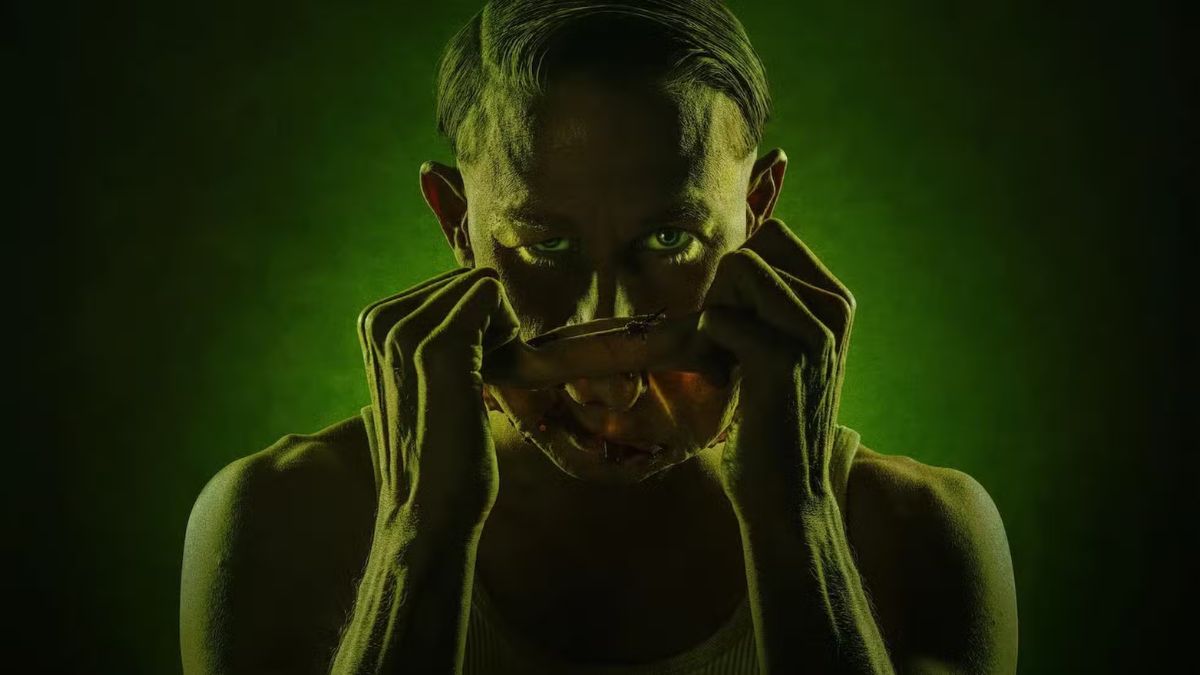
In the frosty heartlands of 1950s Plainfield, Wisconsin, a nightmare took root—a nightmare that would later sprout Frankenstein’s bride in Psycho, Leatherface in The Texas Chain Saw Massacre, and Buffalo Bill in The Silence of the Lambs. Monster: The Ed Gein Story plunges into the decaying farmstead of Ed Gein and unravels how a mild-mannered recluse became a blueprint for modern horror.
Monster: The Ed Gein Story: A Breakdown of the Teaser and Trailer
From the first whisper of the teaser, Monster: The Ed Gein Story casts its long, chilling shadow. Hunnam’s Ed Gein appears as a quiet, melancholic figure—meticulous, isolated, and haunted—never quite revealing the rot beneath the calm surface. The visuals shift slowly, as the camera tracks peeling wallpaper and dilapidated furniture, the dirt under fingernails, and empty eyes. The effect is unsettling: subtle at first, then insidious, like a slow drip of poison.
As the full trailer unfolds, the silence fractures. We glimpse the macabre: grave-robbed corpses, crude artifacts fashioned from human remains, and a house that seems more mausoleum than home. There are flash-cuts to moments of stark violence, but much of the horror lies in what is not shown—and in the way Hunnam turns and addresses the camera: “You’re the one who can’t look away.”
The tease doesn’t just show Gein’s crimes—it asks why we watch them, why we’re drawn to monsters, and whether monsters are born or made. It’s a psychological pivot that re-centers the narrative on Gein’s shattered mind and humanity, not merely his morbidity.

Cast of Shadows: Who’s Who in the Haunted Farmhouse

What to Expect: The Gothic Horror and Psychological Descent

Monster: The Ed Gein Story isn’t content to rehash gruesome headline crimes. Instead, it delves into the slow unraveling of a man: how isolation, trauma, and an obsessive bond with his mother warped Gein’s psyche until his retreat into madness seemed inevitable.
The series is as much a cultural excavation as it is a horror show. It will explore how Gein’s real-life atrocities seeped into the American subconscious—how they gave birth to horrific archetypes and warped our fascination with “true crime” and on-screen monsters.
Tone-wise, expect a palette of cold grays and sepia, long shadows creeping across empty farmhouses, and unblinking close-ups of quiet horror. Murphy and Brennan seem to be leaning into Monster‘s identity not only as true crime, but as gothic tragedy—one where the monster emerges not from leather masks or chainsaws, but from love gone wrong, grief gone rotten, and the terrible gap between what we present to the world and what we bury in secret.
There’s also a meta question haunting the trailer: is the viewer complicit? By turning to the camera, Hunnam’s Gein implicates us in the gaze. The show seems poised to interrogate not just his monstrosity, but our willingness to stare at it.
Why the Show Matters — and Where You’ll Watch It

Set for global streaming on Netflix from October 3, 2025, Monster: The Ed Gein Story continues the anthology’s ambition to examine infamy and the making of modern monsters.
If you appreciated previous seasons like The Jeffrey Dahmer Story or The Lyle and Erik Menendez Story, you’ll find a darker, more psychological journey here—a slow burn that fuels dread not with gore or jump-scares, but with the creeping realization that a monster might live next door, or within.
In conclusion: Monster: The Ed Gein Story is a Gothic mirror held up to the American psyche—grim, eerie, and unnervingly intimate. It doesn’t just retell the horrors of a once-quiet farmer turned grave robber and killer. It suggests that the true horror lies in how society molds monsters, and how those monsters, once revealed, keep pulling us in.
More Trending Releases:

Leave a Reply