

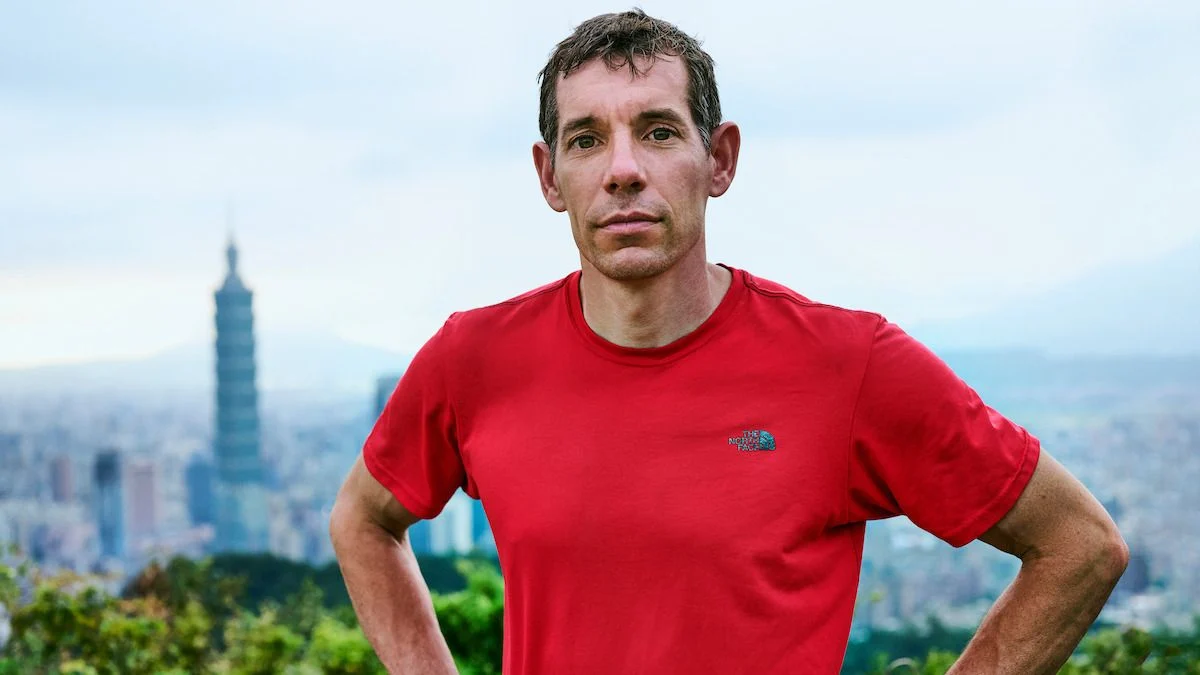
On January 23, 2026, the boundaries between extreme sports, live entertainment, and ethical debate converge in an unprecedented global event. Skyscraper Live, streaming exclusively on Netflix, follows legendary climber Alex Honnold as he attempts a historic free solo ascent of Taipei 101, one of the tallest skyscrapers in the world.
With no ropes, no harnesses, and no safety net, Honnold will climb the 1,667-foot (508-meter) structure live, in real time, before a worldwide audience. Any mistake could be fatal. Yet for Honnold, this climb represents not spectacle—but preparation, discipline, and the culmination of a lifelong ambition.
Netflix summarizes the stakes succinctly:
“No ropes. No fear. Free solo legend Alex Honnold risks it all in a high-stakes, live ascent of one of the world’s tallest skyscrapers in Taipei, Taiwan.”
This article explores the climb, the climber, the building, the risks, the controversy, and the cultural impact—unfolding the story layer by layer as the ascent itself rises toward the sky.
In This Post:

What Is Skyscraper Live? Netflix’s Most Dangerous Live Event Yet

Skyscraper Live marks a significant first for Netflix: a two-hour live broadcast centered on a real-time extreme sports feat where the outcome is unknown. The event airs on January 23, 2026, at 5:00 p.m. PT / 8:00 p.m. ET, translating to approximately 6:30 a.m. IST on January 24 for viewers in India.
The production combines:
- A live exterior climb
- Behind-the-scenes preparation footage
- Expert commentary and analysis
- Multiple camera angles, including drones and fixed rigs
To address concerns around broadcasting a potentially fatal incident, Netflix has implemented a reported 10-second delay, allowing the feed to be interrupted if necessary.
Global start times include:
- 8:00 p.m. ET (USA)
- 1:00 a.m. GMT (UK, Jan 24)
- 9:00 a.m. JST (Japan, Jan 24)
- 12:00 p.m. AEDT (Australia, Jan 24)
Who Is Alex Honnold? The Mind Behind the Impossible
Born in 1985, Alex Honnold is widely regarded as the most accomplished free solo climber in history. Free soloing—climbing without ropes or protective equipment—leaves no margin for error, a fact that has defined Honnold’s career and public image.
His most famous achievement came in 2017, when he completed a 3,000-foot free solo ascent of El Capitan’s Freerider route in Yosemite National Park. The climb took nearly four hours and was documented in the 2018 film Free Solo, which won the Academy Award for Best Documentary Feature.
Honnold began climbing indoors as a child before progressing to outdoor big walls. Over his career, he has completed more than 1,000 free solos across diverse environments, including Yosemite, Patagonia, and Antarctica.
Despite his reputation, Honnold consistently rejects the label of thrill-seeker. In interviews, he emphasizes preparation, mental control, and calculated risk assessment, often describing fear as something he manages through repetition and familiarity.
Beyond climbing, he is also known for environmental advocacy through the Honnold Foundation, which supports solar energy projects worldwide.
Why Taipei 101? The Skyscraper That Changes the Game
Located in Taipei, Taiwan, Taipei 101 is a 101-story skyscraper standing 1,667 feet (508 meters) tall. Completed in 2004, it was the world’s tallest building until 2010 and remains the 11th tallest building globally as of 2026.
Architecturally, the structure is inspired by bamboo, with stacked segments resembling bamboo nodes—symbolizing resilience and growth. Inside, it houses a massive tuned mass damper, a giant pendulum designed to stabilize the building during earthquakes and typhoons, both common in Taiwan.
For a climber, the building presents a radically different challenge than natural rock:
- Glass and steel surfaces
- Repetitive architectural patterns
- Limited natural friction
- Constant exposure to wind at height
Honnold has identified protruding features known as “bamboo boxes” as the most physically demanding sections, requiring precise, repeated movements.

Free Soloing a Skyscraper: How This Climb Works
Climbing Style
- Free solo
- No ropes, harnesses, nets, or safety gear
- Only hands, feet, chalk, and shoes
Route
- Begins at the base of Taipei 101
- Ascends the exterior facade
- Includes lower repetitive panels, mid-building overhangs, and the upper spire
Duration
- Estimated 2 to 2.5 hours
- Focused on endurance rather than technical difficulty
Honnold has described the climb as comparable to “a marathon of pull-ups” or “climbing a ladder for two hours straight.”
The Physical and Mental Challenges of Skyscraper Free Soloing
| Challenge | Description | Honnold’s Insight |
| Endurance | Sustained vertical climbing for over two hours | “The hardest part isn’t a single move—it’s the cumulative fatigue.” |
| Mental Pressure | Live global audience with no margin for error | “I have to fully focus and execute well.” |
| Architectural Features | Bamboo boxes and smooth glass panels | Physically demanding but repetitive, easier than rock in some ways |
| Environmental Factors | Wind and potential rain in Taipei | Building is “ideally suited,” but weather adds unpredictability |
A fall at any height would be fatal. Fatigue-induced mistakes are the primary risk, especially in the final stages of the ascent.
Preparation and Training: Why Honnold Believes This Is Possible
Honnold arrived in Taiwan weeks before the event, conducting extensive rehearsals. These included:
- Roped practice climbs of the building
- Testing holds and movement sequences
- Filming preparation sessions
- Discussing beta (climbing strategies) on camera
He has stated that skyscrapers are less technically demanding than natural rock due to their repetition, but far more demanding in terms of endurance and psychological consistency.
For Honnold, climbing a skyscraper has been a lifelong dream, rooted in childhood fascination with urban exploration and vertical architecture.
Inside the Netflix Broadcast: Hosts, Experts, and Production
Platform: Netflix (subscription required)
Duration: 2 hours
Section: Live Events
Hosts and Guests
- Elle Duncan – Host
- Emily Harrington – Professional climber and expert analyst
- Mark Rober – Engineer and science communicator
- Seth Rollins – WWE star
- Pete Woods – Commentator
Multiple drones and fixed camera rigs will capture the climb from every angle, balancing cinematic scale with real-time realism.
Public Reaction: Awe, Excitement, and Ethical Backlash
Support and Excitement
- Fans describe the event as “history live”
- Polymarket odds reportedly place success at 95%
- Social media buzz includes training footage and comparisons to El Capitan
Criticism and Concern
- Critics label the event “voyeuristic,” “macabre,” and “irresponsible”
- Investor Jason Calacanis publicly urged Honnold to use ropes and criticized Netflix
- Some climbers dismiss it as a “gimmick,” arguing buildings are easier than rock
Media Coverage
Outlets such as The Guardian, NBC News, and Forbes emphasize both the awe and unease surrounding the live broadcast, particularly the ethics of monetizing life-threatening risk. International coverage in Spanish and French media highlights the “no second chances” nature of the climb.

A Cultural Moment at the Edge of Human Limits
At its core, Skyscraper Live is more than a climb. It represents the evolving intersection of:
- Extreme sports
- Global live streaming
- Ethical responsibility
- Human ambition
Honnold himself frames the risk with characteristic clarity:
“If I fall, the price is enormous.”
Yet his history of meticulous preparation, combined with years of calculated decision-making, has earned widespread confidence in his ability to execute.
Whether viewed as inspiration, controversy, or spectacle, Alex Honnold’s free solo climb of Taipei 101 stands as one of the most audacious live events ever attempted.
For viewers around the world, the choice is simple: watch history unfold—or look away.

Leave a Reply