

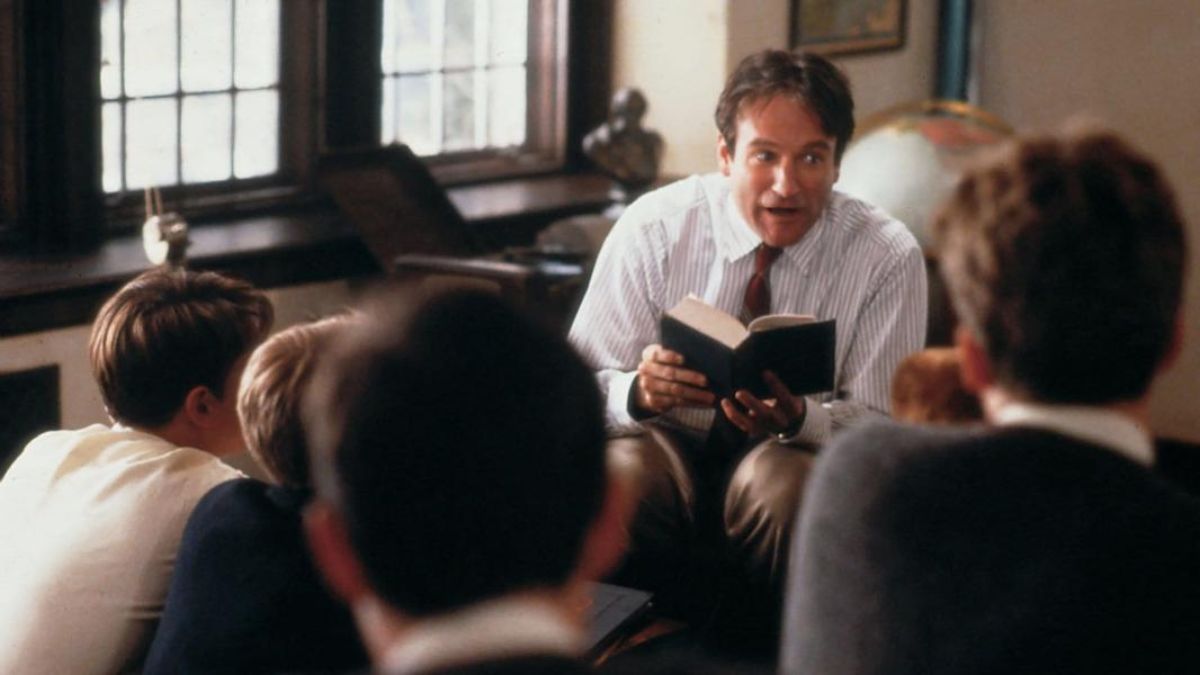
“No matter what anybody tells you, words and ideas can change the world.”
-John Keating
There’s a reason why Dead Poets Society got imprinted into our hearts.
For creatives—writers, artists, musicians, filmmakers, and anyone who’s ever tried to express something deep and difficult—it isn’t just a coming-of-age film or an ode to poetry. It’s a story that recognizes what it means to feel misunderstood by systems that value precision over passion. It articulates, without excessive sentimentality, the silent battle between individuality and conformity, art and utility, inspiration and expectation.
Even after more than 30 years since its release, Dead Poets Society continues to resonate. Not because it’s nostalgic, but because it understands something that most systems—and sadly, many institutions of education—fail to grasp: the creative spirit is fragile, urgent, and necessary.
Here’s why so many creatives keep coming back to it.
1. It Understands the Internal Conflict Between Passion and Expectation
Every creative person at some point experiences a tug-of-war between what they love and what they’re told is “practical.” From an early age, we’re handed a map that prioritizes structure, job security, and quantifiable outcomes. Art doesn’t typically fit into that map.

Neil Perry’s storyline is a painful but honest portrayal of what happens when a person’s genuine desire to pursue something meaningful is met with inflexible expectations. He doesn’t want to rebel for rebellion’s sake—he wants to act. To feel something real. But his world won’t allow that. And the result is one of the most devastating truths in the film: when creativity is treated as indulgence rather than identity, it often suffocates in silence.
That struggle is deeply familiar to artists who grew up feeling like their ambitions were dismissed, misunderstood, or trivialized. Creatives return to Dead Poets Society because it names and reflects that inner tension with painful accuracy.
2. It Reflects the Importance and Rarity of Creative Mentorship
Mr. Keating is not the typical teacher. He doesn’t follow the textbook, doesn’t preach from the podium, and doesn’t treat education like a checklist. He opens space for uncertainty, passion, and perspective. He encourages his students to think for themselves and feel deeply about what they create.

For creatives, having someone like Keating in your life—a teacher, mentor, or even just a peer who believes in your voice-can be life-changing. Mr. Keating doesn’t hand his students the answers but gives them permission to ask questions.
Most creatives remember a Keating of their own, or wish they had one. We revisit this film because it reminds us what mentorship should feel like: not instructive, but awakening. In a world that often reduces education to performance, Keating offers something radical: he makes meaning the goal.
3. It Centers Emotion Without Apology
Dead Poets Society is not afraid of emotion. In fact, it leans into it. It doesn’t just show the joy of creative expression but also the vulnerability, the fear, the isolation, and ultimately the cost.
Todd Anderson’s journey, in particular, stands out. He begins the film unable to speak up in class, terrified of being wrong or seen. By the end, through Keating’s support and his own emotional awakening, he finds his voice, not in rebellion, but in recognition of his own self-worth.

For creatives, that journey is all too real. Many of us spend years wrestling with self-doubt, creative paralysis, or the fear of exposure. Todd’s transformation is slow, fragile, and deeply human. We don’t come back to see him become a star. We come back to see him finally believe that his words matter.
That emotional truth is rare in films, especially those about young men. It’s even rarer in portrayals of art and creativity. But Dead Poets Society handles it with restraint and reverence, making it feel both honest and earned.
4. It Exposes the Cost of Silence in a Way That Stays With You
One of the hardest things about being a creative person is feeling like you have something to say, but never quite being allowed to say it. Whether it’s fear, external judgment, or a lack of space to explore your voice, many creatives carry the weight of that silence.
Neil Perry’s fate is a direct consequence of that. His story isn’t just tragic, but a warning. His environment doesn’t nurture creativity; it punishes it. And when the pressure becomes unbearable, he sees no way out.

This isn’t melodrama but a reflection of what can happen when creative expression is seen as rebellion, not necessity. We return to Dead Poets Society because it confronts that truth head-on. It doesn’t offer easy answers. But it insists on asking the hard questions: What happens when a system demands excellence but punishes authenticity? What happens when passion is treated as defiance?
5. It Reminds Us Why We Chose to Create in the First Place
Creativity is often romanticized, but the reality is that it’s hard. Most artists, no matter their field, experience moments of deep uncertainty, wondering whether their work matters or whether their voice is worth anything at all.
Dead Poets Society doesn’t answer those doubts directly. But it offers something better: it reminds us of the why. Why we write? Why we act? Why we speak up even when we’re afraid?

When Keating asks his students to stand on their desks and see the world differently, he’s not giving them a gimmick; he’s offering a philosophy. A way to break from routine and remember that perspective is everything. That creative work matters not because it’s profitable or popular, but because it allows us to look at life through a new lens.
Creatives return to this film to reconnect with that purpose. To shake off the metrics, expectations, and deadlines. To remember the feeling of raw, unfiltered inspiration…
Final Reflection
In the end, Dead Poets Society endures not because it tells creatives something new, but because it tells them something true. It doesn’t simplify creativity. It doesn’t glamorize it. Instead, it respects it—its beauty, its pain, its cost, and its necessity.
We return to it not for comfort, but for clarity. Because in a world that often forgets the importance of art, this film remembers. It remembers what it means to speak when your voice shakes. To create without a guarantee. To risk being misunderstood in order to be real.
And that reminder is something every creative soul needs to hear, again and again.
“We don’t read and write poetry because it’s cute. We read and write poetry because we are members of the human race. And the human race is filled with passion. And medicine, law, business, engineering, these are noble pursuits and necessary to sustain life. But poetry, beauty, romance, love, these are what we stay alive for. To quote from Whitman, “O me! O life!… of the questions of these recurring; of the endless trains of the faithless… of cities filled with the foolish; what good amid these, O me, O life?” Answer. That you are here – that life exists, and identity; that the powerful play goes on and you may contribute a verse. That the powerful play *goes on* and you may contribute a verse. What will your verse be?”
– – N.H. Kleinbaum, Dead Poets Society


Leave a Reply