
Where Winds Meet builds its world around exploration, movement and the freedom to tackle challenges your own way. The game feels crafted for personal adventure, yet it also hints at a broader social layer beneath the surface. Understanding how that layer works is important, because multiplayer in this game doesn’t follow the usual patterns you might expect.
Instead of throwing everyone into a single bustling server, Where Winds Meet shapes its online features in a more controlled, deliberately designed way. The result sits somewhere between classic co-op, open-world hubs and instanced content. To understand that structure, it’s useful to break the systems apart and see how they interact.
Multiplayer as a Layered System
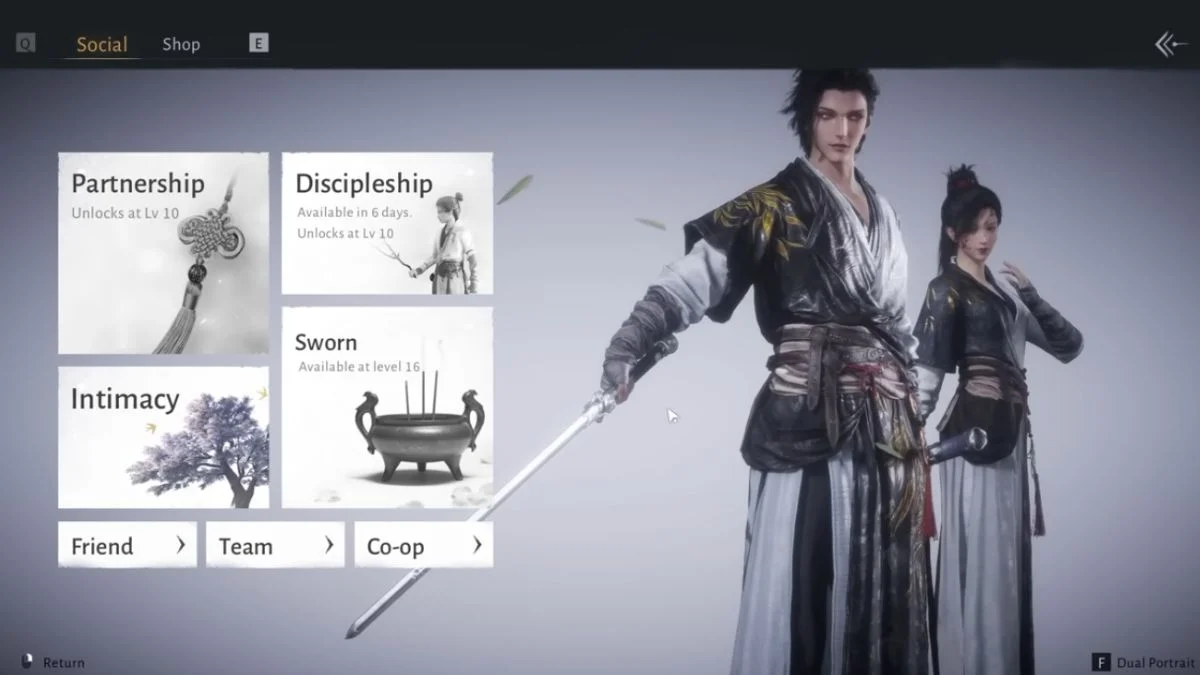
The game activates its multiplayer options once your character reaches level 10. From that point on, you’re free to jump between solo exploration, quiet shared spaces and fully cooperative activities. The options come in two main forms:
Online Mode
A shared version of the world where players appear around you, interact socially, join events, practice professions and form groups. It feels like a wide, open gathering place. The world itself stays peaceful — enemies and world puzzles don’t spawn here — which turns the entire map into a social hub rather than a battlefield.
Co-Op Rooms
A private world hosted by one player where up to four others join. Enemies roam the map, resources can be gathered and exploration behaves much like the solo mode. Because the host sets the level and world state, the experience feels like adventuring together inside one player’s world.
The two modes complement each other, offering a mix of social presence and actual co-op gameplay.

Why the Game Doesn’t Fit the MMO Label
Even though Online Mode shows other players in the open world, it never behaves like an MMORPG. There are no shared zones full of enemies, no competition for world bosses and no chaotic crowding around objectives. The game treats the open world as a personal journey first, and a gathering space second.
This design lets players enjoy the story at their own pace while still having access to group activities when they want them.
What Co-Op Lets You Do
Co-op is where combat, exploration and shared progression come alive. When inside a co-op room, players can:
- Fight world enemies and bosses
- Explore freely and open chests
- Complete side quests that support teamwork
- Trigger puzzles or interactions that require multiple players
- Grow intimacy levels with co-op partners
- Gather materials and complete exploration tasks together
The experience feels like a shared adventure without overwhelming systems or strict roles.
What Remains Solo
Some content stays locked to individual progress to preserve narrative pacing and cinematic moments. These include:
- Main story quests
- Weapon unlock quests
- Story-heavy or stealth-driven sequences
- Early tutorial systems
Co-op never prevents you from switching back to solo play whenever a story moment requires it.
How Online Mode Supports the Social Side
Even though Online Mode lacks enemies, it doesn’t feel empty. Players use it to:
- Train professions
- Trade through guild markets and resource systems
- Participate in mini-events
- Join PvE or PvP activities through matchmaking
- Organize groups before entering instanced challenges
It acts as a vibrant community space where movement, mounts and activities give the world personality.
Instanced PvE Challenges
The game’s deeper cooperative content lives here. These challenges operate separately from the open world:
- Dungeons
- Raids
- Hero’s Realm
- Sword Trials
- Outposts
- Special boss arenas
These modes use stamina to determine rewards but can be tackled with friends or through public matchmaking.
Competitive Modes and Guild Conflict
For players who enjoy testing their builds and movement skills, PvP options cover a wide range:
- 1v1 and 3v3 duels
- Team skirmishes
- Large-scale 30v30 battlegrounds
- Guild vs guild conflict
- Bounty invasions that let players hunt each other
These modes add volatility and personality to the game’s community.
Playing the Entire Game With a Partner
If you like the idea of journeying with one close friend, the game accommodates that well. Most exploration, side content, world bosses and puzzle areas support co-op seamlessly. Only the main story requires you to step into solo mode occasionally.
Still, the overall pacing works smoothly for duos. You can explore and progress together without feeling constantly interrupted.
More Trending Game Guides:


Leave a Reply