

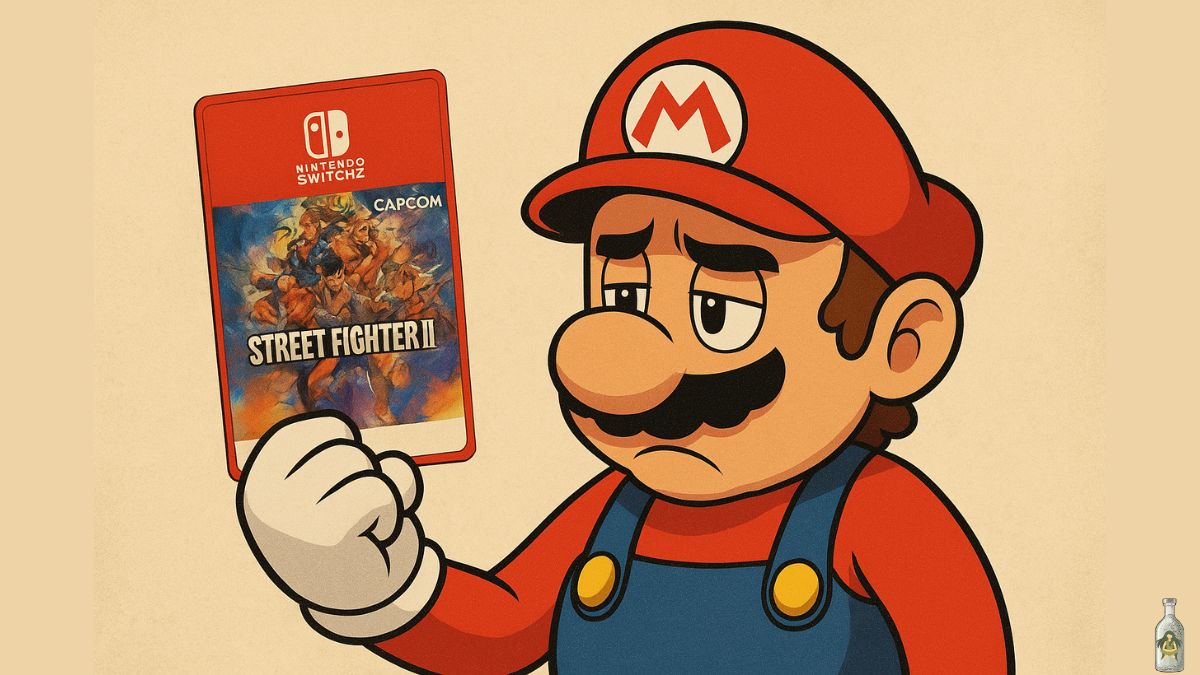
Industry is divided as Nintendo’s new distribution model sparks consumer outrage, preservation fears, and profit concerns
Nintendo’s rollout of Game-Key Cards for the upcoming Switch 2 has triggered a fierce backlash from the gaming community, with critics warning that the model undermines physical ownership and accelerates the erosion of video game preservation.
A “Physical” Game Without the Game
Unlike traditional cartridges, Game-Key Cards carry no actual game data. Instead, they act as retail tokens that unlock full downloads from Nintendo’s eShop. The system requires players to remain online and allocate storage space, effectively tethering ownership to Nintendo’s servers.
What was pitched as a hybrid solution for retail shelves has quickly become one of the most polarizing moves in modern gaming. Third-party publishers are already favoring Game-Key Cards, leading to concerns that standard cartridges could vanish for many Switch 2 titles.
Why Nintendo Is Pushing the Model?
Industry insiders point to Nintendo’s long-standing reliance on retail partnerships as a key driver. According to former marketing executives Kit Ellis and Krysta Yang, Game-Key Cards are an extension of Nintendo’s successful gift card business, which surpassed internal sales projections.
“From Nintendo’s perspective, it’s about keeping a physical footprint in stores while nudging players toward digital,” Ellis explained on their podcast.
Veteran developers such as Masakazu Sugimori have defended Nintendo, arguing the shift is not purely financial. Still, with the company holding over $13 billion in cash reserves, skeptics question whether the model is motivated more by efficiency than necessity.
Preservation Crisis
The preservation community has been quick to condemn the move. In August, Japan’s National Diet Library confirmed it would exclude Game-Key Cards from its government-backed game archiving program, citing their reliance on external servers.
That decision underscores a longstanding fear: once servers are shut down, Game-Key Cards risk becoming inert plastic. Players recall Nintendo’s 2020 closure of certain eShop services in Latin America and the Caribbean, which left hundreds of digital purchases inaccessible.
“I can boot up a 40-year-old NES cartridge today and play it,” one gamer wrote on Reddit. “With these cards, ownership is temporary at best.”
Economics and Consumer Impact
Publishers stand to save significantly on manufacturing, particularly as Switch 2 titles demand higher-capacity storage. But the savings have not translated to consumers. Instead, game prices have risen, fueling accusations that Game-Key Cards are a profit-maximizing tool disguised as innovation.
Analysts note that digital sales already deliver higher margins to publishers, creating strong incentives to accelerate the decline of cartridges.
Divided Community, Uncertain Future
While casual players appear less concerned, collectors and long-time fans argue that Nintendo is redefining “physical” in a way that strips away value. Resale markets and long-term collectibility remain major question marks.
Nintendo has circulated consumer surveys in Japan and abroad, but the company has yet to commit to changes. Observers say the results will likely influence whether Game-Key Cards become a standard or remain a supplement to cartridges.
What’s at Stake?
As the Switch 2 launch approaches, the Game-Key Card debate is exposing deeper fault lines in the industry: the tension between digital convenience and permanent ownership, corporate efficiency and consumer trust, preservation and profit.
Whether Nintendo’s model is remembered as a forward-looking compromise or a breaking point for physical gaming will depend on how fans, publishers, and preservationists respond in the months ahead.
Full Podcast to Kit & Krysta on Nintendo Game Key Cards Controversy:
More Trending News:

Leave a Reply